
European Leaders Vow to Strengthen NATO's 'European Pillar' Ahead of Ankara Summit
The leaders of Europe's five largest military powers met in Berlin to coordinate defense strategy, pledging increased support for Ukraine and a greater share of the transatlantic security burden.
By Adel Khoury

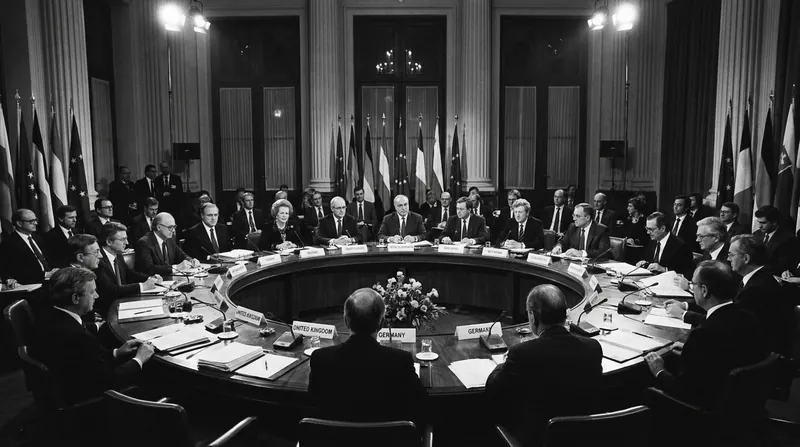
The leaders of Europe's five largest military powers—Germany, France, the United Kingdom, Italy, and Poland—convened in Berlin on Wednesday to forge a unified defense strategy. The high-stakes gathering comes just two weeks before the NATO summit in Ankara, where the alliance will grapple with the ongoing war in Ukraine and shifting transatlantic dynamics.[1][2]
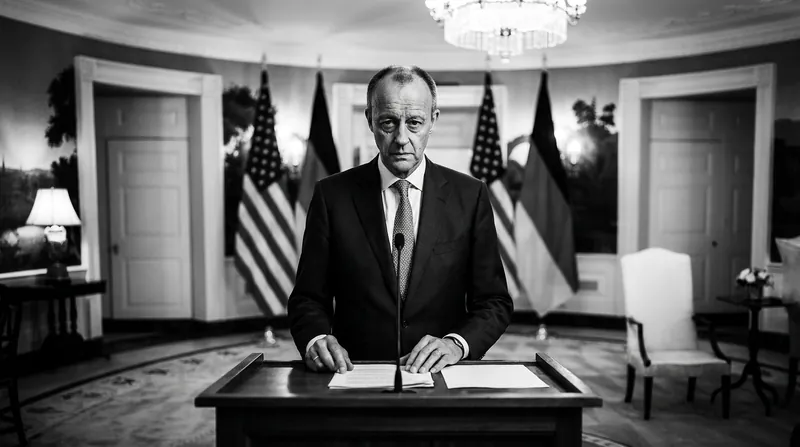
Hosted by German Chancellor Friedrich Merz, the summit brought together French President Emmanuel Macron, Italian Prime Minister Giorgia Meloni, Polish Prime Minister Donald Tusk, and outgoing British Prime Minister Keir Starmer. NATO Secretary-General Mark Rutte also joined the closed-door discussions via video link from Washington to ensure alignment with the broader alliance.[1][4][6]
The meeting utilized the "E5" format, a coalition that has rapidly emerged as the primary engine for European military coordination. By operating outside the formal institutional structures of the 27-member European Union, the E5 allows the continent's heaviest defense spenders—crucially including non-EU Britain—to align their industrial and strategic policies without waiting for unanimous consensus.[4]
The most pressing agenda item was the defense of Ukraine. The leaders sought to transition European support from ad-hoc military donations to a formalized system of long-term backing. Merz proposed that European NATO allies provide Kyiv with "reliable financial guarantees," arguing that the message to Moscow must be that Western resolve will not fracture over time.[2][4]
Starmer, delivering one of his final international addresses before leaving office, emphasized the need to capitalize on Ukraine's recent battlefield momentum. He argued that the Russian economy is showing visible signs of strain, making this a critical window to ramp up economic pressure through tighter sanctions and expanded military aid.[1]
Beyond immediate battlefield needs, the Berlin summit focused heavily on the mechanics of building a "more European" NATO. This concept, often referred to as the alliance's "European pillar," envisions the continent taking primary responsibility for its own deterrence and defense, rather than relying overwhelmingly on American military logistics and hardware.[3][6]
To achieve this, the E5 leaders committed to a generational shift in defense industrial cooperation. A joint statement outlined plans to accelerate the joint development and procurement of advanced military technologies, specifically highlighting air defense systems, unmanned drones, artificial intelligence, and deep precision strike capabilities.[6]
The reality of modern warfare, as Starmer noted, requires nations not just to outmaneuver adversaries, but to out-innovate and out-produce them. The E5 aims to integrate their defense manufacturing bases to achieve the speed and scale necessary to replenish depleted stockpiles and deter future aggression.[6]
This aggressive push for European self-reliance is also a calculated diplomatic signal to the United States. With President Donald Trump frequently criticizing European allies for insufficient defense spending, the E5 is attempting to arrive at the Ankara summit with concrete proof that they are shouldering their share of the transatlantic burden.[1][2]
Macron struck an optimistic tone regarding the transatlantic relationship, describing the current diplomatic climate as a "moment of reconvergence" between Europe and the U.S. He pointed to the recent G7 summit, where all members signed a common text supporting Ukraine's territorial integrity and energy resilience, as evidence of renewed alignment.[3]
In a further display of unity with Washington, the European leaders formally welcomed the recent U.S.-Iran Memorandum of Understanding. The deal, secured by the Trump administration, established a fragile 60-day ceasefire and reopened the Strait of Hormuz, a critical chokepoint for global energy markets that heavily impacts European economies.[3][6]
Despite the unified front, the Berlin summit was shadowed by domestic political fragility across the continent. The meeting served as a poignant swan song for Starmer, who announced his resignation earlier in the week following intense domestic pressure, though he attended to ensure continuity in British foreign policy.[5]
European counterparts used the occasion to pay tribute to Starmer's efforts to rebuild relations across the English Channel. Tusk remarked that the outgoing prime minister had made the continent "forget Brexit, at least temporarily," while Merz expressed regret over his departure but gratitude for the recent era of close cooperation.[2][5]
The Polish prime minister also used the summit to reaffirm Warsaw's commitment to the region's long-term stability, confirming that Poland will host an upcoming conference dedicated to Ukraine's postwar reconstruction and economic recovery.[4]
As the leaders prepare to present their unified platform to the broader alliance in Ankara on July 7, significant uncertainties remain. The ultimate test for the E5 will be whether these ambitious pledges for defense integration and financial guarantees can survive the turbulent electoral politics of the member states and satisfy Washington's demands for a rebalanced NATO.[1][2][3]
Key points
- The leaders of Germany, France, the UK, Italy, and Poland met in Berlin to coordinate defense strategy ahead of the NATO summit in Ankara.
- The E5 coalition pledged to provide Ukraine with reliable, long-term financial guarantees and increased military assistance.
- A central focus was strengthening NATO's 'European pillar' through joint development of air defense, AI, and long-range strike capabilities.
- The European leaders formally welcomed the recent U.S.-Iran Memorandum of Understanding, signaling alignment with Washington on Middle East security.
Open questions
- Whether the ambitious joint procurement plans for advanced weapons systems can overcome historical bureaucratic hurdles and competing national interests.
- How the incoming UK government under Andy Burnham will approach the E5 framework following Keir Starmer's resignation.
- Whether the increased European defense commitments will be sufficient to satisfy the Trump administration's demands for burden-sharing at the Ankara summit.
Timeline
2024
The E5 format is established to coordinate European rearmament in response to growing global security threats.
June 17, 2026
German Chancellor Friedrich Merz formally invites E5 leaders to Berlin during the G7 summit.
June 22, 2026
UK Prime Minister Keir Starmer announces his resignation but confirms his attendance at the Berlin summit.
June 24, 2026
E5 leaders meet in Berlin to finalize their joint defense strategy and support for Ukraine.
July 7, 2026
The NATO summit is scheduled to begin in Ankara, Turkey.
- European Strategic Autonomy Advocates
- Argue that Europe must build sovereign military capabilities to secure its own continent, reducing reliance on the U.S.
- Transatlantic Integrationists
- Emphasize that European rearmament should strengthen NATO as a whole and remain closely coordinated with Washington.
- Eastern Flank Security Hawks
- Prioritize immediate, hard security guarantees and aggressive military support for Ukraine to deter Russian expansion.
Perspectives this story doesn't cover
- The Russian Government
- The Ukrainian Military Command
- U.S. Defense Contractors
Sources
Source coverage
6 outlets
3 viewpoints surfaced





- [1]Al JazeeraEastern Flank Security Hawks
Top European leaders vow 'strong' support for Ukraine ahead of NATO summit
Read on Al Jazeera → - [2]EuractivEuropean Strategic Autonomy Advocates
E5 leaders seek to prove Europe can deliver for Ukraine
Read on Euractiv → - [3]Daily SabahTransatlantic Integrationists
Macron sees renewed Europe-US alignment ahead of Ankara NATO summit
Read on Daily Sabah → - [4]LIGA.netEuropean Strategic Autonomy Advocates
E5 leaders agreed on five priorities ahead of the NATO summit, particularly regarding Ukraine
Read on LIGA.net → - [5]The GuardianEastern Flank Security Hawks
European leaders pay tribute to Starmer as EU-UK summit is postponed
Read on The Guardian → - [6]German GovernmentEuropean Strategic Autonomy Advocates
E5 LEADERS' STATEMENT
Read on German Government →
More in News & Politics
See all →Iran Sanctions
UK Designates Iran's Revolutionary Guards as a Terrorist Organization Amid Escalating Gulf Conflict
3 sources
Russian Oil Sanctions
U.S. Senate Advances Bill Threatening 100% Tariffs on India and China Over Russian Oil
2 sources
Transatlantic Relations
Germany Warns US Against Election Interference Over State Department Grants to European Right-Wing Groups
7 sources
Sanctions Policy
EU Ministers Formally Adopt New Sanctions Targeting Russia's Drone Supply Chain After Kyiv Strike
6 sources
Comments
Every angle. Every day.
Get News & Politics stories with full source coverage and perspective breakdowns, free every day.