
The Cognitive Shield: How Chess and Strategy Games Rewire the Aging Brain
A decade-long study of over 10,000 older adults reveals that playing chess and engaging in active mental tasks can reduce the risk of dementia by up to 11 percent.
By Ryder James

As global life expectancy rises, the medical community faces a looming demographic challenge: the preservation of cognitive health. More than 55 million people worldwide currently live with dementia, a number projected to double over the next three decades.
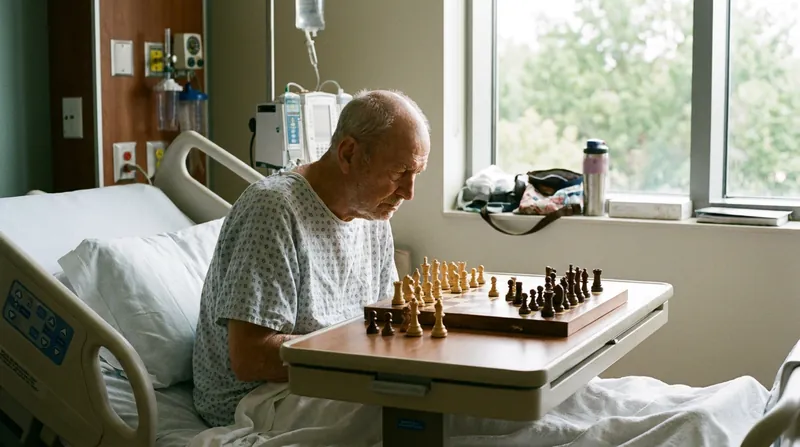
With pharmaceutical interventions remaining limited in their ability to reverse cognitive decline, researchers have increasingly turned their attention to lifestyle factors that might delay its onset. Among the most promising non-pharmacological interventions is an activity that requires no prescription, costs virtually nothing, and has been played for over a millennium: the game of chess.[5]
The premise that "thinking hard" protects the brain is not new, but recent large-scale longitudinal studies have begun to quantify exactly how much protection activities like chess actually offer. The consensus emerging from neurology and gerontology is that the brain operates much like a muscle—it requires consistent, rigorous resistance training to maintain its structural integrity.
Chess, with its unique demand for simultaneous calculation, spatial visualization, and strategic foresight, acts as a high-intensity workout for the mind. By forcing the brain to continuously adapt to novel problems, the game helps construct a neurological buffer against the inevitable decay associated with aging.[3][5]
The most compelling recent evidence comes from a sweeping decade-long study conducted by Monash University and published in the medical journal JAMA Network Open. Researchers tracked 10,318 older adults, with a median age of 73.8, who were relatively healthy at the study's inception.
Over the ten-year observation period, the study meticulously recorded the participants' leisure habits, categorizing them into active mental tasks, passive mental tasks, and social activities. The sheer scale of the cohort allowed researchers to isolate the specific impact of different types of mental engagement, controlling for variables like prior education level and socioeconomic status to ensure the results were not skewed by external advantages.[1]
The findings provided a striking validation for the protective power of strategy games. Participants who routinely engaged in active mental tasks—specifically playing chess, solving crosswords, and using computers—demonstrated a 9 to 11 percent lower risk of developing dementia compared to their peers. This risk reduction significantly outperformed more passive leisure activities.
While creative hobbies like painting, knitting, and reading were still beneficial, they only yielded a 7 percent reduction in dementia risk. The data clearly indicated that the intensity of the cognitive engagement matters; passive consumption of information does not fortify the brain as effectively as the proactive problem-solving required to navigate a complex board state.[1]
These findings build upon a foundational precedent set by earlier, highly respected research. A pioneering study published in the New England Journal of Medicine followed 469 individuals over the age of 75 for an astonishing 21 years.
That study produced even more dramatic figures, suggesting that participants who regularly played board games like chess had a 74 percent reduced risk of dementia compared to those who rarely engaged in such activities. While the Monash study provides a more conservative and modern percentage based on a vastly larger sample size, both data sets point to the same undeniable conclusion: regular strategic gameplay is a potent neuroprotective agent.[2][3]
To understand why moving wooden pieces across a checkered board protects against cellular decay, neuroscientists point to the concept of "cognitive reserve." Cognitive reserve is essentially the brain's capacity to improvise and find alternative neural pathways to complete a task when primary pathways are damaged by age or disease.
Every time a chess player calculates a variation or memorizes an opening sequence, they are stimulating the creation of new neurons and enhancing synaptic activity. A brain with a high cognitive reserve can sustain more physical damage—such as the amyloid plaques associated with Alzheimer's disease—before exhibiting the outward clinical symptoms of memory loss or confusion.[5]
Chess is particularly effective at building this reserve because it does not allow the brain to rely on a single specialized function. Instead, it forces multiple cognitive domains to fire simultaneously. A single game requires episodic memory to recall past positions, visuospatial skills to mentally manipulate the board, calculation to evaluate material exchanges, and executive function to manage time and make final decisions.
This cross-training prevents the brain from settling into comfortable, automated routines. According to researchers, it is this "higher efficiency in using brain networks" that makes competitive strategy games vastly superior to repetitive tasks when it comes to long-term neurological health.[1]
Interestingly, the benefits of chess extend beyond pure neural networking; the game also triggers a profound physiological response. Robert Sapolsky, a neuroendocrinologist at Stanford University, has extensively studied the stress responses of competitive chess players. Sapolsky found that during a high-stakes tournament, a chess player's autonomic nervous system reacts as if they were engaging in intense physical exercise.
Breathing rates increase, blood pressure elevates, and muscle contractions occur as players navigate the tension of the game. This acute stress response, when experienced in the controlled environment of a chess match, acts as a form of conditioning, proving that the mind and body are inextricably linked during deep concentration.[4]
This physiological arousal has led to viral, albeit sometimes exaggerated, claims about the caloric burn of chess. While rumors that grandmasters burn 6,000 calories a day simply by thinking have been debunked by metabolic experts, the reality is still fascinating. Studies utilizing wearable trackers have shown that chess players do experience an elevated metabolic rate during play, burning slightly more calories per minute than they do at rest.
Much of this is attributed to Non-Exercise Activity Thermogenesis (NEAT)—the energy expended through fidgeting, pacing, and postural adjustments during a tense, hours-long classical game. The brain itself, while only weighing a few pounds, consumes roughly 20 percent of the body's energy.[4][5]
Beyond the mechanics of the brain and the stress response of the body, chess offers a third, often overlooked pillar of dementia prevention: social interaction. The Monash University researchers noted that games like chess are inherently competitive and interactive.
Whether played in a local park, at a community club, or even online, chess requires engaging with another human being. Isolation and loneliness are well-documented risk factors for rapid cognitive decline in older adults. By fostering a community centered around a shared intellectual pursuit, chess provides a social anchor that compounds the neurological benefits of the game itself.
Despite the overwhelming positivity of the data, medical professionals are careful to manage expectations. Chess is a cognitive shield, not a bulletproof vest. Engaging in active mental tasks reduces the statistical likelihood of developing dementia, but it cannot guarantee immunity.
Furthermore, while chess is highly effective as a preventative measure to delay the onset of symptoms, there is currently little evidence to suggest that taking up the game can reverse the effects of Alzheimer's once the disease has progressed. The intervention works by building a buffer beforehand, not by curing the underlying pathology after it has taken hold.[3]
Ultimately, the prescription for a healthy aging brain looks remarkably similar to the prescription for a healthy body: stay active, embrace resistance, and avoid complacency. The scientific literature confirms that it is never too late to start building cognitive reserve.
Older adults who learn chess in their seventies still reap the rewards of increased synaptic activity and improved executive function. In a medical landscape where treatments for dementia remain elusive and expensive, a simple board game offers a profoundly democratic solution. By challenging the mind today, players are actively defending their memories, their independence, and their cognitive vitality for tomorrow.[5]
Key points
- A 10-year study of over 10,000 older adults found that active mental tasks like chess reduce dementia risk by 9 to 11 percent.
- Active problem-solving games outperform passive hobbies, such as reading or knitting, in building cognitive resilience.
- Chess protects the brain by building 'cognitive reserve,' forcing multiple neural domains to fire simultaneously.
- The acute stress response experienced during competitive chess mimics physical exercise, elevating heart rate and blood pressure.
- While chess can significantly delay the onset of cognitive decline, it is not a cure for existing Alzheimer's disease.
How we got here
2003
The New England Journal of Medicine publishes a landmark 21-year study linking board games to a 74% reduced risk of dementia.
2014
The ACTIVE study demonstrates that cognitive training through strategy games produces benefits lasting up to a decade.
2020
Stanford neuroendocrinologist Robert Sapolsky details the intense physiological stress responses of competitive chess players.
July 2023
JAMA Network Open publishes the Monash University study, quantifying the 9-11% risk reduction from active mental tasks.
June 2026
Public health advocates increasingly push for the integration of strategy games into senior care and healthy aging curriculums.
- Neuroscientists & Researchers
- Focus on the empirical data showing increased synaptic activity and cognitive reserve.
- Public Health Advocates
- View chess as a low-cost, accessible intervention for aging populations.
- The Chess Community
- Emphasize the competitive, social, and physical demands of the game.
Perspectives this story doesn't cover
- Patients currently living with advanced dementia
- Developers of commercial brain-training applications
Sources
Source coverage
5 outlets
3 viewpoints surfaced





- [1]JAMA Network OpenNeuroscientists & Researchers
Lifestyle Enrichment in Later Life and Its Association With Dementia Risk
Read on JAMA Network Open → - [2]New England Journal of MedicineNeuroscientists & Researchers
Leisure Activities and the Risk of Dementia in the Elderly
Read on New England Journal of Medicine → - [3]National Institutes of HealthNeuroscientists & Researchers
Chess Practice as a Protective Factor in Dementia
Read on National Institutes of Health → - [4]Stanford UniversityThe Chess Community
The physical toll of cognitive stress in competitive chess
Read on Stanford University → - [5]Factlen Editorial TeamPublic Health Advocates
Synthesis by Factlen editorial team
Read on Factlen Editorial Team →
More in Sports
See all →Injury
Medical Report: FM Yosha Iglesias Returns to the Board Following Surgery and Community-Backed Recovery
3 sources
Standings
2026 U.S. Junior and Senior Chess Championships Standings: Early Leaders Emerge as Generations Clash in St. Louis
7 sources
Standings
FIDE World Cup 2027 Qualification Standings: Youth Surges as Continental Championships Set the Early Field
6 sources
Injury
The Healing Board: How Chess is Transforming Medical Recovery and Cognitive Rehabilitation
3 sources
Comments
Every angle. Every day.
Get Sports stories with full source coverage and perspective breakdowns, free every day.