
The Evidence Pack: How Earth's Declining Reflectivity is Accelerating Global Warming
Earth's energy imbalance has more than doubled since the early 2000s, driven largely by the planet losing its reflective snow, ice, and cloud cover. As climate models struggle to capture these feedback loops, scientists warn that the planet is absorbing heat much faster than anticipated.
By Factlen Editorial Team
- Climate System Researchers
- Focus on the physical data showing that Earth's energy imbalance is accelerating due to declining reflectivity.
- Climate Policy Advocates
- Highlight that while physical risks are accelerating, clean technology adoption is reaching positive tipping points that can drive rapid decarbonization.
- Earth System Modelers
- Emphasize the urgent need to integrate warming-induced emissions and feedback loops into international climate accounting frameworks.
What's not represented
- · Fossil Fuel Industry Representatives
- · Developing Nation Climate Negotiators
Why this matters
If current climate models are underestimating the rate at which Earth absorbs solar energy, the remaining carbon budget to keep warming below 1.5°C could be exhausted in just three years, forcing faster and more drastic policy interventions.
Key points
- Earth's energy imbalance has more than doubled since the 1976–1995 period, reaching +1.12 W/m².
- The rapid increase is primarily driven by declining reflectivity (albedo) as ice, snow, and clouds shrink.
- Reductions in particulate air pollution have unmasked additional warming by removing aerosols that reflect sunlight.
- Current climate models systematically underpredict the observed increase in Earth's energy imbalance by 10 to 40 percent.
- The remaining carbon budget for a 50 percent chance of holding warming below 1.5°C has shrunk to roughly 130 gigatonnes.
- Clean technologies like solar and electric vehicles are reaching positive tipping points, offering a rapid decarbonization pathway.
Global warming is traditionally understood through the lens of greenhouse gases acting as a blanket, trapping thermal energy that would otherwise escape into space. However, a growing body of observational data indicates that the planet's warming has triggered a powerful secondary mechanism that is now accelerating the crisis. Earth is losing its ability to reflect sunlight. This phenomenon, known as declining albedo, has fundamentally altered the planet's energy budget, causing it to absorb solar radiation at an unprecedented rate. The resulting surplus of heat—termed Earth's Energy Imbalance (EEI)—has become the ultimate metric of planetary warming, and recent measurements show it is climbing faster than state-of-the-art climate models predicted.[8]
The sheer scale of this acceleration was quantified in the "Indicators of Global Climate Change 2026" report, a comprehensive annual update published in the journal Earth System Science Data. According to the international team of researchers behind the report, Earth's energy imbalance has more than doubled since the 1976–1995 baseline period. The data reveals that human-induced warming reached 1.37 degrees Celsius above pre-industrial levels in 2025, matching the all-time high recorded the previous year. This rapid heating trajectory is pushing the climate system further out of equilibrium, with profound implications for global weather patterns, ocean temperatures, and ice sheet stability.[1][2]
The report calculates that the Earth's Energy Imbalance reached +1.12 watts per square meter over the 2013–2025 period. To put this figure into perspective, it is more than 40 percent higher than the estimate provided by the Intergovernmental Panel on Climate Change (IPCC) in its Sixth Assessment Report just a few years prior. This surplus energy does not simply vanish; it accumulates in the Earth system. The vast majority of this excess heat is absorbed by the world's oceans, driving marine heatwaves that have more than tripled in frequency since 1991, while the remainder melts cryospheric ice, thaws permafrost, and warms the atmosphere.[1][2]

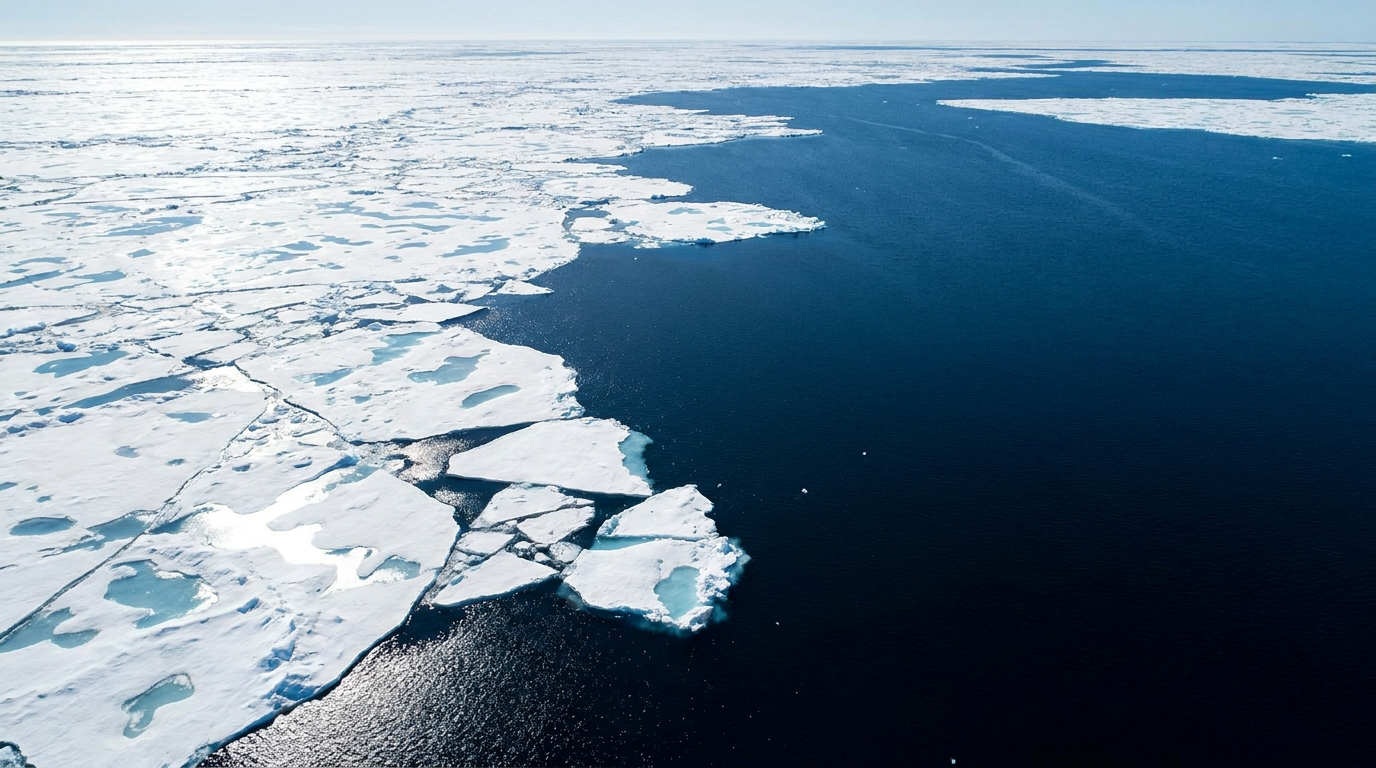
While the accumulation of greenhouse gases remains the root cause of the crisis, the rapid spike in the energy imbalance since the early 2000s is primarily driven by a different factor. According to an analysis by Spark Climate Solutions, a science-based nonprofit focused on unsolved climate challenges, the leading driver of the recent imbalance growth is Earth's declining reflectivity. As global temperatures rise, the highly reflective surfaces that traditionally cool the planet—such as sea ice, glaciers, and snow cover—are contracting. Consequently, the darker ocean and land surfaces exposed beneath them absorb significantly more incoming solar radiation.[3]
This loss of albedo creates a vicious cycle, or a positive feedback loop. Phil Duffy, Chief Scientist at Spark Climate Solutions and a former White House climate science advisor, notes that the warming influence from Earth's declining reflectivity is massive. In fact, the data suggests that the warming effect of this lost reflectivity is roughly equal to the greenhouse gas effect of all human carbon dioxide emissions generated since 1750. Furthermore, warmer land and ocean temperatures appear to be altering cloud formations, reducing the low-lying cloud cover that typically blocks sunlight from reaching the surface, while increasing the high-altitude clouds that trap heat.[3][4]
Complicating the energy imbalance is a paradoxical consequence of environmental progress: the reduction of particulate air pollution. For decades, human activities such as burning coal and biomass emitted massive quantities of sulfur dioxide and other aerosols into the atmosphere. These small particles acted as a reflective shield, bouncing incoming sunlight back into space and altering the reflective properties of clouds. Researchers estimate that this particulate pollution historically masked almost 0.5 degrees Celsius of greenhouse warming. As nations have successfully implemented clean air regulations to protect public health, the concentration of these cooling aerosols has declined, unmasking the true extent of the underlying warming.[2][4]
The convergence of shrinking ice, shifting clouds, and cleaner air has resulted in a planetary energy budget that is increasingly tilted toward heat absorption. Satellite observations confirm that Earth's albedo has fallen steadily and substantially since 2000, with the decline accelerating in recent years. Along the best-fit trend line, the energy imbalance rose from about 0.34 watts per square meter around the turn of the millennium to roughly 1.43 watts per square meter by early 2026. Because this imbalance is the fundamental engine of global warming, a rising figure means the planet is gaining heat at an accelerating pace every single year.[3]

The convergence of shrinking ice, shifting clouds, and cleaner air has resulted in a planetary energy budget that is increasingly tilted toward heat absorption.
Perhaps the most concerning aspect of this trend is that it is not fully captured by the tools scientists use to forecast the future. Current state-of-the-art climate models systematically underpredict the observed increase in Earth's Energy Imbalance, typically missing the mark by 10 to 40 percent. Because these models are the foundation for international climate policy and emissions targets, their failure to fully account for the rapid loss of reflectivity suggests that they may also be underestimating the severity and speed of future warming. This modeling gap has prompted calls for targeted research to better understand the mechanisms driving the albedo decline.[3][8]
The modeling blind spots extend beyond reflectivity to include warming-induced emissions from natural ecosystems. As reported by Yale Environment 360, many of the Earth system models used in recent IPCC assessments do not fully integrate emissions triggered by the warming planet itself, such as carbon released by unprecedented wildfires, methane bubbling up from expanding wetlands, and greenhouse gases escaping from thawing permafrost. Researchers warn that by 2100, the annual contribution of these warming-induced emissions could rival the current output of the global power and building sectors combined, significantly complicating efforts to stabilize the climate.[5]
The combination of an accelerating energy imbalance and uncounted natural emissions places immense pressure on the remaining global carbon budget. The "Indicators of Global Climate Change 2026" report calculates that to maintain a 50 percent chance of holding global warming below the critical 1.5-degree Celsius threshold, the world can only emit an additional 130 gigatonnes of carbon dioxide. At the current global emission rate of approximately 42 gigatonnes per year, this budget will be entirely exhausted in just over three years. On the current trajectory, human-induced warming is projected to permanently breach the 1.5-degree mark around 2030.[1][2]
This rapidly shrinking window leaves policymakers with virtually no margin for error. If the Earth continues to absorb solar energy faster than models predict, the actual carbon budget may be even smaller than the official estimates suggest. This reality underscores the necessity of developing comprehensive accounting frameworks that incorporate both human emissions and the warming-induced feedback loops of the Earth system. Without these updated metrics, governments risk overestimating how much fossil fuel can still be burned before triggering irreversible tipping points in the climate system.[5][8]

Despite the stark physical data, there is a parallel narrative of rapid technological acceleration that offers a viable counterweight to the crisis. A recent policy brief from the United Nations Environment Programme (UNEP), titled "Cheaper. Cleaner. Unstoppable," highlights that several climate-friendly technologies are approaching positive tipping points. Across the energy, transport, and building sectors, clean solutions are transitioning from niche alternatives to the mainstream standard. As production costs plummet and deployment scales up, the adoption of these technologies is becoming self-reinforcing, driven by economic competitiveness rather than just environmental mandates.[6][7]
The most prominent example of this shift is the renewable energy sector. Over the past decade, the cost of installing solar and wind power has fallen so dramatically that it is now cheaper than building new coal or gas plants in most parts of the world. In 2024, renewables attracted roughly $450 billion in global investment, and since 2020, they have accounted for more than 75 percent of all new power capacity added globally. This exponential growth demonstrates that breaking the economic grip of fossil fuels is not only possible but is already actively underway in major markets.[6][7]
Similar tipping points are emerging in other critical sectors. Electric vehicles now account for a substantial and rapidly growing share of global new car sales, while heat pumps are transforming the energy efficiency of heating and cooling systems in buildings. UNEP officials emphasize that these technological transitions are essential for slashing the greenhouse gas emissions that are driving the Earth's energy imbalance. By rapidly decarbonizing the global economy, humanity can mitigate the primary forcing mechanism that initiated the loss of planetary reflectivity in the first place.[6][7]

Ultimately, the trajectory of the global climate will be determined by a race between two accelerating forces: the physical feedback loops of a warming Earth system and the exponential scaling of clean energy technologies. The data from the 2026 climate indicators report makes it clear that the physical system is reacting faster and more aggressively than anticipated. To prevent the Earth's energy imbalance from spiraling out of control, the deployment of mitigation technologies must outpace the planet's declining reflectivity, making the societal choices of the current decade the most consequential in human history.[2][6][8]
How we got here
1976–1995
The baseline period against which the modern doubling of Earth's Energy Imbalance is measured.
Early 2000s
Satellite observations begin showing a steady and substantial decline in Earth's overall reflectivity.
2020
Researchers report an alarming spike in atmospheric methane, partly attributed to expanding wetlands driven by warming.
2025
Human-induced warming reaches 1.37°C above pre-industrial levels, matching the all-time high set the previous year.
June 2026
The IGCC 2026 report confirms Earth's Energy Imbalance has surpassed +1.12 W/m², significantly higher than prior IPCC estimates.
Viewpoints in depth
The Physical Science View
Earth is absorbing heat faster than expected due to a loss of reflective surfaces.
Researchers tracking the physical Earth system emphasize that the planet's energy budget is fundamentally shifting. As ice caps melt and cloud formations change, the Earth is losing its natural ability to reflect sunlight back into space. This declining albedo creates a self-reinforcing feedback loop where warmer temperatures lead to darker surfaces, which in turn absorb more heat. For these scientists, the rapidly growing energy imbalance is the most critical metric of the climate crisis, indicating that the physical impacts of warming are accelerating independently of current human emission rates.
The Modeling View
Current climate models are missing critical feedback loops.
Earth system modelers are increasingly concerned that the sophisticated computer simulations used to guide international climate policy are underestimating the speed of planetary changes. By failing to fully account for the rapid loss of reflectivity and the surge in warming-induced emissions from natural sources like permafrost and wildfires, these models may be presenting an overly optimistic view of the remaining carbon budget. This camp argues for an urgent overhaul of climate accounting frameworks to ensure that policymakers are working with data that reflects the true, accelerating nature of the Earth's feedback loops.
The Mitigation View
Clean technology is scaling fast enough to offer a counterweight.
Policy advocates and energy economists focus on the exponential growth of clean technologies as the primary solution to the accelerating physical risks. They point to the dramatic cost reductions in solar power, wind energy, and electric vehicles, which are now outcompeting fossil fuels on pure economics in many global markets. From this perspective, the emergence of 'positive tipping points' in the energy transition provides a realistic pathway to rapidly slash the greenhouse gas emissions that initially triggered the Earth's energy imbalance, offering hope that the worst feedback loops can still be mitigated.
What we don't know
- Exactly how much of the recent decline in reflectivity is due to shifting cloud formations versus the loss of surface ice and snow.
- Whether current climate models will be able to accurately integrate warming-induced natural emissions before the 1.5°C threshold is permanently breached.
- If the rapid scaling of clean energy technologies can outpace the accelerating physical feedback loops of the Earth system.
Key terms
- Earth's Energy Imbalance (EEI)
- The fundamental metric of global warming, representing the surplus of solar energy absorbed by the Earth compared to the energy radiated back into space.
- Albedo
- A measure of how much sunlight a surface reflects; highly reflective surfaces like ice and snow have a high albedo, while dark oceans have a low albedo.
- Effective Radiative Forcing (ERF)
- A measurement of how human activities, such as greenhouse gas emissions and aerosol pollution, alter the balance of incoming and outgoing energy in the Earth system.
- Particulate Pollution
- Microscopic particles suspended in the air, often from industrial emissions, which can temporarily cool the planet by reflecting sunlight.
- Warming-Induced Emissions
- Greenhouse gases released by natural ecosystems as a direct result of rising temperatures, such as methane from thawing permafrost or carbon from increasing wildfires.
Frequently asked
What is Earth's Energy Imbalance?
It is the difference between the amount of solar energy the Earth absorbs from the sun and the amount of thermal energy it radiates back into space. A positive imbalance means the planet is accumulating heat.
Why is reducing air pollution accelerating warming?
Particulate pollution, such as sulfur dioxide from burning coal, acts as a reflective shield that bounces sunlight back into space. As air quality improves, these cooling aerosols are removed, unmasking the underlying greenhouse warming.
How much time is left in the carbon budget?
According to the 2026 climate indicators report, the world has roughly 130 gigatonnes of carbon dioxide left to emit for a 50 percent chance of staying below 1.5°C of warming, which equates to about three years at current emission rates.
Are climate models underestimating future warming?
Current state-of-the-art climate models systematically underpredict the observed increase in Earth's Energy Imbalance by 10 to 40 percent, suggesting they may not fully capture the rapid loss of planetary reflectivity.
Sources
Source coverage
8 outlets
3 viewpoints surfaced








[1]CopernicusClimate System Researchers
Indicators of Global Climate Change 2026
Read on Copernicus →[2]Earth System Science DataClimate System Researchers
Indicators of Global Climate Change 2025: annual update of key indicators of the state of the climate system and human influence
Read on Earth System Science Data →[3]Spark Climate SolutionsClimate System Researchers
Earth's Energy Imbalance and declining reflectivity
Read on Spark Climate Solutions →[4]Probable FuturesClimate System Researchers
Understanding Earth's Energy Imbalance: An Interview with Dr. Phil Duffy
Read on Probable Futures →[5]Yale Environment 360Earth System Modelers
A Missing Feedback: How Climate Models Ignore Warming-Induced Emissions
Read on Yale Environment 360 →[6]UNEPClimate Policy Advocates
Cheaper. Cleaner. Unstoppable. Clean technologies that are delivering for the Climate
Read on UNEP →[7]Gulf NewsClimate Policy Advocates
Scientists say the Earth is likely to shoot past a key global warming target within the decade
Read on Gulf News →[8]Factlen Editorial TeamEarth System Modelers
Synthesis by Factlen editorial team
Read on Factlen Editorial Team →



Every angle. Every day.
Get science stories with full source coverage and perspective breakdowns delivered to your inbox.