
Restaurants Worldwide Embrace 'Sensory-Friendly' Dining Hours as Noise Complaints Peak
From designated "quiet hours" to adjustable lighting, the hospitality industry is rapidly adopting neuro-inclusive design to accommodate diners seeking a low-stimulation environment.
By Factlen Editorial Team
- Neurodivergent Advocates
- Argues that sensory-friendly accommodations are essential for making public spaces accessible and safe for individuals with autism, ADHD, and sensory processing differences.
- Hospitality Operators
- Views quiet hours and inclusive design as a strategic way to attract an underserved demographic and boost revenue during traditionally slower service periods.
- General Diners
- Supports the reduction of restaurant noise pollution to improve basic conversation, comfort, and accessibility for those with hearing loss.
What's not represented
- · Waitstaff adapting to new service protocols
- · Architects specializing in acoustic restaurant design
Why this matters
For decades, dining out has been an overwhelming and exclusionary experience for the neurodivergent community and those with hearing loss. The rapid adoption of sensory-friendly hours not only makes public spaces more accessible, but it also signals a major shift in how the hospitality industry defines a 'good' atmosphere—proving that inclusivity is highly profitable.
Key points
- Restaurants globally are introducing 'quiet hours' to accommodate neurodivergent diners and those with sensory sensitivities.
- Adjustments include dimmed lighting, lowered music, acoustic paneling, and staff trained to minimize operational noise.
- The trend follows successful implementations of sensory-friendly shopping hours by major retailers like Walmart.
- Surveys show broad public support, with 65% of general diners complaining that modern restaurants are too loud for conversation.
- Tourism boards are now marketing entire regions based on the availability of sensory-friendly hospitality options.
The clatter of silverware, booming background music, and harsh overhead lighting have long been the hallmarks of a bustling restaurant. But in 2026, a growing number of eateries are intentionally turning down the volume. Driven by consumer demand and a push for neuro-inclusivity, "sensory-friendly" dining is transitioning from a niche accommodation to a mainstream hospitality standard.[1]
Establishments across the globe are introducing designated "quiet hours" or low-stimulation services to cater to guests who find traditional dining environments overwhelming. In Washington, D.C., the South American restaurant Ceibo recently launched "Lo-Fi Sundays," a dedicated lunch and early dinner service where staff lower their voices, avoid clanking dishes, and play relaxed music at a minimal volume. The goal is to create a serene environment focused entirely on the food and conversation, removing the chaotic energy that defines typical weekend services.[3][4]
This shift in the hospitality sector mirrors a broader retail trend that has gained massive traction in recent years. Major grocery chains, including Walmart and Canada's Sobeys, previously pioneered sensory-friendly shopping hours by dimming lights, turning off digital screens, and silencing in-store music. Having proven the model's viability and popularity in retail, the restaurant industry is now recognizing that sensory overload is a significant barrier for millions of potential patrons.[1][5]

For the estimated 19% of Americans who identify as neurodivergent—including individuals with autism, ADHD, and sensory processing differences—traditional dining rooms can trigger physical discomfort and anxiety. Advocacy groups note that a staggering 78% of families with autistic children often avoid hospitality venues entirely due to a lack of inclusive measures. By offering predictable, low-stimulation environments, restaurants are opening their doors to a heavily underserved demographic.[1][7]
Advocacy groups note that a staggering 78% of families with autistic children often avoid hospitality venues entirely due to a lack of inclusive measures.
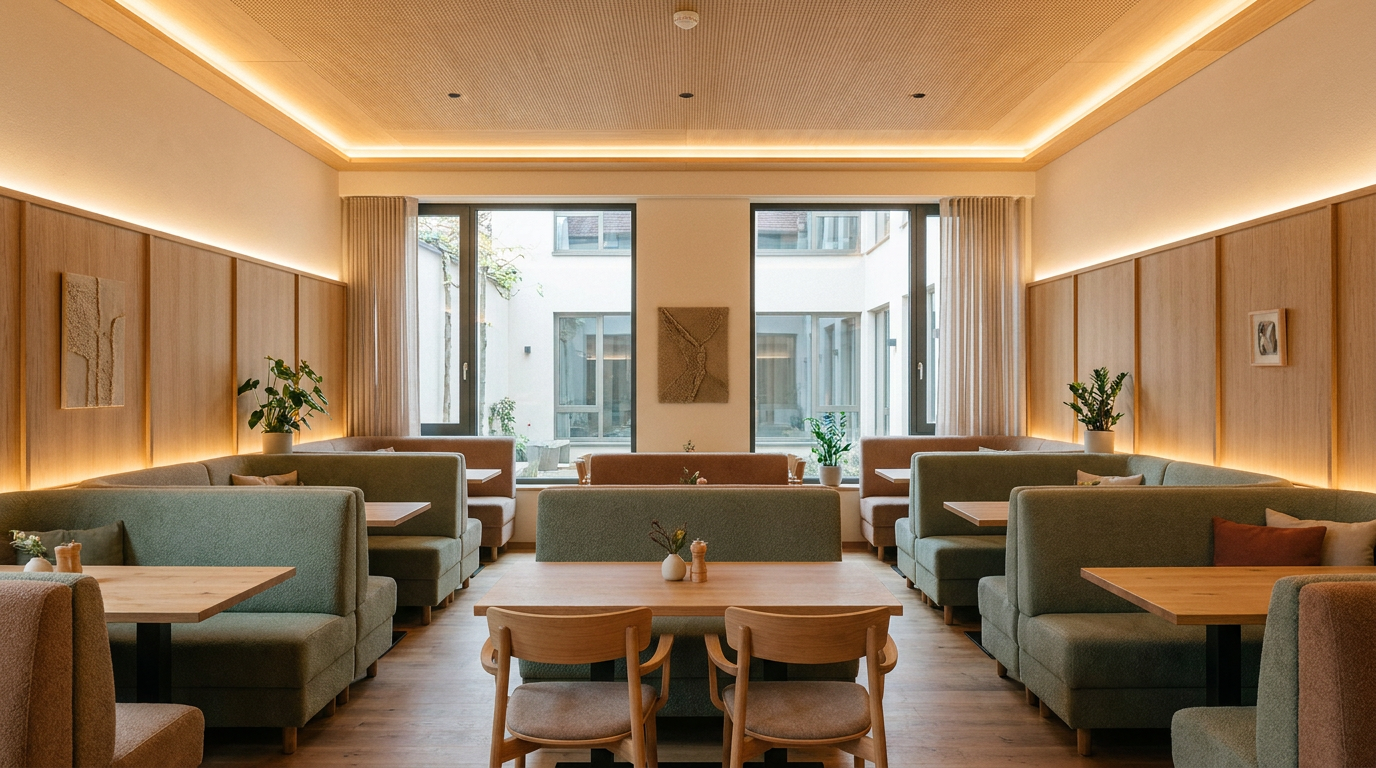
Beyond simply adjusting the volume dial, operators are fundamentally rethinking their interior design. Industry publications highlight the growing integration of acoustic panels, absorptive booths, and cove lighting that conceals harsh LED glares. Some venues are replacing rigid overhead lighting with individual table lamps that guests can dim themselves, allowing for personalized sensory control at each table.[1]
A few pioneering establishments are taking these accommodations a step further. Certified sensory-inclusive venues are training their staff to recognize sensory overload and are providing patrons with "sensory bags" equipped with noise-canceling headphones, fidget tools, and verbal cue cards. Others have built dedicated multi-sensory retreat rooms where overwhelmed guests can decompress with weighted blankets before returning to their meals.[7]

The push for quieter dining spaces is not solely driven by neuro-inclusivity; it also makes strong business sense for the general public. A national survey by Quiet Communities revealed that 65% of all respondents find it difficult to converse with friends and family in modern restaurants. Furthermore, 46% of consumers stated they would be much more likely to dine at an establishment that offered designated quiet hours, and nearly 60% would actively recommend such venues to others.[2]
The concept has even begun to reshape regional tourism marketing. Entire travel destinations, such as San Luis Obispo County in California, are now building campaigns around sensory-friendly hospitality. The region promotes wineries and restaurants that offer pre-reserved quiet spaces and tableside service away from crowded tasting bars, allowing visitors to tailor the sensory intensity of their vacations.[6]
As organizations continue to certify venues in sensory inclusivity, industry experts predict that quiet hours and acoustic design will soon become as standard as offering vegetarian menu options. For an industry that historically equated loud, bustling dining rooms with success and popularity, the sound of silence is proving to be surprisingly profitable and profoundly welcoming.[1][2][3][7]

How we got here
2019
Grocery chains in Canada begin introducing weekly sensory-friendly shopping hours.
July 2023
Walmart rolls out sensory-friendly morning hours nationwide to accommodate neurodivergent shoppers.
June 2024
Ceibo in Washington, D.C., launches 'Lo-Fi Sundays,' bringing the quiet-hour concept to the upscale dining sector.
April 2025
Tourism boards like SLO CAL begin marketing entire regions as sensory-friendly travel destinations.
Early 2026
Acoustic design and sensory inclusivity certifications become mainstream trends in global restaurant management.
Viewpoints in depth
Neurodivergent Advocates
Focuses on how dining out has historically been an exclusionary experience due to sensory overload.
For decades, the hospitality industry's standard operating procedure—loud music, bright lights, and crowded tables—has inadvertently excluded millions of people. Advocates point out that for individuals with autism or sensory processing disorders, these environments aren't just annoying; they can cause genuine distress and physical pain. By formalizing quiet hours and offering sensory kits, restaurants are finally providing the safety and autonomy that neurodivergent families need to participate in public dining.
Hospitality Operators
Focuses on the operational shift and the business case for inclusivity.
While retrofitting dining rooms with acoustic paneling and training staff requires an upfront investment, operators view it as a highly lucrative strategy. By scheduling quiet hours during traditionally slow periods—such as early Sunday dinners or mid-afternoon lunches—restaurants can fill tables that would otherwise sit empty. Furthermore, operators note that the neurodivergent community is incredibly loyal to brands that accommodate them, leading to high customer retention and positive word-of-mouth marketing.
General Diners
Focuses on the universal benefit of reduced noise pollution in public spaces.
The appeal of sensory-friendly dining extends far beyond the neurodivergent community. Audiologists and consumer advocates highlight that an aging population and rising rates of hearing loss make quiet dining a broad public health and comfort issue. Many general diners express frustration that modern restaurant design—which often favors hard, sound-reflecting surfaces like concrete and exposed metal—makes basic conversation impossible. For these patrons, quiet hours represent a return to an era where dining out was a relaxing, conversational experience.
What we don't know
- Whether sensory-friendly hours will eventually expand into peak Friday and Saturday night dinner services.
- How the rise of quiet dining will impact the architectural trends of new restaurant builds over the next decade.
Key terms
- Neurodivergent
- Having a brain that functions, learns, and processes information differently than what is considered typical, encompassing conditions like autism, ADHD, and dyslexia.
- Sensory Overload
- A condition where one or more of the body's senses experiences over-stimulation from the environment, such as loud noises or bright lights, leading to physical discomfort or anxiety.
- Cove Lighting
- A form of indirect lighting built into ledges or recesses that directs light up towards the ceiling or down adjacent walls, reducing harsh glare.
- Acoustic Paneling
- Sound-absorbing materials installed on walls or ceilings designed to reduce noise reverberation and echo in open spaces.
Frequently asked
What are restaurant quiet hours?
Designated times when a restaurant intentionally lowers its sensory output by dimming lights, turning down music, and instructing staff to minimize operational noise.
Who benefits from sensory-friendly dining?
While designed primarily for neurodivergent individuals and those with sensory processing differences, quiet hours also benefit people with hearing loss and anyone seeking a calmer environment.
Do sensory-friendly hours cost more for the consumer?
No. Restaurants implement these hours as a standard service adjustment, usually during off-peak times, without passing additional fees to the diner.
Sources
Source coverage
7 outlets
3 viewpoints surfaced







[1]Modern Restaurant ManagementHospitality Operators
The Importance of Neurodiversity-Friendly Design
Read on Modern Restaurant Management →[2]Quiet CommunitiesGeneral Diners
A desire for “quiet hours”
Read on Quiet Communities →[3]WashingtonianHospitality Operators
This DC Restaurant Now Has Quiet Hours
Read on Washingtonian →[4]FOX 5 DCHospitality Operators
DC restaurant offering quiet hours
Read on FOX 5 DC →[5]Supermarket NewsHospitality Operators
Walmart is rolling out sensory-friendly in-store hours
Read on Supermarket News →[6]SLO CALHospitality Operators
Sensory-Friendly Adventures for Neurodivergent Travelers
Read on SLO CAL →[7]Action Behavior CentersNeurodivergent Advocates
Autism-friendly restaurants & dining experiences
Read on Action Behavior Centers →
Every angle. Every day.
Get food drink stories with full source coverage and perspective breakdowns delivered to your inbox.