
Red Bull Halts Aggressive 2026 Car Development to Focus on 2027 Season
Facing a 110-point deficit in the championship, Red Bull Racing is using the Formula 1 summer break to pivot its engineering resources toward next year's car. The strategic shift aims to avoid repeating the late-season development push that compromised their current campaign.
By Omar Haddad

- Red Bull Leadership
- Focuses on long-term resource management and avoiding consecutive compromised seasons.
- Technical Analysts
- Examines the aerodynamic testing limits and the mathematical impossibility of catching up.
- Trackside Competitors
- Focuses on the immediate racing impact and the drivers' acceptance of the performance gap.
Perspectives this story doesn't cover
- Mercedes and Ferrari engineering teams
- Red Bull Powertrains technical staff
The short answer
- Red Bull Racing is halting major development on its 2026 car to focus on the 2027 season.
- The decision aims to avoid repeating the late-season development push that compromised their current car.
- Max Verstappen currently sits 110 points behind championship leader Kimi Antonelli.
- The shift coincides with the FIA's mandatory 14-day summer factory shutdown.
- Red Bull will still introduce minor circuit-specific tweaks, but major aerodynamic overhauls are finished.
Red Bull Racing is officially pulling the plug on its aggressive mid-season development war. As the Formula 1 paddock powers down for the mandatory August summer break, the Milton Keynes-based squad has confirmed a strategic pivot: the bulk of their engineering resources will now shift away from the current RB22 car and toward their 2027 challenger.[1][6]
The decision, confirmed by Team Principal Laurent Mekies, marks a stark departure from the team's approach just twelve months ago. It is a calculated admission that the 2026 Drivers' and Constructors' Championships are likely out of reach, and a necessary sacrifice to ensure the team does not start next season on the back foot.[1][7]
"We are in a very different situation from last year, when we were in full fightback mode and competing for the title until the very end," Mekies explained to the media following the Hungarian Grand Prix. "After the summer break, most of our attention will shift to the 2027 car, which I consider completely normal."[1]
To understand Red Bull's current predicament, one has to look at the hangover from the 2025 season. Last year, Max Verstappen was locked in a bitter, season-long title fight with McLaren's Lando Norris. To support Verstappen's campaign, Red Bull pushed development of their 2025 car deep into the autumn, introducing upgrade packages long after their rivals had shifted focus to the future.[1][4]
That late-stage push nearly worked—Norris ultimately claimed the crown by a mere two points at the Abu Dhabi finale—but it came at a severe cost. Every hour of wind tunnel time and computational fluid dynamics (CFD) allocation spent on the 2025 car was an hour stolen from the 2026 project.[4]
As a result, the RB22 arrived at the 2026 season opener in Melbourne noticeably undercooked. Red Bull technical director Pierre Waché conceded that the car was initially a full second off the pace of the front-running Mercedes and Ferrari machines, forcing the team into a frantic game of catch-up.[4]
As a result, the RB22 arrived at the 2026 season opener in Melbourne noticeably undercooked.
Between the season opener and the Hungarian Grand Prix, Red Bull brought a massive volume of upgrades to the track. The aggressive development sprint successfully closed the performance gap, allowing Verstappen to secure three podiums in the last four races before the break.[2][6]
However, continuing that relentless pace is mathematically and strategically impossible under Formula 1's strict cost cap and Aerodynamic Testing Restrictions (ATR). The ATR rules operate on a sliding scale, limiting the amount of wind tunnel runs a team can perform based on their championship position.[2][5]
With Verstappen currently sitting sixth in the standings—110 points behind 19-year-old Mercedes phenom and championship leader Kimi Antonelli—the math simply does not justify further heavy investment in the RB22.[3][6]
The pivot perfectly coincides with the FIA's mandatory 14-day summer shutdown. During this two-week window in August, teams are strictly prohibited from operating wind tunnels, running CFD simulations, or manufacturing parts. The shutdown forces a natural reset, giving teams a clean break to reallocate their engineering departments upon reopening.[5]
When the Red Bull factory reopens, the focus will not just be on aerodynamic surfaces for 2027, but on the monumental task of integrating their in-house power unit. Red Bull Powertrains is taking full control of the engine supply, adding a layer of complexity that demands maximum lead time and resources.[1]
For his part, Verstappen appears to have accepted the reality of the 2026 season. The four-time World Champion has praised Antonelli's dominant run, calling the teenager's performance "rock solid" and "really impressive," while acknowledging that his own season has felt like "a bit of a jungle."[3]
While the RB22 will still receive minor, circuit-specific tweaks—such as low-drag wings for the upcoming Italian Grand Prix at Monza—the era of sweeping floor and sidepod overhauls for this chassis is effectively over. The team will only introduce parts that are already in the manufacturing pipeline.[1][7]
Ironically, Red Bull's early exit from the 2026 development race could give them a distinct advantage next year. As Mercedes, Ferrari, and McLaren continue to pour resources into their current cars to fight for the 2026 crown, they risk falling into the exact same trap that ensnared Red Bull last winter.[2][4]
- 110 pts
- Verstappen's championship deficit
- 14 days
- Mandatory FIA summer shutdown
- 2 pts
- Margin of 2025 title loss
The sequence
Late 2025
Red Bull pushes development of the RB21 to the final race to support Verstappen's title fight against Lando Norris.
March 2026
The new RB22 car arrives at the season opener noticeably off the pace of Mercedes and Ferrari.
April - July 2026
Red Bull introduces a massive volume of upgrades, securing three podiums for Verstappen but failing to win a race.
August 2026
Team Principal Laurent Mekies confirms the team will use the summer break to shift primary focus to the 2027 car.
Sources
Source coverage
7 outlets
3 viewpoints surfaced







- [1]Grande PrêmioRed Bull Leadership
Red Bull admits shifting focus to 2027 after summer break: 'Different situation from last year'
Read on Grande Prêmio → - [2]Crash.netTechnical Analysts
Red Bull set to 'make an early call' on 2026 F1 development push
Read on Crash.net → - [3]Formula 1 OfficialTrackside Competitors
'He's been rock solid' – Verstappen praises Antonelli for 'really impressive' first half of 2026
Read on Formula 1 Official → - [4]RacingNews365Technical Analysts
Pierre Waché identifies twofold explanation for Red Bull's difficult start to F1 season
Read on RacingNews365 → - [5]News.gpTechnical Analysts
F1 Explained: How does the mandatory summer shutdown work?
Read on News.gp → - [6]GPFansRed Bull Leadership
Red Bull F1 boss Laurent Mekies confirms switch to focus more on 2027
Read on GPFans → - [7]GPTodayRed Bull Leadership
Red Bull team principal Laurent Mekies confirms earlier call on switching development
Read on GPToday →
Comments

More in Sports
See all →Standings
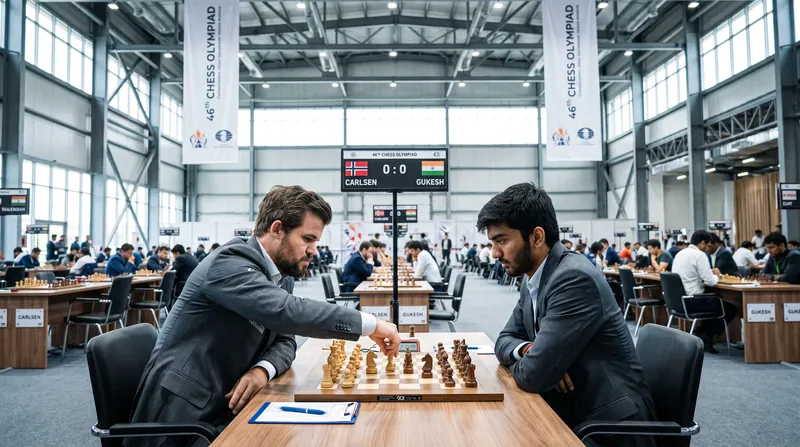
Race to Gold Narrows at 46th Chess Olympiad as US, India, and Uzbekistan Remain Perfect
7 sources
Recap
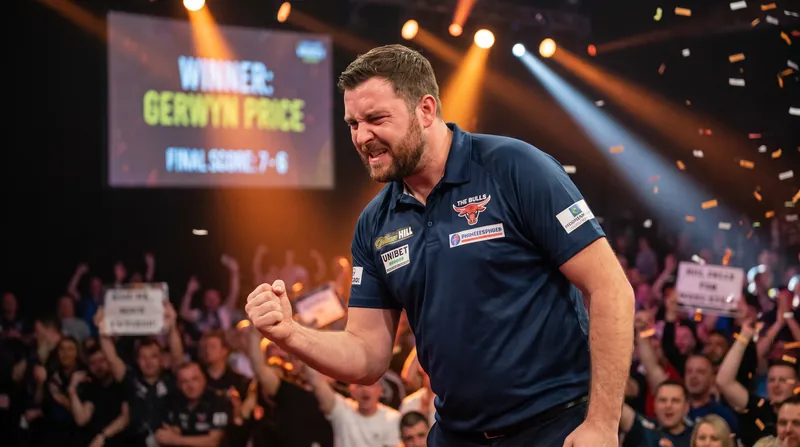
Gerwyn Price Survives Brody Klinge's Stunning Fightback at World Series of Darts Finals
4 sources
Storyline
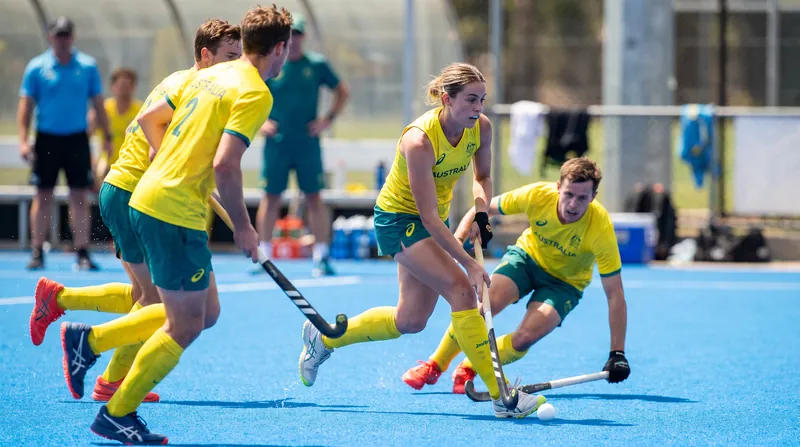
Hockey Australia Launches 'Talent Accelerator 2032' to Fast-Track Next Generation
4 sources
Storyline
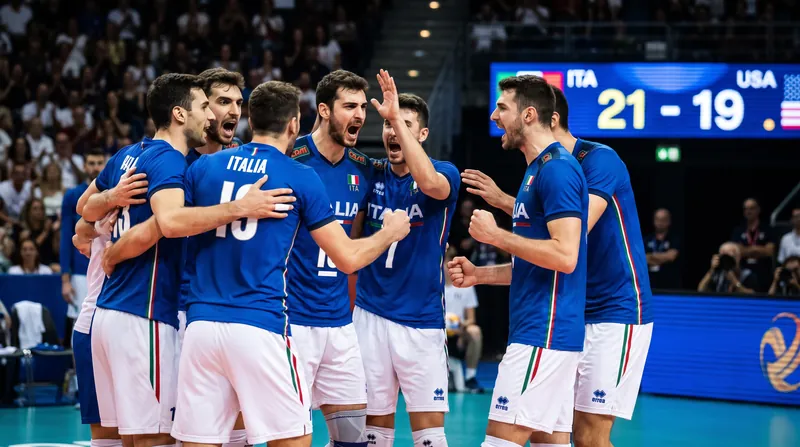
Italy Completes Flawless EuroVolley Group Stage as Knockout Phase Arrives in Turin and Sofia
6 sources
Every angle. Every day.
Get Sports stories with full source coverage and perspective breakdowns delivered to your inbox.