
OPEC+ Agrees to Boost Production Further, Sending Global Oil Prices to Five-Month Lows
OPEC+ will increase its collective oil production by 188,000 barrels per day in August, unwinding previous cuts as the reopening of the Strait of Hormuz erases the market's geopolitical risk premium.
By Layla Zaher

- Market Bears
- Traders and analysts who argue that the unwinding of cuts and the end of the war premium will lead to a massive supply glut and lower prices in 2026 and 2027.
- OPEC+ Leadership
- Alliance officials emphasizing a cautious, data-driven approach to unwinding cuts to maintain market stability without crashing prices.
- Consumer Advocates
- Economists focusing on the macroeconomic relief, noting that lower crude prices will ease global inflation and lower costs at the pump.
- Geopolitical Analysts
- Observers highlighting the fragility of the Strait of Hormuz and viewing the production increases as contingent on the US-Iran peace pact holding.
Perspectives this story doesn't cover
- Alternative Energy Advocates
- Asian Industrial Importers
The global energy market is undergoing a massive recalibration this week, shifting rapidly from a narrative of geopolitical scarcity to one of impending surplus. On Sunday, the Organization of the Petroleum Exporting Countries and its allies, known collectively as OPEC+, announced a decision to increase crude oil production quotas by 188,000 barrels per day starting in August. The immediate reaction across global commodities exchanges was a sharp downward adjustment, signaling that traders are no longer pricing in the catastrophic supply disruptions that defined the first half of the year.[1]
Following the announcement, Brent crude, the international benchmark, slid below $72 per barrel on Monday morning, touching its lowest levels since late February. West Texas Intermediate (WTI) followed suit, hovering near $68. This decisive price action effectively erases the massive "war premium" that had gripped the market throughout the spring. Just two months ago, Brent crude was trading near $115 per barrel as a severe conflict between the US, Israel, and Iran threatened to permanently sever the world's most critical energy arteries.
To understand the mechanics of Sunday's decision, it is necessary to look at the internal levers of OPEC+. The alliance does not operate as a single monolith; rather, production targets are negotiated among member states to stabilize prices and manage global supply. The August increase is being driven by seven core members: Saudi Arabia, Russia, Iraq, Kuwait, Kazakhstan, Algeria, and Oman. Officials from these nations met virtually over the weekend to assess the rapidly changing landscape and coordinate their extraction targets for the late summer.[1][2]
This move marks the fifth consecutive month that these core nations have agreed to raise their output. It is part of a broader, carefully choreographed strategy to unwind the deep voluntary production cuts that the group first implemented in 2023. At that time, the cuts were designed to prop up sagging prices during a period of macroeconomic uncertainty. Cumulatively, the alliance has now authorized nearly 800,000 barrels per day in quota increases since April, signaling a clear pivot from restricting supply to reclaiming market share.[1]
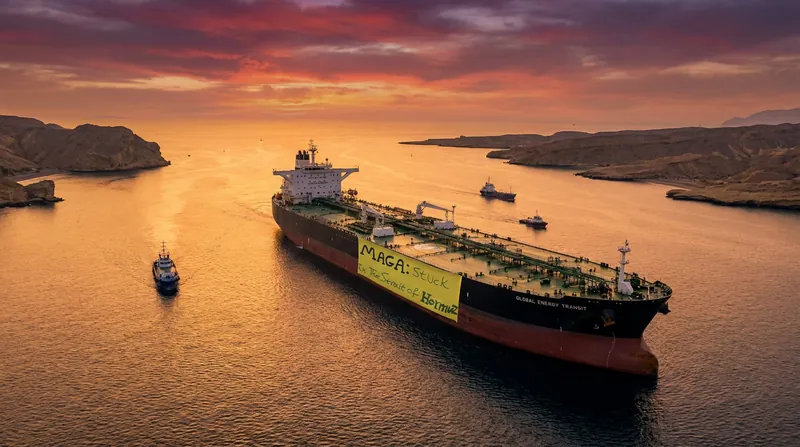
However, authorizing an increase on paper and physically delivering those barrels to the global market are two entirely different logistical challenges, especially in the wake of a major regional war. The spring conflict fundamentally broke the physical supply chain of Middle Eastern crude. Iran's effective closure of the Strait of Hormuz—a narrow maritime chokepoint that historically handles roughly 20 percent of the world's oil and liquefied natural gas—forced Gulf producers to drastically curtail their physical extraction.[1][2]
Because massive commercial tankers could not safely transit the strait, millions of barrels had nowhere to go. Regional storage facilities quickly reached maximum capacity, forcing nations like Saudi Arabia, Iraq, and Kuwait to shut in their wells. According to OPEC's own data, the group's total production plummeted from 42.77 million barrels per day in February to just 33.13 million by May. This massive drop in physical output created an artificial scarcity that panicked global markets and drove prices to multi-year highs.[1]
Because massive commercial tankers could not safely transit the strait, millions of barrels had nowhere to go.
The turning point arrived on June 17, when the United States and Iran signed a landmark memorandum of understanding. This diplomatic agreement established a ceasefire and guaranteed the unimpeded passage of commercial shipping through the Strait of Hormuz. Since that breakthrough, maritime traffic has steadily accelerated. Tankers that had been anchored off the coast of Oman for weeks are finally docking and loading cargo, clearing the massive logistical backlog that had paralyzed the region for months.[2]
The safe passage of these vessels has provided the physical mechanism necessary for OPEC+ to begin ramping its extraction back up to normal levels without overwhelming local storage tanks. With the shipping lanes open, member nations are now racing to restore their physical output. Kuwait, for example, recorded the largest monthly recovery in June, lifting its output by 870,000 barrels per day after its production had been slashed by nearly 80 percent during the height of the blockade.[2]
Yet, energy analysts caution that restarting dormant oil fields is a complex engineering process that cannot be achieved overnight. While the August quota increase signals the alliance's confidence in the recovery, physical production is expected to lag behind the paper targets for several more weeks. Pipelines must be repressurized, wells must be carefully unsealed, and export terminals must be brought fully back online before the physical flow of oil matches the newly authorized quotas.[2]
For the global economy, the normalization of the Strait of Hormuz and the subsequent drop in crude prices is a profoundly positive development. The spring energy crisis had triggered a cascading inflationary shock, driving up the cost of consumer gasoline, agricultural fertilizer, and global maritime shipping. In North America and Europe, consumer gas prices had surged to near-record levels, threatening to derail central bank efforts to tame inflation and forcing everyday citizens to absorb massive cost-of-living increases.
The current retreat in crude prices is expected to translate directly into relief at the pump, providing a vital economic tailwind for consumers heading into the late summer. Looking ahead, the market's focus is rapidly shifting from the immediate recovery to the structural balance of 2026 and 2027. With the geopolitical risk premium evaporating, traders are increasingly pricing in the likelihood of a significant supply glut, completely inverting the scarcity mindset that dominated the spring.
If OPEC+ continues to unwind its 2023 cuts while non-OPEC producers in the Americas maintain their record output levels, the world could soon be awash in crude. This bearish outlook is compounded by lingering questions about the strength of industrial demand in Asia, which has historically been the primary engine of global oil consumption. Within the OPEC+ alliance, internal debates over future capacity are already brewing as nations seek to maximize their revenue in a falling-price environment.[2]
Nations like Iraq, which suffered severe financial losses during the spring blockade, are actively lobbying for higher baseline quotas to recoup their lost revenue. These internal negotiations will culminate in a highly anticipated capacity review later this year. For now, however, the global energy system has stepped back from the brink. The successful reopening of the Strait of Hormuz and the orderly resumption of OPEC+ production have averted a worst-case economic scenario, replacing the panic of the spring with a cautious, well-supplied optimism.[2]
Key points
- OPEC+ will increase its collective oil production by 188,000 barrels per day starting in August.
- The announcement pushed international crude benchmarks to five-month lows, with Brent crude falling below $72 per barrel.
- The price drop reflects the erasure of a massive 'war premium' following the reopening of the Strait of Hormuz.
- The alliance has authorized nearly 800,000 barrels per day in cumulative quota increases since April.
- Lower crude prices are expected to provide significant macroeconomic relief and lower consumer inflation globally.
Why this matters
The sharp drop in global crude oil prices directly translates to lower gasoline costs for consumers and reduced shipping expenses for businesses. This provides a massive macroeconomic tailwind, helping central banks tame inflation and easing the cost-of-living burden on everyday households.
Sources
Source coverage
2 outlets
4 viewpoints surfaced


- [1]Al JazeeraGeopolitical Analysts
Saudi Arabia’s early FIFA World Cup exit prompts federation chief to resign
Read on Al Jazeera → - [2]AfricanewsMarket Bears
OPEC+ agrees August oil output hike as Gulf shipping recovers
Read on Africanews →
Comments
More in Energy
See all →Reactor Physics
How the Negative Temperature Coefficient of Reactivity Physically Prevents Light-Water Reactor Meltdowns
8 sources
Reservoir Engineering
How Arps' Decline Curve Equations Forecast Oil Production and Where They Fail in Shale Reservoirs
3 sources

Battery Physics
The Fundamental Trade-Off Between Energy Density and Power Density That Dictates Battery Application
5 sources

OPEC+ Quotas
OPEC+ Pauses October Oil Production Increase Amid Strait of Hormuz Disruptions
4 sources
Every angle. Every day.
Get Energy stories with full source coverage and perspective breakdowns delivered to your inbox.