
OLED vs. Mini-LED TVs in 2026: Which Premium Display Tech is Right for You?
The premium television market is now a strict two-way race between OLED's perfect contrast and Mini-LED's blinding brightness. Choosing the right technology depends entirely on your room's lighting and your viewing habits.
By Factlen Editorial Team
- Pragmatic Buyers
- Consumers focused on the best price-to-performance ratio, especially at massive screen sizes.
- OLED Purists
- Cinephiles and dark-room viewers who prioritize perfect contrast and pixel-level precision.
- Mini-LED Advocates
- Bright-room viewers and sports fans who value sustained brightness and burn-in immunity.
What's not represented
- · Budget-constrained buyers who cannot afford either premium technology
- · Projector enthusiasts who prefer massive screens over absolute contrast
Why this matters
Choosing the wrong premium TV technology for your specific living room can result in thousands of dollars spent on a display that either suffers from severe glare during the day or displays distracting light-bleed during movie nights. Understanding these trade-offs ensures your investment actually matches your viewing habits.
Key points
- OLED TVs offer perfect black levels and infinite contrast by turning off individual pixels.
- Mini-LED TVs provide significantly higher peak brightness, making them ideal for sunlit rooms.
- OLED technology carries a slight risk of permanent burn-in from static images over time.
- Mini-LED is immune to burn-in and offers much better value at screen sizes above 77 inches.
- New 2026 RGB Mini-LED models have closed the color accuracy gap with OLED.
- OLED remains the superior choice for fast-paced console gaming due to near-zero motion blur.
The television market in 2026 has firmly left standard LED displays behind, transforming the premium segment into a two-horse race between Organic Light Emitting Diode (OLED) and Mini-LED technologies. For consumers looking to upgrade, the choice is no longer about simply buying the most expensive model on the shelf; it requires a calculated trade-off analysis based on viewing habits and room environments. Both technologies have reached unprecedented levels of refinement, with OLED pushing the boundaries of color volume through Quantum Dot integration, and Mini-LED introducing RGB backlighting to challenge OLED's color supremacy. Understanding the fundamental differences between these two approaches is essential for making an informed investment.[1][2]
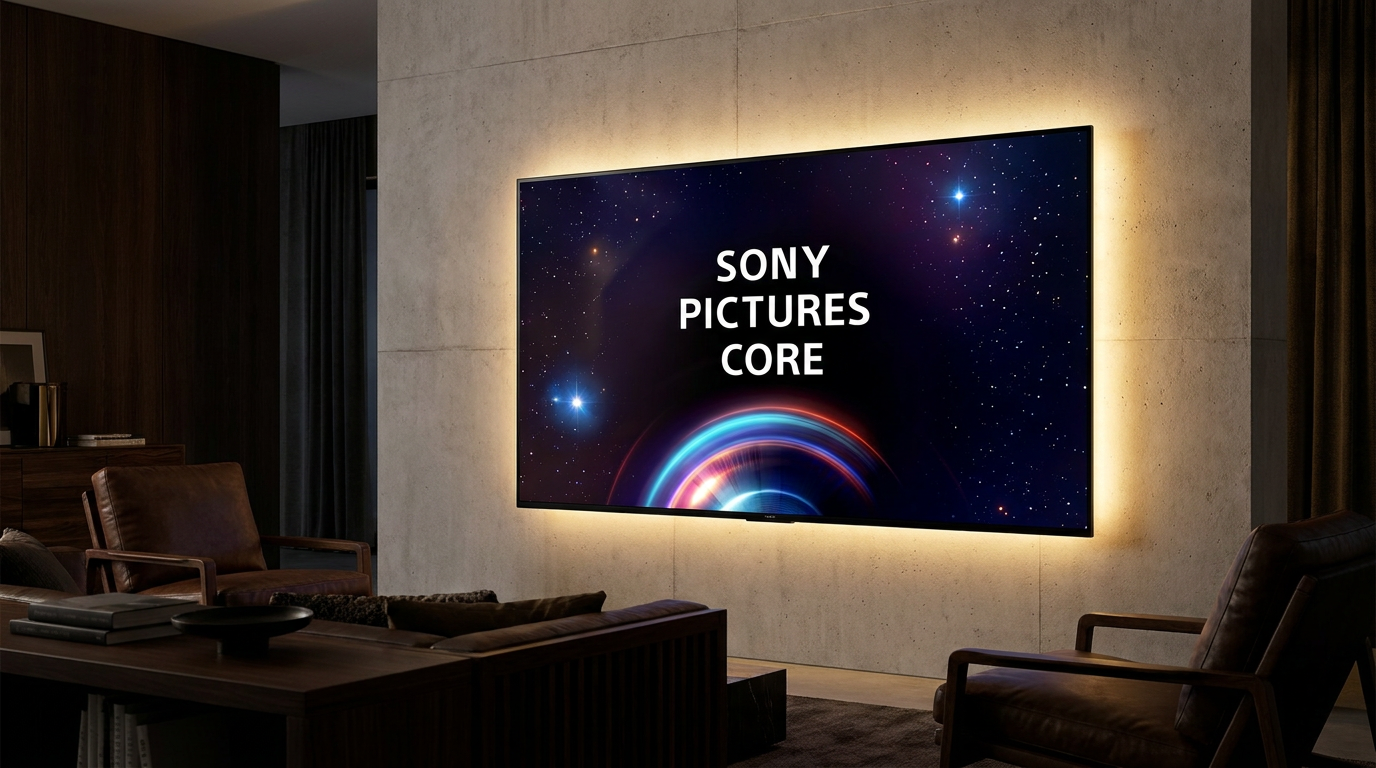
The primary argument for OLED centers on its absolute mastery of contrast. Because OLED panels lack a traditional backlight, each individual pixel generates its own light and can turn off completely independently. The evidence for this superiority is stark in dark-room testing, where OLEDs achieve a mathematically infinite contrast ratio. When displaying a bright starfield against a black sky, an OLED screen shows zero light bleed or "haloing" around the stars. However, the case against OLED emerges when ambient light increases. While 2026 models have improved their peak brightness to around 2,000 nits in small highlights, they still aggressively dim the full screen during bright scenes to prevent overheating and protect the organic compounds.[1][3]
Conversely, the argument for Mini-LED is built on sheer, unadulterated luminance. Mini-LED TVs utilize thousands of microscopic light-emitting diodes grouped into local dimming zones behind an LCD panel. The evidence supporting Mini-LED's dominance in bright environments is overwhelming; flagship 2026 models routinely sustain full-screen brightness levels that force OLEDs to dim, with peak highlights pushing well past 2,500 nits. The case against Mini-LED, however, lies in its reliance on zones rather than individual pixels. Even with advanced algorithms and upwards of 20,000 dimming zones on ultra-premium models, Mini-LEDs still struggle with blooming—a visible glow around bright objects on dark backgrounds, particularly noticeable in subtitles or letterbox bars.[4][5]

When evaluating color performance, the trade-offs become highly nuanced. The case for OLED's color accuracy is rooted in its pixel-level precision, which ensures that colors remain perfectly saturated even in the darkest shadows. The evidence from colorimetry research shows OLEDs maintaining near-perfect fidelity across wide viewing angles, making them ideal for wide seating arrangements. The argument against Mini-LED in this category used to be color washout at off-angles, but the 2026 introduction of RGB Mini-LED technology—which uses pure red, green, and blue diodes instead of white—has dramatically narrowed the gap. While Mini-LEDs can now push more vibrant colors at maximum brightness, OLED still retains the edge in subtle, low-light color gradation.[2][5]
For gamers, the trade-off analysis heavily favors OLED, though Mini-LED presents a compelling counter-argument for specific use cases. The case for OLED in gaming is anchored by its near-instantaneous pixel response time, typically measured at 0.1 milliseconds. The evidence is visible in fast-paced action, where OLEDs produce zero motion blur or ghosting behind moving objects. Furthermore, OLEDs handle Variable Refresh Rate (VRR) flawlessly without compromising local dimming. The argument against Mini-LED in gaming is that activating "Game Mode" often disables complex local dimming algorithms to reduce input lag, which inadvertently worsens blooming and contrast. However, Mini-LED remains the safer choice for PC gamers who leave static taskbars or HUDs on screen for hours.[1][6]
For gamers, the trade-off analysis heavily favors OLED, though Mini-LED presents a compelling counter-argument for specific use cases.
The specter of permanent image retention, or burn-in, remains the most significant argument against OLED technology. While manufacturers have introduced aggressive pixel-shifting, logo-dimming, and panel-refreshing algorithms, the organic materials in OLEDs inherently degrade over time. The evidence from accelerated longevity testing confirms that constant exposure to static elements—like news tickers or sports scoreboards—can still leave permanent shadows on OLED panels after several thousand hours. The case for Mini-LED in this regard is absolute: the inorganic diodes are entirely immune to burn-in. For households where the television serves as background noise on a single news channel all day, Mini-LED is the only logical recommendation.[3][6]

The final major trade-off involves screen size and budget. The argument for Mini-LED's value proposition becomes undeniable once screen sizes exceed 77 inches. The manufacturing process for massive OLED panels remains prohibitively expensive, causing prices to skyrocket exponentially for 83-inch and 97-inch models. The evidence is clear in the retail market, where a 98-inch Mini-LED can often be purchased for a fraction of the cost of a similarly sized OLED. If the goal is to replicate a true cinematic scale in a living room, Mini-LED provides the only financially viable path to the 100-inch threshold without sacrificing premium features.[3][5]
Beyond the raw panel technology, the processing algorithms driving these displays represent a critical battleground. The argument for premium processing is that raw contrast and brightness mean little without intelligent upscaling. The evidence is visible when watching lower-bitrate streaming content or older 1080p Blu-rays; top-tier OLEDs and Mini-LEDs use AI-driven cognitive processors to clean up compression artifacts and map colors accurately. The case against relying solely on panel specs is that a mid-range Mini-LED with poor local-dimming algorithms will exhibit worse blooming than its zone-count suggests. Therefore, the software controlling the hardware is just as vital as the hardware itself.[1][2]
Synthesizing these trade-offs reveals clear conditional recommendations. OLED technology fits perfectly when the primary viewing environment is a dedicated home theater or a dimly lit living room. It is the undisputed choice for cinephiles who prioritize perfect black levels, shadow detail, and cinematic accuracy. It also fits exceptionally well for console gamers who demand pristine motion clarity and play a variety of games without static HUDs. Conversely, OLED does not fit well in sun-drenched rooms with floor-to-ceiling windows, nor is it appropriate for users who watch the same cable news channel for eight hours a day.[7]

On the other hand, Mini-LED fits perfectly when the television is placed in a bright, open-concept living space where glare and ambient light are constant factors. It is the ideal choice for sports fans who need sustained full-screen brightness to make a hockey rink or football field pop during a Sunday afternoon broadcast. It also fits well for buyers seeking a massive, wall-filling display of 85 inches or larger without spending luxury-car money. Mini-LED does not fit well for viewers who are highly sensitive to blooming around subtitles, or those who primarily watch moody, dark content in pitch-black rooms.[7]
Ultimately, the 2026 television landscape proves that the concept of a single "best TV" is a myth. The decision between OLED and Mini-LED is a reflection of how and where the screen will be used. By quantifying the trade-offs—OLED's infinite contrast and perfect motion against Mini-LED's blinding brightness and burn-in immunity—consumers can match the technology to their specific lifestyle. Both panel types represent the pinnacle of current display engineering, ensuring that as long as the choice aligns with the room's lighting and the viewer's habits, the resulting experience will be spectacular.[7]
How we got here
2013
The first commercial OLED televisions hit the consumer market, establishing a new benchmark for perfect black levels.
2019
Mini-LED technology is introduced to consumer TVs, dramatically increasing the number of dimming zones compared to standard LED.
2022
Quantum Dot OLED (QD-OLED) launches, combining OLED's contrast with quantum dots for significantly brighter and more vibrant colors.
2026
RGB Mini-LED models enter the mainstream market, utilizing colored backlights to close the color-accuracy gap with OLED.
Viewpoints in depth
OLED Purists
Cinephiles and dark-room viewers who prioritize perfect contrast and pixel-level precision.
For this camp, picture quality is defined by black levels. Because OLED pixels emit their own light and can turn off completely, they provide an infinite contrast ratio that makes space scenes and moody cinema look flawless. They argue that while Mini-LEDs are brighter, the inevitable 'blooming' or light-bleed around bright objects on dark backgrounds ruins the cinematic experience. To an OLED purist, absolute precision in a dark room always trumps sheer brightness.
Mini-LED Advocates
Bright-room viewers and sports fans who value sustained brightness and burn-in immunity.
This perspective argues that televisions are mostly watched in real-world living rooms with windows and ambient light, not pitch-black home theaters. Mini-LED advocates point to the technology's ability to push past 2,500 nits of brightness, easily overpowering daytime glare. Furthermore, they emphasize the peace of mind that comes with Mini-LED; because it uses inorganic diodes, users can leave news tickers, sports scoreboards, or PC taskbars on the screen all day without any fear of permanent burn-in.
Pragmatic Buyers
Consumers focused on the best price-to-performance ratio, especially at massive screen sizes.
Pragmatists acknowledge the strengths of both technologies but base their decisions on value scaling. They note that while OLED is competitively priced at 55 and 65 inches, the cost becomes astronomical at 83 inches and above. For buyers wanting a truly massive 98-inch or 115-inch display to replicate a theater experience, this camp argues that Mini-LED is the only logical choice, offering 90% of OLED's dark-room performance at a fraction of the large-format price.
What we don't know
- Whether next-generation Micro-LED technology will become affordable enough to replace both OLED and Mini-LED before the end of the decade.
- How the long-term durability of the new 2026 RGB Mini-LED backlights will compare to traditional white Mini-LEDs over a ten-year lifespan.
Key terms
- OLED (Organic Light Emitting Diode)
- A display technology where each individual pixel generates its own light and color, allowing it to turn off completely for perfect black levels.
- Mini-LED
- An advanced LCD backlight system that uses thousands of microscopic LEDs grouped into zones to precisely control brightness and contrast.
- Local Dimming Zones
- Specific areas of a Mini-LED backlight that can dim or brighten independently to improve contrast on different parts of the screen.
- Blooming (or Haloing)
- A visual artifact on LED TVs where light from a bright object bleeds into the surrounding dark areas, creating a faint glow.
- Nits
- A standard unit of measurement for a display's brightness; a higher number means a brighter screen.
Frequently asked
Does OLED still suffer from burn-in in 2026?
While modern OLEDs use advanced pixel-shifting and panel-refreshing algorithms to mitigate the risk, permanent image retention is still possible if static elements (like news tickers) are displayed constantly over thousands of hours.
What is RGB Mini-LED?
A newer 2026 technology that replaces the standard white backlight in Mini-LED TVs with pure red, green, and blue diodes, significantly improving color accuracy and vibrancy to better compete with OLED.
Which TV is better for PlayStation 5 and Xbox Series X?
OLED is generally preferred for console gaming due to its near-instantaneous pixel response time and flawless handling of Variable Refresh Rate (VRR), though Mini-LED is safer for PC gamers who leave static HUDs on screen.
Why are large OLED TVs so expensive?
Manufacturing flawless organic panels at massive sizes (83 inches and above) yields fewer usable screens per production run, driving up costs exponentially compared to the more scalable LCD-based Mini-LED manufacturing process.
Sources
Source coverage
7 outlets
3 viewpoints surfaced







[1]RTINGS.comPragmatic Buyers
The 5 Best OLED TVs - Summer 2026
Read on RTINGS.com →[2]What Hi-Fi?OLED Purists
Best TVs 2026: Flagship OLEDs and RGB Mini LEDs tested
Read on What Hi-Fi? →[3]CNETPragmatic Buyers
OLED vs. Mini-LED: Which TV Should You Buy?
Read on CNET →[4]SamsungMini-LED Advocates
Mini LED vs OLED: Which TV should you choose?
Read on Samsung →[5]TCLMini-LED Advocates
Mini LED vs. OLED: Image Quality in the Spotlight
Read on TCL →[6]100% AppliancesPragmatic Buyers
OLED vs Mini LED TVs: 2026 Buyer's Guide
Read on 100% Appliances →[7]Factlen Editorial TeamPragmatic Buyers
Synthesis by Factlen editorial team
Read on Factlen Editorial Team →
Every angle. Every day.
Get shopping stories with full source coverage and perspective breakdowns delivered to your inbox.