
No Drafts, Record TV Deals, and Guaranteed Contracts: How 2026 Became the Year of the Women's Soccer Player
A wave of historic labor agreements and record-breaking broadcasting deals has fundamentally reshaped women's professional soccer in 2026, granting players unprecedented financial security and career autonomy.
By Ryder James

The landscape of women's professional soccer has reached a historic inflection point in 2026, driven by a pair of milestones that have fundamentally shifted power and capital toward the players. In the United States, the National Women's Soccer League (NWSL) is operating under a revolutionary collective bargaining agreement that abolished the college draft and instituted full free agency. Simultaneously, England's Barclays Women's Super League (WSL) has secured a record-breaking United States television rights deal, signaling an unprecedented level of international commercial demand.[1]
The WSL's new broadcast agreement with CBS Sports, which runs through the 2029-30 season, represents a massive financial leap for the English league. The network will stream 183 matches per season on Paramount+, making it the most comprehensive US coverage in the competition's newly expanded 14-team history. Industry insiders estimate the new contract delivers a four-fold increase in valuation compared to the league's previous short-term pacts, underscoring the skyrocketing value of premium women's sports properties.[1]
Broadcasters are eagerly capitalizing on this stabilized, highly professionalized product. By adding the WSL to a portfolio that already includes the NWSL and the UEFA Women's Champions League, networks like CBS are building year-round, multi-time-zone programming blocks dedicated entirely to women's soccer. The investment proves that robust broadcast visibility and premium scheduling are no longer seen as charitable endeavors, but as highly lucrative media assets.
While the WSL is setting commercial records abroad, the NWSL has completely rewritten the rulebook on player labor rights at home. Following intense negotiations by the NWSL Players Association, the league became the first major American professional sports organization to entirely eliminate its draft system. Young talent entering the league no longer face forced allocation to specific cities; instead, they have the autonomy to negotiate contracts and sign with the club of their choosing.
This abolition of the draft aligns the US league with standard global soccer practices and ends a uniquely American system that historically stripped young athletes of their leverage. "This next phase empowers players with freedom of choice over their career," the NWSLPA noted, highlighting that the agreement also ends trades without player consent and establishes guaranteed contracts for all rostered athletes.
The 2026 season marks the second year of full free agency, granting veterans unprecedented control over their playing destinations and market value. To accommodate this free-market approach, the NWSL has raised its net transfer fee threshold to $605,000, allowing clubs to spend aggressively on acquiring international talent without immediately triggering salary cap penalties.[2]
The financial baseline for players has risen in tandem with their autonomy. The NWSL's base salary cap has climbed to $3.5 million for the 2026 season, but a newly implemented revenue-sharing mechanism—which gives players a direct cut of the league's growing sponsorship and media rights—has pushed the effective cap to $3.7 million per team. This marks a staggering departure from the league's early years, when minimum salaries hovered near the poverty line.[2]
Beyond base compensation, the cultural and structural approach to motherhood in professional soccer has undergone a radical transformation. Historically treated as a career-ending disruption or an injury, pregnancy is now explicitly protected under comprehensive league policies. The NWSL guarantees paid parental leave, salary continuation, and roster protection for pregnant players, ensuring athletes are not forced to choose between starting a family and continuing their careers.
The real-world impact of these protections is highly visible on the pitch this season. Elite players like Mallory Swanson and Sophia Wilson have successfully returned to active rosters following maternity leave, supported by structured return-to-play protocols and guaranteed medical coverage. Rather than rushing back to avoid losing their roster spots, players are now afforded the time and medical support necessary for a high-performance transition.
This domestic progress mirrors global shifts, with FIFA recently updating its own maternity regulations to mandate a minimum of 14 weeks of paid leave across all member associations. The convergence of FIFA mandates and NWSL union victories has created a safety net that allows female athletes to experience peak earning years and family planning simultaneously.
As the sport looks ahead to the 2027 Women's World Cup, the victories of 2026 serve as a blueprint for the future. By abolishing antiquated draft systems, guaranteeing contracts, and supporting working mothers, women's soccer has not only secured the livelihoods of its athletes but has also built a more lucrative, globally competitive entertainment product.[1]
Key points
- The NWSL has become the first major American sports league to completely abolish its draft system.
- A new revenue-sharing mechanism has pushed the NWSL salary cap to $3.7 million for the 2026 season.
- England's Women's Super League secured a record US broadcast deal with CBS Sports through 2030.
- Comprehensive maternity policies now guarantee paid leave and roster protection for pregnant athletes.
- The changes align the US league with global soccer standards and grant players unprecedented career autonomy.
How we got here
Jan 2022
NWSL ratifies its first-ever CBA, establishing minimum salaries and basic protections.
Aug 2024
NWSLPA secures a groundbreaking new CBA that abolishes the draft and introduces revenue sharing.
May 2026
CBS Sports announces a record-breaking four-year broadcast deal for the English Women's Super League.
June 2026
The NWSL operates with a record $3.7M salary cap and full free agency, while elite players successfully return under new maternity protections.
- Player Advocates
- Focus on autonomy, health, and fair compensation as non-negotiable foundations for the sport.
- League Executives
- Focus on commercial viability, audience growth, and the ROI of women's sports.
- Global Analysts
- View this as a necessary alignment of US sports with global football standards.
Perspectives this story doesn't cover
- Collegiate athletes navigating the new free-agency entry system
- Smaller market clubs adapting to the lack of a draft
Sources
Source coverage
2 outlets
3 viewpoints surfaced


- [1]The GuardianGlobal Analysts
WSL lands record four-year deal with CBS Sports to broadcast games in the US
Read on The Guardian → - [2]NWSL OfficialLeague Executives
NWSL RELEASES COMPETITION RULES, UPDATES FOR 2026 SEASON
Read on NWSL Official →
More in Sports
See all →Standings
MLS Playoff Bubble Boils Over: Three-Way Tie in the East as Decision Day Looms
3 sources

UEFA Nations League
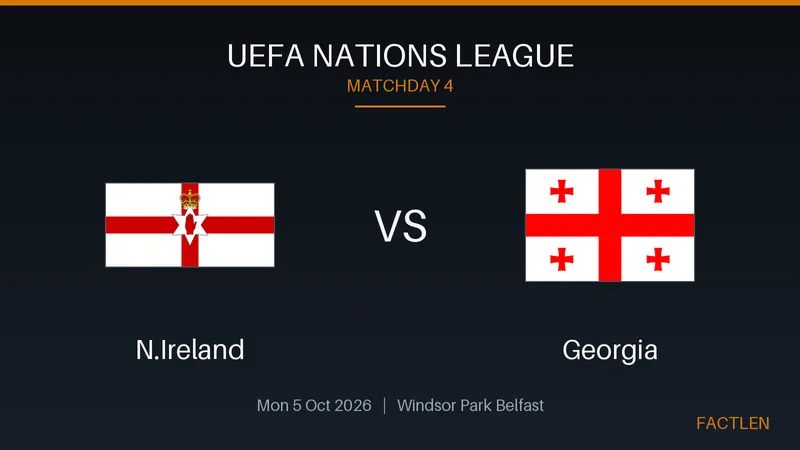
Northern Ireland Chases Nations League Promotion Against Struggling Georgia
6 sources
UEFA Nations League
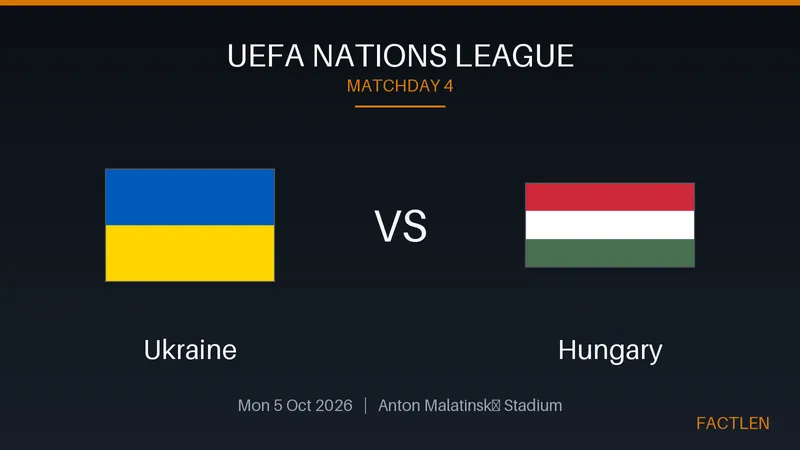
Ukraine and Hungary Face Defining Nations League Clash in Trnava
6 sources
UEFA Nations League
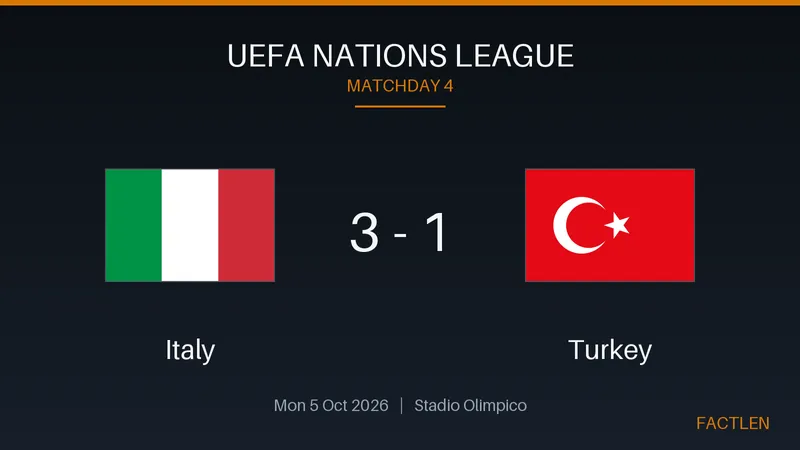
Italy Overcomes Turkey 3-1 to Secure Second Place in Nations League Group A1
4 sources
Comments
Every angle. Every day.
Get Sports stories with full source coverage and perspective breakdowns, free every day.