
Induction vs. Gas Cooktops in 2026: Which Stove Is Right for Your Kitchen?
As induction technology reaches mainstream price parity, home cooks face a complex choice between the rapid, clean efficiency of electromagnetic heating and the familiar, tactile control of traditional gas flames.
By Factlen Editorial Team
- Efficiency & Health Advocates
- Focuses on the thermodynamic superiority of induction and the urgent need to remove combustion byproducts from indoor air.
- Culinary Traditionalists
- Argues that the tactile feedback of a flame, universal cookware compatibility, and resilience during power outages make gas irreplaceable.
- Pragmatic Homeowners
- Emphasizes the hidden costs of electrical panel upgrades required for induction, weighing them against long-term utility savings.
What's not represented
- · Renters who cannot modify their kitchen infrastructure
- · Commercial restaurant operators managing high-volume kitchens
Why this matters
Choosing between induction and gas impacts your daily cooking experience, your household's long-term utility bills, and the quality of the air your family breathes indoors.
Key points
- Induction cooktops transfer heat directly to cookware via electromagnetic fields, achieving 85-90% energy efficiency.
- Gas stoves operate at 32-40% efficiency, losing the majority of their heat to the surrounding kitchen air.
- Switching to induction eliminates indoor combustion pollutants like nitrogen dioxide and benzene.
- Gas stoves remain preferred for visual flame control, wok cooking, and reliability during power outages.
- Induction often requires a costly 240-volt electrical panel upgrade, though it saves money on long-term utility bills.
The kitchen stove is undergoing a generational shift in 2026, transforming a routine appliance purchase into a complex debate over thermodynamics, health, and culinary tradition. For decades, the blue flame of a gas cooktop was the undisputed gold standard for serious home cooks. Today, electromagnetic induction technology has matured from a premium niche into a mainstream powerhouse, challenging gas on nearly every performance metric. Choosing between the two requires navigating a maze of upfront costs, long-term energy savings, and deeply ingrained cooking habits.[6]
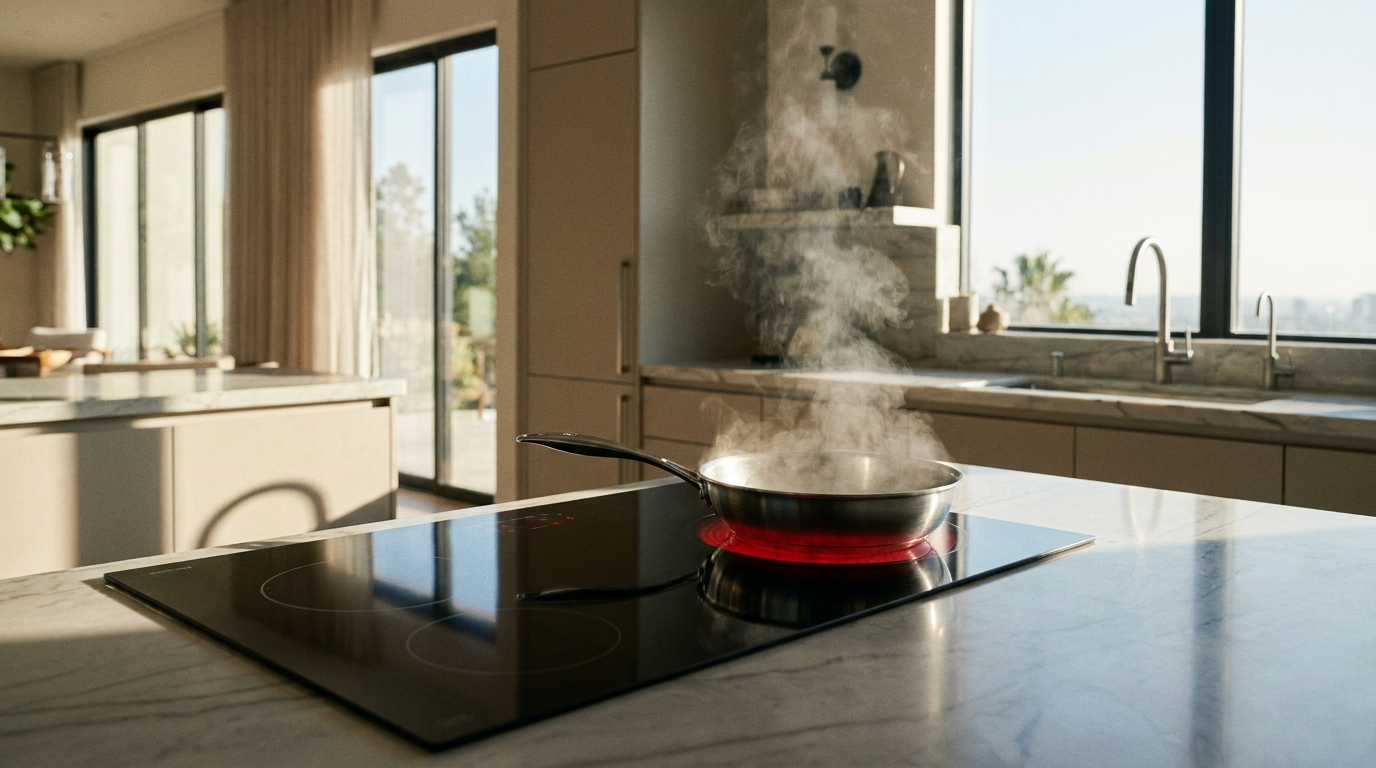
The fundamental difference between the two platforms lies in how they generate and transfer heat. Gas stoves rely on combustion, igniting natural gas or propane to create an open flame that heats the air, the grates, and eventually the cookware. Induction cooktops bypass the surface entirely, using copper coils to generate a magnetic field that induces an electrical current directly inside compatible pots and pans. The cookware itself becomes the heat source, leaving the surrounding glass surface relatively cool to the touch.[6]
The case for induction centers heavily on raw speed, precision, and safety. Because the electromagnetic field transfers energy directly to the metal, there is almost zero lag time when adjusting temperatures. A cook can drop a rolling boil to a gentle simmer instantly, without waiting for heavy cast-iron grates to cool down. Furthermore, the absence of an open flame eliminates the risk of grease fires or loose sleeves catching alight, making the kitchen inherently safer for households with young children or aging residents.[1][5]

The arguments against induction primarily involve friction during the transition period and strict hardware requirements. The technology only works with ferromagnetic materials, meaning home cooks must often replace beloved copper, aluminum, or glass cookware with magnetic stainless steel or cast iron. Additionally, the learning curve can be steep; the sheer speed of induction means traditional prep timing goes out the window, and users must adapt to new sounds, such as the subtle buzzing of magnetic fields and the whir of internal cooling fans.[5]
The evidence backing induction is anchored in stark efficiency and health metrics. According to energy analysts, induction operates at roughly 85 to 90 percent efficiency, transferring the vast majority of its energy directly into the food. In contrast, gas stoves operate at 32 to 40 percent efficiency, losing more than half their heat to the surrounding kitchen air. On the health front, a landmark Columbia University study found that switching to induction reduced indoor nitrogen dioxide concentrations by 56 percent, addressing a pollutant that peer-reviewed research has linked to a 42 percent increased risk of childhood asthma.[2][3]
The evidence backing induction is anchored in stark efficiency and health metrics.
The case for gas relies on tactile control, universal compatibility, and resilience. Many professional and home chefs prefer the visual feedback of a flame, which allows them to intuitively gauge heat levels without looking at a digital readout. Gas is also the only option for techniques that require an open flame, such as charring peppers or achieving true wok hei with a round-bottomed pan. Crucially, gas stoves remain operational during power outages, providing a reliable backup for households in areas with unstable electrical grids.[4]

The arguments against gas focus on its inherent energy waste, environmental footprint, and the physical difficulty of maintenance. The ambient heat loss not only wastes fuel but forces air conditioning systems to work harder during summer months. Cleaning a gas stove involves dismantling heavy grates and scrubbing baked-on spills around delicate burner heads, a chore that contrasts sharply with simply wiping down a flat, cool induction glass surface. Furthermore, the growing awareness of indoor combustion byproducts has led some municipalities to restrict new gas hookups entirely.[3][5]
The evidence regarding gas highlights its lower upfront accessibility but higher long-term environmental costs. While a basic gas range can often be purchased for under $700, the hidden costs emerge in utility bills and indoor air quality. Studies show that gas stoves emit benzene—a known carcinogen—at levels comparable to secondhand smoke, and they leak methane even when turned off. While proper ventilation hoods can mitigate some of these risks, data indicates that the majority of residential kitchens lack range hoods with sufficient capture efficiency to fully clear combustion gases.[2][3]
A comprehensive cost comparison reveals a tale of two timelines. Upfront, gas is generally cheaper to purchase, and if a home already has a gas line, installation is a simple hookup. Induction ranges typically start around $1,000 to $1,500, but the real hurdle is electrical; upgrading a kitchen to the required 40- or 50-amp, 240-volt circuit can add $1,000 to $3,000 to the project. However, over a ten-year lifespan, induction's 90 percent efficiency translates to significantly lower operating costs, often saving hundreds of dollars annually depending on local utility rates.[1][4][5]

Ultimately, induction fits well when a household prioritizes indoor air quality, rapid cooking speeds, and effortless cleanup. It is the ideal choice for families with young children, eco-conscious consumers looking to decarbonize their homes, and anyone undertaking a full kitchen remodel where electrical upgrades can be easily integrated. It does not fit well when a home has an outdated electrical panel that would require a massive infrastructure overhaul, or for cooks who rely heavily on non-magnetic specialty cookware.[6]
Conversely, gas fits well when a home already has dedicated gas lines but limited electrical capacity, making a panel upgrade prohibitively expensive. It remains the preferred choice for culinary traditionalists who demand visual flame control, frequent wok users, and residents in rural areas prone to frequent winter power outages. It does not fit well when a kitchen lacks high-quality exterior ventilation, or in households where residents suffer from asthma or other severe respiratory conditions.[6]
The decision between induction and gas is no longer just a matter of culinary preference; it is a calculation of infrastructure, health, and long-term economics. As induction technology continues to drop in price and government rebates incentivize electrification, the magnetic cooktop is rapidly becoming the default for modern kitchens. Yet, for those who value the reliability and tactile art of the flame, gas remains a deeply ingrained tradition that will not easily be extinguished.[6]
How we got here
Early 1900s
Gas stoves become the dominant cooking appliance in urban homes, replacing wood and coal.
1970s
The first consumer induction cooktops are introduced by Westinghouse, but high costs keep them a niche novelty.
2022–2023
Major peer-reviewed studies link indoor gas stove usage to increased rates of childhood asthma, sparking nationwide debate.
2026
Induction cooktops achieve mainstream price parity in many markets, driven by energy rebates and growing health awareness.
Viewpoints in depth
Efficiency & Health Advocates
Focuses on the thermodynamic superiority of induction and the urgent need to remove combustion byproducts from indoor air.
This perspective argues that the era of burning fossil fuels inside the home is coming to a necessary end. Advocates point to decades of peer-reviewed research demonstrating that gas stoves emit nitrogen dioxide, carbon monoxide, and benzene at levels that frequently violate outdoor air quality standards. By shifting to induction, households not only eliminate these respiratory hazards but also benefit from a cooking method that uses less than half the primary energy of gas, significantly reducing a home's overall carbon footprint.
Culinary Traditionalists
Argues that the tactile feedback of a flame, universal cookware compatibility, and resilience during power outages make gas irreplaceable.
For many chefs and home cooks, cooking is a sensory art that relies on the visual and auditory feedback of an open flame. This camp emphasizes that gas allows for intuitive temperature adjustments without relying on digital interfaces. Furthermore, they highlight the practical limitations of induction, such as its inability to properly heat round-bottomed woks or char vegetables directly on the burner. The reliance on grid electricity is also a major concern; for those in areas with frequent storms or rolling blackouts, a gas stove represents a vital piece of off-grid resilience.
Pragmatic Homeowners
Emphasizes the hidden costs of electrical panel upgrades required for induction, weighing them against long-term utility savings.
This viewpoint focuses strictly on the economics and logistics of the transition. While acknowledging the performance benefits of induction, pragmatic upgraders warn that the sticker price of the appliance is rarely the final cost. Upgrading an older home's electrical panel to support a 50-amp circuit can easily double or triple the project's budget. This camp advises homeowners to carefully calculate their local utility rates and existing infrastructure before making a switch, noting that while induction pays for itself over time through efficiency, the upfront barrier remains prohibitively high for many.
What we don't know
- How quickly aging electrical grids will be upgraded to handle the increased load of widespread residential electrification.
- Whether future iterations of induction technology will successfully bridge the gap for specialty techniques like wok cooking.
Key terms
- Electromagnetic Induction
- A process where a magnetic field generates an electrical current directly inside a ferromagnetic object, creating heat without an external flame.
- Ferromagnetic
- Materials that are strongly attracted to magnets, such as iron and certain steel alloys, which are required for induction cooking.
- Nitrogen Dioxide (NO2)
- A toxic gas produced by combustion, including gas stoves, which can irritate the respiratory system and exacerbate asthma.
- Capture Efficiency
- The percentage of cooking fumes and combustion gases that a ventilation hood successfully pulls out of the kitchen air.
Frequently asked
Do I need to buy all new pots and pans for an induction stove?
Only if your current cookware isn't magnetic. Cast iron, enameled cast iron, and most stainless steel work perfectly, but aluminum, copper, and glass will need to be replaced.
Will an induction cooktop increase my electric bill?
While it uses electricity, induction is highly efficient. It transfers 90% of its energy directly to the food, meaning it often costs less to operate than a gas stove, depending on local utility rates.
Can I use an induction stove if I have a pacemaker?
Modern induction stoves emit very low electromagnetic fields, and the FDA considers them generally safe. However, individuals with pacemakers should consult their cardiologist to be certain.
Why do gas stoves require better ventilation?
Gas combustion releases byproducts like nitrogen dioxide, carbon monoxide, and benzene into the air. A high-quality range hood that vents to the outside is necessary to maintain safe indoor air quality.
Sources
Source coverage
6 outlets
3 viewpoints surfaced






[1]CNETPragmatic Homeowners
Gas vs. Standard Electric vs. Induction Ranges Compared
Read on CNET →[2]Columbia University Mailman School of Public HealthEfficiency & Health Advocates
Switching from Gas to Induction Stoves Improves Indoor Air Quality
Read on Columbia University Mailman School of Public Health →[3]Energy SolutionsEfficiency & Health Advocates
The Case for Cooking Electrification
Read on Energy Solutions →[4]Food RepublicCulinary Traditionalists
Is A Gas Or Induction Stove Actually More Affordable In The Long Term?
Read on Food Republic →[5]The KitchnPragmatic Homeowners
What to Know Before Switching from a Gas to an Induction Stove
Read on The Kitchn →[6]Factlen Editorial TeamPragmatic Homeowners
Synthesis by Factlen editorial team
Read on Factlen Editorial Team →


Every angle. Every day.
Get shopping stories with full source coverage and perspective breakdowns delivered to your inbox.