
How AI and Biomechanics Are Revolutionizing Elite Badminton Training
As the world's fastest racket sport pushes human physical limits, players are increasingly turning to wearable sensors and machine learning to optimize swing mechanics and prevent career-ending injuries.
By Jackson Reed

Badminton holds a unique distinction in the athletic world: it is the fastest racket sport on the planet. When an elite player executes a full-power jump smash, the shuttlecock can leave the racket face at speeds exceeding 490 kilometers per hour.
Achieving this explosive velocity requires a violent, perfectly timed contraction of muscles from the calves all the way through the core, shoulder, and wrist. For decades, mastering this movement relied almost entirely on a coach's intuition, endless repetition, and a grueling "train until you break" philosophy that often left athletes with chronic joint issues by their mid-twenties.[1][4]
Today, that paradigm is undergoing a radical shift. The world's top national training centers, from Denmark to China, are replacing guesswork with granular biomechanical data. By outfitting players with micro-sensors and surrounding courts with high-speed computer vision cameras, sports scientists are decoding the exact kinetic chain required to produce maximum power with minimum physical strain. This technological revolution is fundamentally changing how the sport is taught, played, and sustained at the highest levels.[1]
The core of this transformation lies in the analysis of the jump smash, the sport's most devastating offensive weapon. Researchers have discovered that power does not originate in the arm, but rather in the rapid transfer of energy from the lower body. High-speed kinematic analysis reveals that elite players generate massive ground reaction forces, transferring that energy through a rigid core and into the shoulder.
The final, crucial element is forearm pronation—the inward twisting of the wrist just milliseconds before impact. Sensors weighing less than 20 grams, attached to the base of the racket handle, can now measure this pronation angle and racket head speed in real time.[2]
By analyzing this data, coaches can identify microscopic inefficiencies in a player's swing. If a player is relying too heavily on their shoulder joint rather than their core rotation, the sensors flag the anomaly. Correcting these mechanical flaws does more than just add speed to the shuttlecock; it drastically reduces the sheer stress placed on the rotator cuff, a common site of career-altering injuries in professional badminton.[2][3]
Beyond swing mechanics, technology is tackling the sport's most pressing physical challenge: lower limb injuries. Badminton requires constant, explosive lunges, sudden changes of direction, and high-impact landings on a hard court surface. This places immense strain on the Achilles tendons, patellar tendons, and ankle ligaments. Historically, players simply played through the pain until a catastrophic rupture occurred.[3]
Now, load-management algorithms are being deployed to monitor cumulative joint stress. Wearable biometric trackers measure the exact impact force of every lunge and jump during a training session. When a player's cumulative load approaches a threshold associated with tissue fatigue, the software alerts the coaching staff to modify the training intensity. Early studies indicate that national teams utilizing these load-management protocols have seen up to a 30% reduction in severe lower-limb injuries over a two-year cycle.[3][4]
The physical properties of the shuttlecock itself are also being subjected to unprecedented scrutiny. Unlike a tennis ball, which follows a relatively predictable parabolic arc, a feathered shuttlecock is a highly aerodynamic object that experiences massive drag. It decelerates incredibly rapidly after the initial strike, dropping steeply as it crosses the net. Understanding these unique flight dynamics is crucial for elite court positioning.
Engineers at sports technology labs have used wind tunnels and computational fluid dynamics to map exactly how different atmospheric conditions—such as the air conditioning drafts in massive arenas or the humidity in tropical climates—affect the shuttlecock's drag coefficient. Machine learning models now ingest this data to help players adjust their shot selection and string tension based on the specific microclimate of the tournament hall.[4]
Artificial intelligence is also revolutionizing tactical preparation. In the past, analyzing an opponent meant spending hours manually reviewing match footage. Today, computer vision algorithms automatically track both players and the shuttlecock across hundreds of matches. These systems generate heat maps of a player's typical court coverage, identify their preferred shot responses under pressure, and highlight subtle tells in their footwork before they execute a deceptive drop shot.[4]
This level of predictive analytics allows players to step onto the court with a mathematically optimized game plan. They know exactly which corners their opponent is statistically slowest to defend in the third game of a match, and they know precisely which angles yield the highest probability of an unreturned smash. The game becomes a high-speed chess match, guided by probability matrices.
However, the influx of data is not without its skeptics. Some veteran coaches argue that badminton is fundamentally a game of rhythm, deception, and instinct. They caution against "paralysis by analysis," warning that players who become too focused on achieving the perfect biomechanical metric may lose their natural fluidity and creativity on the court. In a sport where reaction times are measured in milliseconds, conscious thought can be a liability.[4]
There is also the challenge of translating sterile laboratory data into the chaotic environment of a live match. A player might exhibit perfect kinetic transfer during a controlled training session, but under the immense psychological pressure of a World Championship final, mechanics often break down. The ultimate goal of modern sports science is not just to build a mechanically perfect swing, but to ingrain it so deeply into muscle memory that it holds up when the athlete is physically exhausted and mentally strained.[2][4]
Perhaps the most exciting aspect of this technological wave is its rapid democratization. The micro-sensors and AI tracking software that were once exclusive to multi-million-dollar national federations are now being integrated into consumer smartphones and commercially available rackets. Amateur club players can now record their matches on a phone and receive instant AI-generated feedback on their footwork efficiency and smash technique.[4]
As these tools become more accessible, the global standard of play is expected to rise dramatically. Players from countries without a deep historical pedigree in badminton can now access elite-level biomechanical coaching through digital platforms, leveling the playing field against traditional powerhouse nations.[1][4]
Ultimately, the marriage of badminton and biomechanics represents a triumph of human ingenuity. By applying rigorous scientific principles to one of the world's most physically demanding sports, researchers are not just creating faster smashes and more efficient footwork. They are ensuring that the athletes who dedicate their lives to the game can play it safer, smarter, and longer than ever before.[3][4]
The essentials
- Badminton is the fastest racket sport, requiring immense physical exertion and precise biomechanics.
- Wearable sensors now track racket speed and wrist pronation to optimize the kinetic chain of a smash.
- Load-management algorithms are reducing severe lower-limb injuries by tracking cumulative joint stress.
- AI computer vision maps opponent tendencies, turning match preparation into a data-driven process.
- This elite technology is rapidly becoming available to amateur players via smartphone apps.
Timeline
Pre-2000s
Training relies almost entirely on coach intuition, repetition, and traditional physical conditioning.
Early 2010s
Basic video analysis becomes standard for elite national teams to review opponent tactics.
2018
First generation of lightweight racket sensors introduced to measure swing speed and angle.
2022
AI-driven computer vision systems begin automating match analysis and court-coverage heat maps.
2026
Predictive load-management algorithms become widespread, significantly reducing chronic injury rates among top professionals.
- Sports Scientists
- Advocate for rigorous data collection to optimize biomechanics, maximize power output, and prevent chronic joint injuries.
- Sports Technologists
- Focus on developing lighter sensors, better computer vision, and AI models to democratize elite training tools for all levels.
- Traditional Coaches
- Value instinct, rhythm, and court craft, warning that an over-reliance on data can lead to mechanical, predictable play.
Perspectives this story doesn't cover
- Amateur club players adopting the technology
- Sports psychologists addressing data anxiety
Sources
Source coverage
4 outlets
3 viewpoints surfaced




- [1]Badminton World FederationSports Scientists
Sports Science and Biomechanical Analysis in Modern Badminton
Read on Badminton World Federation → - [2]Journal of Sports SciencesSports Scientists
Kinematic analysis of the jump smash in elite male badminton players
Read on Journal of Sports Sciences → - [3]Asian Journal of Sports MedicineSports Scientists
Epidemiology and Prevention of Lower Limb Injuries in Elite Badminton
Read on Asian Journal of Sports Medicine → - [4]Factlen Editorial TeamSports Technologists
Synthesis by Factlen editorial team
Read on Factlen Editorial Team →

More in Sports
See all →BWF World Tour
Yushi Tanaka Upsets World No. 2 Kunlavut Vitidsarn in Japan Open Quarterfinal
5 sources
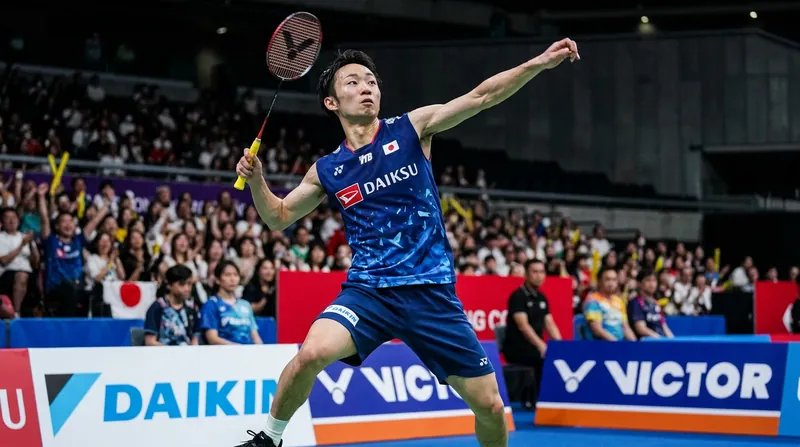
Injury
Riko Gunji's Resurgent Return From Injury Culminates in Maiden Super 300 Title
5 sources

Standings
Victor Lai and Alwi Farhan Crack Top 10 in Latest BWF Men's Singles Standings
6 sources
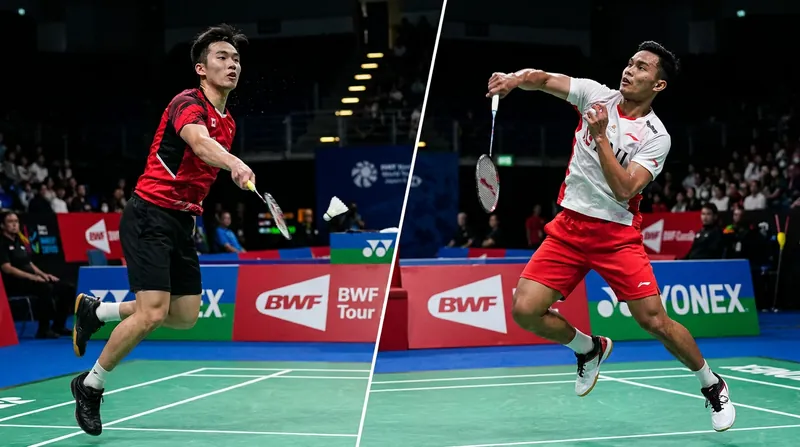
Standings
USA Badminton Pairs Surge in BWF Race to Finals Standings Following Historic Japan Open Quarterfinal Runs
4 sources

Comments
Every angle. Every day.
Get Sports stories with full source coverage and perspective breakdowns, free every day.