
The Mechanics of Modern Skiing: How Closed-Loop Tech and AI are Saving the Winter Season
Faced with warming winters, the ski industry is engineering its survival through temperature-independent snowmaking, wastewater reclamation, and bio-based gear.
By Factlen Editorial Team
- Climate-Adaptive Resort Operators
- Focused on leveraging technology to guarantee season lengths and protect the economic viability of winter tourism.
- Environmental Scientists
- Focused on the energy demands of artificial snow and the necessity of transitioning the sport to a zero-carbon footprint.
- Winter Sports Enthusiasts
- Focused on the quality of the snow, the performance of sustainable gear, and the preservation of the sport.
What's not represented
- · Local municipal water authorities
- · Ski resort seasonal workers
Why this matters
As climate change threatens the existence of winter sports, these technological breakthroughs prove that recreation and environmental stewardship can coexist, offering a blueprint for how industries can adapt to a warming world without sacrificing their core product.
Key points
- Temperature-Independent Snowmaking (TIS) uses internal refrigeration to produce snow even when outside temperatures exceed 80°F.
- Resorts are adopting closed-loop water systems, including high-altitude reservoirs and treated wastewater reclamation, to eliminate strain on local aquifers.
- AI-driven sensors now automate snow guns, optimizing energy use by tracking micro-climates and humidity in real-time.
- The ski gear industry is rapidly replacing toxic PFAS waxes and petroleum plastics with plant-based, biodegradable alternatives.
For generations, the winter sports industry relied on a simple, unpredictable variable: the weather. But as global temperatures rise and natural snowfall becomes increasingly erratic, the ski industry is facing an existential threat. Shorter seasons and marginal temperatures have forced resorts to rethink their entire operational model. Rather than simply retreating to higher altitudes, the industry is engineering its way out of the crisis. From temperature-independent snowmaking to skis manufactured from castor beans, a wave of sustainable technology is fundamentally reshaping how the world hits the slopes.[7][8]
The shift represents a transition from mere adaptation to proactive, sustainable innovation. Historically, artificial snowmaking was viewed as a brute-force, energy-intensive band-aid. Today, it is evolving into a highly sophisticated, closed-loop science. Resort operators recognize that guaranteeing a season opening date is essential for economic survival, but doing so at the expense of the local environment is no longer viable. As a result, the focus has pivoted toward efficiency, water conservation, and decarbonizing the mountain ecosystem.[2][8]
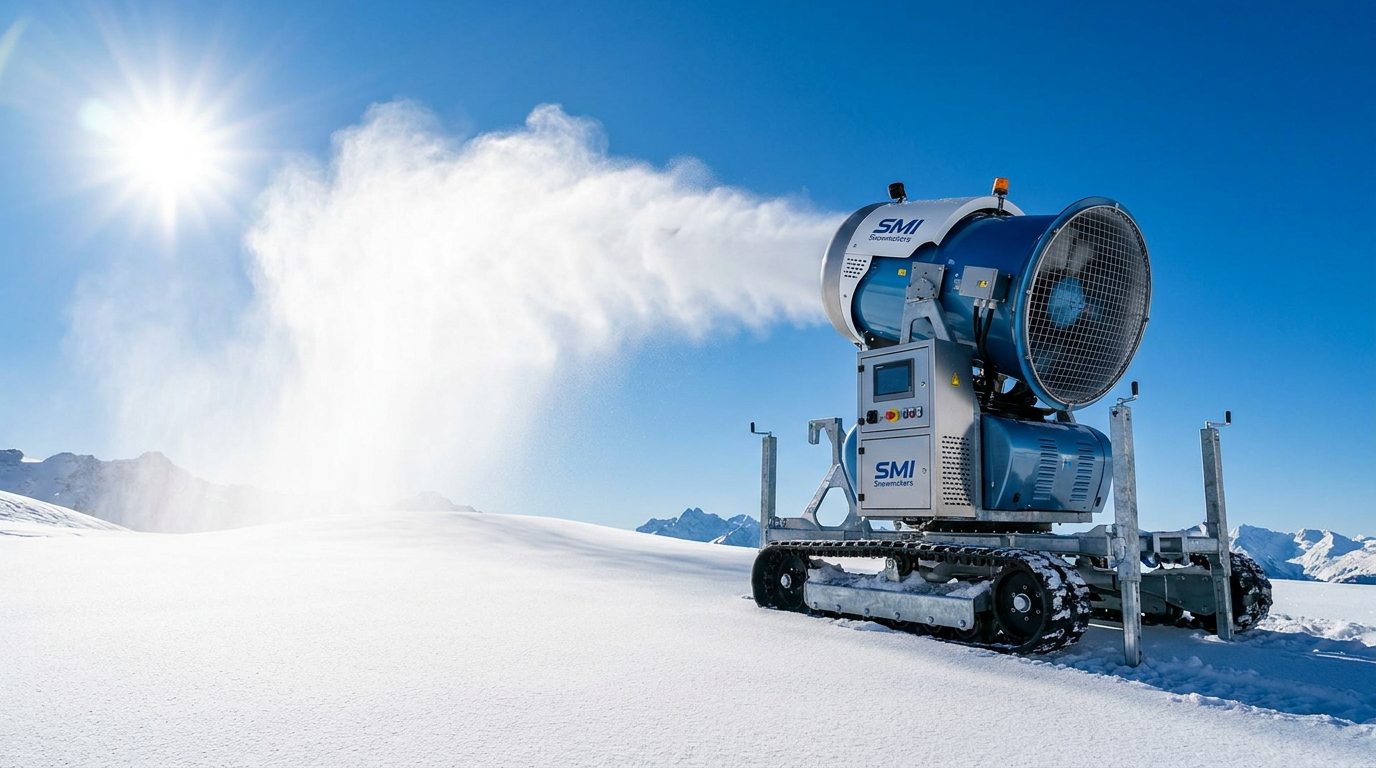
To understand the breakthrough, one must first understand the limitations of traditional snowmaking. Classic snow guns attempt to mimic natural precipitation by mixing large volumes of water with compressed air and blasting the mist into the atmosphere. For this to work, the ambient temperature must be below freezing—ideally around 14 degrees Fahrenheit (minus 10 degrees Celsius) for optimal efficiency. The water droplets freeze as they fall, creating a durable base that is physically identical to natural snow, albeit with slightly coarser ice crystals.[7]
The vulnerability of this traditional mechanism is its strict reliance on the thermometer. If the air temperature creeps above 28 degrees Fahrenheit, or if humidity levels spike, standard snow guns become useless. As the number of reliable sub-freezing days shrinks, particularly at lower elevations, resorts are left with narrow, fleeting windows to build their base layers. This bottleneck has driven the development of the industry's most significant recent breakthrough: Temperature-Independent Snowmaking (TIS).[1][7]

Temperature-Independent Snowmaking bypasses the ambient atmosphere entirely. Instead of spraying water into freezing air, TIS systems function essentially like massive, industrial ice makers. Housed inside shipping containers, these systems utilize an internal refrigeration cycle. Water is frozen onto the interior walls of a chilled barrel or plate system, scraped off by mechanical augers, and then blown out onto the slopes through flexible pipes. Because the freezing happens in a controlled, enclosed environment, the outside weather is irrelevant.[1][2]
The results are visually jarring but highly effective. Systems like TechnoAlpin's SnowFactory and the Latitude 90 can produce massive mounds of white snow even when external temperatures exceed 80 degrees Fahrenheit. For smaller ski areas and lower-elevation resorts, these "snowmaking boxes" are a lifeline, allowing them to open beginner slopes and terrain parks weeks before the first natural freeze. They are not designed to cover an entire mountain, but rather to guarantee a secure start to the season and patch crucial high-traffic areas.[2][3]
However, refrigeration requires immense power, raising concerns about the carbon footprint of TIS technology. To counter this, engineers are turning to thermodynamic recycling. The refrigeration process inherently generates substantial waste heat. Forward-thinking resorts are now capturing this thermal exhaust and redirecting it to heat multifunctional base buildings, restaurants, and staff accommodation. When paired with renewable energy sources like on-site solar arrays or local hydroelectric power, the carbon impact of all-weather snowmaking drops precipitously.[1][6]
However, refrigeration requires immense power, raising concerns about the carbon footprint of TIS technology.
Beyond energy, the most pressing resource challenge for ski resorts is water. Traditional snowmaking draws heavily from local streams and municipal reservoirs, a practice that strains watersheds during drought years. In response, the industry is moving toward closed-loop water systems. By constructing high-altitude storage lakes, resorts can capture spring snowmelt and rainwater, holding it until the following winter. Because the water is stored high on the mountain, gravity feeds the snow guns, eliminating the massive electricity costs associated with pumping water uphill.[6]

Some resorts are pushing water conservation even further by tapping into unconventional sources. In Montana, Big Sky Resort recently launched a groundbreaking initiative to convert treated municipal wastewater into skiable snow. As the first public ski area in the state to adopt this practice, Big Sky plans to utilize up to 23 million gallons of reclaimed water annually in its initial phase, eventually scaling up to 44 million gallons.[5]
While the concept of skiing on wastewater might initially raise eyebrows, the science ensures absolute safety. The water undergoes a state-of-the-art, highly regulated reclamation process that removes all impurities, resulting in a product that is odorless, crystal clear, and physically indistinguishable from natural snow. By utilizing reclaimed water, the resort preserves pristine local aquifers and effectively recycles the community's water supply, creating a sustainable loop that benefits both the mountain and the surrounding ecosystem.[5]
The optimization of these resources is increasingly managed by artificial intelligence. Modern snowmaking is no longer a manual guessing game. IoT-driven sensors are embedded across the mountain, continuously monitoring micro-climates, wind direction, humidity, and snow depth. AI algorithms process this data in real-time, automatically activating specific snow guns only when conditions yield the highest efficiency, and shutting them down the moment the temperature shifts. This precision prevents water waste and drastically reduces energy consumption.[6][8]

The sustainability revolution extends far beyond the snow itself, reaching into the very gear skiers wear and ride. For decades, ski technicians relied on waxes containing per- and polyfluoroalkyl substances (PFAS) to reduce friction and increase speed. However, these toxic "forever chemicals" were found to be contaminating mountain watersheds and accumulating in the bloodstreams of ski technicians at alarming rates. In response, the International Ski Federation banned PFAS waxes, forcing a rapid industry pivot.[4]
Today, the market is being flooded with 100% plant-based, biodegradable waxes. Companies are proving that performance does not have to be sacrificed for environmental safety. These alternative waxes provide the necessary glide for Olympic-level athletes while ensuring that the spring runoff remains free of synthetic toxins. It is a prime example of regulatory pressure sparking rapid, positive chemical innovation.[4]
Similarly, the heavy, fossil-fuel-derived plastics that have long dominated ski boot manufacturing are being phased out. Major brands like SCARPA are now utilizing advanced bio-based polymers, such as heat-moldable plastics derived from castor beans and recycled waste materials. These bio-plastics offer the exact blend of lightness, flexibility, and extreme-cold durability required for high-performance skiing, but with a carbon footprint up to 30% lower than their petroleum-based predecessors.[4]

Even the skis themselves are returning to their natural roots, augmented by modern materials science. While early skis were entirely wooden, the mid-20th century saw a shift toward fiberglass and oil-based plastics. Now, manufacturers are developing hybrid designs that incorporate sustainably harvested wood cores, recycled carbon fibers, and bio-resins. These innovations maintain the torsional stiffness and edge grip modern skiers demand while significantly reducing the product's end-of-life environmental impact.[4][8]
The narrative of the ski industry is often framed as a tragic casualty of climate change. Yet, the reality on the ground is a story of profound resilience and engineering ingenuity. By embracing temperature-independent snowmaking, closed-loop water recycling, AI automation, and bio-based materials, the winter sports sector is proving that it can adapt. The slopes of the future will look identical to those of the past, but the invisible mechanisms sustaining them will be entirely transformed—ensuring the sport survives for generations to come.[2][8]
How we got here
2013
TechnoAlpin begins distributing early versions of all-weather, temperature-independent snowmaking technology.
2022
The Beijing Winter Olympics become the first Games to rely almost entirely on machine-made snow, highlighting the industry's shift.
2023
The International Ski Federation officially bans the use of toxic PFAS 'forever chemicals' in ski waxes.
2025
Big Sky Resort in Montana announces a pioneering initiative to convert millions of gallons of treated wastewater into skiable snow.
Viewpoints in depth
Climate-Adaptive Resort Operators
Focused on leveraging technology to guarantee season lengths and protect the economic viability of winter tourism.
For mountain operators, the primary concern is predictability. The economic model of a ski town collapses if the resort cannot guarantee a Thanksgiving or early December opening. This camp views Temperature-Independent Snowmaking and high-altitude water reservoirs not as luxuries, but as essential infrastructure. They argue that the high initial capital costs of these systems are quickly offset by the ability to sell early-season lift tickets and secure holiday bookings, while closed-loop water systems insulate them from increasingly strict municipal water regulations.
Environmental Scientists
Focused on the energy demands of artificial snow and the necessity of transitioning the sport to a zero-carbon footprint.
While acknowledging the necessity of snowmaking, environmental researchers caution against 'maladaptation'—solving a climate problem by using massive amounts of fossil-fuel energy to run refrigeration units. This perspective advocates for strict regulations ensuring that new snowmaking tech is powered exclusively by renewables. They also champion the rapid phase-out of PFAS waxes and petroleum-based plastics, arguing that the ski industry has a moral obligation to protect the fragile alpine ecosystems it profits from.
Winter Sports Enthusiasts
Focused on the quality of the snow, the performance of sustainable gear, and the preservation of the sport.
For the skiers and snowboarders on the ground, the transition must be seamless. This camp is highly supportive of sustainable initiatives, provided they do not compromise the on-mountain experience. They expect bio-based ski boots to offer the same stiffness and power transfer as traditional plastics, and they expect machine-made snow to carve as smoothly as natural powder. Their willingness to adopt eco-friendly gear and support progressive resorts is the primary economic driver pushing the industry toward greener practices.
What we don't know
- Whether the high capital costs of Temperature-Independent Snowmaking will force smaller, independent ski hills out of business, leaving only mega-resorts.
- How long artificial snowmaking can outpace rising global temperatures before even advanced refrigeration systems become economically unviable.
Key terms
- Temperature-Independent Snowmaking (TIS)
- A system that uses refrigeration technology to freeze water internally, allowing snow production regardless of outside air temperature.
- Closed-Loop Water System
- A sustainable infrastructure model where water used for snowmaking is captured as it melts, treated, and reused in subsequent seasons.
- PFAS
- Per- and polyfluoroalkyl substances, often called 'forever chemicals,' traditionally used in ski wax to reduce friction but now being banned due to environmental toxicity.
- Bio-based Polymers
- Plastics derived from renewable biomass sources, such as castor beans, used to manufacture sustainable ski boots and equipment.
Frequently asked
Can artificial snow be made when it's warm outside?
Yes. New Temperature-Independent Snowmaking (TIS) systems use internal refrigeration to create snow even when outside temperatures exceed 80°F.
Is reclaimed wastewater safe for snowmaking?
Yes. The water undergoes an extensive, highly regulated treatment process that removes impurities, making it completely safe and odorless for skiers.
Why was traditional ski wax banned?
Traditional waxes contained PFAS, toxic 'forever chemicals' that contaminated mountain watersheds and posed severe health risks to ski technicians.
Sources
Source coverage
8 outlets
3 viewpoints surfaced








[1]SINTEFEnvironmental Scientists
Temperature independent snow production
Read on SINTEF →[2]Ski Area ManagementClimate-Adaptive Resort Operators
The Future of All-Weather Snowmaking
Read on Ski Area Management →[3]TechnoAlpinClimate-Adaptive Resort Operators
SnowFactory — guaranteed snow at temperature
Read on TechnoAlpin →[4]World Bio Market InsightsEnvironmental Scientists
Low-carbon ski gear hits the powder
Read on World Bio Market Insights →[5]OutsideWinter Sports Enthusiasts
This Montana Mountain Is the Latest Ski Resort to Make Snow From Reclaimed Wastewater
Read on Outside →[6]SnowBrainsClimate-Adaptive Resort Operators
Innovations & Improvements in Snowmaking Systems Across the Globe Improve Sustainability
Read on SnowBrains →[7]REIEnvironmental Scientists
Everything to Know about Machine-Made Snow
Read on REI →[8]Factlen Editorial TeamWinter Sports Enthusiasts
Synthesis by Factlen editorial team
Read on Factlen Editorial Team →

More in sports
See all 8 stories →NWSL Expansion
NWSL Shatters Attendance Records as Utah Royals Mount Historic 10-Game Unbeaten Streak
7 sources

Injury
Ilia Topuria Avoids Surgery for Orbital Fractures Following UFC Freedom 250 Title Bout
9 sources

Standings
UFC Championship Picture: Gaethje and Gane Claim Gold as Standings Reshuffle
8 sources

US Cricket
Major League Cricket Launches Season 4 as US Infrastructure Boom Accelerates
8 sources

Every angle. Every day.
Get sports stories with full source coverage and perspective breakdowns delivered to your inbox.