
Ice Baths vs. Saunas: The New Science of Thermal Recovery
Recent meta-analyses reveal that while cold water immersion rapidly reduces muscle soreness, heat therapy may be the superior choice for long-term muscle growth and cellular repair.
By Factlen Editorial Team
- Hypertrophy & Heat Proponents
- Focus on maximizing muscle growth, cellular repair, and long-term tissue adaptation.
- Cryotherapy Advocates
- Prioritize rapid recovery, pain reduction, and returning to peak performance as quickly as possible.
- Evidence-Based Skeptics
- Emphasize the primacy of sleep and nutrition, warning against over-indexing on thermal modalities.
What's not represented
- · Casual gym-goers without access to expensive thermal equipment
- · Physical therapists treating acute soft-tissue injuries
Why this matters
Understanding how temperature affects cellular repair allows you to stop guessing and start using thermal stress as a precision tool. Choosing the wrong modality—like an ice bath after lifting weights—can actively sabotage your hard-earned muscle growth.
Key points
- Cold water immersion (5–10°C for 10–15 minutes) is highly effective at reducing delayed onset muscle soreness and clearing metabolic waste.
- Applying cold therapy immediately after lifting weights can actively blunt the cellular signaling required for long-term muscle hypertrophy.
- Heat therapy, such as sauna use, promotes vasodilation and triggers Heat Shock Proteins that aid in cellular repair and muscle preservation.
- Contrast therapy alternates hot and cold to create a vascular pumping effect, offering a middle ground for athletes needing rapid recovery without fully suppressing inflammation.
The thermal recovery boom has officially moved from the exclusive training facilities of professional sports teams into suburban garages and local gyms. Over the past five years, cold plunges and infrared saunas have become ubiquitous fixtures in the wellness landscape, driven by a cultural obsession with optimizing human performance. Athletes and recreational lifters alike are constantly chasing marginal gains, looking for any edge that will allow them to train harder, recover faster, and perform better. However, as these modalities have exploded in popularity, the scientific nuance behind them has often been lost in marketing hype. The core question facing today’s fitness enthusiast is no longer whether to use thermal therapy, but rather understanding the precise biological timing of when to freeze and when to sweat.[7]
To understand how temperature manipulates recovery, one must first understand the physiological toll of intense exercise. When an athlete lifts heavy weights, sprints, or engages in high-impact sports, they create microscopic tears within their muscle fibers. This mechanical damage triggers a cascade of biological responses: metabolic waste products like hydrogen ions accumulate, and the immune system initiates an acute inflammatory response to begin the repair process. For decades, the primary goal of post-workout recovery was simply to clear this waste and suppress the inflammation as quickly as possible, allowing the athlete to return to the field without crippling soreness.[4]
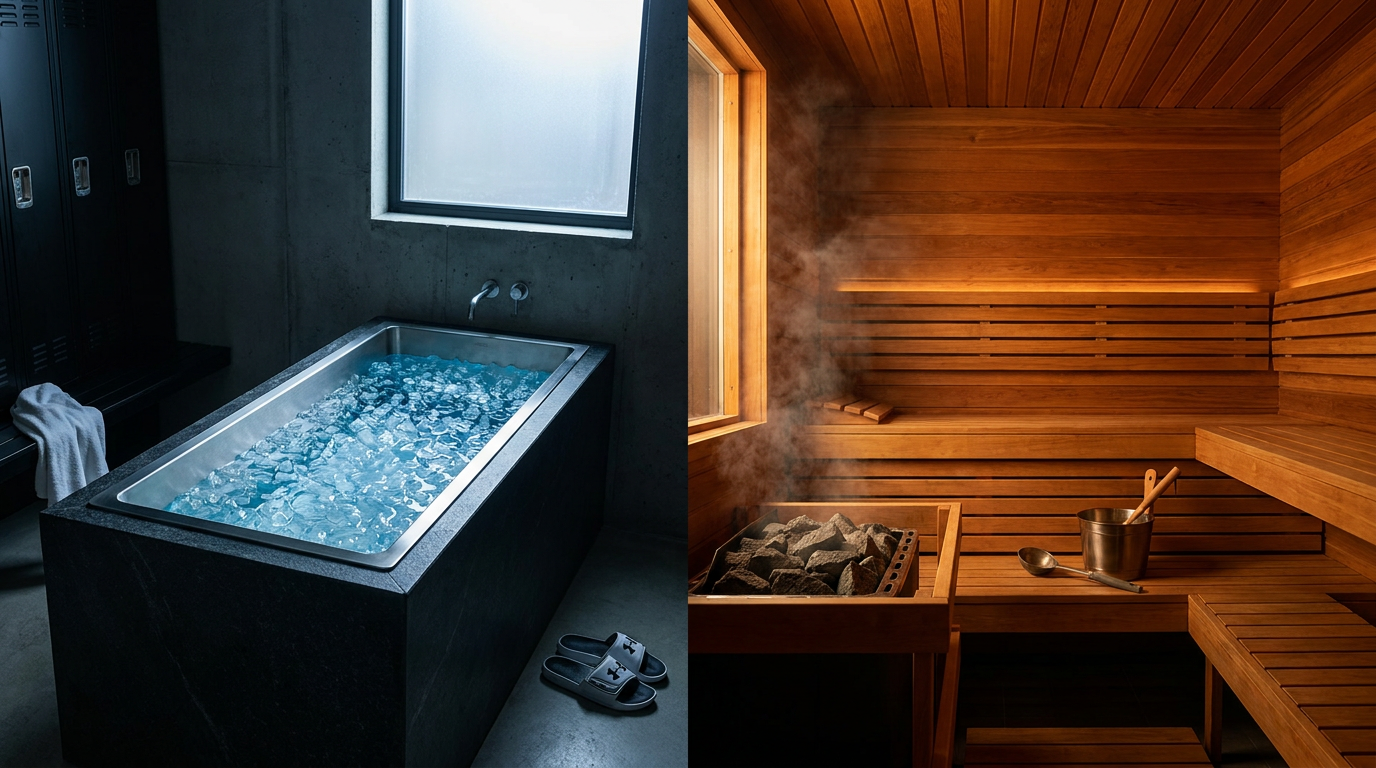
Enter Cold Water Immersion (CWI), the undisputed heavyweight champion of immediate pain relief. For generations, the post-game ice bath has been a staple of athletic recovery. The biological mechanism is highly effective and straightforward: exposing the body to freezing temperatures causes rapid and aggressive vasoconstriction. The blood vessels narrow dramatically, forcing blood away from the extremities and deep into the core to protect vital organs. This vascular clamping acts as a biological brake on the inflammatory cascade, preventing excessive swelling in the damaged muscle tissues. Furthermore, the extreme cold activates TRPM8 cold receptors in the skin, which actively inhibit the firing frequency of nerve endings, effectively slowing the transmission of nociceptive pain signals to the brain.[1]

The clinical evidence supporting the pain-relieving properties of cold water immersion is incredibly robust. A comprehensive 2025 network meta-analysis published in Frontiers in Physiology evaluated dozens of distinct recovery protocols and confirmed that CWI significantly reduces Delayed Onset Muscle Soreness (DOMS). The data also showed a marked reduction in blood levels of creatine kinase, a primary biomarker used by sports scientists to measure exercise-induced muscle damage. Researchers were even able to pinpoint the optimal "dose" for cold therapy: submerging the body in water temperatures between 5°C and 10°C (41°F to 50°F) for a duration of 10 to 15 minutes provides the maximum anti-inflammatory benefit without causing excessive systemic stress or risking hypothermia.[1]
However, the ice bath comes with a significant physiological catch that many recreational gym-goers fail to realize. While cold therapy is unparalleled for reducing acute pain and accelerating a rapid return to play, it can actively sabotage long-term muscle growth. By aggressively blunting the acute inflammatory response immediately after resistance training, cold water immersion inhibits the vital cellular signaling required for muscle hypertrophy. The inflammation that causes soreness is the exact same signal that tells the body to build denser, stronger muscle fibers. By freezing that signal, athletes inadvertently rob themselves of the adaptations they just spent an hour in the gym working to achieve.[4]

This biological reality brings us to the opposite end of the thermometer: heat therapy. While an ice bath suppresses the body's natural response to exercise stress, a session in a sauna actively amplifies it. Heat exposure induces widespread vasodilation, expanding the blood vessels and dramatically increasing the flow of nutrient-rich, oxygenated blood to damaged muscle tissues. Rather than trapping metabolic waste, this increased perfusion helps flush it out naturally while delivering the amino acids necessary for tissue repair. As a result, saunas have rapidly gained favor among bodybuilders and strength athletes who want to accelerate recovery without blunting their hypertrophic gains.[2]
This biological reality brings us to the opposite end of the thermometer: heat therapy.
The true magic of heat therapy, however, occurs at the microscopic level through the activation of Heat Shock Proteins (HSPs). When the body is exposed to significant thermal stress, cells recognize the threat and rapidly ramp up the production of these "first responder" proteins, specifically a variant known as HSP70. The primary job of these proteins is to patrol the cellular environment, repairing misfolded proteins and protecting the cell against oxidative stress. In the context of athletic recovery, Heat Shock Proteins are critical because they actively prevent muscle atrophy and ensure that the new proteins synthesized by the body are functional, healthy, and resilient.[2]
Recent academic literature has further illuminated the anabolic benefits of heat. Studies highlight that thermal stress directly triggers the mammalian target of rapamycin (mTOR) signaling pathway, which serves as the central biological regulator of cell growth and protein synthesis. While mechanical tension—the physical act of lifting heavy weights—remains the primary driver of muscle hypertrophy, thermal stress acts as a powerful supplementary stimulus. By upregulating the mTOR pathway, a post-workout sauna session effectively primes the muscle for continued growth, keeping the body in an anabolic state even while the athlete is passively resting on a wooden bench.[5][6]

A 2026 meta-analysis examining the intersection of heat therapy and muscle growth noted a small but highly meaningful signal favoring heat application shortly after resistance training. While the researchers cautioned that sitting in a sauna will never replace the necessity of lifting heavy weights, they concluded that spending 15 to 20 minutes in a hot environment post-workout provides a marginal but distinct boost to both hypertrophy and neuromuscular recovery. For athletes who have already optimized their diet, sleep, and training programming, this thermal advantage represents the next frontier of legal performance enhancement.[5]
Yet, the application of heat therapy is not without its evidence-based skeptics. Some recent clinical trials, particularly those focusing on older adult populations, have found no statistically significant effect on muscle mass, fiber size, or overall strength from passive heating protocols. Researchers argue that for heat therapy to be genuinely effective, it must induce a sufficient degree of "endogenous thermal strain." This means that the core and deep muscle temperatures must actually rise to a specific threshold, a physiological state that a mild, short, or poorly ventilated sauna session may completely fail to achieve.[2]
For athletes who are unwilling to choose exclusively between the benefits of hot and cold, Contrast Water Therapy (CWT) offers a compelling, evidence-based middle ground. By deliberately alternating between extremes—such as spending three minutes in a hot tub followed by one minute in a freezing cold plunge—practitioners aim to create a powerful "vascular pumping" effect. The rapid, forced shift from vasodilation to vasoconstriction theoretically acts as a mechanical pump within the circulatory system, aggressively flushing metabolic waste products out of the muscle bellies while simultaneously driving fresh, oxygenated blood back in.[3]

Systematic reviews analyzing the efficacy of this alternating approach, including comprehensive data published in PLOS One, demonstrate that contrast therapy is significantly superior to passive rest for reducing delayed onset muscle soreness and minimizing strength loss in the days following intense exercise. While the data does not conclusively prove that contrast therapy is vastly superior to cold water immersion alone, it provides a highly effective recovery modality for athletes who want the pain-relieving benefits of cold without completely suppressing the inflammatory signals required for long-term tissue adaptation.[3]
Ultimately, the choice between hot, cold, or contrast therapy should not be based on fitness trends, but rather dictated entirely by the athlete's immediate physiological goal. If the objective is to recover as quickly as possible for another high-stakes competition tomorrow—such as during a multi-day CrossFit competition, a tennis tournament, or a grueling endurance event—cold water immersion remains the undisputed champion. The ability to rapidly numb pain, reduce swelling, and restore perceived readiness makes the ice bath an invaluable tool for acute performance preservation.[1][7]
Conversely, if the athlete's primary goal is to build maximum muscle mass, increase absolute strength, and drive long-term tissue adaptation during an off-season training block, heat therapy is the vastly superior choice. By aligning the specific thermal stimulus with the broader physiological objective, athletes can stop guessing and start utilizing temperature as a precision tool. In the modern era of human performance, recovery is no longer just about resting; it is about actively directing the body's biological resources exactly where they are needed most.[6][7]
How we got here
2011
Early meta-analyses establish cold water immersion as significantly superior to passive rest for reducing delayed onset muscle soreness.
2015
Sports scientists begin warning that immediate post-workout cold exposure might blunt the adaptations required for muscle hypertrophy.
2023
Research highlights the critical role of Heat Shock Proteins in sauna-induced muscle preservation and recovery.
2025
Network meta-analyses pinpoint the optimal cold plunge protocol at 5–10°C for 10–15 minutes.
2026
Emerging data confirms that post-workout heat therapy provides a marginal but meaningful boost to the mTOR muscle-building pathway.
Viewpoints in depth
Cryotherapy Advocates
Prioritize rapid recovery, pain reduction, and returning to peak performance as quickly as possible.
This camp, heavily populated by endurance athletes, CrossFit competitors, and team-sport players, views inflammation as an obstacle to immediate performance. They rely on cold water immersion to rapidly lower core temperature, numb nociceptive pain signals, and flush out metabolic waste. For them, the ability to train hard again the next day far outweighs any potential long-term blunting of muscle hypertrophy.
Hypertrophy & Heat Proponents
Focus on maximizing muscle growth, cellular repair, and long-term tissue adaptation.
Bodybuilders, powerlifters, and longevity enthusiasts argue that the acute inflammation caused by lifting weights is a necessary signal for growth. They avoid ice baths post-workout, opting instead for saunas to induce vasodilation and trigger Heat Shock Proteins. By amplifying the body's natural stress response rather than suppressing it, they aim to maximize the mTOR signaling pathway and build denser, stronger muscle tissue over time.
Evidence-Based Skeptics
Emphasize the primacy of sleep and nutrition, warning against over-indexing on thermal modalities.
Sports scientists and clinical researchers in this camp argue that the fitness industry drastically overstates the benefits of both cold plunges and saunas. They point to studies showing high individual variability and highlight that without sufficient 'endogenous thermal strain,' many protocols act as little more than expensive placebos. They maintain that 95% of recovery comes from adequate sleep, protein intake, and active movement, viewing thermal therapy as a minor optimization.
What we don't know
- The exact core temperature threshold required to trigger a meaningful Heat Shock Protein response in different body types.
- Whether the long-term mental resilience benefits of cold plunging outweigh the physiological blunting of muscle hypertrophy for recreational lifters.
- How variations in age and gender affect the efficacy of passive heat therapy, as most studies have focused on young male athletes.
Key terms
- Delayed Onset Muscle Soreness (DOMS)
- The deep muscle pain and stiffness that typically peaks 24 to 72 hours after intense or unfamiliar exercise.
- Heat Shock Proteins (HSPs)
- Cellular 'first responder' proteins produced during thermal stress that repair misfolded proteins and protect against muscle breakdown.
- mTOR Pathway
- The central cellular signaling pathway responsible for regulating cell growth and driving muscle protein synthesis.
- Vasoconstriction
- The narrowing of blood vessels, typically in response to cold, which restricts blood flow to the extremities to preserve core temperature.
- Creatine Kinase (CK)
- An enzyme found in muscle tissue that leaks into the bloodstream when muscles are damaged, used as a biomarker for exercise-induced muscle damage.
Frequently asked
Should I take an ice bath immediately after lifting weights?
No, if your primary goal is muscle growth. Cold water immersion blunts the acute inflammatory response needed to trigger muscle hypertrophy. Save ice baths for rest days or after endurance training.
How hot does a sauna need to be for muscle recovery?
Traditional Finnish saunas should reach 175–195°F (80–90°C), while infrared saunas are effective at lower temperatures of 120–150°F (50–65°C), provided you stay in long enough to significantly raise your core body temperature.
Does contrast therapy actually flush out lactic acid?
Yes, the rapid alternation between hot and cold creates a 'vascular pump' effect, expanding and constricting blood vessels to help clear metabolic waste products more efficiently than passive rest.
Can I just take a cold shower instead of an ice bath?
While cold showers offer mental benefits and mild alertness, they generally do not lower deep muscle temperature enough to provide the same anti-inflammatory and recovery benefits as full-body cold water immersion.
Sources
Source coverage
7 outlets
3 viewpoints surfaced







[1]Frontiers in PhysiologyCryotherapy Advocates
Network meta-analysis on cold water immersion protocols for exercise-induced muscle damage
Read on Frontiers in Physiology →[2]Journal of Applied PhysiologyHypertrophy & Heat Proponents
Passive heat therapy and neuromuscular function: The role of Heat Shock Proteins
Read on Journal of Applied Physiology →[3]PLOS OneEvidence-Based Skeptics
Contrast Water Therapy and Exercise Induced Muscle Damage: A Systematic Review
Read on PLOS One →[4]British Journal of Sports MedicineCryotherapy Advocates
Cold water immersion and recovery from strenuous exercise: A meta-analysis
Read on British Journal of Sports Medicine →[5]Men's FitnessHypertrophy & Heat Proponents
Heat therapy for muscle growth: What the latest meta-analysis says
Read on Men's Fitness →[6]MDPI SportsHypertrophy & Heat Proponents
Effects of passive sauna bathing on maximal strength and body composition
Read on MDPI Sports →[7]Factlen Editorial TeamEvidence-Based Skeptics
Synthesis by Factlen editorial team
Read on Factlen Editorial Team →

Every angle. Every day.
Get fitness stories with full source coverage and perspective breakdowns delivered to your inbox.