
How Virtual Power Plants Are Transforming Home Energy Into Utility-Scale Grid Support
By networking home batteries, EV chargers, and smart thermostats, virtual power plants are creating a decentralized energy grid that is faster and cheaper than traditional fossil-fuel facilities.
By Factlen Editorial Team
- Grid Operators & Utilities
- Prioritize grid stability, frequency regulation, and cost-effective capacity expansion.
- Consumer Participants
- Prioritize financial compensation, home backup power, and device autonomy.
- Technology Providers
- Prioritize software integration, rapid deployment, and scaling decentralized networks.
What's not represented
- · Traditional fossil-fuel peaker plant operators facing obsolescence
- · Renters and low-income households who cannot afford solar or battery installations
Why this matters
As electricity demand surges from AI and electric vehicles, upgrading the grid with traditional power plants will cost billions and take years. Virtual power plants offer a zero-emission alternative that pays consumers for their unused energy while preventing blackouts.
Key points
- Virtual power plants (VPPs) use software to coordinate home batteries, solar panels, and smart devices into a single energy network.
- VPPs can react to grid demand in fractions of a second, outperforming traditional natural gas peaker plants.
- The U.S. Department of Energy estimates VPPs could save the grid $10 billion annually by 2030.
- Consumers who participate in VPPs are financially compensated for allowing operators to manage their devices during peak events.
- Widespread adoption is currently limited by consumer awareness and the need for standardized software protocols.
The modern electricity grid is facing a math problem it cannot solve with traditional infrastructure alone. With the rapid adoption of electric vehicles, the electrification of home heating, and the massive energy appetite of new data centers, peak electricity demand is surging.[1][7]
Historically, utilities solved this by building peaker plants—expensive, fossil-fuel-burning facilities that sit idle most of the year and only spin up during the hottest days or coldest nights. But building new transmission lines and power plants now takes years, plagued by interconnection backlogs and multi-billion-dollar price tags.[1]
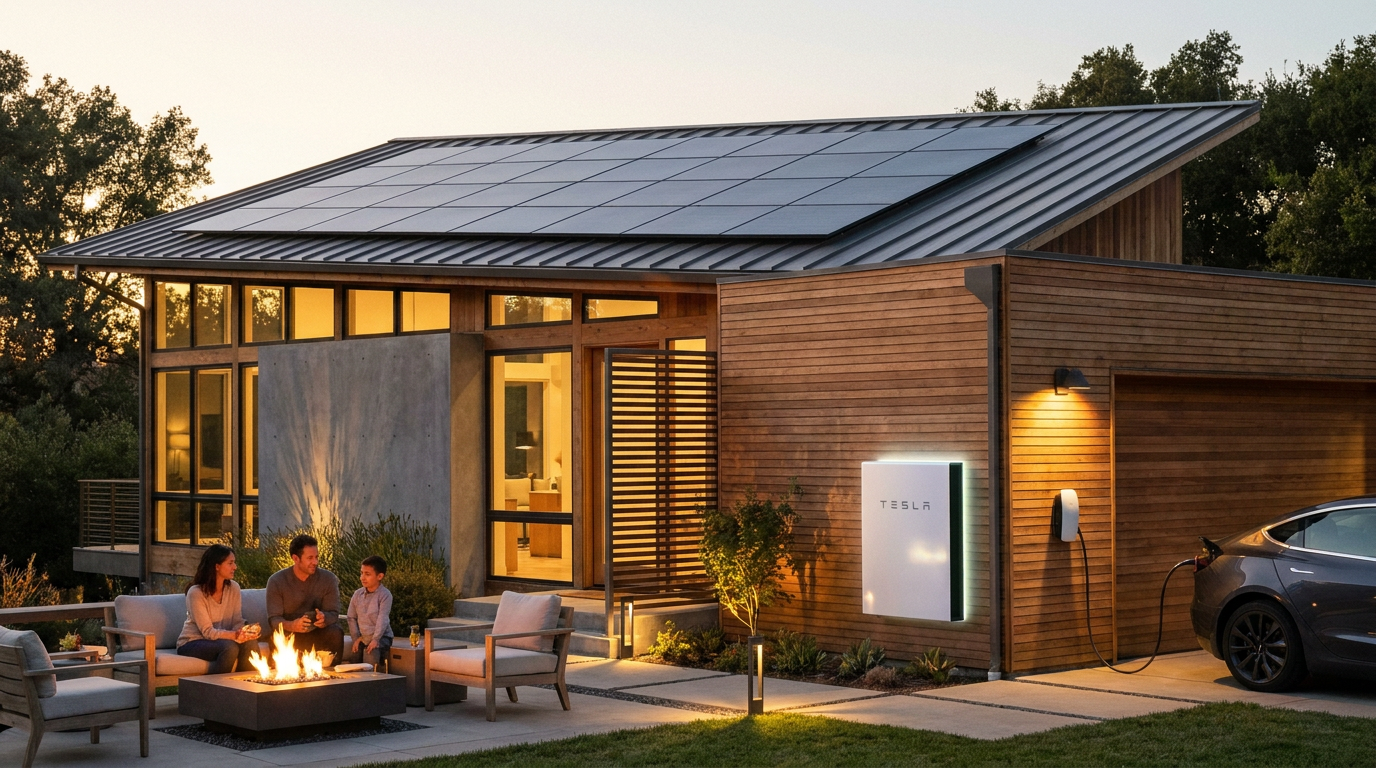
Enter the Virtual Power Plant (VPP). Rather than pouring concrete and burning natural gas at a single centralized location, a VPP is a digital network that coordinates thousands of decentralized energy assets.[2][3]
These assets—known as Distributed Energy Resources (DERs)—include home solar panels, residential battery walls, electric vehicle chargers, smart thermostats, and electric water heaters. Through advanced software, a VPP pools these small-scale devices together so they function as a single, massive power station.[1][3][4][5]

The mechanism relies on real-time telemetry and automated control. When grid demand spikes, the VPP operator sends a digital signal to participating homes. Smart thermostats might adjust by one degree, while home batteries discharge their stored solar energy back into the grid.[2][5]
To the utility operator, this coordinated response looks exactly like a traditional power plant ramping up production. The difference is speed and precision. While a natural gas peaker plant can take minutes to spin up, VPP software can trigger a response in fractions of a second.[6]
Equipment manufacturers are already pushing the technical limits of this rapid response. Systems developed by companies like SolaX Power can achieve reaction speeds as quick as 0.092 seconds, exceeding strict fast-frequency response standards required by national grid operators.[3]
The scale of these digital power plants is no longer theoretical. In California, a VPP operated by Tesla recently delivered more than 535 megawatts of capacity to the grid during peak demand. With participating households providing nearly 500 megawatts of that total, the network generated enough capacity to power half of San Francisco.[2]
The scale of these digital power plants is no longer theoretical.
Similar lifelines have been deployed in more vulnerable grid environments. In Puerto Rico, distributed battery networks have delivered up to 50 megawatts during grid emergencies, actively helping the local utility avoid rolling blackouts and maintain reliable service.[2][6]
The economic case for VPPs is drawing intense focus from federal regulators. According to the U.S. Department of Energy's Liftoff Report, scaling VPP capacity to between 80 and 160 gigawatts by 2030 could address up to 20% of peak load demand.[1]
Achieving that scale would fundamentally alter utility economics. The Department of Energy estimates that widespread VPP deployment could save the grid $10 billion annually by avoiding new generation buildouts and delaying expensive infrastructure upgrades.[1]

In fact, utilizing distributed batteries and smart devices to provide peaking capacity operates at roughly 40% to 80% lower net costs than building traditional utility-scale batteries or natural gas peaker plants.[1]
For everyday consumers, the VPP model flips the traditional utility relationship. Instead of merely paying for electricity, households become paid energy suppliers. Participants are financially compensated for allowing the VPP operator to manage their devices during peak events.[4][5]
In markets like the United Kingdom and Australia, the financial incentives are becoming highly structured. Homeowners with solar batteries can often get paid twice—earning standard export tariffs for sending solar power to the grid, while also receiving direct payments from the VPP operator for participating in peak-shaving events.[4][5]
Despite the clear benefits, widespread adoption faces significant hurdles. Currently, a vast majority of eligible distributed energy resources remain siloed, with federal data indicating that VPPs are still undervalued by grid operators and have yet to scale to their full potential.[1]

The primary barriers are consumer awareness and the psychological hurdle of relinquishing control. Homeowners must trust that the VPP software will not drain their EV battery right before a long trip, or leave their home without backup power during a storm.[4]
Furthermore, the industry is still wrestling with interoperability. Connecting devices from dozens of different manufacturers—each with proprietary software—into a seamless, secure network requires standardized protocols like IEEE 2030.5, which are only now becoming industry norms.[3]
Ultimately, the transition to a decentralized grid appears inevitable. As extreme weather events test the limits of centralized power stations, the ability to dynamically share energy across thousands of homes offers a resilient, zero-emission alternative that is already hiding in plain sight.[1][6][7]
How we got here
2023
The U.S. Department of Energy publishes its initial Pathways to Commercial Liftoff report for VPPs.
July 2025
California VPPs deliver over 535 MW of capacity during peak demand, proving the technology at scale.
September 2025
Tesla expands its VPP operations, utilizing distributed batteries to prevent load shedding in Puerto Rico.
2030 (Target)
The DOE aims to deploy 80 to 160 GW of VPP capacity across the United States.
Viewpoints in depth
Grid Operators & Utilities
Focused on maintaining grid stability and avoiding multi-billion-dollar infrastructure upgrades.
For utility companies, VPPs represent a massive cost-saving mechanism. Facing multi-year backlogs for transmission interconnections and surging peak demand, operators view VPPs as a way to instantly access gigawatts of power without pouring concrete. They value the sub-second reaction times of distributed batteries, which can stabilize grid frequency far faster than spinning up a dormant natural gas plant.
Consumer Advocates
Focused on household economics, energy independence, and fair compensation for data and power.
Consumer groups champion VPPs as a way to democratize energy production, allowing everyday homeowners to profit from the grid rather than just paying into it. However, they emphasize the need for transparent contracts. Advocates warn against overcycling home batteries—which can degrade their lifespan—and stress that participants must retain the right to opt out during personal emergencies or extreme weather events.
Climate & Clean Energy Advocates
Focused on the rapid decarbonization of the energy sector and the retirement of fossil-fuel peaker plants.
Environmental organizations view VPPs as the missing link in the renewable energy transition. Because wind and solar power are intermittent, the grid has historically relied on highly polluting natural gas peaker plants to fill the gaps. By storing excess solar energy in residential batteries during the day and discharging it at night, VPPs effectively turn intermittent renewables into reliable, dispatchable baseload power.
What we don't know
- Whether consumer participation rates will scale fast enough to meet the Department of Energy's 2030 capacity targets.
- How quickly competing device manufacturers will adopt universal communication standards like IEEE 2030.5.
Key terms
- Virtual Power Plant (VPP)
- A digital network of decentralized energy resources that are coordinated by software to supply power and support the grid like a traditional power plant.
- Distributed Energy Resources (DERs)
- Small-scale energy generation and storage technologies located close to where electricity is used, such as home batteries and solar panels.
- Peaker Plant
- A traditional power plant, usually powered by natural gas, that only runs when there is a high demand for electricity.
- Fast Frequency Response
- The rapid injection of power into the grid—often in fractions of a second—to maintain the stability of the electrical frequency.
- IEEE 2030.5
- An international standard for secure communication between the smart grid and consumer energy devices.
Frequently asked
Do I have to give up control of my home devices to join a VPP?
Yes, to an extent. When you join a VPP, you allow the operator to remotely manage your battery or thermostat during specific peak events, though most programs allow you to set limits or opt out of individual events.
Can a VPP drain my battery right before a blackout?
Reputable VPP programs include safeguards that preserve a minimum backup reserve in your home battery, ensuring you still have power if the broader grid goes down.
How much money can I make participating in a VPP?
Earnings vary widely by region and the size of your battery, but in active markets like the UK and Australia, participants can earn hundreds of dollars annually, often getting paid both for exporting power and for participating in grid-support events.
Sources
Source coverage
7 outlets
3 viewpoints surfaced







[1]U.S. Department of EnergyGrid Operators & Utilities
Pathways to Commercial Liftoff: Virtual Power Plants
Read on U.S. Department of Energy →[2]TeslaTechnology Providers
What is a Virtual Power Plant?
Read on Tesla →[3]SolaX PowerGrid Operators & Utilities
Virtual Power Plant (VPP) and Smart Grid
Read on SolaX Power →[4]SunsaveConsumer Participants
Virtual power plants: explained
Read on Sunsave →[5]Solar ChoiceConsumer Participants
Virtual Power Plants (VPPs) in Australia
Read on Solar Choice →[6]EticaTechnology Providers
Virtual Power Plants: Building the Grid of the Future
Read on Etica →[7]Factlen Editorial TeamTechnology Providers
Synthesis by Factlen editorial team
Read on Factlen Editorial Team →
Every angle. Every day.
Get energy stories with full source coverage and perspective breakdowns delivered to your inbox.