
WNBA Valuations and Revenue Surge as Franchises Reap the Rewards of a Business Boom
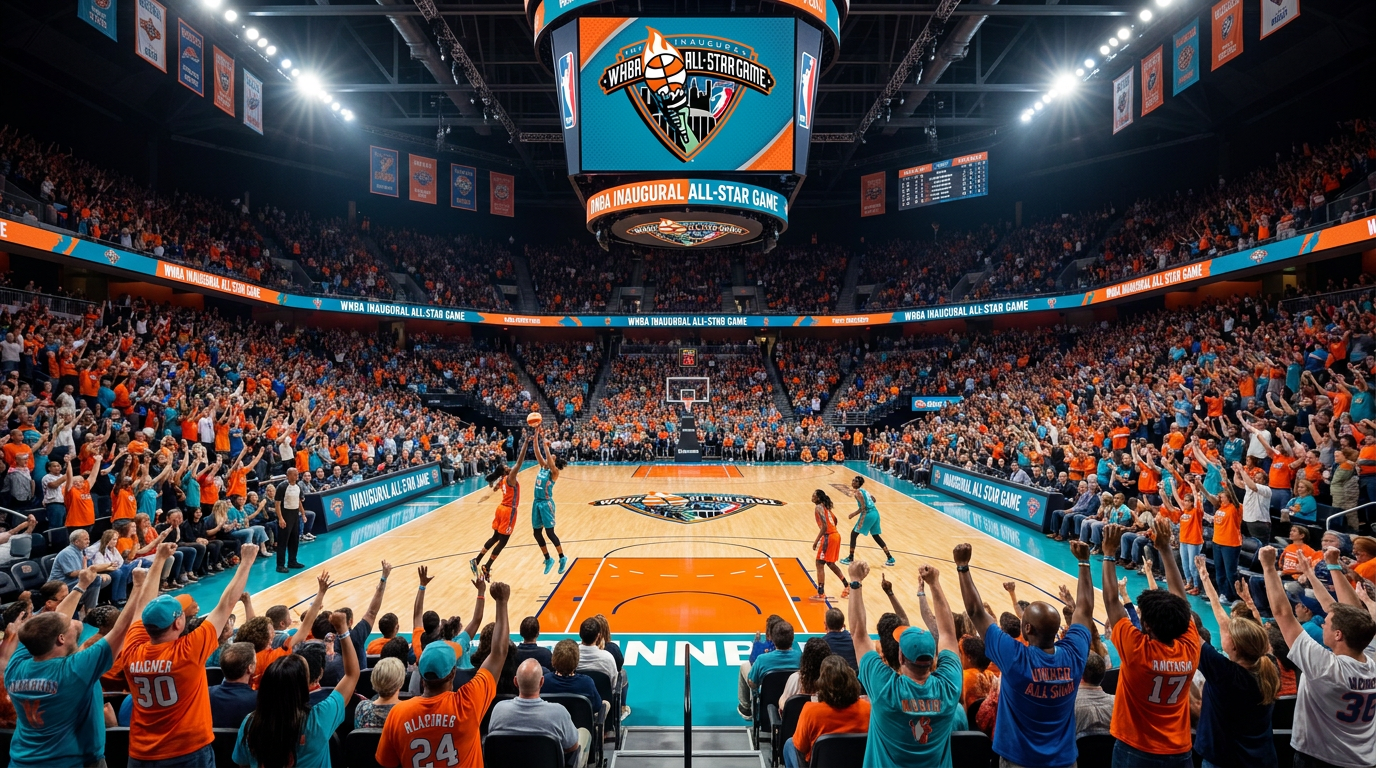
The WNBA is experiencing unprecedented financial growth in 2026, with team valuations soaring, record-breaking revenue, and massive increases in ticket and sponsorship sales.
By Factlen Editorial Team
- Franchise Ownership
- Views the league as a rapidly appreciating asset class, focusing on long-term valuations, arena infrastructure, and institutional investment.
- Commercial Partners
- Treats the WNBA as a core marketing strategy to reach young, diverse audiences, moving beyond experimental sponsorships.
- Ticketing & Market Analysts
- Tracks the unprecedented surge in consumer demand, noting record-breaking live attendance and secondary market premiums.
What's not represented
- · Legacy fans priced out by skyrocketing ticket costs
- · Independent arena operators competing for WNBA tenancies
Why this matters
The financial explosion of the WNBA proves that women's sports are a highly lucrative asset class, reshaping how broadcasters, corporate sponsors, and institutional investors allocate billions of dollars in the sports entertainment industry.
Key points
- The Golden State Valkyries generated $78 million in their inaugural season and are valued at $780 million.
- The Dallas Wings reported a 220 percent increase in overall ticket sales revenue.
- League-wide sponsorship revenue increased by 40 percent year-over-year.
- A new 11-year media rights deal guarantees the league approximately $200 million annually.
- The revenue surge triggered a historic 50 percent revenue-sharing payout to players.
The Women's National Basketball Association is experiencing a historic financial boom in 2026, transforming the league into a highly lucrative asset class. What was once framed by investors as a long-term growth play is now yielding massive, immediate returns across the board. From skyrocketing franchise valuations to unprecedented ticket demand and corporate sponsorships, the business of women's basketball has definitively shifted from an emerging market to a blue-chip reality. The financial surge is being felt not just by legacy franchises, but by expansion teams and rebuilding squads alike, proving that the league's economic foundation has broadened significantly.[2][5]
The Dallas Wings serve as a prime example of this rapid financial transformation. According to Chief Executive Officer Greg Bibb, the franchise is reaping the benefits of strategic, back-to-back No. 1 draft choices, which have translated directly into a stronger win-loss record and a massive boost in ticket revenue. The team reported a 220 percent increase in overall ticket sales revenue, alongside a staggering 1,200 percent jump in individual ticket sales. For the first time in the franchise's history, season ticket memberships completely sold out, forcing the organization to create a waitlist for eager fans.[1][6][7]
This surge in live-event attendance has catalyzed intense corporate interest at the local level. The Wings saw their partnership revenue double from 2024 to 2025, and the franchise expects that figure to double yet again in 2026. Brands are increasingly eager to align with the team's young stars and growing audience. As the Wings prepare to relocate to the renovated Dallas Memorial Auditorium in 2027, the team is also building a new practice facility and seeking a naming rights sponsor, opening up even more avenues for commercial expansion.[1][4][6]

The localized success in Dallas reflects a broader, league-wide explosion in corporate backing. The WNBA reported a 40 percent increase in overall sponsorship revenue over the last year, and executives expect similar year-over-year growth heading into the 2026 season. The league has successfully courted major corporate partners, adding brands like Amazon Web Services, Skechers, and Mars to its roster. Crucially, the WNBA now boasts over a dozen sponsors that do not have concurrent deals with the NBA, indicating that brands are investing specifically in the women's game rather than treating it as an add-on.[3]
The localized success in Dallas reflects a broader, league-wide explosion in corporate backing.
Franchise valuations have skyrocketed in tandem with this revenue growth. According to recent financial estimates, no WNBA team is currently worth less than $250 million. The expansion Golden State Valkyries have set a new benchmark in their inaugural season, generating a league-record $78 million in revenue. The Valkyries are now valued at an estimated $780 million, making them the most valuable women's sports team in the world. Other franchises, including the New York Liberty and the Indiana Fever, have also seen their valuations soar past the half-billion-dollar mark.[2][5]
The cost of entry into the league has hit unprecedented heights, reflecting immense confidence from institutional investors and billionaires. Recent expansion teams have reportedly paid fees up to $250 million to join the WNBA, a massive leap from the $50 million fees seen just a few years prior. This inflation is driven by the instant financial success of teams like the Valkyries, who managed to build a season-ticket base of 12,000 fans—numbers that rival established NBA franchises.[2][5]

Fueling this long-term optimism is the league's new 11-year media rights agreement, which officially takes effect in 2026. The landmark deal, involving major broadcast partners like The Walt Disney Company, NBCUniversal, and Amazon Prime Video, is worth approximately $200 million annually. This agreement guarantees a steady, predictable stream of national broadcast revenue while significantly expanding the league's visibility through increased streaming coverage and prime-time television slots. For franchise owners, this locked-in media revenue provides the financial security needed to invest heavily in player development, marketing, and state-of-the-art facilities without relying solely on game-day ticket sales.[3]
The influx of cash has also triggered new financial milestones for the athletes on the court. The league generated enough revenue to activate a 50 percent revenue-sharing payout to players under the current collective bargaining agreement, marking a historic first for the WNBA. As the league and the Women's National Basketball Players Association continue to navigate the evolving financial landscape, the conversation has shifted from basic viability to equitable wealth distribution. With teams like the Wings preparing to move into larger arenas to accommodate surging demand, the business of women's basketball has definitively transformed into a sustainable, high-growth industry.[3][5]
Looking ahead, the trajectory of the WNBA suggests that this financial boom is not a fleeting moment, but the establishment of a new baseline. Deloitte projects that the global women's professional sports market will be worth at least $3 billion this year, representing a massive leap from previous estimates. For executives like Dallas Wings CEO Greg Bibb, the message to prospective corporate partners has fundamentally changed. Brands are no longer being asked to be early adopters or philanthropic supporters; instead, they are being warned not to get left behind as the league's commercial value continues its exponential climb.[4]
How we got here
2020
The WNBA and the players' union sign a transformative Collective Bargaining Agreement that lays the groundwork for future revenue sharing.
2024
The league secures a landmark 11-year media rights deal worth approximately $200 million annually, set to begin in 2026.
2025
The Golden State Valkyries generate a record $78 million in revenue during their inaugural season, reshaping valuation expectations.
May 2026
The Dallas Wings announce a 220 percent increase in ticket sales revenue and back-to-back sold-out season memberships.
Viewpoints in depth
The Ownership Perspective
Franchise owners are seeing massive returns on what was once considered a speculative investment.
For years, investing in women's sports was framed as a philanthropic endeavor or a long-term play requiring immense patience. Today, ownership groups are treating WNBA franchises as premium, high-yield assets. With expansion fees reaching $250 million and team valuations approaching the $1 billion mark, owners are aggressively investing in dedicated practice facilities, arena upgrades, and data-driven front offices to maximize their returns. The instant financial success of expansion teams like the Golden State Valkyries has validated this aggressive spending, proving that the market can sustain premium pricing for tickets and merchandise.
The Commercial Partners' View
Brands are shifting their WNBA sponsorships from experimental budgets to core marketing strategies.
Corporate sponsors are no longer partnering with the WNBA simply to check a diversity or corporate social responsibility box. Brands like Amazon Web Services, Skechers, and CVS are investing heavily because the league offers direct access to a highly engaged, young, and diverse consumer base. Marketing executives note that the return on investment has become undeniable, prompting companies to sign multi-year, multi-million-dollar deals. This shift is evidenced by the growing number of sponsors who are partnering exclusively with the WNBA, rather than treating it as an add-on to an NBA sponsorship package.
The Players' Stance
Athletes are pushing for a larger share of the league's unprecedented financial windfall.
While owners and sponsors celebrate soaring revenues, the players who drive the product are actively negotiating for their fair share. The influx of cash has triggered revenue-sharing clauses for the first time, but the players' union continues to advocate for higher base salaries, improved travel accommodations, and a larger percentage of gross league income. As the WNBA enters its new media rights deal, athletes are leveraging the league's undeniable popularity to ensure that the wealth generated by their on-court performance translates into long-term financial security for the workforce.
What we don't know
- Whether the rapid increase in ticket prices will alienate the league's legacy fanbase.
- How the upcoming collective bargaining negotiations will alter the current revenue-sharing structure.
Key terms
- Expansion Fee
- A sum of money paid by a new ownership group to the league in order to establish a new franchise, which is then distributed among existing owners.
- Revenue Sharing
- A financial mechanism in the collective bargaining agreement where players receive a percentage of the league's income once it surpasses a predetermined threshold.
- Media Rights Deal
- An agreement in which broadcasters and streaming platforms pay the league for the exclusive right to televise and distribute its games.
Frequently asked
Why are WNBA franchise valuations increasing so rapidly?
Valuations are soaring due to a combination of record-breaking ticket sales, a massive new $200 million annual media rights deal, and a surge in corporate sponsorships. Expansion teams like the Golden State Valkyries have proven that the market can support premium pricing and massive revenue generation.
How has the Dallas Wings' business grown?
The Dallas Wings have seen a 220 percent increase in overall ticket sales revenue and a 1,200 percent jump in individual ticket sales. Their partnership revenue doubled from 2024 to 2025 and is expected to double again in 2026.
Are the players benefiting from this revenue boom?
Yes, the league generated enough revenue to trigger a 50 percent revenue-sharing payout to players under the current collective bargaining agreement, marking a historic first. However, the players' union continues to negotiate for higher base salaries.
Sources
Source coverage
7 outlets
3 viewpoints surfaced







[1]BloombergFranchise Ownership
WNBA's Dallas Wings Reaping Benefits From Draft Choices
Read on Bloomberg →[2]ForbesFranchise Ownership
The WNBA's Most Valuable Teams 2026
Read on Forbes →[3]Sports Business JournalCommercial Partners
WNBA heads into season 30 with new sponsors, commercial growth
Read on Sports Business Journal →[4]Marketing BrewCommercial Partners
The Dallas Wings' partnership revenue doubled from 2024 to 2025
Read on Marketing Brew →[5]The GuardianFranchise Ownership
Women's sport is in its high-growth phase
Read on The Guardian →[6]CBS NewsTicketing & Market Analysts
The WNBA has been grabbing the attention of sports fans nationally and the Dallas Wings are no exception
Read on CBS News →[7]Front Office SportsTicketing & Market Analysts
The WNBA Boom Goes Beyond Caitlin Clark
Read on Front Office Sports →


Every angle. Every day.
Get business stories with full source coverage and perspective breakdowns delivered to your inbox.