
How the New 'Fostering the Future' Accounts Aim to Build Wealth for Foster Youth
A new federal initiative allows state child welfare agencies to open tax-advantaged investment accounts for foster children, seeded with a $1,000 Treasury deposit. The program seeks to provide a financial foundation for vulnerable youth when they age out of the system.
By Factlen Editorial Team
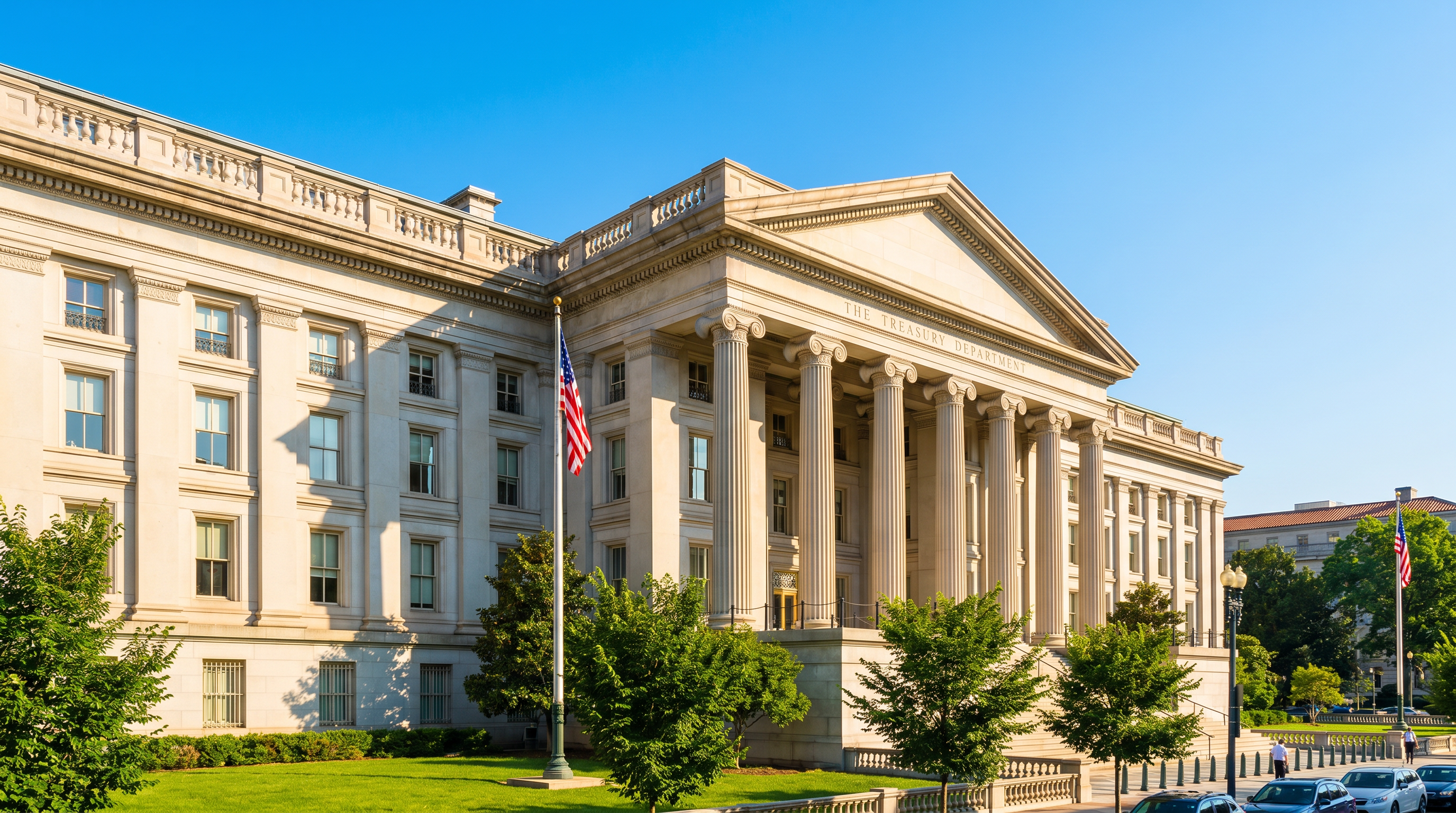
- Federal Policymakers
- View the accounts as a historic tool to democratize asset ownership and provide a financial foundation for vulnerable youth.
- State Administrators
- Focus on the operational rollout and the opportunity to integrate wealth-building into existing state child welfare systems.
- Financial Industry Advocates
- Emphasize the mathematical power of compound growth and the critical need to pair the accounts with financial literacy.
- Child Welfare Analysts
- Welcome the financial support but raise logistical questions about tracking the funds and ensuring youth don't prematurely cash out at 18.
What's not represented
- · Foster youth who have aged out of the system
- · State-level social workers managing the caseloads
Why this matters
By allowing state agencies to open federally funded investment accounts for foster children, this policy creates a first-of-its-kind financial safety net that could prevent thousands of vulnerable youth from facing homelessness when they age out of the system at 18.
Key points
- A new federal policy allows state child welfare agencies to open investment accounts for foster youth.
- The accounts are seeded with a $1,000 deposit from the U.S. Treasury.
- Funds grow tax-free and can accept up to $5,000 in annual contributions from states or private entities.
- Beneficiaries gain full control of the accounts when they turn 18.
- 23 state governors have already pledged to participate in the program.
On Thursday, the federal government unveiled a new financial mechanism designed to prevent youth in the foster care system from aging into poverty. Spearheaded by First Lady Melania Trump and Treasury Secretary Scott Bessent, the initiative introduces "Fostering the Future Accounts"—a targeted expansion of a recently established federal investment program. The policy allows state child welfare agencies to open tax-advantaged investment accounts for eligible foster children, seeded with a $1,000 contribution from the U.S. Treasury.[1][3]
The initiative addresses a long-standing structural crisis in the American child welfare system. Approximately 330,000 children currently reside in U.S. foster care, and those who age out of the system at 18 face a notoriously steep financial cliff. According to the National Foster Youth Institute, one in five foster youth is at risk of homelessness after leaving the system, and only half secure employment by age 24. By providing a dedicated financial asset, policymakers hope to replace that cliff with a foundation for long-term independence.[4]
To understand the new foster youth initiative, one must first look at its underlying engine: the "Trump Account." Created by the One Big Beautiful Bill Act of 2025, the baseline program offers a $1,000 Treasury deposit to any U.S. citizen born between January 1, 2025, and December 31, 2028. These accounts function similarly to an Individual Retirement Account (IRA), allowing funds to be invested in the stock market and grow tax-free until the beneficiary reaches adulthood.[1][4]
However, the original legislation required a parent or legal guardian to actively open the account—a logistical hurdle that effectively excluded wards of the state. The new federal guidance bridges this gap by explicitly authorizing state, territorial, and tribal child welfare agencies to act as the legal guardian for the purpose of establishing the accounts. This administrative adjustment ensures that the nation's most vulnerable children are not left out of the wealth-building program.[3][7]

The financial mechanics rely heavily on the power of compound interest over an extended time horizon. The White House Council of Economic Advisers estimates that a single $1,000 deposit for a baby born in 2026, invested in a standard index fund, will grow to approximately $5,800 by the time the child turns 18. If left untouched until age 28, that initial seed is projected to reach $18,100, assuming historical market returns and no additional contributions.[4]
But the accounts are designed to accept more than just the initial federal seed. The program permits up to $5,000 in annual contributions from external sources, opening the door for states, private employers, and philanthropic organizations to bolster the funds. Some states are already stepping up; Oklahoma, for instance, has pledged to deposit an additional $250 into the account of every eligible foster child in its jurisdiction.[2][4]

But the accounts are designed to accept more than just the initial federal seed.
The rollout relies heavily on state-level cooperation, and early adoption has been swift. At the launch event in Washington, D.C., officials announced that 23 governors have already pledged to participate in the program. States will be responsible for navigating the sign-up process, which involves submitting formal election forms to the Treasury to establish the initial accounts for children under their care.[1][2]
State leaders have framed the initiative as a critical modernization of the social safety net. In Arkansas, Governor Sarah Huckabee Sanders announced that all eligible foster youth in the state would be enrolled, calling it a chance to help vulnerable young people start saving before adulthood. Similarly, Montana Governor Greg Gianforte and Georgia Governor Brian Kemp issued directives to integrate the accounts into their respective state child welfare systems, emphasizing the need for a stronger path to independence.[6][7]
The financial services industry has also thrown its weight behind the program. The Investment Company Institute (ICI), a major association representing regulated funds, publicly applauded the initiative. Industry advocates argue that combining early-life investments with robust financial literacy can fundamentally alter the economic trajectory of foster youth, democratizing access to compound growth that has historically been reserved for wealthier families.[5]
Despite the broad bipartisan optimism, logistical and administrative questions remain. While the federal government has streamlined the initial sign-up process, child welfare advocates note that managing the accounts over a child's lifetime presents complex challenges. Foster children frequently move between placements, age out of the system, or transition to adoptive families, requiring seamless transfer of account oversight without losing track of the assets.[2][7]

The most critical juncture for these accounts will occur when the beneficiaries turn 18. Under the program's rules, the young adults will gain full control of the funds, which can be withdrawn and taxed as ordinary income or left to continue growing. Without mandatory financial literacy training, there is a risk that 18-year-olds facing immediate housing or living expenses might cash out the accounts early, sacrificing decades of potential tax-free growth.[2][4]
To mitigate this risk, the Treasury Department has emphasized that the Fostering the Future initiative will be paired with enhanced financial education resources. The goal is to ensure that when a foster youth reaches the age of majority, they possess not only a funded investment account but also the knowledge to manage it responsibly—whether that means paying for higher education, securing housing, or keeping the funds invested for retirement.[1][7]
Treasury Secretary Bessent has characterized the broader Trump Accounts program as the most significant federal wealth-building benefit for young people since the GI Bill. By embedding foster youth into the fabric of the program from the outset, the administration aims to prove that asset ownership can be a universal American reality, rather than a privilege tied to family wealth.[1][4]
As the July 4, 2026, date for the opening of contributions approaches, the focus will shift from policy design to execution. State agencies now face the monumental task of identifying eligible children, filing the necessary paperwork, and establishing the infrastructure to monitor the accounts. If successful, the initiative could redefine how the United States supports its foster youth, shifting the paradigm from temporary welfare to long-term wealth building.[2][7]
How we got here
Summer 2025
President Trump signs the One Big Beautiful Bill Act, creating the baseline Trump Accounts for newborns.
June 11, 2026
First Lady Melania Trump and Treasury Secretary Scott Bessent announce the Fostering the Future initiative, allowing states to open accounts for foster youth.
July 4, 2026
The federal portal officially opens for states and parents to begin making contributions and enrolling eligible children.
Viewpoints in depth
Federal Policymakers
View the accounts as a historic tool to democratize asset ownership and provide a financial foundation for vulnerable youth.
Administration officials, including Treasury Secretary Scott Bessent, frame the Fostering the Future Accounts as a generational shift in how the United States supports its most vulnerable citizens. By comparing the initiative to the GI Bill, policymakers argue that providing a tangible financial asset is far more effective than temporary welfare. The core philosophy is that early exposure to compound growth and asset ownership will fundamentally alter the economic trajectory of foster youth, turning the concept of individual liberty into a substantive reality.
State Administrators
Focus on the operational rollout and the opportunity to integrate wealth-building into existing state child welfare systems.
For state governors and child welfare directors, the initiative represents a new tool to combat the dismal outcomes often associated with aging out of the foster system. Leaders in states like Arkansas, Montana, and Georgia have emphasized the practical benefits of the program, noting that it closes a critical gap in financial preparedness. Their primary focus is on execution—navigating the federal guidance to ensure that every eligible child under state care is successfully enrolled and that the accounts are seamlessly integrated into existing support frameworks.
Child Welfare Analysts
Welcome the financial support but raise logistical questions about tracking the funds and ensuring youth don't prematurely cash out at 18.
While broadly supportive of the financial injection, child welfare advocates and financial analysts caution that the program's success hinges on what happens after the accounts are opened. They point out that foster children frequently move between jurisdictions or transition to adoptive families, creating a complex administrative burden to ensure accounts aren't lost in the shuffle. Furthermore, analysts warn that handing over thousands of dollars to an 18-year-old who may be facing immediate housing insecurity requires robust, mandatory financial literacy training to prevent the funds from being drained prematurely.
What we don't know
- How states will handle the administrative tracking of accounts when foster children move across state lines or are adopted.
- Whether the federal government will mandate specific financial literacy courses before beneficiaries can withdraw funds at age 18.
- How many private employers and philanthropic organizations will ultimately step up to provide the allowed $5,000 in annual matching contributions.
Key terms
- Trump Account
- A tax-advantaged investment account created by the 2025 One Big Beautiful Bill Act, seeded with a $1,000 federal deposit for eligible newborns.
- Fostering the Future Account
- The specific designation for a Trump Account opened and managed by a state child welfare agency on behalf of a foster child.
- Compound Interest
- The process where investment earnings generate their own earnings over time, accelerating the growth of an account balance.
- Age of Majority
- The legal age—typically 18—when a foster youth transitions out of the state's care and assumes legal control over their assets.
Frequently asked
Who is eligible for a Fostering the Future Account?
U.S. foster children born between January 1, 2025, and December 31, 2028, who have a valid Social Security number.
How much money does the government contribute?
The U.S. Treasury provides an initial, one-time deposit of $1,000 per eligible child.
Can anyone else contribute to the account?
Yes. States, private organizations, employers, and individuals can contribute up to a combined annual limit of $5,000.
When can the child access the money?
The beneficiary gains full control of the account and can begin making withdrawals on January 1 of the year they turn 18.
Sources
Source coverage
7 outlets
4 viewpoints surfaced







[1]U.S. Department of the TreasuryFederal Policymakers
Treasury Secretary Scott Bessent and First Lady Melania Trump Announce Access to Trump Accounts for Foster Youth
Read on U.S. Department of the Treasury →[2]MarketWatchChild Welfare Analysts
Foster children are getting their own version of 'Trump accounts,' but major questions remain
Read on MarketWatch →[3]The White HouseFederal Policymakers
First Lady Melania Trump Launches Fostering the Future Accounts America's First Savings & Investment Vehicle for Foster Youth
Read on The White House →[4]Associated PressChild Welfare Analysts
Melania Trump unveils a spinoff of Trump Accounts for foster kids
Read on Associated Press →[5]Investment Company InstituteFinancial Industry Advocates
ICI Applauds First Lady Melania Trump for Her Work To Ensure Foster Children Receive Access to Trump Accounts
Read on Investment Company Institute →[6]Office of the Governor of ArkansasState Administrators
Sanders Announces All Arkansas Foster Youth to Receive Trump Accounts
Read on Office of the Governor of Arkansas →[7]Factlen Editorial TeamChild Welfare Analysts
Synthesis by Factlen editorial team
Read on Factlen Editorial Team →

More in finance
See all 36 stories →Market Maturation
Bitcoin's Dropping Volatility Signals a Shift From Speculative Casino to Viable Global Currency
9 sources

Space Economy
How the Historic SpaceX IPO Works: Starlink, AI, and the $1.75 Trillion Valuation
8 sources

Wealth Management
Direct Indexing vs. ETFs: A Side-by-Side Analysis of Modern Wealth Tools
7 sources

Cash Management
High-Yield Savings vs. T-Bills: Where to Park Your Cash in 2026
6 sources

Every angle. Every day.
Get finance stories with full source coverage and perspective breakdowns delivered to your inbox.