
How Solid-State Batteries Work: The Breakthrough Powering the Next Generation of EVs
By replacing flammable liquid electrolytes with solid materials, solid-state batteries promise to double electric vehicle range, slash charging times, and eliminate fire risks. As pilot production lines spin up in 2026, the auto industry is preparing for a massive technological shift.
By Factlen Editorial Team
- Aggressive Adopters
- Automakers pushing for rapid commercialization to gain a competitive edge.
- Pragmatic Scalers
- Battery manufacturers focused on the economic and manufacturing realities of scaling.
- Industry Analysts
- Experts focused on the underlying materials science and broad market forecasts.
What's not represented
- · Lithium Mining Communities
- · Independent Auto Mechanics
- · Grid Infrastructure Planners
Why this matters
Range anxiety, long charging stops, and cold-weather performance drops are the biggest hurdles to EV adoption. Solid-state technology solves all three simultaneously, paving the way for cars that can travel over 600 miles on a 10-minute charge.
Key points
- Solid-state batteries replace flammable liquid electrolytes with stable solid materials, virtually eliminating fire risks.
- The rigid architecture allows for lithium-metal anodes, which can double the energy density of current EV batteries.
- Early commercial models are projected to offer over 600 miles of range and charge in under 15 minutes.
- While pilot production is beginning in 2026, high manufacturing costs will likely delay mass-market adoption until the early 2030s.
In 2026, the electric vehicle industry is standing on the precipice of its most significant technological leap since the commercialization of the lithium-ion cell. After decades confined to laboratory benches and small-scale prototypes, solid-state batteries are finally entering pilot production.[2][6]
The stakes are immense. For years, widespread EV adoption has been bottlenecked by three persistent consumer anxieties: limited driving range, lengthy charging times, and severe performance degradation in extreme cold. Solid-state technology promises to shatter all three barriers simultaneously, fundamentally rewriting the physics of energy storage.[7][8]
To understand the breakthrough, one must first look at the limitations of the batteries powering today's EVs. In a conventional lithium-ion battery, energy is stored and released as lithium ions swim back and forth between an anode and a cathode. They make this journey through a liquid electrolyte—an organic, highly conductive solvent.[5][7]
While effective, this liquid electrolyte is the Achilles' heel of current battery architecture. It is inherently flammable, posing a risk of "thermal runaway" if the cell is punctured in a crash or severely overheated. To mitigate this, automakers must encase battery packs in heavy, bulky protective armor and sophisticated cooling systems, which adds dead weight to the vehicle and limits how much actual energy can be packed inside.[4][8]

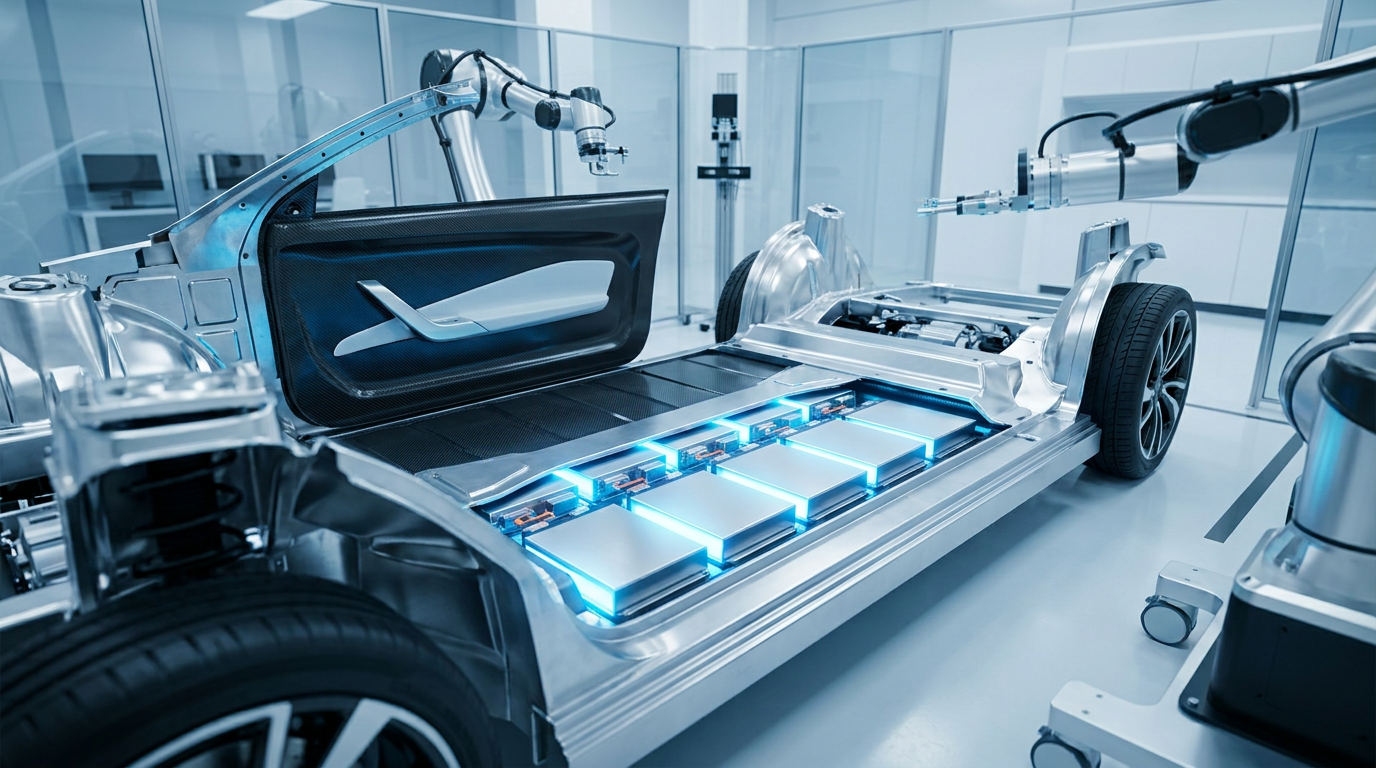
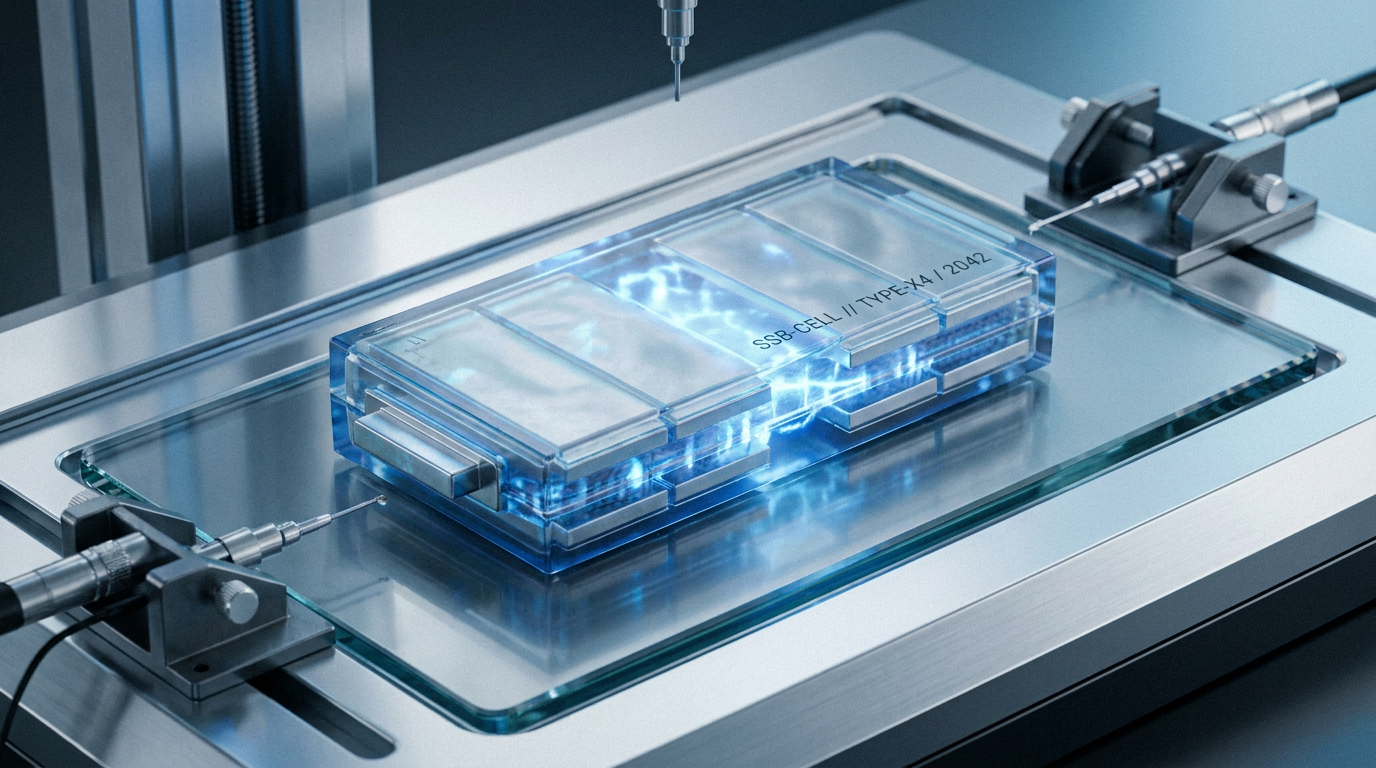
The solid-state solution is elegantly simple in concept, though devilishly complex in execution: replace the volatile liquid with a stable, solid material. Engineers are currently utilizing advanced ceramics, sulfide glasses, and specialized polymers to act as the separator and electrolyte.[5][7]
This solid barrier still allows lithium ions to pass through, but it fundamentally changes the battery's mechanical properties. Because the solid electrolyte is physically rigid and non-flammable, it acts as an internal fireproof wall. Comparative testing shows that thermal events in solid-state systems do not begin until temperatures reach roughly 247°C, compared to just 90°C for conventional lithium-ion cells.[8]
But safety is only the beginning; the true prize is energy density. The rigid nature of the solid electrolyte allows battery designers to rethink the anode. In today's batteries, the anode is typically made of graphite, which is heavy and bulky. With a solid separator, engineers can safely replace graphite with pure lithium metal.[4][5]
But safety is only the beginning; the true prize is energy density.
A lithium-metal anode can hold roughly ten times the capacity of a standard graphite anode. In practical terms, this pushes the energy density of the battery from today's ceiling of around 250 to 300 watt-hours per kilogram (Wh/kg) up to a targeted 400 to 500 Wh/kg. For the consumer, this translates to an EV that can travel 600 to 700 miles on a single charge without increasing the physical size or weight of the battery pack.[1][5][6][8]

Charging speeds also see a dramatic improvement. Because the solid architecture is vastly more resistant to heat, it can accept massive influxes of electrical current without degrading. Automakers like Toyota are projecting that their first-generation solid-state packs will be capable of charging from 10% to 80% in just 10 to 15 minutes, mirroring the convenience of a traditional gas station visit.[1][6]
Furthermore, solid-state batteries solve the dreaded winter range-drop. Liquid electrolytes become viscous and sluggish in freezing temperatures, severely limiting power output and charging capability. Solid electrolytes maintain their structural and conductive integrity in extreme cold, allowing vehicles to retain the vast majority of their efficiency even in sub-zero climates.[8]
Despite these revolutionary metrics, the transition will not happen overnight. As pilot plants break ground in 2026—including a massive joint venture between Toyota and Idemitsu Kosan in Japan—the industry faces steep manufacturing hurdles. The primary challenge is "interface resistance": ensuring the solid electrolyte maintains perfect, microscopic contact with the electrodes as the battery expands and contracts during use.[2][4][5]

Cost also remains a formidable barrier. Chinese battery giant CATL recently noted that sulfide-based solid-state cells are currently three to five times more expensive to produce than conventional lithium-ion cells. The precision required to manufacture these materials in moisture-free environments means that early production yields are low and capital expenditures are astronomical.[3][4]
Because of these economic realities, the rollout will be phased. Industry consensus points to 2027 and 2028 as the debut years for the first commercial solid-state EVs, which will almost certainly be low-volume, high-priced luxury or performance models. Mass-market adoption—where solid-state batteries power everyday commuter cars—is widely projected to arrive in the early 2030s.[1][3][4]

In the interim, "semi-solid" batteries are serving as a vital stepping stone. These hybrid designs use a mix of solid materials and a small amount of liquid gel to bridge the manufacturing gap, offering a partial boost in safety and density while utilizing existing factory equipment.[4]
How we got here
1991
Sony commercializes the first rechargeable lithium-ion battery, revolutionizing portable electronics.
2024–2025
Automakers begin testing 'semi-solid' batteries in limited-production vehicles as a stepping stone.
2026
Major pilot plants break ground, and China releases its first national standard for solid-state battery technology.
2027–2028
Anticipated launch window for the first premium electric vehicles equipped with fully solid-state batteries.
2030+
Projected timeline for mass-market adoption and economies of scale to bring costs down to parity with liquid lithium-ion.
Viewpoints in depth
The Aggressive Adopters
Automakers pushing for rapid commercialization to gain a competitive edge.
Companies like Toyota and QuantumScape view solid-state technology as an immediate game-changer that will redefine market leadership. They are aggressively investing in pilot lines and targeting 2027 or 2028 for their first commercial releases. For these players, the focus is on the massive performance gains—specifically the 10-minute fast-charging and 600-plus mile range—which they believe will entirely eliminate consumer hesitation around electric vehicles.
The Pragmatic Scalers
Battery manufacturers focused on the economic and manufacturing realities of scaling.
Incumbent battery giants like CATL and BYD acknowledge the scientific superiority of solid-state cells but remain highly cautious about the timeline. They point out that sulfide-based solid-state cells currently cost three to five times more to produce than traditional lithium-ion batteries. Their strategy involves a slower, phased approach, relying heavily on 'semi-solid' hybrid batteries to bridge the gap while waiting for manufacturing yields to improve and costs to fall before attempting mass-market deployment in the 2030s.
The Materials Scientists
Researchers focused on solving the microscopic physical challenges of solid-state chemistry.
For the scientific community, the primary hurdle is no longer proving that solid-state batteries work, but ensuring they survive thousands of charge cycles outside the laboratory. Researchers are heavily focused on 'interface resistance'—the challenge of keeping the rigid solid electrolyte in perfect contact with the electrodes as the battery naturally expands and contracts. They are also working to perfect protective coatings that prevent lithium dendrites from piercing the solid separator over time.
What we don't know
- Exactly how quickly manufacturing costs will fall to reach price parity with traditional lithium-ion batteries.
- Which specific solid electrolyte material—ceramics, sulfides, or polymers—will ultimately dominate the mass market.
- How the existing global supply chain will pivot to source the massive amounts of pure lithium metal required for the new anodes.
Key terms
- Electrolyte
- The medium inside a battery that allows ions to flow between the positive and negative electrodes during charging and discharging.
- Anode
- The negative electrode of a battery, which stores lithium ions when the battery is fully charged.
- Dendrites
- Microscopic, needle-like metallic structures that can grow inside a battery, potentially causing short circuits and fires.
- Thermal Runaway
- A dangerous chain reaction where a battery cell overheats, causing adjacent cells to also overheat and potentially catch fire.
- Energy Density
- The amount of energy a battery can store relative to its physical weight, typically measured in watt-hours per kilogram (Wh/kg).
Frequently asked
Can I buy an EV with a solid-state battery today?
As of 2026, fully solid-state batteries are not yet available in consumer vehicles. They are currently in pilot production, with the first premium models expected to launch around 2027 or 2028.
Why do solid-state batteries charge faster?
Because solid electrolytes are highly resistant to heat and degradation, they can safely accept massive influxes of electrical current without the risk of overheating or damaging the cell.
Are solid-state batteries safer in a crash?
Yes. They replace the flammable liquid solvents found in traditional lithium-ion batteries with stable, non-flammable solid materials, virtually eliminating the risk of chemical fires and thermal runaway.
Will this make electric vehicles cheaper?
Eventually, but not immediately. Currently, solid-state cells cost three to five times more to produce than conventional batteries. Prices are expected to drop as manufacturing scales in the 2030s.
Sources
Source coverage
8 outlets
3 viewpoints surfaced







[1]Car and DriverAggressive Adopters
Toyota Lays Out Its EV Battery Road Map, Including a Solid-State Battery
Read on Car and Driver →[2]ElectrekAggressive Adopters
Toyota partner breaks ground on solid electrolytes plant for all-solid-state EV batteries
Read on Electrek →[3]ElectrivePragmatic Scalers
CATL tempers near-term expectations for solid-state batteries
Read on Electrive →[4]Battery Tech OnlinePragmatic Scalers
Reality: Lithium solid-state batteries promise higher energy density and safety
Read on Battery Tech Online →[5]IDTechExIndustry Analysts
Solid-State Batteries: A Technological Leap
Read on IDTechEx →[6]Green Car ReportsAggressive Adopters
Toyota EV plans: Tenfold boost by 2026, solid-state batteries
Read on Green Car Reports →[7]EV Infrastructure NewsIndustry Analysts
What are solid-state batteries? Technology fundamentals explained
Read on EV Infrastructure News →[8]TO7 MotorIndustry Analysts
Solid-State Batteries 2026: The Breakthrough Powering Next-Gen EVs
Read on TO7 Motor →

Every angle. Every day.
Get guides stories with full source coverage and perspective breakdowns delivered to your inbox.