
How Local AI is Putting Powerful Models Directly on Your Devices
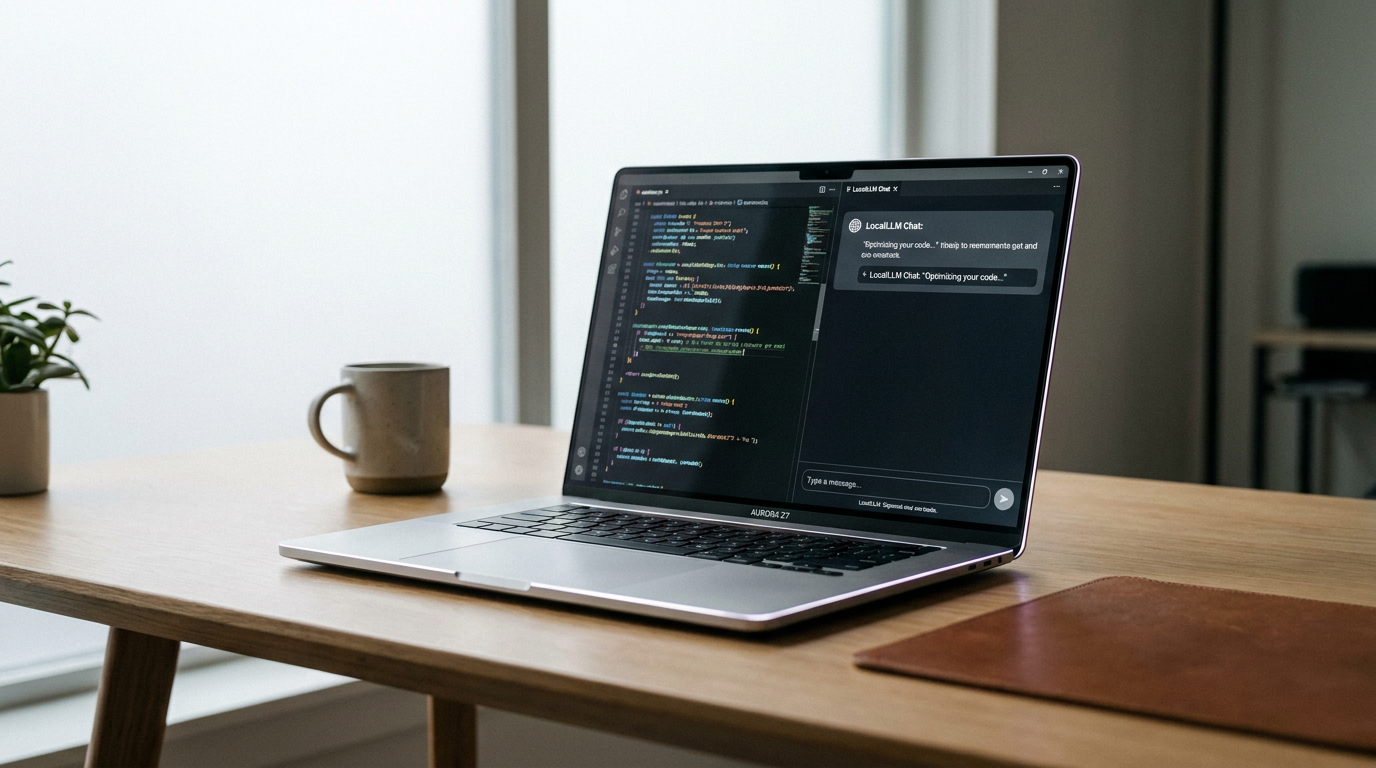
In 2026, artificial intelligence is moving out of the cloud and onto your laptop and phone. Driven by Small Language Models (SLMs) and dedicated neural hardware, on-device AI offers zero latency, complete privacy, and offline capabilities.
By Factlen Editorial Team
- Privacy & Security Advocates
- Argues that local AI is essential for data sovereignty and protecting user information.
- Hardware Manufacturers
- Views the local AI boom as a critical driver for a massive consumer upgrade cycle.
- Open-Source AI Community
- Focuses on democratizing AI access through open weights and efficient compression.
- Enterprise IT Leaders
- Focuses on hybrid routing, reducing cloud API costs, and regulatory compliance.
What's not represented
- · Cloud Infrastructure Providers
- · Data Center Operators
Why this matters
By running AI models directly on your own hardware, you eliminate expensive cloud subscription fees, protect your sensitive data from corporate logging, and gain the ability to use powerful AI tools even when you have no internet connection.
Key points
- AI processing is shifting from remote cloud servers directly to consumer laptops and smartphones.
- Dedicated Neural Processing Units (NPUs) allow devices to run AI tasks efficiently without draining battery life.
- Small Language Models (SLMs) offer frontier-level performance for routine tasks while fitting into 8GB of RAM.
- Local AI guarantees complete data privacy, as sensitive information never leaves the physical device.
- On-device inference eliminates network latency and allows AI tools to function entirely offline.
For the past three years, interacting with artificial intelligence meant sending your data to a distant server and waiting for a response. That cloud-first model brought generative AI to the masses, but it came with hidden costs: network latency, privacy risks, and expensive API fees. In 2026, the industry is undergoing a massive structural shift. AI is moving out of the data center and directly onto your laptop, phone, and tablet.[1][7]
This transition to "on-device AI" has crossed a critical threshold this year. Rather than relying on massive, trillion-parameter behemoths housed in remote server farms, developers and consumers are increasingly turning to Small Language Models (SLMs). These compact neural networks are designed to run entirely offline, offering a level of speed and privacy that cloud-based systems simply cannot match.[2][3]
To understand how this is possible, it helps to look at the architecture of an SLM. While frontier models like GPT-4o or Gemini Ultra rely on hundreds of billions of parameters to answer almost any conceivable question, SLMs are highly focused. Typically ranging from 1 billion to 8 billion parameters, they act more like specialists than generalists. They are trained on carefully curated, high-quality data to excel at specific tasks like coding assistance, text summarization, and real-time translation.[2][3]
But shrinking a model is only half the battle; it also has to fit into the memory constraints of a standard consumer device. This is achieved through a mathematical compression technique called quantization. By reducing the precision of the model's weights—often from 16-bit floating-point numbers down to 4-bit integers—developers can drastically shrink the model's footprint. A 4-billion parameter model that once required a massive server GPU can now run comfortably in just 4GB to 8GB of standard laptop RAM.[3][4]

The true catalyst for the 2026 local AI boom, however, is hardware. Modern processors now ship with a dedicated chip called a Neural Processing Unit, or NPU. Think of the NPU as a specialized engine built exclusively for the complex matrix math required by machine learning. While a traditional CPU is flexible and a GPU is powerful, both consume massive amounts of electricity when running AI tasks. The NPU handles these workloads with remarkable efficiency.[4][5]
The impact on battery life is transformative. Hardware reviewers and developers note that running continuous AI inference on an NPU-equipped laptop can yield up to twice the battery life compared to older systems that forced the GPU to do the heavy lifting. This means background AI tasks—like live audio transcription, webcam background blurring, or predictive text generation—can run all day without draining the device.[4][5]
The 2026 hardware landscape is defined by this NPU arms race. The market is currently dominated by a three-way competition: Qualcomm's Snapdragon X2 Elite Gen 2, Intel's Core Ultra Series 3, and Apple's M4 and M5 Silicon. To earn the "AI PC" designation, these chips are pushing 40 to 80 TOPS (Trillion Operations Per Second) of dedicated neural performance, providing the necessary headroom to run multiple local models simultaneously.[4][5]
The 2026 hardware landscape is defined by this NPU arms race.
However, processing power is only part of the equation. As local AI becomes standard, the baseline requirements for system memory have shifted. Industry experts now consider 16GB of RAM to be the absolute minimum for a modern machine, as the operating system, browser, and a local AI model will quickly consume that capacity. For developers and power users looking to run larger SLMs alongside heavy applications, 32GB to 64GB of RAM has become the new recommended standard.[3][4]

Beyond hardware efficiency, the strongest driver for on-device AI is privacy. Regulations like the European Union's AI Act, alongside strict data residency rules in healthcare and finance, have made corporate IT departments wary of sending sensitive information to third-party cloud providers. With local inference, the data never leaves the physical hardware. There are no API calls, no server logs, and no risk of proprietary code or patient data being intercepted or used to train future commercial models.[1][2]
Apple has made this privacy-first architecture the cornerstone of its 2026 software ecosystem. With the rollout of Apple Intelligence, the company relies heavily on on-device processing for everyday tasks. When a request requires more computational horsepower than the iPhone or Mac can provide, the system seamlessly routes it to "Private Cloud Compute"—specialized Apple Silicon servers designed to process the data without ever storing it, a claim verified by independent security audits.[6]
Local AI also fundamentally changes the user experience by eliminating network latency. A typical cloud API call adds 200 to 800 milliseconds of delay before the first word of a response appears. By processing the prompt directly on the motherboard, on-device models respond almost instantaneously. For real-time applications like voice assistants, live translation, and predictive coding, this elimination of lag is the difference between a clunky gimmick and a fluid, indispensable tool.[1][2]
Furthermore, local models offer true offline capability. Cloud-based AI is entirely useless on an airplane, in a remote field location, or during a network outage. For military applications, disaster response teams, and mobile workers, the ability to access a highly capable AI assistant without an internet connection is not just a convenience; it is a strict operational requirement.[1][2]
The software ecosystem has evolved rapidly to support this hardware. Open-source and open-weights models like Microsoft's Phi-4, Google's Gemma 3, and Meta's Llama 3.2 have achieved benchmark scores that rival the massive cloud models of just two years ago. A 3-billion parameter model running locally today can successfully execute complex logic and coding tasks that previously required a paid subscription to a frontier model.[1][3]

Deploying these models has also become remarkably user-friendly. Just a few years ago, running a local AI required navigating complex Python environments and command-line interfaces. Today, applications like Ollama, LM Studio, and Apple-optimized frameworks like MLX allow users to download and run sophisticated SLMs with the click of a button, complete with intuitive chat interfaces that look and feel exactly like web-based AI tools.[3][7]
The economic implications for software developers are profound. Relying exclusively on cloud APIs to power AI features can cost consumer applications hundreds of thousands of dollars a month in token fees. By shifting the compute burden to the user's NPU, developers can offer AI-powered features without incurring ongoing server costs, fundamentally changing the business model for AI startups.[1][4]
Despite these massive leaps, local AI is not a complete replacement for the cloud. Small Language Models are exceptional at focused, domain-specific tasks, but they lack the vast, encyclopedic knowledge and deep reasoning capabilities of trillion-parameter frontier models. They are more likely to hallucinate when asked highly obscure questions and cannot process the massive context windows required to analyze entire libraries of documents at once.[2][7]
Ultimately, the future of artificial intelligence in 2026 is not a binary choice between local and cloud, but a hybrid architecture. Devices are increasingly designed to act as intelligent routers: they handle 95 percent of routine queries—drafting emails, summarizing notes, and controlling device settings—instantly and privately on the NPU. Only when a task demands massive computational scale does the system silently escalate the request to the cloud, offering users the best of both worlds.[1][2][7]
How we got here
2020
GPT-3 launches, establishing the massive cloud-first paradigm for large language models.
2023
Early quantization techniques allow enthusiasts to run compressed open-source models on high-end gaming GPUs.
2024
The first wave of 'AI PCs' launches, introducing Neural Processing Units (NPUs) to mainstream consumer laptops.
2025
Small Language Models (SLMs) prove that sub-10B parameter models can rival older frontier models in efficiency.
2026
Hybrid AI becomes standard, with operating systems routing tasks locally by default to save costs and protect privacy.
Viewpoints in depth
Privacy & Security Advocates
Argues that local AI is essential for data sovereignty and protecting user information.
For privacy advocates and compliance officers, the shift to on-device AI is a necessary correction to the massive data-harvesting practices of the early generative AI boom. By keeping inference local, users ensure their personal queries, proprietary code, and sensitive health data never traverse the open internet. This camp views cloud-only AI as a fundamental security vulnerability and champions local models as the only viable path forward for enterprise and regulated industries.
Hardware Manufacturers
Views the local AI boom as a critical driver for a massive consumer upgrade cycle.
Chipmakers and laptop manufacturers see on-device AI as the most compelling reason for consumers to upgrade their hardware in a decade. By heavily marketing NPU TOPS (Trillion Operations Per Second) and establishing new baselines for RAM, companies like Qualcomm, Intel, and Apple are attempting to reset the standard for what constitutes a capable computer. For this camp, the software is merely the vehicle to sell high-margin, AI-accelerated silicon.
Open-Source AI Community
Focuses on democratizing AI access through open weights and efficient compression.
The open-source community views local AI as a democratizing force that breaks the oligopoly of massive cloud providers. By refining quantization techniques and building user-friendly deployment tools like Ollama and MLX, this camp is focused on making powerful intelligence accessible to anyone with a standard laptop. They argue that the future of AI should be decentralized, transparent, and free from the API paywalls and censorship guardrails imposed by centralized tech giants.
What we don't know
- Whether Small Language Models will eventually hit a hard capability ceiling compared to their massive cloud counterparts.
- How quickly software developers will rewrite legacy applications to take full advantage of NPU hardware.
- If the 40 TOPS benchmark will remain sufficient for future local models, or if hardware requirements will continue to inflate.
Key terms
- Small Language Model (SLM)
- A highly efficient AI model, typically under 10 billion parameters, designed to run locally on consumer hardware rather than in a data center.
- Neural Processing Unit (NPU)
- A specialized computer chip built specifically to handle the complex matrix math required by machine learning with high energy efficiency.
- Quantization
- A mathematical compression technique that shrinks the memory footprint of an AI model by reducing the precision of its internal numbers.
- TOPS
- Trillion Operations Per Second, a standard benchmark used to measure the raw processing power of a Neural Processing Unit.
- Private Cloud Compute
- Apple's hybrid architecture that processes complex AI requests on secure, verifiable servers without storing user data.
Frequently asked
Can I run local AI on my current laptop?
Yes, if you have at least 8GB to 16GB of RAM. However, without a dedicated Neural Processing Unit (NPU), the processing will rely on your CPU or GPU, which may drain your battery quickly and run slower.
Do local AI models cost money to use?
No. Once you download an open-weights model like Llama 3.2 or Gemma 3, running it on your own hardware is completely free and requires no API subscriptions or token fees.
Is an on-device model as smart as ChatGPT?
Not for complex reasoning or obscure trivia. Small Language Models are highly capable for routine tasks like coding, summarizing, and writing, but they lack the vast encyclopedic knowledge of massive cloud models.
Does local AI work without an internet connection?
Yes. Because the model files are stored directly on your hard drive, local AI functions perfectly on airplanes, in remote areas, or during internet outages.
Sources
Source coverage
7 outlets
4 viewpoints surfaced






[1]AI MagicxOpen-Source AI Community
A practical guide to running AI models locally on consumer hardware in 2026
Read on AI Magicx →[2]TechnoFuznPrivacy & Security Advocates
Small Language Models: The Future of Efficient AI
Read on TechnoFuzn →[3]Local AI MasterOpen-Source AI Community
Best Small Language Models 2026: 12 SLMs Ranked for 8GB RAM
Read on Local AI Master →[4]David's BlueprintHardware Manufacturers
Best NPU laptops in 2026
Read on David's Blueprint →[5]Tom's GuideHardware Manufacturers
Best AI laptops 2026
Read on Tom's Guide →[6]Apple NewsroomPrivacy & Security Advocates
Apple introduces the next generation of Apple Intelligence
Read on Apple Newsroom →[7]Factlen Editorial TeamEnterprise IT Leaders
Synthesis by Factlen editorial team
Read on Factlen Editorial Team →

More in ai
See all 6 stories →AI Reasoning
The End of Instant AI: How 'Test-Time Compute' is Teaching Models to Think Before They Speak
6 sources

Neuroprosthetics
How AI and Neural Interfaces Are Rewiring Human Mobility
8 sources

Local AI
How On-Device AI Chatbots Work (And Why They Matter)
6 sources

AI Filmmaking
How Indie Filmmakers Are Using AI Video Generators to Slash VFX Budgets and Rival Studio Productions
6 sources

Every angle. Every day.
Get ai stories with full source coverage and perspective breakdowns delivered to your inbox.