
How Hydration Testing and Sports Science Are Revolutionizing Weight Cutting in Combat Sports
Combat sports organizations are increasingly abandoning dangerous rapid weight loss tactics in favor of strict hydration testing and gradual weight management protocols to protect athlete health.
By Factlen Editorial Team
- Sports Science Researchers
- Advocating for gradual weight loss and strict physiological monitoring.
- Athletic Commissions
- Balancing fighter safety with the logistical realities of event promotion.
- Fighters & Coaches
- Adapting traditional fight camp strategies to meet new safety regulations.
What's not represented
- · Traditional Boxing Promoters
- · Regional Circuit Fighters
Why this matters
Extreme weight cutting has historically been one of the most dangerous aspects of combat sports, leading to severe organ damage and even death. The shift toward science-backed hydration testing ensures that fighters can compete safely, extending their careers and improving the quality of the sport for fans.
Key points
- Combat sports are shifting away from dangerous rapid weight loss (RWL) tactics.
- Promotions are increasingly utilizing Urine Specific Gravity (USG) tests to ensure fighters are hydrated.
- Extreme dehydration significantly impairs cognitive function and increases the risk of brain injury.
- Gradual Weight Loss (GWL) preserves muscle mass and energy by focusing on fat reduction over water loss.
- Modern fight camps employ specialized low-fiber and low-sodium diets in the final days before a bout.
The traditional image of a combat sports athlete sweating profusely in a foil sauna suit just hours before an official weigh-in is slowly becoming a relic of the past. For decades, the culture of mixed martial arts (MMA) and professional boxing normalized extreme weight cutting—a grueling, often dangerous process where fighters shed massive amounts of water weight to compete in smaller divisions. The prevailing logic was simple: by dehydrating the body to make a lower weight class, a fighter could rehydrate before the bout and step into the cage significantly larger and stronger than their opponent. However, this pursuit of a competitive edge frequently pushed human physiology to its absolute breaking point, resulting in severe health complications and diminished in-ring performance.[5][7]
However, a quiet but profound revolution is currently reshaping the combat sports industry. Driven by rapid advancements in sports science and a growing, industry-wide emphasis on athlete longevity, the MMA world is aggressively transitioning away from dangerous dehydration tactics. Major organizations and state athletic commissions are increasingly adopting strict hydration testing protocols and actively promoting gradual weight loss methodologies over acute fluid shedding. This paradigm shift represents a fundamental change in how fighters, coaches, and promoters view preparation, moving away from the archaic "toughness" of surviving a brutal weight cut and toward a modernized approach that prioritizes metabolic health, cognitive preservation, and sustainable athletic careers.[1][8]
To fully understand the necessity of this shift, one must examine the underlying mechanics of Rapid Weight Loss (RWL). Historically, fighters would engage in a practice known as "water loading"—drinking excessive amounts of water, sometimes up to two gallons a day, to trigger increased kidney function and frequent urination. Following this loading phase, athletes would suddenly and severely restrict their fluid intake. Because the kidneys continue operating at an accelerated rate, the body rapidly flushes out its remaining water reserves. Combined with intense, exogenous sweating induced by saunas, hot Epsom salt baths, or training in heavy thermal suits, athletes could artificially drop up to eight percent of their total body mass in a matter of days.[5][7]

The physiological toll of this extreme dehydration practice is severe and multifaceted. As the body loses water, blood volume decreases significantly, which impairs cardiovascular function and forces the heart to work exponentially harder just to circulate oxygen. This reduction in fluid also cripples the body's ability to regulate its core temperature, increasing the risk of heat exhaustion. According to recent biomechanical analyses, this rapid loss of fluid, often paired with severe calorie restriction, causes deep glycogen depletion and muscle catabolism. Consequently, a fighter's power output, explosive strength, and muscular endurance are drastically reduced, leaving them physically compromised before the first bell even rings.[2]
Beyond the obvious physical drain, extreme weight cutting severely impacts an athlete's cognitive function and neurological resilience. Visio-spatial skills, reaction times, and complex decision-making capabilities are all demonstrably compromised when the brain is deprived of adequate hydration and essential electrolytes. In a high-stakes sport where a fraction of a second dictates the outcome of a strike or a takedown defense, these cognitive deficits not only diminish overall competitive performance but exponentially increase the risk of traumatic brain injury. A dehydrated brain lacks the necessary cerebrospinal fluid cushioning to absorb the impact of concussive blows, making fighters significantly more vulnerable to knockouts and long-term neurological damage.[1][6]
The catalyst for widespread regulatory change came after a series of high-profile tragedies directly linked to extreme weight cutting, most notably the 2015 death of a 21-year-old MMA fighter who suffered fatal complications from severe dehydration. In response to this and other near-fatal incidents, progressive promotions like ONE Championship completely overhauled their weight-management systems. They banned traditional dehydration-based weight cutting and instituted a revolutionary "walking weight" model. Under this system, athletes are required to compete at a weight much closer to their natural, everyday size, fundamentally altering the competitive landscape and setting a new global standard for fighter safety.[3][4]
In response to this and other near-fatal incidents, progressive promotions like ONE Championship completely overhauled their weight-management systems.
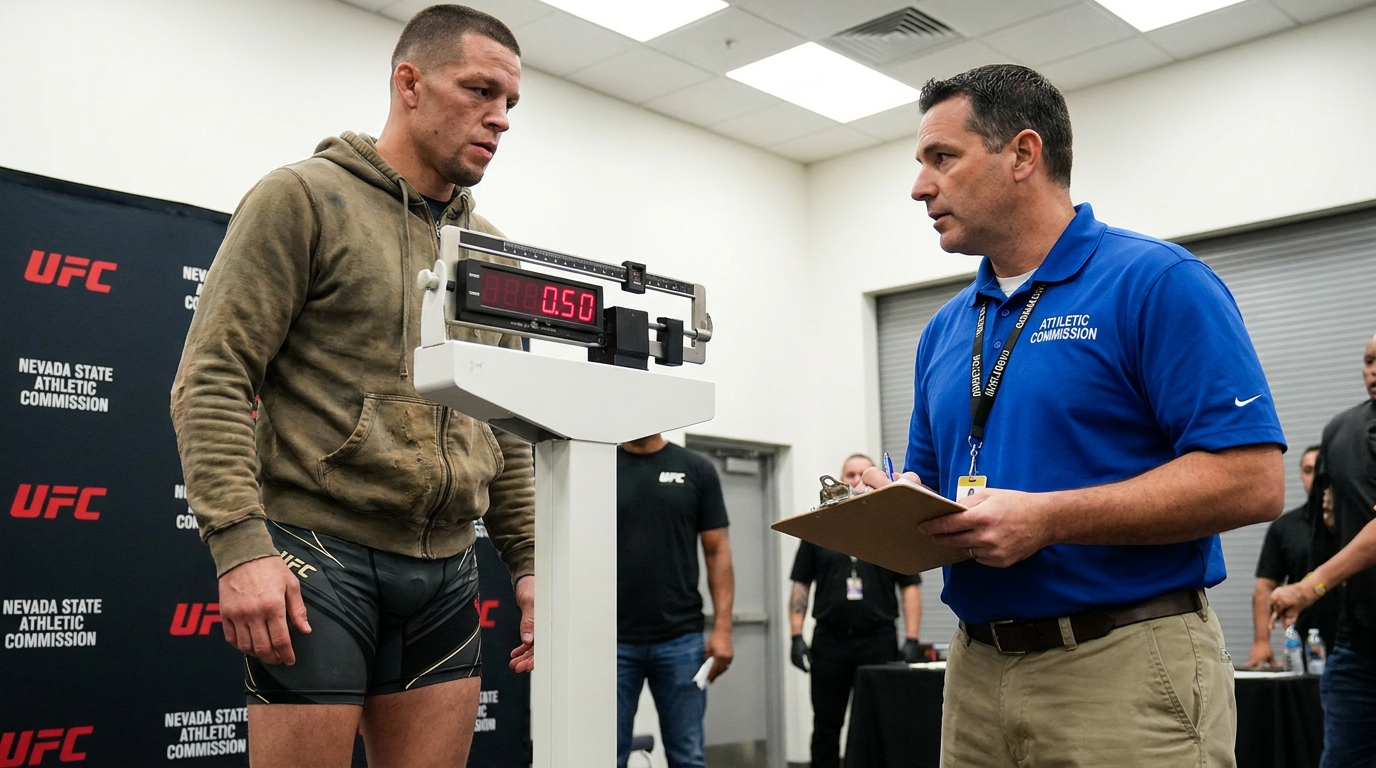
The cornerstone of this modernized safety paradigm is the implementation of the Urine Specific Gravity (USG) test. Rather than simply measuring an athlete's total mass on a scale, athletic commissions and medical officials now test the concentration of particles in a fighter's urine to determine their true hydration level. A USG reading above 1.025 typically indicates significant hypohydration. If an athlete fails this metric, they are deemed medically unfit to compete, resulting in the immediate cancellation or restructuring of the bout. This objective, science-based metric ensures that fighters cannot simply sweat out their weight without facing immediate regulatory consequences.[1][7]

Implementing these stringent hydration tests has not been without its logistical challenges. Some athletes and their camps have attempted to game the system through strategic fluid manipulation—consuming small, precise amounts of water just minutes before the test to artificially dilute their urine while their internal organs remain systemically dehydrated. This "temporary rehydration" creates a brief, deceptive window where the urine sample meets regulatory standards. To combat these dangerous loopholes, commissions are increasingly relying on continuous, randomized monitoring throughout fight week, rather than relying on a single-point test, ensuring that athletes maintain safe hydration levels consistently.[4]
To eliminate the need for these risky workarounds, sports scientists and elite nutritionists are heavily advocating for Gradual Weight Loss (GWL) as the definitive alternative. This evidence-based method involves a progressive, multi-week reduction in body mass achieved through sustained dietary energy restriction and meticulously managed training loads, rather than acute fluid loss. By prioritizing actual fat loss over temporary water loss, athletes preserve their lean muscle mass, protect their vital organs, and arrive at fight week fully hydrated. Studies consistently show that fighters utilizing GWL maintain significantly higher energy levels and better mood stability heading into competition.[1][8]
Modern fight camps now frequently employ dedicated, highly educated sports nutritionists to manage this gradual process safely and effectively. In the final days before a bout, fighters transition to a specialized low-fiber and low-sodium diet. Reducing dietary fiber minimizes the physical weight of gastrointestinal contents without depriving the body of energy, while lowering sodium intake naturally decreases extracellular fluid retention. This sophisticated nutritional strategy allows fighters to shed those final, necessary pounds safely, entirely eliminating the need for dangerous, exogenous sweating techniques like sauna suits or severe fluid restriction.[5][7]

For athletes who do engage in mild, strictly regulated water shedding, the subsequent rehydration phase is meticulously calculated to maximize recovery. Medical experts recommend replacing 125 to 150 percent of the fluid lost, utilizing high-sodium oral rehydration solutions to ensure the body actually retains the water rather than immediately flushing it out. This recovery process is carefully timed and monitored, as clinical research indicates that a minimum 36-hour recovery interval is necessary to fully restore muscle contractility, cardiovascular performance, and cognitive function after even a moderate, medically supervised weight cut.[1][8]
The broader shift toward safer, science-backed weight management is still an ongoing process across the global combat sports landscape. While some smaller regional circuits and traditional boxing commissions lag behind in adopting these modern protocols, the overarching trajectory of the sport is undeniably clear. The widespread integration of early morning weigh-ins, stringent hydration testing, and a cultural shift toward fighting at natural weight classes is actively creating a safer, more sustainable environment. As more high-profile fighters publicly advocate for these changes, the stigma against fighting at a natural weight is rapidly dissolving.[3][4]
Ultimately, the evolution of weight-cutting protocols represents a crucial maturation of combat sports as a whole. By aligning regulatory frameworks with modern sports science and prioritizing long-term health, the industry is proving that peak athletic performance and uncompromising athlete safety do not have to be mutually exclusive. Fighters are increasingly learning that stepping into the cage fully hydrated, metabolically stable, and cognitively sharp provides a far greater, more reliable competitive advantage than simply being the heavier, but severely depleted, athlete on fight night.[2][8]
How we got here
2015
ONE Championship bans dehydration-based weight cutting following the tragic death of a 21-year-old fighter.
2016
Early morning weigh-ins are introduced by major athletic commissions to allow athletes more time to safely rehydrate.
2018
Medical experts publicly call for mandatory hydration testing across all combat sports to prevent inevitable fatalities.
2024
Advanced Urine Specific Gravity (USG) testing becomes a standard regulatory practice in progressive MMA promotions.
2026
Sports science systematic reviews confirm that Gradual Weight Loss (GWL) significantly outperforms Rapid Weight Loss (RWL) in cognitive retention.
Viewpoints in depth
Sports Science Researchers
Advocating for gradual weight loss and strict physiological monitoring.
Sports scientists and medical professionals argue that the traditional model of rapid weight loss is fundamentally incompatible with peak athletic performance. They point to extensive biomechanical data showing that severe dehydration cripples muscle contractility, reduces cerebrospinal fluid, and exponentially increases the risk of traumatic brain injury. This camp pushes for continuous, randomized hydration testing and the complete abolition of extreme fluid shedding.
Athletic Commissions
Balancing fighter safety with the logistical realities of event promotion.
For regulatory bodies and promoters, the shift toward hydration testing is a necessary evolution to prevent catastrophic health failures and legal liabilities. Organizations like ONE Championship have led the charge by implementing 'walking weight' models. However, commissions acknowledge the logistical difficulty of enforcing these rules globally, noting that athletes often attempt to game single-point urine tests, requiring more sophisticated and expensive continuous monitoring protocols.
Fighters & Coaches
Adapting traditional fight camp strategies to meet new safety regulations.
The athletes and their coaching staffs are on the front lines of this transition. While many welcome the end of grueling sauna sessions and dangerous dehydration, adapting to gradual weight loss requires a complete overhaul of fight camp nutrition. Coaches emphasize that fighting at a natural weight allows athletes to train harder and retain more explosive power, though some express concern about facing opponents who still manage to exploit loopholes in the hydration testing system.
What we don't know
- Whether smaller regional circuits have the financial resources to implement rigorous, continuous hydration testing.
- How effectively commissions can close loopholes that allow fighters to temporarily dilute their urine for a test.
Key terms
- Rapid Weight Loss (RWL)
- The practice of shedding significant body mass in a short period, primarily through severe dehydration and sweating.
- Gradual Weight Loss (GWL)
- A structured, multi-week approach to reducing body mass through caloric deficit and fat loss while maintaining healthy hydration levels.
- Urine Specific Gravity (USG)
- A laboratory test that measures the concentration of particles in urine, used by athletic commissions to determine an athlete's hydration level.
- Water Loading
- A technique where an athlete consumes excessive water for several days to increase kidney output, before suddenly restricting fluids to induce rapid dehydration.
- Glycogen Depletion
- The reduction of stored carbohydrates in the muscles and liver, which naturally sheds bound water weight but severely reduces athletic endurance.
Frequently asked
Why do fighters cut weight in the first place?
Fighters cut weight to compete in a lower weight class, aiming to gain a size, reach, and strength advantage over their opponents once they rehydrate.
How does hydration testing prevent extreme weight cutting?
Hydration testing measures the concentration of a fighter's urine. If the urine is too concentrated, indicating severe dehydration, the fighter is not cleared to compete.
What is the difference between water weight and fat loss?
Water weight can be lost and regained in a matter of hours through sweating and drinking, while actual fat loss requires a sustained caloric deficit over several weeks.
Sources
Source coverage
8 outlets
3 viewpoints surfaced








[1]Scientific Journal of Sport and PerformanceSports Science Researchers
Optimizing weight cutting practices in MMA: A systematic review of safer methods
Read on Scientific Journal of Sport and Performance →[2]Hilaris PublisherSports Science Researchers
Weight Cutting in Mixed Martial Arts Biomechanical Performance Impact
Read on Hilaris Publisher →[3]WikipediaAthletic Commissions
Weight cutting in combat sports
Read on Wikipedia →[4]TheWrestlingFallacyAthletic Commissions
Weight Cutting and Hydration Tests in MMA: A double edged sword?
Read on TheWrestlingFallacy →[5]Evolve DailyFighters & Coaches
How Does Weight Cutting And Hydration Work In MMA
Read on Evolve Daily →[6]MDPISports Science Researchers
Comparative Analysis of Visio-Spatial Skills Profiles in Boxing, Karate, and Taekwondo Athletes
Read on MDPI →[7]Phantom AthleticsFighters & Coaches
Weight Cutting in Combat Sports: Risks, Methods & Safety
Read on Phantom Athletics →[8]Factlen Editorial TeamFighters & Coaches
Synthesis by Factlen editorial team
Read on Factlen Editorial Team →
More in sports
See all 10 stories →Injury
Young NFL Stars Make Triumphant Returns to the Field During 2026 Mandatory Minicamps
0 sources
Standings
2026 CFL Standings: Defending Champion Roughriders Hold Top Spot as Alouettes Surge
0 sources
Injury
Stanley Cup Final Injury Report: Karlsson Ruled Out as Golden Knights and Hurricanes Battle Attrition
0 sources

ATP Tour
Kamil Majchrzak Claims Maiden ATP Title at 30 in Historic Libéma Open Run
0 sources
Every angle. Every day.
Get sports stories with full source coverage and perspective breakdowns delivered to your inbox.