
How Enhanced Geothermal Systems Are Unlocking 24/7 Clean Energy
By adapting horizontal drilling techniques from the oil and gas industry, next-generation geothermal plants are tapping into the Earth's subterranean heat to provide constant, carbon-free baseload power.
By Factlen Editorial Team
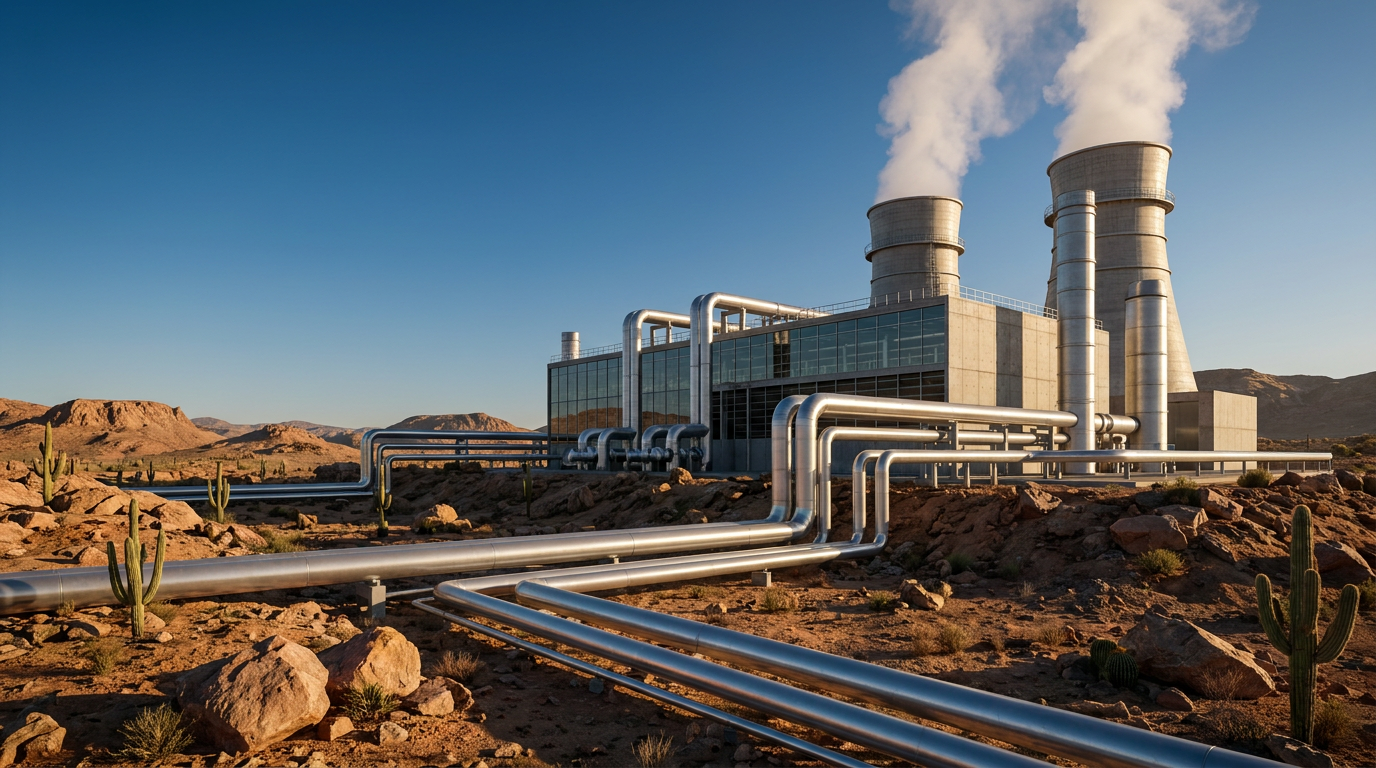
- Geothermal Developers
- Argue that EGS is now a proven, bankable technology ready to scale rapidly if transmission hurdles are cleared.
- Energy Analysts & Economists
- Focus on the dramatic cost reductions and the market demand from tech companies seeking 24/7 clean power.
- Grid & Infrastructure Planners
- Emphasize the logistical challenges of connecting remote geothermal resources to the broader electrical grid.
What's not represented
- · Local communities near proposed EGS sites
- · Environmental groups monitoring water usage
Why this matters
As the power grid struggles to balance intermittent wind and solar with the massive energy demands of AI data centers, Enhanced Geothermal Systems offer a holy grail: reliable, 24/7 electricity with zero carbon emissions. The commercial arrival of this technology could fundamentally rewrite the timeline for decarbonizing the global economy.
Key points
- Enhanced Geothermal Systems (EGS) create artificial underground reservoirs to generate electricity, bypassing the need for natural hot springs.
- By adapting horizontal drilling techniques from the oil and gas industry, developers have slashed drilling times by 70%.
- Major tech companies like Google and Meta are signing long-term contracts for EGS power to run their AI data centers.
- A Princeton study estimates that EGS could supply up to 20% of the United States' electricity by 2050.
- Fervo Energy, a leading EGS developer, recently went public at a $10 billion valuation, signaling strong market confidence.
- A lack of high-voltage transmission lines in the Western U.S. remains the primary bottleneck for scaling the technology.
In early June 2026, a clean energy company named Fervo Energy quietly went public, closing its first day of trading with a valuation of $10 billion. While the financial milestone made headlines on Wall Street, the underlying technological achievement is what has energy analysts paying attention. Fervo is the first commercial-scale operator of an Enhanced Geothermal System (EGS)—a next-generation approach to tapping the Earth's subterranean heat. For an energy transition desperate for reliable, carbon-free power, the successful public listing signals that a long-theorized technology has finally crossed the threshold from experimental pilot to bankable infrastructure.[7]
For decades, geothermal energy has been the elusive holy grail of the renewable sector. Unlike wind and solar arrays, which are inherently intermittent and depend heavily on daily weather conditions, geothermal provides constant, 24/7 baseload power. It operates day and night, regardless of cloud cover or wind speeds. However, conventional geothermal plants have historically been severely geographically constrained. To function economically, they require a rare natural trifecta: immense subterranean heat, naturally occurring underground fluid, and highly permeable rock formations that allow the fluid to circulate freely. Finding all three elements in the same location is exceptionally rare.[1][2]
Because of these strict geological requirements, traditional geothermal power has been largely limited to volcanic hotspots and active tectonic plate boundaries, such as the rugged landscape of Iceland or the famous geysers of Northern California. If a region lacked natural hot springs or permeable aquifers, it was simply deemed unsuitable for geothermal development. As a result, geothermal currently accounts for a remarkably small fraction of the United States' total electricity generation—hovering around just 0.2 percent of summer capacity. Enhanced Geothermal Systems are explicitly designed to eliminate that geographic bottleneck entirely, opening up vast swaths of the country to clean energy development by engineering the necessary subsurface conditions.[2][4]
The core premise of EGS is elegantly simple: if the Earth does not naturally provide the necessary fluid and permeability, engineers can artificially create them. The process begins by drilling deep into hot, dry, and impermeable crystalline rock—often thousands of meters below the surface, far deeper than traditional water wells. Once the target depth is reached, operators inject fluid under carefully controlled high pressure to create a network of microscopic fractures in the solid rock. This technique is directly adapted from the hydraulic fracturing methods pioneered by the oil and gas industry.[1][8]

This artificial fracturing creates a vast, human-made subterranean reservoir where none previously existed. A second well, known as a production well, is then drilled at a precise angle to intersect this newly created fracture network. With the loop established, cold water is pumped down the injection well, where it is forced to circulate through the hot, fractured rock. As the water travels through these microscopic fissures, it acts as a massive heat exchanger, absorbing immense amounts of thermal energy directly from the Earth's crust.[1]
The superheated water is then pumped back to the surface through the production well. Because the fluid is kept under immense pressure throughout its underground journey, it remains in a liquid state even at temperatures exceeding 300°F to 600°F. Once it reaches the surface facility, the pressure is carefully reduced, causing the water to rapidly flash into steam—or, in binary cycle plants, it is used to heat a secondary working fluid with a much lower boiling point. This steam spins a massive turbine to generate electricity, and the cooled water is subsequently reinjected into the earth in a continuous, zero-emission closed-loop cycle.[1][4]
The concept of Enhanced Geothermal Systems has existed in academic circles and national laboratories since the 1970s, but it was historically plagued by exorbitant costs that kept it relegated to small pilot projects. Drilling through hard, abrasive basement rock like granite is fundamentally more difficult and time-consuming than drilling through the softer sedimentary rock typically targeted by fossil fuel companies. Drill bits wear out faster, and progress is agonizingly slow. Historically, these drilling expenses accounted for 50% to 80% of a geothermal project's total capital expenditure, making the economics completely unviable for widespread commercial deployment when competing against cheap natural gas or subsidized solar.[8]
Drill bits wear out faster, and progress is agonizingly slow.
The recent breakthrough that has propelled EGS into the mainstream has not come from a novel scientific discovery, but rather from the aggressive application of modern oil and gas technology. By utilizing advanced horizontal drilling techniques, sophisticated subsurface imaging, and modern drill bits developed during the shale boom, companies like Fervo have drastically accelerated their drilling speeds. Between its early pilot projects and its current commercial wells, Fervo reduced its drilling completion times by an astonishing 70 percent—dropping from 60 to 80 days per well down to just 15 to 20 days.[7][8]

This steep learning curve is fundamentally transforming the financial calculus of geothermal energy, bringing it closer to parity with other renewables. A comprehensive 2025 analysis published in the journal Joule by Princeton University researchers modeled the long-term impact of these sustained cost reductions. The study concluded that if EGS deployment continues to scale and follow historical learning curves seen in solar and wind, the technology could supply up to 20% of the United States' total electricity needs by 2050.[2][3]
The commercial viability of EGS is arriving at a critical moment for the U.S. power grid. The explosive growth of artificial intelligence and the rapid construction of massive data centers have triggered a sudden surge in electricity demand that wind and solar alone struggle to meet around the clock. Tech giants are under immense pressure to secure firm, carbon-free baseload power to meet their ambitious climate pledges without compromising the strict reliability requirements of their server farms.[3][7]
Recognizing this perfect alignment of supply and demand, major technology companies have eagerly stepped in as the anchor tenants for the nascent EGS industry. Google and Meta have both signed long-term power purchase agreements (PPAs) to buy electricity directly from next-generation geothermal plants. Fervo's flagship Cape Station project in Utah, which is slated to begin commercial operations later this year with an initial 100-megawatt output, is heavily backed by these corporate energy demands, proving that the market is willing to pay a premium for reliable clean power.[6][7]

Despite the technological triumphs and the recent influx of Wall Street capital, significant hurdles remain before EGS can achieve true national scale. The most pressing bottleneck facing developers today is not underground, but above it: the severe lack of high-voltage transmission infrastructure. Many of the most promising and easily accessible EGS sites are located in remote, arid areas of the American West, far from the coastal population centers and suburban data hubs that desperately require the power. Building new transmission lines across state borders is notoriously difficult, often requiring a decade of environmental reviews, permitting battles, and local opposition.[6]
Industry analysts warn that this lack of grid connectivity could strand gigawatts of potential geothermal capacity. Fervo alone has amassed a staggering development pipeline of roughly 42 gigawatts across Nevada, Utah, and Idaho, but securing the necessary grid interconnection rights remains a slow and highly bureaucratic process. To bypass these gridlock issues, some developers are increasingly exploring 'behind-the-meter' arrangements, proposing to build massive data centers directly adjacent to the remote geothermal plants to consume the power on-site.[6]
Even as the first wave of EGS plants comes online, researchers are already testing the next frontier of geothermal technology to unlock even greater efficiencies. Companies like Quaise Energy are developing radical millimeter-wave drilling systems—using directed energy technology derived from nuclear fusion research—to literally vaporize rock and drill up to 20 kilometers deep. At those extreme depths, water reaches a 'supercritical' state, potentially yielding five to ten times more energy per well than current EGS methods and allowing plants to be built virtually anywhere on Earth.[8]
For now, the successful commercialization of Enhanced Geothermal Systems represents a rare and highly tangible victory in the global energy transition. By cleverly repurposing the heavy machinery, horizontal drilling expertise, and skilled workforce of the fossil fuel era to unlock a virtually inexhaustible supply of clean subterranean heat, next-generation geothermal has officially moved from a speculative science experiment to a bankable asset class. As the first commercial electrons flow onto the grid later this year, EGS stands poised to fill the critical gap in the renewable energy landscape, proving that the Earth's own heat can reliably power the future.[5][7]
How we got here
1970s
The concept of Enhanced Geothermal Systems is first proposed and tested in early pilot projects, but proves too expensive.
2010s
The shale gas boom drives massive advancements in horizontal drilling and hydraulic fracturing technology.
2021
Fervo Energy begins applying modern oil and gas drilling techniques to geothermal test wells in Nevada.
June 2025
A Princeton University study projects EGS could supply 20% of U.S. electricity by 2050.
June 2026
Fervo Energy goes public at a $10 billion valuation, marking the commercial arrival of EGS.
Late 2026
Fervo's Cape Station project in Utah is scheduled to begin commercial operations, delivering its first 100 megawatts.
Viewpoints in depth
Geothermal Developers
Industry leaders argue that EGS has solved its core technical challenges and is ready for massive deployment.
For the companies drilling the wells, the narrative is one of triumph and urgency. Having successfully adapted oil and gas technology to slash drilling costs by 70 percent, developers view EGS as a fully de-risked, bankable asset class. Their primary concern has shifted away from subsurface engineering and toward above-ground bureaucracy. They argue that the massive demand from AI data centers proves the market viability of their product, but warn that sluggish permitting and a lack of high-voltage transmission lines in the American West could artificially cap the industry's growth.
Grid Operators & Utilities
Grid managers welcome the prospect of clean baseload power but remain cautious about infrastructure bottlenecks.
Utility companies and grid operators view EGS as the missing puzzle piece in the renewable transition. Because wind and solar are intermittent, grid managers currently rely on natural gas peaker plants or expensive battery storage to keep the lights on when the weather doesn't cooperate. EGS offers the exact profile they need: 24/7, dispatchable, carbon-free power. However, operators caution that integrating gigawatts of new power from remote desert locations will require billions of dollars in new transmission infrastructure, a process that historically takes over a decade to permit and build.
Oil & Gas Industry Veterans
Fossil fuel workers see next-generation geothermal as a lifeline and a natural pivot for their existing skill sets.
For the traditional energy sector, the rise of EGS represents a profound opportunity rather than a threat. The International Energy Agency estimates that over 75 percent of the technical skills required for next-generation geothermal overlap directly with the oil and gas industry. Roughnecks, petroleum engineers, and drilling supervisors are finding that their expertise in horizontal drilling and hydraulic fracturing is exactly what the clean energy transition requires. Industry veterans view geothermal as a way to future-proof their careers while utilizing the heavy machinery and supply chains already established in places like Texas and Houston.
What we don't know
- How quickly the U.S. can build the necessary high-voltage transmission lines to connect remote EGS plants to major population centers.
- Whether next-generation 'supercritical' drilling technologies, like millimeter-wave systems, will prove commercially viable at scale.
- How the long-term water usage of EGS plants will be managed in the increasingly arid American West.
Key terms
- Enhanced Geothermal System (EGS)
- A human-made underground reservoir created by injecting fluid into hot, dry rock to extract heat for electricity generation.
- Baseload Power
- The minimum amount of electric power needed to be supplied to the electrical grid at any given time, requiring energy sources that can run continuously.
- Horizontal Drilling
- A technique where a well is drilled vertically deep into the earth and then steered horizontally to maximize contact with the target rock formation.
- Power Purchase Agreement (PPA)
- A long-term contract between an electricity generator and a buyer, often used to secure financing for new energy projects.
- Supercritical Fluid
- A substance held at a temperature and pressure where distinct liquid and gas phases do not exist, allowing it to carry massive amounts of thermal energy.
Frequently asked
What is the difference between conventional geothermal and EGS?
Conventional geothermal requires naturally occurring hot water and permeable rock. EGS creates its own reservoir by injecting fluid into hot, dry, impermeable rock to fracture it.
Does EGS use hydraulic fracturing?
Yes, EGS uses techniques adapted from the oil and gas industry to create microscopic fractures in deep rock, though it targets different geological formations and uses water rather than chemical-heavy fracking fluids.
Why is EGS suddenly becoming commercially viable?
Recent advancements in horizontal drilling have slashed the time it takes to drill deep wells by 70%, dramatically lowering the upfront capital costs that previously held the industry back.
Can EGS be built anywhere?
In theory, yes, if you drill deep enough. However, current commercial projects target areas in the Western U.S. where hot rock is relatively close to the surface, keeping drilling costs manageable.
Sources
Source coverage
8 outlets
3 viewpoints surfaced








[1]U.S. Department of EnergyGrid & Infrastructure Planners
Enhanced Geothermal Systems
Read on U.S. Department of Energy →[2]Princeton EngineeringEnergy Analysts & Economists
Enhanced geothermal systems: An underground tech surfaces as a serious clean energy contender
Read on Princeton Engineering →[3]Energy Platform NewsGrid & Infrastructure Planners
Next-generation geothermal technology to provide cheap, carbon-free electricity
Read on Energy Platform News →[4]Switchgear MagazineGeothermal Developers
Geothermal breakthrough may unlock 150 GW
Read on Switchgear Magazine →[5]ThinkGeoEnergyGeothermal Developers
Geothermal in 2025: Progress, Pressure, and Perspective
Read on ThinkGeoEnergy →[6]Utility DiveGrid & Infrastructure Planners
Fervo's 42 GW geothermal push hits a Western grid bottleneck
Read on Utility Dive →[7]Wood MackenzieEnergy Analysts & Economists
Fervo Energy goes public: is next-generation geothermal ready for the mainstream?
Read on Wood Mackenzie →[8]Information Technology and Innovation FoundationEnergy Analysts & Economists
Advanced Geothermal Energy Is Widely Available, Clean, and Maybe Cheap Enough to Make a Big Impact
Read on Information Technology and Innovation Foundation →

Every angle. Every day.
Get guides stories with full source coverage and perspective breakdowns delivered to your inbox.