
G7 Leaders Press Trump to Broker Ukraine-Russia Peace Deal at Évian Summit
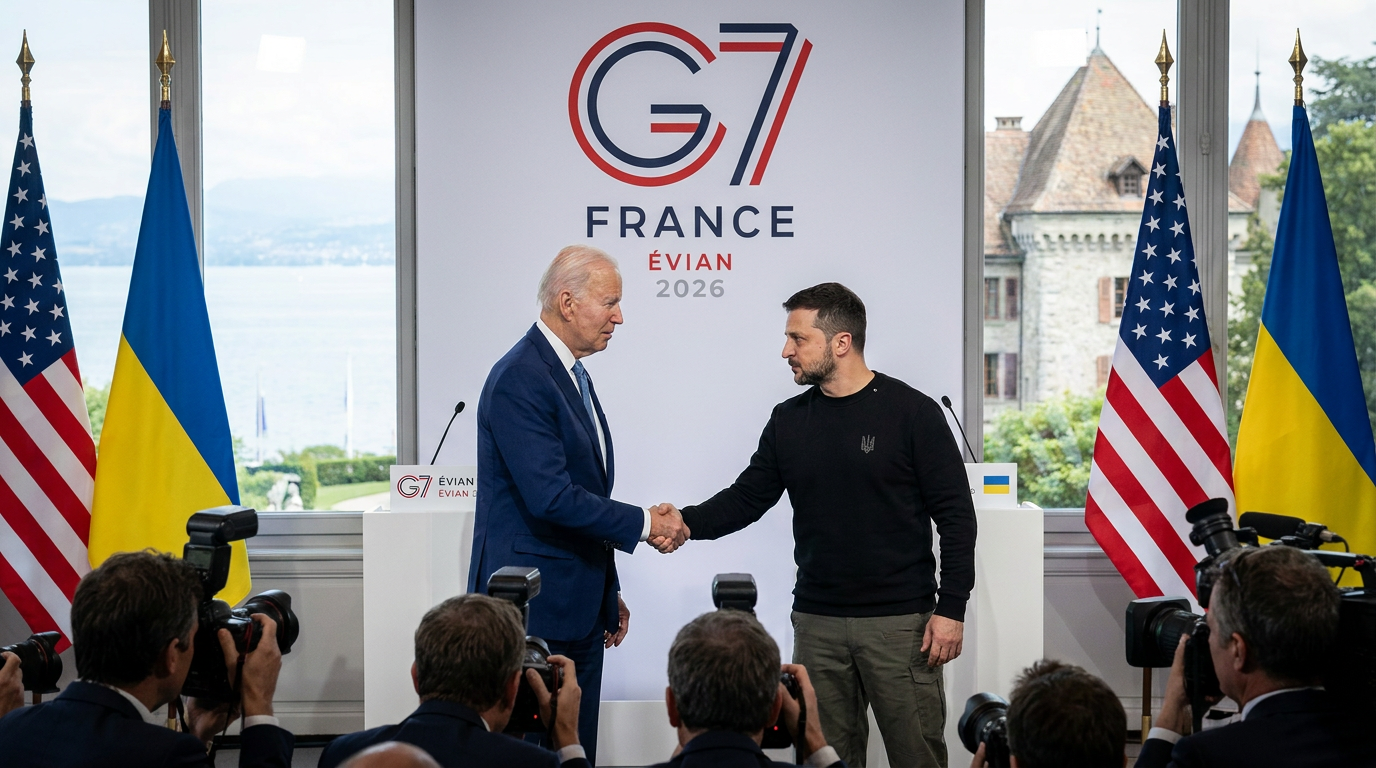
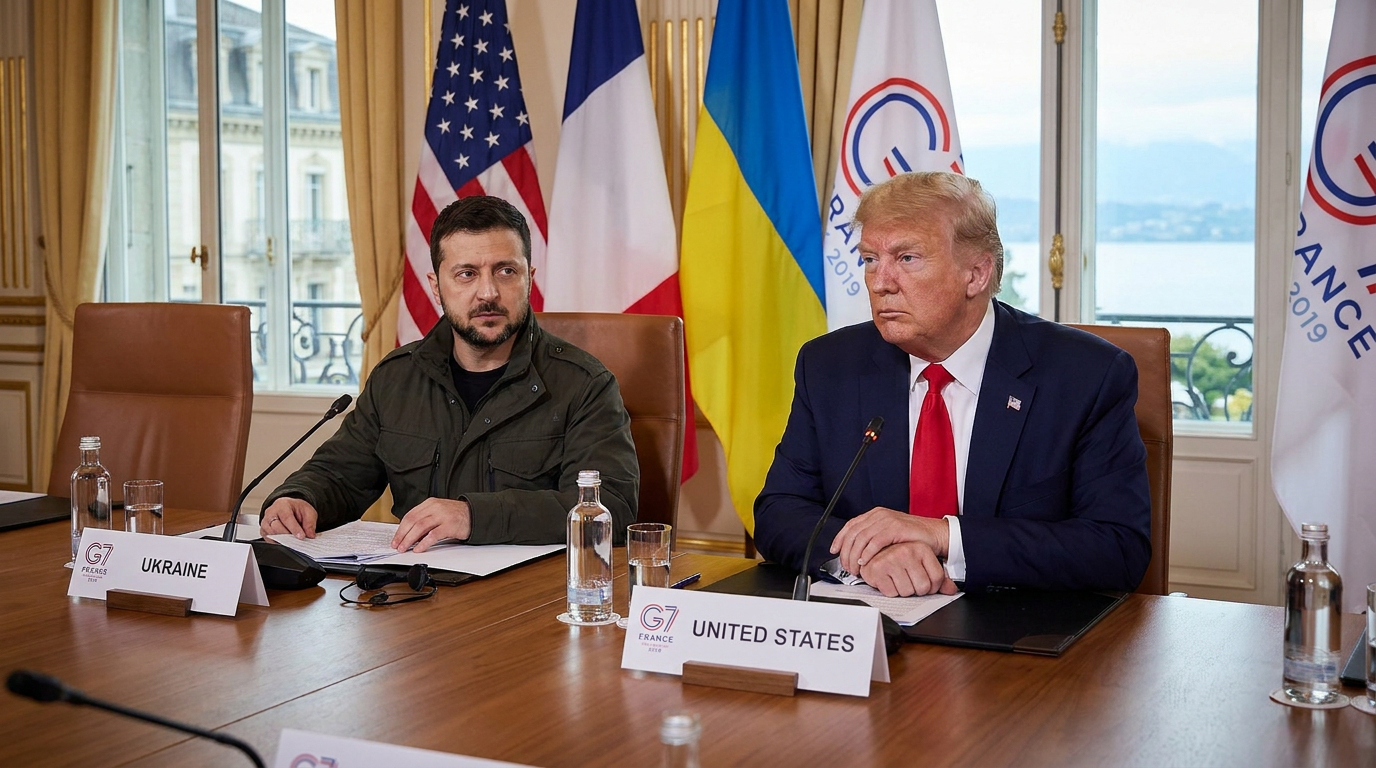
At the G7 summit in France, European leaders urged U.S. President Donald Trump to mediate an end to the five-year Russia-Ukraine war. Following a meeting with Ukrainian President Volodymyr Zelenskyy, Trump stated that Russia 'should make a deal' and vowed to help end the conflict, though he remained noncommittal on new U.S. sanctions.
By Factlen Editorial Team
- Ukrainian Government
- Argues that Russia only responds to force and strict economic sanctions, and that Putin is the primary obstacle to peace.
- European Allies
- Seeks to keep the U.S. engaged in European security while pushing for a negotiated settlement backed by unified Western pressure.
- U.S. Administration
- Views the war as a tragic but distant conflict, prioritizing a swift diplomatic deal over prolonged military entanglement.
What's not represented
- · The Russian Government
- · Russian civilians affected by the war
- · Global South nations impacted by energy markets
Why this matters
A U.S.-brokered peace deal would fundamentally reshape European security and global energy markets after five years of grinding conflict. However, any settlement hinges on whether Washington will apply enough economic pressure to force Moscow to the negotiating table.
Key points
- G7 leaders met in Évian-les-Bains, France, focusing heavily on ending the five-year Russia-Ukraine war.
- U.S. President Donald Trump met with Ukrainian President Volodymyr Zelenskyy, stating that Russia 'should make a deal.'
- European leaders urged Trump to host direct peace talks between Zelenskyy and Russian President Vladimir Putin.
- Zelenskyy presented evidence of recent Russian strikes on civilian and religious infrastructure in Kyiv.
- While expressing a desire to end the war, Trump remained noncommittal on imposing new U.S. sanctions against Moscow.
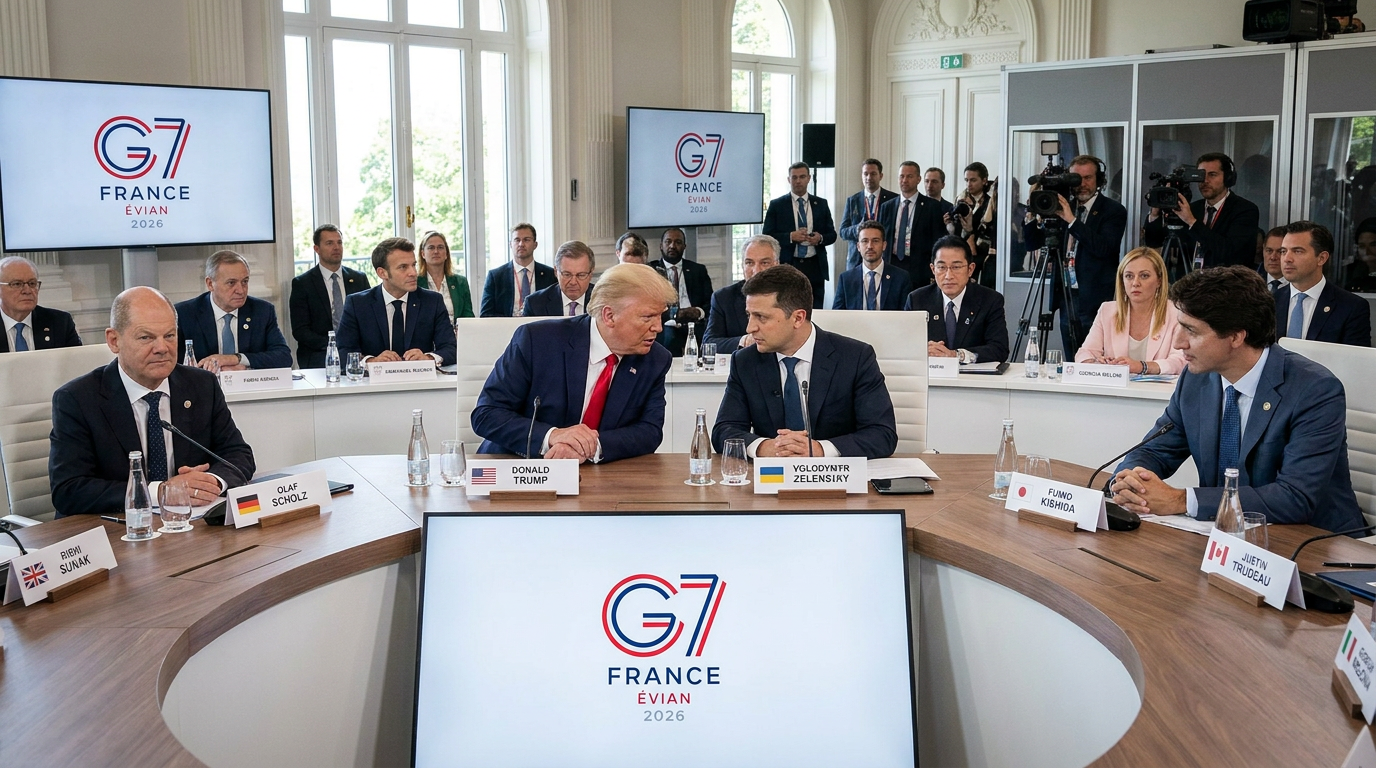
At the Group of Seven (G7) summit in the picturesque French lakeside resort of Évian-les-Bains, European leaders have launched a highly coordinated diplomatic effort to persuade U.S. President Donald Trump to broker an end to the grueling five-year Russia-Ukraine war. The renewed push for peace follows a highly anticipated face-to-face meeting between Trump and Ukrainian President Volodymyr Zelenskyy on Tuesday, their first direct encounter in four months. Emerging from the closed-door talks, Trump signaled a clear willingness to engage in the peace process, telling assembled reporters that Russia "should make a deal" and vowing to do whatever he could to halt the ongoing bloodshed. The summit's focus on Eastern Europe represents a critical juncture for the alliance, as leaders attempt to leverage Washington's diplomatic weight to force a breakthrough in a conflict that has fundamentally destabilized global security.[1][2][4]
The collaborative tone of the Évian-les-Bains summit marks a stark contrast to previous, more fractured encounters between Washington and its European allies regarding the war's trajectory. European diplomats and Zelenskyy arrived in France hoping to capitalize on Trump's recent diplomatic momentum—specifically his administration's preliminary agreement to end a U.S. conflict with Iran—and redirect his focus toward the European theater. German Chancellor Friedrich Merz expressed cautious optimism after the morning sessions concluded, describing Trump as "very cooperative" and highly attentive to the unified European position. This shift in demeanor has fueled hopes among G7 members that the United States might be ready to reassert its traditional role as a primary mediator in European security crises, rather than stepping back from the continent's affairs.[2][3][4]
Zelenskyy’s strategy during the intensive 75-minute meeting relied heavily on demonstrating the immediate and devastating human cost of the ongoing conflict. According to European diplomats familiar with the discussions, the Ukrainian leader showed Trump stark photographs detailing the aftermath of a massive Russian strike on Kyiv's historic Pechersk Lavra monastery, a devastating attack that occurred just hours before the G7 summit officially began. Trump reportedly expressed clear disapproval of the strike upon seeing the images, lamenting the "ridiculous" death toll and noting with frustration that far too many young men were dying on both sides of the front lines. Diplomats described Zelenskyy's decision to share the photographs as a psychologically effective move that grounded the abstract geopolitical discussions in the brutal reality of the war.[2][4][5]

Despite the constructive tone of the meetings, Trump's public messaging remained characteristically mixed regarding the extent of future U.S. involvement in the region. While he expressed strong support for brokering a peace deal, he simultaneously downplayed the direct stakes for Washington, remarking to reporters that the war "has no impact on us" other than the sale of military weapons, and emphasizing that the United States remains safely "thousands of miles away." He openly acknowledged that his earlier ambitions to settle the war quickly had proven far more difficult than anticipated, citing the deep-seated animosity and lack of trust between Zelenskyy and Russian President Vladimir Putin as the primary roadblocks to a swift resolution.[3][5]
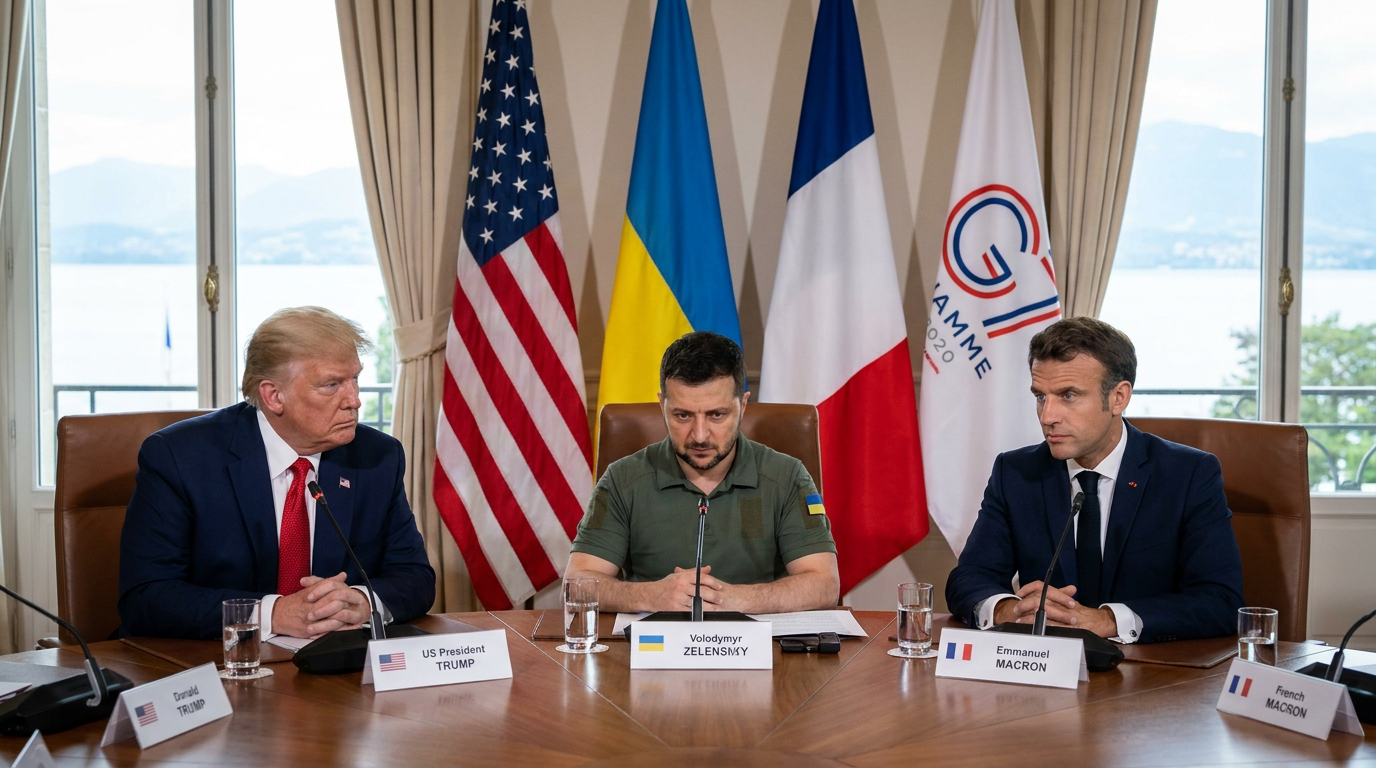
Seizing on Trump's stated desire to end the fighting, European leaders, including French President Emmanuel Macron, are actively urging the U.S. president to host direct, high-stakes negotiations between Zelenskyy and Putin in the United States. Zelenskyy has publicly supported the idea of participating in such talks, arguing forcefully that Ukraine's recently improved battlefield position—bolstered by deep and effective drone incursions into Russian territory—means Kyiv is no longer negotiating from a point of weakness. He told the assembled G7 leaders that Russia has definitively lost the military initiative and must be forced to the negotiating table before the onset of another harsh winter, which traditionally complicates both combat operations and civilian survival.[1][2]
Seizing on Trump's stated desire to end the fighting, European leaders, including French President Emmanuel Macron, are actively urging the U.S.
The primary point of friction among the allies remains exactly how to apply the necessary force to bring Moscow to the table. Zelenskyy and his European counterparts are pushing for a dramatic and immediate escalation in economic pressure, specifically targeting Russia's lucrative shadow oil fleet, its international banking sector, and its domestic military production capabilities. To that end, the European Union is already in the advanced stages of preparing its 21st comprehensive package of sanctions, which includes strict new restrictions on the sale and transfer of liquefied natural gas (LNG) tankers to Russia, aiming to further choke off the Kremlin's primary source of war funding.[1][4]

However, Trump remained notably noncommittal on whether the United States would join Europe in imposing further, more aggressive sanctions on Moscow. European diplomats noted that while the U.S. president was receptive to the moral arguments and agreed on the urgent need for a ceasefire, he offered very few concrete details on how Washington might leverage its immense economic weight to squeeze the Kremlin into compliance. This hesitation underscores the ongoing, fundamental divide between Europe's desire for a unified, punishing economic front and Washington's reluctance to deepen its financial entanglement or risk further disruptions to global energy markets.[2][4]
In the absence of sweeping new U.S. sanctions, the G7 discussions also focused heavily on the immediate logistical challenge of sustaining Ukraine's military capabilities through the coming months. With direct U.S. military aid having scaled back significantly under the Trump administration, France and other European nations have been forced to become the primary providers of financial and military support to Kyiv. During the summit, Zelenskyy specifically lobbied the leaders for assistance in obtaining the necessary licenses to produce Patriot anti-ballistic missile systems domestically, a critical technological need for defending Ukraine's vulnerable power grid and civilian centers against relentless Russian aerial bombardments.[5][6]

Publicly, Zelenskyy has maintained an uncompromising line regarding Moscow's true intentions, telling reporters and international observers that Putin remains the sole obstacle to peace and is "just playing games" to stall meaningful negotiations. The Kremlin, for its part, responded swiftly to the developments at the G7 summit by stating that if Zelenskyy genuinely desires a meeting to discuss a settlement, he must travel directly to Moscow—a provocative offer that Kyiv has consistently and categorically rejected as a non-starter for any legitimate peace process.[7]
As the high-stakes summit in France concludes, the international community watches closely to see if Trump will formally invite Putin and Zelenskyy to a U.S.-hosted peace summit in the coming weeks. While the Évian-les-Bains meetings have undoubtedly injected a much-needed dose of optimism into a grueling, five-year war, the path to a durable and just ceasefire remains heavily dependent on whether Washington is ultimately willing to apply the severe economic leverage necessary to turn diplomatic rhetoric into a binding, enforceable agreement.[1][3]
How we got here
June 15, 2026
Russia launches a major drone and missile barrage against Kyiv, damaging the Pechersk Lavra monastery.
June 16, 2026
The G7 summit begins in Évian-les-Bains, France, with the Ukraine war topping the agenda.
June 16, 2026
U.S. President Donald Trump and Ukrainian President Volodymyr Zelenskyy hold their first face-to-face meeting in four months.
Viewpoints in depth
Ukrainian Leadership
Argues that Russia only responds to force and strict economic sanctions.
Kyiv maintains that Vladimir Putin is not negotiating in good faith and uses diplomacy merely to stall. Ukrainian officials argue that their recent successes with deep drone incursions prove Russia is losing the initiative. Consequently, they believe the only path to a durable peace is forcing Moscow to the table through crippling sanctions on its shadow oil fleet and banking sector, alongside robust military support for Ukraine.
European Allies
Seeks to keep the U.S. engaged in European security while pushing for a negotiated settlement.
European nations, now shouldering the majority of the financial and military burden for Ukraine's defense, are anxious for a resolution but wary of a deal that rewards Russian aggression. Leaders like Emmanuel Macron and Friedrich Merz are cautiously optimistic about Trump's willingness to mediate, but they are simultaneously pushing Washington to commit to strict enforcement mechanisms and further sanctions to ensure Moscow honors any potential ceasefire.
The U.S. Administration
Prioritizes a swift diplomatic deal over prolonged military entanglement.
The current U.S. administration views the Ukraine conflict as a tragic but geographically distant war that drains resources and distracts from other foreign policy priorities, such as the recent Iran deal. While expressing a genuine desire to stop the bloodshed, the administration is hesitant to impose new sanctions that could disrupt global energy markets, preferring instead to leverage direct leader-to-leader negotiations to reach a rapid settlement.
What we don't know
- Whether Russian President Vladimir Putin will agree to participate in U.S.-hosted peace talks.
- If the U.S. administration will ultimately agree to impose the stricter sanctions requested by Ukraine and the EU.
- How much leverage the U.S. currently holds over Moscow's military decisions without the threat of new economic penalties.
Key terms
- G7 (Group of Seven)
- An intergovernmental political and economic forum consisting of Canada, France, Germany, Italy, Japan, the United Kingdom, and the United States.
- Pechersk Lavra
- A historic Orthodox Christian monastery in Kyiv that was recently damaged by Russian strikes.
- Patriot Missiles
- Advanced surface-to-air missile defense systems used by Ukraine to intercept Russian ballistic missiles.
Frequently asked
Did the U.S. agree to new sanctions on Russia?
No. While President Trump expressed a desire to end the war, European diplomats noted he remained noncommittal on imposing further U.S. sanctions against Moscow.
What did Zelenskyy show Trump during their meeting?
Zelenskyy presented images of the aftermath of a recent Russian strike on the historic Pechersk Lavra monastery in Kyiv to highlight the ongoing human cost of the war.
How did European leaders react to Trump's stance?
European leaders expressed cautious optimism. German Chancellor Friedrich Merz noted that Trump appeared cooperative and attentive to their concerns regarding a peace settlement.
Sources
Source coverage
7 outlets
3 viewpoints surfaced







[1]The GuardianEuropean Allies
European leaders urge Trump to host Zelenskyy-Putin talks
Read on The Guardian →[2]Jerusalem PostU.S. Administration
G7 leaders express optimism for peace after Trump's 'very good' Zelensky meeting
Read on Jerusalem Post →[3]Courthouse NewsU.S. Administration
Trump sends mixed messages on Ukraine at G7
Read on Courthouse News →[4]Channel News AsiaEuropean Allies
Trump says Russia should make peace with Ukraine after meeting Zelenskyy
Read on Channel News Asia →[5]PBSU.S. Administration
US could soon reimpose sanctions on Russian oil shipments
Read on PBS →[6]Ukrainska PravdaUkrainian Government
G7 united on need to force Putin to end war via sanctions – Zelenskyy
Read on Ukrainska Pravda →[7]Scripps NewsUkrainian Government
Zelenskyy making it clear Putin is the obstacle
Read on Scripps News →
More in news politics
See all 10 stories →D.C. Autonomy
Trump Threatens Federal Takeover of Washington D.C. as Progressive Leads Mayoral Primary
6 sources
Ukraine War
Trump Urges Russia to 'Make a Deal' at G7 Summit, Weighs Reinstating Oil Sanctions
7 sources
G7 Summit
G7 Leaders Push for Ukraine Peace Deal as Trump Signals Return of Russian Oil Sanctions
8 sources
Reparations Debate
Justice Department Sues to Halt Evanston's First-in-the-Nation Reparations Program
6 sources

Every angle. Every day.
Get news politics stories with full source coverage and perspective breakdowns delivered to your inbox.