
China's Renewables Surpass 40% of Power Mix as Coal Share Drops Below 50%
For the first time on record, coal generated less than half of China's electricity over a six-month period, while wind, solar, and hydro surpassed 40 percent of the total power mix.
By Marina Lopez

The common misconception about China's energy grid is that it operates as an unstoppable coal-burning monolith, expanding fossil fuel capacity at the expense of all else. The reality, revealed by generation data from the first half of 2026, is far more complex and systems-driven. Rather than a zero-sum game between dirty and clean energy, the country is executing a massive, parallel infrastructure build-out.
In this dual-track system, the sheer volume of clean energy deployment has finally begun to outpace the legacy fossil fuel network. This marks a profound psychological and operational shift for a grid that has relied on coal as its undisputed backbone through decades of rapid, unprecedented industrialization.[4]
For the first time in modern history, coal-fired power accounted for less than half of China's total electricity generation over a six-month period. According to official data released by the National Energy Administration (NEA), coal's share of the national power mix dropped to 49.7 percent between January and June of 2026. This marks a profound psychological and operational shift for a grid that has relied on coal as its undisputed backbone through decades of rapid, unprecedented industrialization and economic expansion.[1][3]
Simultaneously, renewable energy sources—encompassing wind, solar, hydropower, and biomass—surpassed a critical threshold, supplying 41.2 percent of the country's electricity during the same period. Wind and solar alone generated nearly a quarter of the total power consumed, producing over 1.2 trillion kilowatt-hours in just six months. This staggering volume of clean electricity generation is a direct result of years of aggressive state-backed investment, transforming vast stretches of the Chinese landscape into the most productive renewable energy hubs on the planet.[2]
This shift represents a structural milestone in the world's largest energy market. It demonstrates that the unprecedented scale of renewable installations is finally translating into a dominant generation share, fundamentally altering the baseline of how the nation powers its industrial base. Beyond actual generation, the physical hardware on the ground is also crossing a historic threshold. Total installed solar capacity reached 1.27 billion kilowatts by the end of June and is projected to surpass total coal capacity before the end of the year, according to the China Photovoltaic Industry Association.[3]
However, the decline in coal's percentage share does not equate to a decline in absolute coal consumption. China's overall electricity demand continues to surge at a remarkable pace, driven by the rapid domestic adoption of electric vehicles, the massive expansion of artificial intelligence data centers, and a robust high-tech manufacturing sector. Because the total energy pie is growing so quickly, thermal power plants actually increased their absolute output in the first half of the year simply to meet baseline demand.[1][2][3]
In this rapidly expanding system, coal remains the critical anchor for China's grid stability. State planners view thermal plants as a necessary dispatchable backup to smooth out the inherent intermittency of wind and solar generation.
When the sun sets or the wind dies down, coal plants are ramped up to ensure that factories keep running and cities stay illuminated. This dynamic means that while renewables are capturing the vast majority of new growth, fossil fuels are still heavily relied upon to prevent the rolling blackouts that have historically plagued rapid green transitions.[3][4]
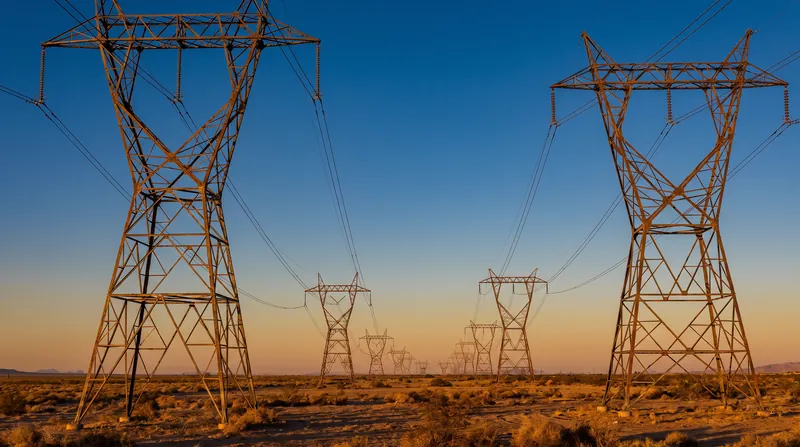
The challenge for state planners is now shifting away from raw generation capacity and toward grid integration and transmission infrastructure. A significant portion of China's renewable energy is generated in the remote, sun-drenched, and windy northwestern provinces. This geographic reality creates a severe structural mismatch, as these massive generation hubs sit thousands of miles away from the densely populated eastern coastal megacities where power demand is highest. The lack of sufficient long-distance transmission lines has created severe bottlenecks in the national system.[4]
This geographic and infrastructural mismatch has led to rising curtailment rates—a phenomenon where renewable power output is deliberately shut off because the local grid cannot absorb it or transport it elsewhere. Research from the Centre for Research on Energy and Clean Air indicates that an estimated 360 terawatt-hours of solar and wind power went untapped in early 2026 due to these constraints. That wasted energy is roughly equivalent to the annual electricity consumption of entire mid-sized nations, highlighting the friction of scaling green energy faster than the grid can handle.[4]
The curtailment issue is further exacerbated by legacy policies and long-standing contracts that guarantee minimum operating hours for coal plants. These agreements were originally designed to ensure the financial viability of thermal plants, but they now have the unintended consequence of crowding out clean energy during periods of low demand. Environmental analysts warn that unless these market mechanics are reformed, the grid risks a long-term "coal lock-in," where zero-emission electrons are discarded simply to fulfill contractual obligations to fossil fuel operators.[4]
To address these mounting inefficiencies, Beijing is actively pivoting its broader energy strategy. Rather than focusing purely on the sheer scale of new solar panel and wind turbine installations, policymakers are increasingly emphasizing efficiency, system quality, and massive grid upgrades. The government recently issued the 15th Five-Year Plan for Building a New Energy System, setting a firm target to establish a secure, efficient, and highly integrated grid architecture by the end of the decade. This marks a transition from a build-at-all-costs mentality to a focus on sustainable, usable power delivery.
A central pillar of this new strategy is accelerating the construction of ultra-high-voltage (UHV) transmission lines capable of moving clean electrons across the continent with minimal energy loss. Furthermore, the deployment of grid-scale battery storage is accelerating rapidly to capture excess midday solar generation and discharge it during evening peak hours. This storage capacity is a critical step in reducing the grid's reliance on coal peaker plants, allowing the system to balance itself without burning additional fossil fuels when the sun goes down.[1]
Ultimately, this milestone proves that renewable energy can scale to support the world's largest industrial economy, but it also highlights the downstream consequences of rapid, uncoordinated deployment. The next phase of China's energy transition will rely less on how many solar panels its factories can manufacture, and more on how efficiently its infrastructure can route that power to where it is needed most. If successful, the integration of these massive renewable resources will not only secure China's domestic energy supply but also fundamentally alter the trajectory of global carbon emissions.[3]
Key points
- Coal generated less than 50% of China's electricity in the first half of 2026, a historic first.
- Renewable energy sources supplied 41.2% of the country's total power mix.
- Absolute coal consumption still rose due to surging overall electricity demand from EVs and AI data centers.
- Grid bottlenecks caused an estimated 360 terawatt-hours of clean energy to be curtailed or wasted.
Unanswered questions
- Whether the rapid expansion of ultra-high-voltage transmission lines will be completed fast enough to significantly reduce curtailment rates by 2030.
- Exactly when China's absolute coal consumption will peak, given the unpredictable electricity demands of the AI sector.
How we got here
2020
China announces its dual carbon goals: peaking emissions before 2030 and achieving carbon neutrality by 2060.
2022-2023
A surge in government approvals for new coal-fired plants raises international concerns about a fossil fuel relapse.
2024-2025
Renewable installations accelerate dramatically, with wind and solar capacity additions breaking global records.
June 2026
The National Development and Reform Commission issues the 15th Five-Year Plan, pivoting focus toward grid integration and efficiency.
July 2026
Official data confirms coal's share of power generation fell below 50% for the first time in the first half of the year.
- State Energy Planners
- Emphasize the need for a balanced transition that guarantees energy security and grid stability.
- Climate & Environmental Analysts
- Warn that legacy coal contracts and grid bottlenecks are artificially slowing the phase-out of fossil fuels.
- Market & Industry Observers
- Focus on the macroeconomic drivers of electricity demand, particularly the surge in EVs and AI data centers.
Perspectives this story doesn't cover
- Local communities near mega-projects
- Coal industry workers facing transition
Sources
Source coverage
4 outlets
3 viewpoints surfaced




- [1]Investing.comMarket & Industry Observers
China coal share drops below 50% of electricity mix
Read on Investing.com → - [2]ImpakterClimate & Environmental Analysts
China's Coal Power Falls Below 50% for the First Time
Read on Impakter → - [3]BloombergMarket & Industry Observers
Less than half of China's electricity came from coal in the first six months of the year for the first time
Read on Bloomberg → - [4]The Straits TimesClimate & Environmental Analysts
More plants, less power
Read on The Straits Times →
More in Energy
See all →Next-Gen Geothermal
Google Signs Record 396-Megawatt Geothermal Deal With Fervo Energy to Power Utah Data Centers
3 sources
Thermal Efficiency
Why Thermal Power Plants Hit a 45% Efficiency Wall and How Ultra-Supercritical Steam Pushes the Limit
5 sources
Turbine Aerodynamics
The Betz Limit: Why No Wind Turbine Can Convert More Than 59.3% of Wind's Kinetic Energy
7 sources
Grid Physics
Why Doubling Transmission Voltage Cuts Power Line Loss by 75%
6 sources
Comments
Every angle. Every day.
Get Energy stories with full source coverage and perspective breakdowns delivered to your inbox.