
Buildings Are Getting 'Immune Systems' to Eradicate Airborne Disease
A $150 million federal initiative and new engineering standards are transforming buildings into active defenders of human health, using smart sensors to neutralize indoor pathogens in real time.
By Factlen Editorial Team
- Public Health Advocates
- Argue that clean indoor air is a fundamental human right and essential for preventing future pandemics.
- Building Owners & Managers
- Focus on the practicalities of implementation, capital costs, and the need for government incentives to offset retrofitting expenses.
- Environmental Engineers
- Champion the shift from prescriptive ventilation to performance-based metrics like ECAi and dynamic, sensor-driven systems.
- Immunologists & Microbiologists
- Caution against creating entirely sterile environments, emphasizing that some microbial exposure is necessary for a healthy human immune system.
What's not represented
- · Residential renters who lack control over their building's HVAC systems
- · Small business owners facing the capital costs of upgrading older facilities
Why this matters
Humans spend roughly 70 years of their lives indoors. Upgrading our buildings to actively monitor and clean the air will not only prevent the next pandemic, but immediately improve cognitive function, reduce sick days, and protect against wildfire smoke.
Key points
- The federal government is investing $150 million to develop 'building immune systems' that actively monitor and clean indoor air.
- New engineering standards allow buildings to dynamically respond to airborne threats using sensors, advanced filtration, and UV-C light.
- The technology aims to prevent the spread of diseases like influenza and COVID-19 without making buildings entirely sterile.
- Experts project that modernizing indoor air quality could yield massive economic returns through improved cognitive function and reduced sick days.
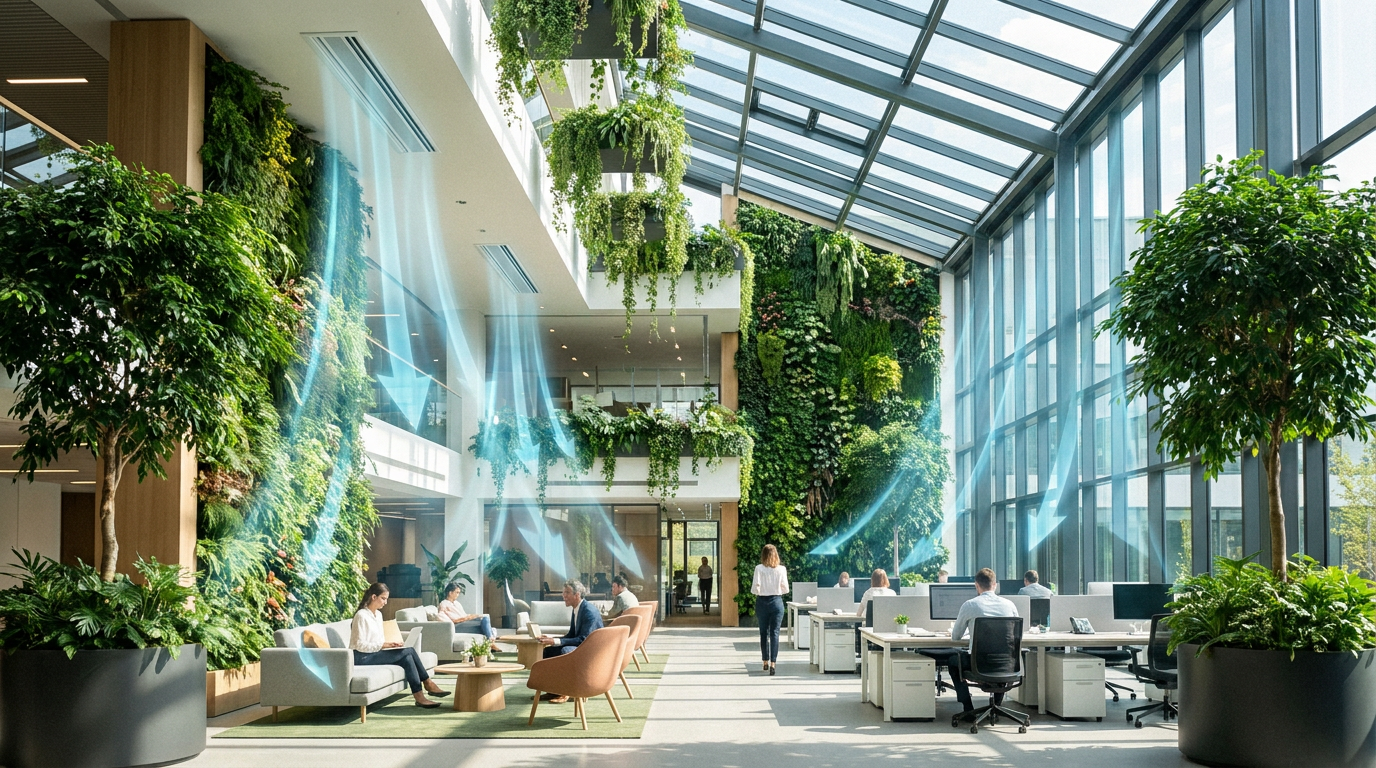
For decades, humans have treated the air inside buildings as a static environment—something to be heated, cooled, and occasionally filtered for dust. But a quiet revolution in environmental engineering is fundamentally changing how we think about the spaces where we spend roughly 70 years of our lives. The new paradigm treats buildings not as passive boxes, but as active, responsive entities equipped with their own "immune systems." By integrating advanced biosensors with dynamic ventilation, the next generation of architecture is being designed to actively protect human health.[6]
The catalyst for this shift was the COVID-19 pandemic, which exposed a glaring vulnerability in global public health: our indoor environments were largely defenseless against airborne pathogens. In response, the federal government and leading engineering bodies are now treating indoor air quality with the same urgency historically reserved for water sanitation and outdoor pollution. The New York Times reports that this shift is materializing through massive federal investments aimed at eradicating airborne disease transmission indoors, transforming how we live and work.[5]
At the forefront of this effort is the Advanced Research Projects Agency for Health (ARPA-H), which recently launched the BREATHE program—Building Resilient Environments for Air and Total HEalth. Backed by a $150 million investment, BREATHE is designed to develop scalable platforms that can continuously monitor indoor air and neutralize threats in real time. Dr. Rafid Fadul, ARPA-H's Chief Medical Officer, has described indoor air as the "missing pillar" in the nation's biosecurity infrastructure, noting that while decades of work have improved outdoor air, indoor environments have been left behind.[1]
The mechanism behind a building "immune system" mirrors the human body's biological defenses. Just as human antibodies detect and neutralize viruses, these next-generation building systems rely on distributed biosensors to detect spikes in pathogens, carbon dioxide, or particulate matter. When a threat is detected—such as an infectious person entering a crowded conference room—the building's central nervous system automatically triggers a localized, immediate response to clear the air before the pathogen can spread to other floors or rooms.[6]

This response might involve dynamically increasing the intake of fresh outdoor air, activating ultraviolet germicidal irradiation (UV-C) in the ductwork, or ramping up localized HEPA filtration. Crucially, the system targets the specific zone where the threat was detected. Once the air is scrubbed clean and the threat dissipates, the system returns to a baseline, energy-saving state. This dynamic adaptability ensures that buildings remain highly energy-efficient during normal operations while providing hospital-grade protection precisely when and where it is needed most.[1][6]
The engineering foundation making this possible is ASHRAE Standard 241, officially titled "Control of Infectious Aerosols." Developed in an unprecedented 116 days at the request of the White House, this standard represents a paradigm shift in HVAC design. For the past century, indoor air standards primarily focused on occupant comfort and odor control, often reducing ventilation rates to save energy. Standard 241 is the first to explicitly mandate performance metrics for infection risk mitigation, providing a code-enforceable framework for healthier buildings.[2]
The cornerstone of Standard 241 is a new metric called the Equivalent Clean Airflow Rate (ECAi). Rather than simply measuring how much outdoor air is pumped into a room, ECAi quantifies the total volume of pathogen-free air delivered to occupants. This can be achieved through a combination of outdoor ventilation, advanced filtration, and active air-cleaning technologies. This technology-agnostic approach allows building owners to meet rigorous safety targets without necessarily overhauling their entire HVAC infrastructure, making upgrades far more accessible.[2]
The cornerstone of Standard 241 is a new metric called the Equivalent Clean Airflow Rate (ECAi).
Standard 241 also introduces the concept of "Infection Risk Management Mode" (IRMM). During normal operations, a building might run at standard efficiency to conserve energy and minimize wear on mechanical systems. However, during a localized outbreak, a severe flu season, or a future pandemic, facility managers can activate IRMM. This mode temporarily boosts the ECAi to maximum capacity, prioritizing human health over energy conservation until the risk subsides, effectively giving the building a "fever response" to fight off an infection.[2]
The economic and societal implications of this shift are profound. Researchers writing in the journal Science have proposed that these new standards could serve as a blueprint for a universal "Clean Indoor Air Act," similar to the legislation that transformed outdoor air quality in the 1970s. The American Chemical Society notes that the U.S. Clean Air Act yielded a return on investment of 30 to 1 in health benefits and economic productivity; experts project that modernizing indoor air could deliver similar, if not greater, dividends for society.[3][4]

Beyond preventing the spread of viruses like influenza, RSV, and SARS-CoV-2, building immune systems offer secondary benefits that directly impact daily life. High-quality indoor air has been consistently linked to improved cognitive function, higher academic test scores in schools, and significantly reduced absenteeism in the workplace. By continuously scrubbing the air of allergens, wildfire smoke, and volatile organic compounds emitted by furniture and cleaning supplies, these dynamic systems create environments where human performance, comfort, and overall well-being are fundamentally optimized.[3][4][6]
However, the transition to "smart" indoor air is not without its practical challenges. The primary hurdle is the split incentive between building owners, who bear the capital costs of installing advanced sensors and filtration, and the occupants or tenants, who reap the long-term health benefits. To bridge this gap, advocates are pushing for clear regulatory frameworks, updated municipal building codes, and potential government tax incentives to make the upgrades financially viable, particularly for older, existing structures that require retrofitting.[4]

There is also a nuanced scientific debate regarding how "clean" our indoor air should actually be. While eliminating dangerous pathogens is the primary goal, some immunologists and microbiologists caution against creating entirely sterile environments. The "hygiene hypothesis" suggests that some exposure to benign environmental microbes is necessary to train the human immune system, particularly in children, and to prevent the development of allergies and autoimmune disorders. Striking the right balance between safety and natural microbial exposure is a key design challenge.[4]
Consequently, the goal of the BREATHE program and ASHRAE 241 is not to create hermetically sealed, sterile bubbles, but rather to manage acute risks intelligently. The sensors currently being developed are designed to differentiate between harmless background bioaerosols and dangerous concentrations of respiratory pathogens. This targeted approach ensures that the air remains safe during periods of high viral load without completely severing our biological connection to the natural microbial world, preserving the delicate balance required for long-term human health.[1][2][4]
As these technologies move from the laboratory to commercial deployment, early adopters are already seeing tangible results. Pilot programs in public school districts and international airports have successfully utilized real-time monitoring to detect and mitigate pathogens before they could trigger widespread outbreaks. These early successes are proving that the technology is not just theoretical, but highly practical, scalable, and ready to be integrated into the broader infrastructure of our cities. The data collected from these initial rollouts is helping engineers refine sensor accuracy and optimize the automated responses of the HVAC systems.[1][3]

Ultimately, the development of building immune systems represents a profoundly optimistic leap forward in public health and environmental engineering. By engineering our indoor environments to actively protect us, we are moving away from a reactive stance against airborne diseases and toward a proactive future. As these intelligent systems become standard in offices, schools, and homes, the very walls around us will work tirelessly to keep us healthy, resilient, and thriving, marking a new era in how humanity interacts with the built environment.[5][6]
How we got here
1970
The U.S. Clean Air Act is passed, fundamentally transforming outdoor air quality but leaving indoor air largely unregulated.
2020
The COVID-19 pandemic exposes severe vulnerabilities in how standard building ventilation handles airborne pathogens.
June 2023
ASHRAE publishes Standard 241, the first major code-enforceable standard focused on mitigating infectious aerosols indoors.
April 2024
ARPA-H launches the $150 million BREATHE program to accelerate the development of next-generation indoor air technologies.
Viewpoints in depth
Public Health Advocates
Argue that clean indoor air is a fundamental human right and essential for preventing future pandemics.
Public health experts view the modernization of indoor air as the next great frontier in human longevity, akin to the sanitation of drinking water in the 19th century. They argue that because humans spend the vast majority of their lives indoors, the air we breathe in offices, schools, and homes should be subject to rigorous, health-based standards. This camp advocates for a universal 'Clean Indoor Air Act' to ensure equitable access to safe environments, noting that poor indoor air quality disproportionately affects lower-income communities in older, poorly ventilated buildings.
Building Owners & Managers
Focus on the practicalities of implementation, capital costs, and the need for government incentives to offset retrofitting expenses.
For the commercial real estate sector, the shift toward building immune systems presents a significant financial and logistical challenge. While owners recognize the value of healthier buildings—which can command higher rents and attract premium tenants—they face the immediate burden of capital expenditures to retrofit older HVAC systems. This group emphasizes the 'split incentive' problem, where owners pay for the upgrades but tenants reap the health and productivity benefits. Consequently, they are lobbying for tax credits, grants, and phased regulatory timelines to make the transition financially sustainable.
Environmental Engineers
Champion the shift from prescriptive ventilation to performance-based metrics like ECAi and dynamic, sensor-driven systems.
Engineers and technologists are energized by the move away from rigid, outdated ventilation codes toward dynamic, performance-based standards like ASHRAE 241. They argue that simply pumping more outdoor air into a building is highly energy-inefficient, especially in extreme climates. Instead, they champion the Equivalent Clean Airflow Rate (ECAi), which allows them to creatively combine HEPA filtration, UV-C light, and smart sensors to achieve hospital-grade air quality while minimizing the building's carbon footprint. For this camp, the building immune system is the ultimate synthesis of health and sustainability.
Immunologists & Microbiologists
Caution against creating entirely sterile environments, emphasizing that some microbial exposure is necessary for a healthy human immune system.
While supportive of mitigating dangerous pathogens like SARS-CoV-2, some microbiologists warn against the unintended consequences of over-sanitizing our indoor environments. Citing the 'hygiene hypothesis,' they note that human immune systems—particularly in developing children—require regular exposure to benign environmental microbes to function properly and avoid autoimmune disorders. This camp advocates for precision in building immune systems, urging developers to design sensors that target specific, high-risk viral loads rather than attempting to eradicate all biological matter from the air we breathe.
What we don't know
- How quickly municipal governments will adopt and enforce the new ASHRAE 241 standards in local building codes.
- The exact long-term impact of highly filtered indoor air on the natural development of the human immune system.
- Whether federal tax incentives will be introduced to help small businesses and residential landlords afford the necessary HVAC retrofits.
Key terms
- Building Immune System
- A network of sensors and advanced air-cleaning technologies that dynamically detect and neutralize airborne threats in real time.
- Equivalent Clean Airflow Rate (ECAi)
- A new metric that measures the total volume of pathogen-free air delivered to a space, combining outdoor ventilation, filtration, and air cleaning.
- Infection Risk Management Mode (IRMM)
- An operational setting for buildings that temporarily maximizes clean airflow to protect occupants during a localized outbreak or pandemic.
- Bioaerosols
- Microscopic airborne particles that contain biological material, such as viruses, bacteria, fungi, or pollen.
Frequently asked
Will building immune systems make rent or leases more expensive?
Initially, upgrading HVAC systems and installing sensors requires capital investment. However, experts suggest that reduced absenteeism, higher productivity, and potential government tax incentives will offset these costs over time.
Does this mean the air inside will be completely sterile?
No. The goal is to manage acute risks from dangerous pathogens like influenza or SARS-CoV-2, not to eliminate all benign microbes, which are necessary for a healthy human immune system.
How is this different from the air conditioning I already have?
Traditional HVAC systems primarily manage temperature and basic dust filtration. A building immune system actively monitors for biological threats and dynamically adjusts ventilation and advanced filtration (like UV-C) in real time to neutralize them.
Sources
Source coverage
6 outlets
4 viewpoints surfaced






[1]Advanced Research Projects Agency for Health (ARPA-H)Environmental Engineers
BREATHE - Building Resilient Environments for Air and Total Health
Read on Advanced Research Projects Agency for Health (ARPA-H) →[2]ASHRAEEnvironmental Engineers
ASHRAE Standard 241, Control of Infectious Aerosols
Read on ASHRAE →[3]SciencePublic Health Advocates
A blueprint for indoor air quality standards
Read on Science →[4]American Chemical SocietyPublic Health Advocates
Roadblocks to a Clean Indoor Air Act and Approaches to Overcome Them
Read on American Chemical Society →[5]The New York TimesBuilding Owners & Managers
Buildings May Soon Have ‘Immune Systems’ That Fight Airborne Disease
Read on The New York Times →[6]Factlen Editorial TeamImmunologists & Microbiologists
Synthesis by Factlen editorial team
Read on Factlen Editorial Team →


Every angle. Every day.
Get health stories with full source coverage and perspective breakdowns delivered to your inbox.