
Iran Announces Closure of Strait of Hormuz, Citing Ceasefire Violations in Lebanon
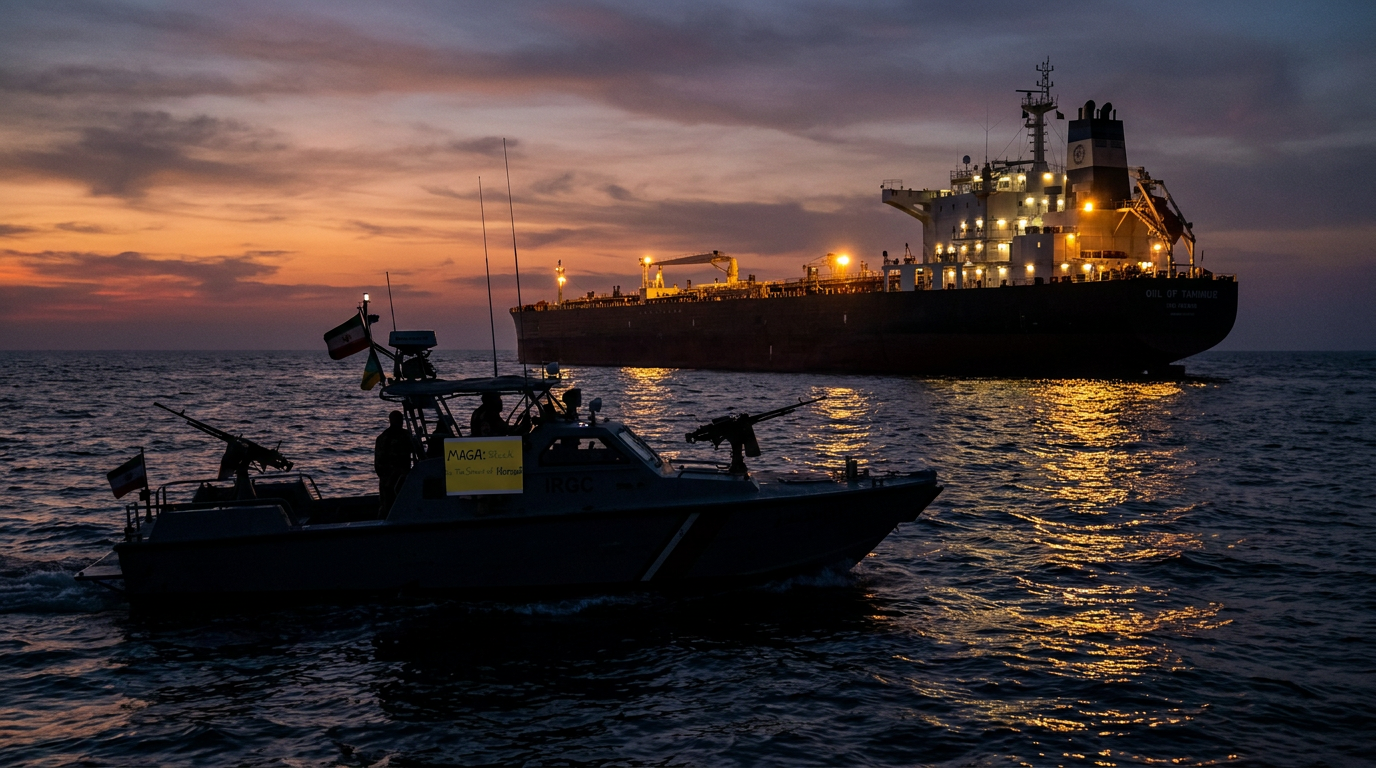
Just days after reopening the critical waterway, Iran's military command declared the Strait of Hormuz closed to shipping in response to Israeli strikes on Hezbollah. The move threatens to derail a fragile US-Iran peace agreement and reignite a global energy crisis.
By Factlen Editorial Team
- Iranian Security Establishment
- Views the Lebanon strikes as a direct violation of the MoU, requiring immediate retaliation via the Strait.
- US Administration & Mediators
- Maintains that the MoU remains intact and views the closure announcement as a pressure tactic.
- Israeli Defense Forces
- Prioritizes neutralizing immediate threats from Hezbollah, regardless of the broader US-Iran diplomatic timeline.
- Global Energy Sector
- Highly sensitive to any disruption in the Strait, prioritizing the free flow of oil over the geopolitical specifics of the Lebanon conflict.
Why this matters
The Strait of Hormuz is the world's most critical energy chokepoint, handling roughly a fifth of global oil consumption. A sustained closure would immediately spike global energy prices, trigger severe inflation, and risk collapsing the fragile 14-point peace agreement between Washington and Tehran.
Just three days after the world breathed a collective sigh of relief, the geopolitical fault lines of the Middle East have violently ruptured once again. On Saturday, Iran's highest military authority, the Khatam al-Anbiya Central Headquarters, announced that the Strait of Hormuz would be closed to all vessel traffic. The dramatic declaration threatens to unravel the fragile 14-point Memorandum of Understanding (MoU) signed earlier this week by US President Donald Trump and Iranian President Masoud Pezeshkian, plunging global energy markets back into a state of acute uncertainty.[1][2][3]
The immediate trigger for the closure was not maritime in nature, but rather a fierce escalation of violence hundreds of miles away in southern Lebanon. Between Thursday and Friday, the Israel Defense Forces (IDF) launched strikes against more than 80 Hezbollah targets, responding to a projectile attack by the Iran-backed militant group that killed four Israeli soldiers near Kfar Tebnit. Lebanese authorities reported that the subsequent Israeli airstrikes killed at least 47 people, marking the highest combined casualty count since the US and Iran initially struck their diplomatic deal.[2][6][7]
For Tehran, the preservation of Hezbollah is a non-negotiable pillar of its regional deterrence strategy. Iranian officials argue that the Israeli offensive constitutes a direct and blatant violation of Clause 1 of the newly signed MoU, which mandates a comprehensive ceasefire on all fronts, explicitly including Lebanon. In a statement broadcast on state-run television, the Khatam al-Anbiya Headquarters framed the strait's closure as a necessary "first step" in response to what it termed a "clear breach of faith" by the United States, which it holds responsible for failing to rein in its Israeli ally.[3][5][7]

The mechanism of this announced closure, however, remains shrouded in a fog of diplomatic and military ambiguity. Prior to Saturday's announcement, Iran had already begun altering the operational reality of the waterway. Rather than restoring the pre-war status quo of unrestricted international transit, Tehran established the Persian Gulf Strait Authority (PGSA). This new regulatory body mandated that all commercial vessels submit transit requests, adhere to assigned routes, and comply with Iranian safety protocols—effectively transforming an international chokepoint into a toll road under sovereign Iranian jurisdiction.[6][7]
The mechanism of this announced closure, however, remains shrouded in a fog of diplomatic and military ambiguity.
While the PGSA initially promised to waive tariffs for security and insurance during the 60-day negotiation period outlined in the MoU, the sudden military decree supersedes that bureaucratic framework. Yet, the physical reality on the water may not yet match the fiery rhetoric emanating from Tehran. US Vice President JD Vance, speaking to Fox News on Saturday, stated unequivocally that the administration has seen "no evidence" that the Strait of Hormuz has actually been closed to shipping, suggesting the announcement may be a high-stakes pressure tactic rather than an immediate military blockade.[3][4][6]
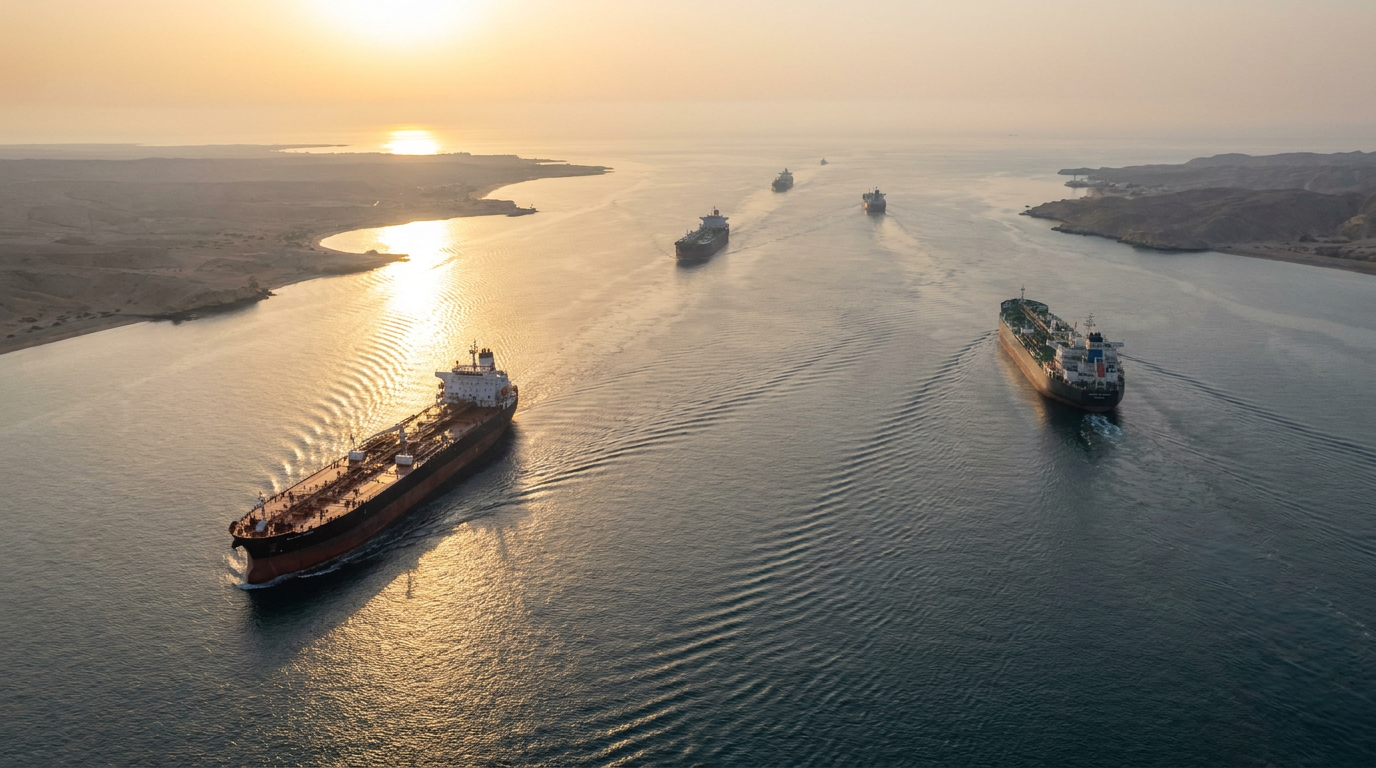
The stakes of this brinkmanship are difficult to overstate. The Strait of Hormuz is the central artery of the global energy economy. Following the initial signing of the MoU, oil tankers had just begun to freely navigate the channel after months of paralysis. On Wednesday night alone, more than 12.5 million barrels of oil traversed the waterway. A renewed blockade would not only sever this vital supply line but would instantly reignite the global energy crisis that the Washington-Tehran pact was explicitly designed to extinguish.[1][6]

The diplomatic fallout has been swift and chaotic. A highly anticipated meeting between US and Iranian delegations, originally scheduled for Friday in Switzerland, was abruptly canceled as Iranian envoys refused to travel while Israeli bombs fell on Lebanon. The cancellation underscored the fundamental fragility of the MoU: neither Israel nor Hezbollah are actual signatories to the agreement, yet their localized conflict possesses the kinetic power to detonate the broader peace framework.[2][6]
Despite the breakdown, backchannel efforts are operating in overdrive to salvage the deal. Qatar and Pakistan, acting as primary mediators, managed to broker a renewed, localized ceasefire between Israel and Hezbollah late Friday afternoon. With that localized truce tentatively holding, diplomatic momentum is slowly attempting to reboot. Vice President Vance confirmed that US special envoy Steve Witkoff and Jared Kushner are already on the ground in Switzerland, expressing optimism that technical talks with Iranian representatives could commence as early as Sunday.[2][4][6]

The coming days will test whether the MoU was a genuine off-ramp from regional war or merely a fleeting diplomatic mirage. Iran appears determined to use its control over the Strait of Hormuz as a geopolitical lever, conditioning any progress on nuclear negotiations upon the United States' ability to force an Israeli cessation of hostilities in Lebanon. Conversely, Washington faces the daunting task of balancing its security commitments to Israel with the imperative of keeping the global energy spigot open, all while navigating a 60-day window that is rapidly closing before it ever truly opened.[1][4][7]
Viewpoints in depth
Iranian Security Establishment
Views the Lebanon strikes as a direct violation of the MoU, requiring immediate retaliation via the Strait.
For Iran's military and political hardliners, the 14-point Memorandum of Understanding is only valid if it protects Tehran's broader "Axis of Resistance." The Khatam al-Anbiya Central Headquarters interprets Clause 1—which mandates a ceasefire on all fronts—as an absolute shield for Hezbollah in Lebanon. When Israeli forces launched strikes in response to Hezbollah projectiles, Tehran viewed this not as a localized skirmish, but as a fundamental breach of faith by the United States, which it holds responsible for Israeli actions. By announcing the closure of the Strait of Hormuz, Iran is attempting to use its ultimate economic weapon to force Washington to rein in Israel, signaling that it will not trade the survival of its most important regional ally for temporary sanctions relief.
US Administration & Mediators
Maintains that the MoU remains intact and views the closure announcement as a pressure tactic.
The US administration, alongside mediators from Qatar and Pakistan, is working frantically to compartmentalize the violence in Lebanon from the broader US-Iran peace framework. Vice President JD Vance's assertion that there is "no evidence" of a physical closure in the Strait reflects a strategy of de-escalation through denial, attempting to call Tehran's bluff while keeping the diplomatic door open. Washington views the MoU as a massive geopolitical achievement that must be insulated from the decades-old Israel-Hezbollah conflict. By rushing envoys to Switzerland and pushing for technical talks to resume by Sunday, the US is betting that Iran's desire for the promised initial economic relief will ultimately outweigh its commitment to absolute military solidarity with Hezbollah.
Israeli Defense Forces
Prioritizes neutralizing immediate threats from Hezbollah, regardless of the broader US-Iran diplomatic timeline.
Israel is not a signatory to the US-Iran Memorandum of Understanding and does not view itself as bound by its geopolitical constraints when facing direct security threats. Following the death of four IDF soldiers in a Hezbollah projectile attack, the Israeli military responded with overwhelming force, striking over 80 targets in southern Lebanon. From the perspective of the Israeli defense establishment, allowing Hezbollah to operate with impunity under the umbrella of a US-Iran ceasefire is an unacceptable strategic risk. While Israel eventually agreed to a renewed, localized truce brokered by Qatar, its actions demonstrate a clear willingness to prioritize its northern border security over the stability of Washington's broader regional peace initiatives.
What we don't know
- Whether the Iranian military will physically intercept and detain commercial vessels, or if the announcement is purely a diplomatic pressure tactic.
- If the localized ceasefire brokered between Israel and Hezbollah late Friday will hold long enough for US-Iran talks to resume.
- How global energy markets will price in the renewed risk when trading opens on Monday.
Sources
Source coverage
7 outlets
4 viewpoints surfaced







[1]AxiosUS Administration & Mediators
Iran closing Strait of Hormuz over Israeli attacks on Lebanon
Read on Axios →[2]The HinduIranian Security Establishment
Iran's military command announces Strait of Hormuz closure over ceasefire violations by U.S., Israel
Read on The Hindu →[3]Times of IsraelIsraeli Defense Forces
Iran says it is closing Strait of Hormuz over Israeli strikes in Lebanon
Read on Times of Israel →[4]Iran InternationalGlobal Energy Sector
Iran says it will close Strait of Hormuz to shipping
Read on Iran International →[5]Anadolu AgencyIranian Security Establishment
Iran says Strait of Hormuz 'will be closed' amid US, Israeli violations
Read on Anadolu Agency →[6]PBSUS Administration & Mediators
Talks between the U.S. and Iran were called off Friday after intense fighting between Israel and Hezbollah
Read on PBS →[7]Institute for the Study of WarGlobal Energy Sector
Iran Update Special Report, June 19, 2026
Read on Institute for the Study of War →
More in news politics
See all 5 stories →Labor Law
House Passes Landmark 'Faster Labor Contracts Act,' Setting Up Senate Showdown
7 sources
U.S.-Iran Deal
U.S. and Iran Sign Interim Agreement to Halt War as Regional Tensions Persist
6 sources
US-Iran Relations
US and Iran Reach Memorandum of Understanding to Halt Hostilities as Administration Defends Terms
9 sources
Every angle. Every day.
Get news politics stories with full source coverage and perspective breakdowns delivered to your inbox.