
How to Build a DIY Rainwater Harvesting System: The Complete Explainer
Modern DIY rainwater systems go far beyond a simple barrel under a downspout. By incorporating first-flush diverters and proper filtration, home gardeners can safely capture thousands of gallons of free, unchlorinated water.
By Factlen Editorial Team
- Environmental & Public Health Experts
- Focus on the benefits of stormwater management while warning about the risks of mosquito breeding and contamination.
- Self-Reliance Advocates
- Value rainwater harvesting for off-grid capability and reducing dependence on municipal utilities.
- System Manufacturers & Installers
- Emphasize the need for proper engineering, FDA-approved materials, and reliable filtration hardware.
What's not represented
- · Municipal Water Authorities
- · Homeowners Associations (HOAs)
Why this matters
Capturing rainwater can reduce summer municipal water usage by up to 50%, lowering utility bills while providing plants with the soft, unchlorinated water they naturally prefer. Understanding the mechanics of safe collection ensures the water remains clean and mosquito-free.
Key points
- A 1,000-square-foot roof can shed roughly 600 gallons of water during a single inch of rain.
- Rainwater is naturally soft and unchlorinated, making it superior to tap water for plant health.
- First-flush diverters automatically trap the initial, dirty roof runoff to keep storage tanks clean.
- Tanks must be opaque to prevent algae growth and tightly screened to block mosquitoes.
- Harvested rainwater is strictly non-potable unless treated with advanced filtration and UV disinfection.
For generations, the image of rainwater harvesting was simply an old wooden barrel sitting beneath a leaky gutter. Today, as municipal water costs rise and summer droughts become more frequent, home gardeners are upgrading to sophisticated, self-cleaning DIY micro-infrastructure. These modern systems can capture thousands of gallons of free water each season, transforming how homeowners manage their landscapes.[1][8]
The mathematics of roof catchment are highly favorable for the average home. A standard 1,000-square-foot roof will shed roughly 600 gallons of water during a single inch of rainfall. By capturing even a fraction of this runoff, households can reduce their reliance on municipal water supplies by 30 to 50 percent during peak summer months, significantly lowering utility bills.[1][5]
Beyond the economic benefits, rainwater is biologically superior for gardening. Unlike municipal tap water, which is treated with chlorine or chloramine and often contains dissolved minerals that create "hard" water, rain is naturally soft and slightly acidic. This chemical profile helps unlock nutrients in the soil, leading to visibly healthier plants and higher vegetable yields.[1][2]
However, safely capturing this water requires more than just placing a tank under a downspout. The roof acts as a massive collection plate not just for water, but for dust, pollen, soot, and bird droppings. If this debris washes directly into a storage tank, it quickly breaks down into a foul-smelling sludge that breeds bacteria and clogs irrigation lines.[3][4][6]

To solve this, modern DIY systems rely on a brilliant, non-mechanical piece of plumbing called a "first-flush diverter." This device operates on the principle that the first fraction of an inch of rainfall—roughly 0.5 millimeters—acts as a wash cycle for the roof, carrying away the vast majority of accumulated contaminants.[3][4]
A first-flush diverter is typically constructed from a vertical length of PVC pipe installed inline before the main storage tank. As the rain begins, the initial, dirty water flows down the gutters and falls into this vertical chamber rather than entering the clean tank. The size of this chamber is calculated based on the square footage of the roof it serves.[3][4][8]
Inside this vertical pipe sits a specialized floating ball. As the dirty water fills the chamber, the ball rises with the water level. Once the chamber reaches its maximum capacity—meaning the roof has been thoroughly washed—the ball is pushed against a rubber seat at the top of the pipe, creating a watertight seal.[3][4]
As the dirty water fills the chamber, the ball rises with the water level.
With the diverter sealed, the subsequent flow of clean rainwater is mechanically forced to bypass the vertical pipe and flow horizontally into the main storage tank. At the bottom of the diverter chamber, a slow-release drip valve gradually empties the dirty water over several hours or days, automatically resetting the system for the next rainstorm.[4][8]

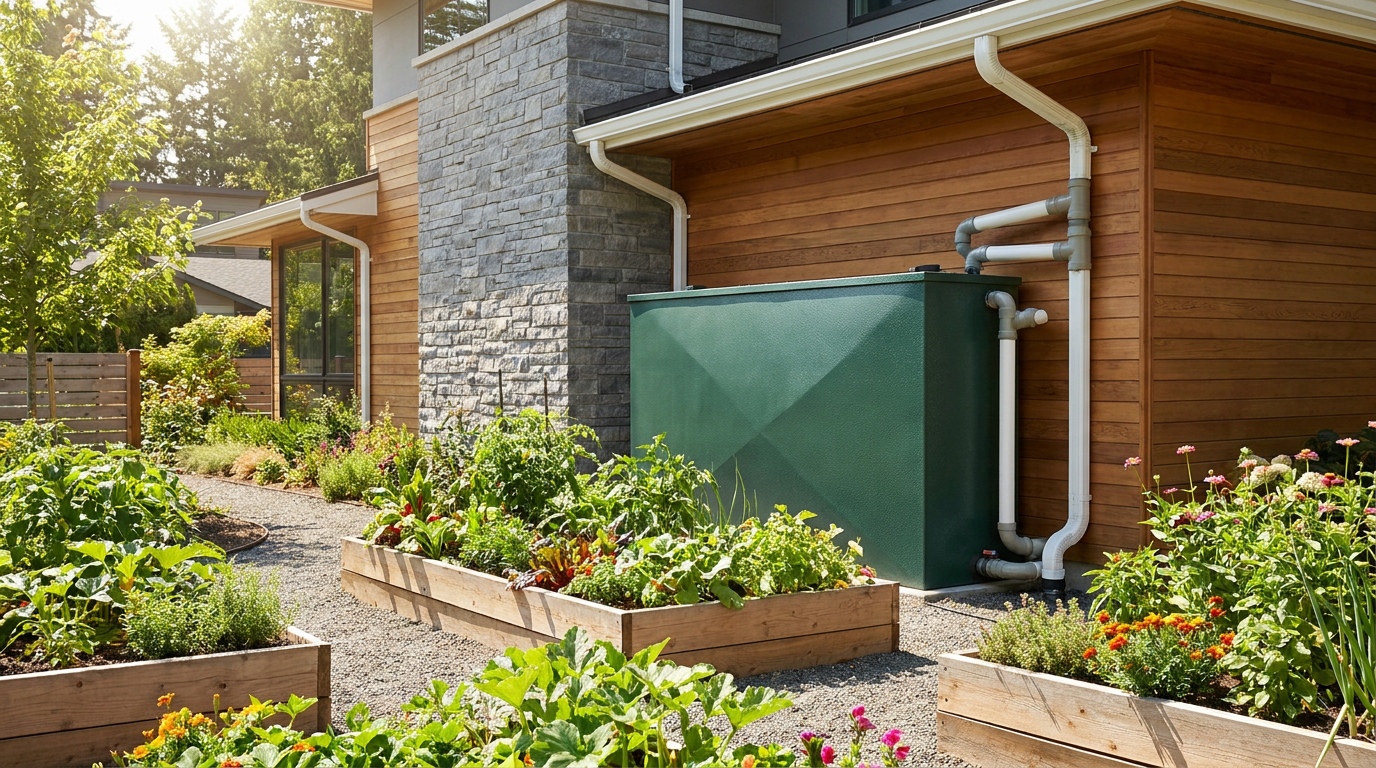
Once the clean water reaches the storage phase, the choice of container becomes critical. While repurposed 55-gallon food-grade barrels are popular for beginners, many homeowners quickly upgrade to 275-gallon Intermediate Bulk Containers (IBC totes) or dedicated polyethylene cisterns. Experts emphasize that any tank must be made of FDA-approved, food-safe materials to prevent chemical leaching.[1][7]
Light management is another crucial safety factor. Algae requires sunlight to grow, so storage tanks must be completely opaque. If a translucent tank is used, it must be painted, wrapped, or enclosed in a wooden structure to block UV rays and keep the stored water clear and fresh.[7][8]
To prevent the system from becoming a breeding ground for pests, all entry and exit points must be heavily secured. A fine stainless-steel or nylon mesh screen must cover the tank inlet to block mosquitoes from laying eggs. Without this simple barrier, a rain barrel can quickly become a neighborhood public health nuisance.[2][7]
Every system must also account for overflow. When a multi-day storm hits, a 55-gallon or even a 300-gallon tank will quickly reach capacity. A properly designed DIY system includes an overflow pipe near the top of the tank, matching the diameter of the inlet pipe, to direct excess water safely away from the home's foundation.[1][7]

Many eco-conscious gardeners route this overflow into a dedicated "rain garden"—a shallow, planted depression in the yard designed to absorb runoff. This prevents soil erosion, recharges local groundwater aquifers, and keeps excess stormwater out of overburdened municipal sewer systems.[1][5]
While the water produced by these systems is excellent for irrigation, washing vehicles, and cleaning outdoor equipment, it is strictly non-potable. Using harvested rainwater for drinking, cooking, or indoor plumbing requires a significantly more complex setup, including multi-stage sediment filtration, activated carbon filters, and ultraviolet (UV) light disinfection to neutralize pathogens.[6][7]
Maintenance of a garden-grade system is straightforward but essential. Homeowners should inspect and clean their roof gutters every three to four months, check the mosquito screens for tears, and ensure the first-flush diverter's drip valve remains unclogged. In colder climates, above-ground tanks must be drained before the first hard freeze to prevent the expanding ice from cracking the plastic.[7][8]
As urban water infrastructure faces increasing pressure from growing populations and shifting weather patterns, decentralized water collection is moving from a niche hobby to a mainstream resilience strategy. By understanding the mechanics of safe catchment, anyone with a roof and a few basic tools can turn the next summer storm into a valuable resource.[2][5][8]
Viewpoints in depth
Self-Reliance Advocates
Focus on reducing dependence on municipal utilities and building household resilience.
For off-grid enthusiasts and self-reliance advocates, rainwater harvesting is primarily about independence. They view municipal water systems as vulnerable to power grid failures, chemical supply chain issues, and drought-induced rationing. By capturing their own water, this camp argues that homeowners can insulate themselves from rising utility costs and ensure a reliable backup supply for sanitation and agriculture during emergencies.
Environmental & Public Health Experts
Focus on stormwater management, aquifer recharge, and preventing waterborne diseases.
Public health and environmental experts view decentralized rainwater harvesting as a vital tool for urban stormwater management. By capturing rain at the source, these systems reduce the volume of runoff that overwhelms city sewers and pollutes local rivers. However, this camp heavily emphasizes the safety risks of poorly designed DIY systems. They advocate strictly for the use of first-flush diverters, opaque tanks, and secure mosquito netting, warning that open or unfiltered barrels can quickly become vectors for dengue, West Nile virus, and bacterial contamination.
System Manufacturers & Installers
Focus on material safety, proper engineering, and long-term durability.
Professionals in the water catchment industry stress that water is incredibly heavy—roughly 8.3 pounds per gallon—and requires serious infrastructure. They caution DIYers against using cheap, non-food-grade plastics that can leach chemicals or degrade under UV exposure. This camp advocates for investing in purpose-built, FDA-approved polyethylene cisterns, engineered overflow valves, and professional-grade filtration, arguing that cutting corners on materials usually leads to system failure or property damage.
What we don't know
- How changing local zoning laws and HOA regulations will impact the adoption of large-scale residential cisterns.
- The exact long-term durability of consumer-grade plastic rain barrels under extreme summer heat and UV exposure.
Key terms
- First-Flush Diverter
- A plumbing device that captures and isolates the first fraction of rainfall, which contains the highest concentration of roof debris, preventing it from entering the clean storage tank.
- Catchment Area
- The surface area, typically a roof, upon which rain falls and is collected for harvesting.
- IBC Tote
- Intermediate Bulk Container; a large, cube-shaped industrial plastic tank (often 275 gallons) frequently repurposed by DIYers for high-capacity water storage.
- Potable Water
- Water that has been filtered and treated to a standard safe for human consumption and cooking.
- Hard Water
- Municipal or well water that contains high levels of dissolved minerals, like calcium and magnesium, which can build up in soil over time.
Frequently asked
Is it illegal to collect rainwater?
In most jurisdictions, rainwater harvesting is entirely legal and often encouraged to reduce stormwater runoff. However, a few states and local municipalities have specific regulations regarding tank size and water rights, so it is always best to check local codes.
Can I drink the rainwater I collect?
No, not without significant treatment. Roof runoff contains bird droppings, dust, and environmental pollutants. Making it safe for drinking requires multi-stage sediment filtration, carbon filtering, and ultraviolet (UV) disinfection.
How do I keep mosquitoes out of my rain barrel?
Ensure that all inlets and overflow pipes are covered with a fine stainless-steel or nylon mesh screen. The tank must be completely sealed so adult mosquitoes cannot enter to lay eggs.
What happens when the tank gets full?
A properly designed system includes an overflow pipe near the top of the tank. This pipe should direct excess water safely away from your home's foundation, ideally into a rain garden or existing drainage system.
Sources
Source coverage
8 outlets
3 viewpoints surfaced








[1]Off-Grid GhanaSelf-Reliance Advocates
DIY Rainwater Harvesting: Complete Guide to Building Your Own Collection System
Read on Off-Grid Ghana →[2]GharpediaSelf-Reliance Advocates
10 Innovative DIY Rainwater Harvesting Tips to Collect and Preserve Rainwater
Read on Gharpedia →[3]Caribbean Environmental Health InstituteEnvironmental & Public Health Experts
RWH Technical Fact Sheet: First Flush Diverters
Read on Caribbean Environmental Health Institute →[4]National Poly IndustriesSystem Manufacturers & Installers
What is a Rainwater First Flush Diverter?
Read on National Poly Industries →[5]SafetyCultureEnvironmental & Public Health Experts
What is Rainwater Harvesting? Benefits and Systems
Read on SafetyCulture →[6]Oxfam WASHEnvironmental & Public Health Experts
Domestic Rainwater Harvesting and Water Quality
Read on Oxfam WASH →[7]ThrivelotSystem Manufacturers & Installers
Rainwater Harvesting Safety and Maintenance Guide
Read on Thrivelot →[8]Factlen Editorial TeamSystem Manufacturers & Installers
Synthesis by Factlen editorial team
Read on Factlen Editorial Team →
Every angle. Every day.
Get home stories with full source coverage and perspective breakdowns delivered to your inbox.