
The Rise of 'Slow Content': Why Multi-Hour Video Essays Are Defeating the Algorithm
Exhausted by hyper-caffeinated short-form videos, audiences are driving a massive resurgence in long-form video essays and deliberate, unhurried storytelling.
By Factlen Editorial Team
- Digital Wellbeing Advocates
- Focus on the psychological benefits of escaping the infinite scroll and reclaiming deep attention.
- Content Creators & Strategists
- Prioritize the creative freedom, reduced burnout, and deeper audience trust that long-form storytelling provides.
- Platform Engineers & Advertisers
- Focus on the economic value of long-form content, specifically higher user retention and premium ad inventory.
What's not represented
- · Short-form platform executives
- · Casual viewers who prefer micro-content
Why this matters
As the internet pivots away from anxiety-inducing 'brainrot,' the rise of Slow Content empowers users to reclaim their attention spans. For anyone exhausted by the endless scroll, this trend offers a healthier, more intentional way to consume digital media and learn new concepts.
Key points
- Audiences are increasingly rejecting hyper-fast short-form videos in favor of multi-hour 'Slow Content.'
- TikTok has progressively increased its video length limits, piloting 15-minute uploads to compete with YouTube.
- The shift is driven by 'Content Fatigue,' as users seek deeper, more authentic storytelling to combat algorithmic burnout.
- Creators are embracing the trend to escape the exhausting daily-upload grind and build stronger audience trust.
- Platforms are financially incentivizing longer videos because they dramatically increase user retention and ad revenue.
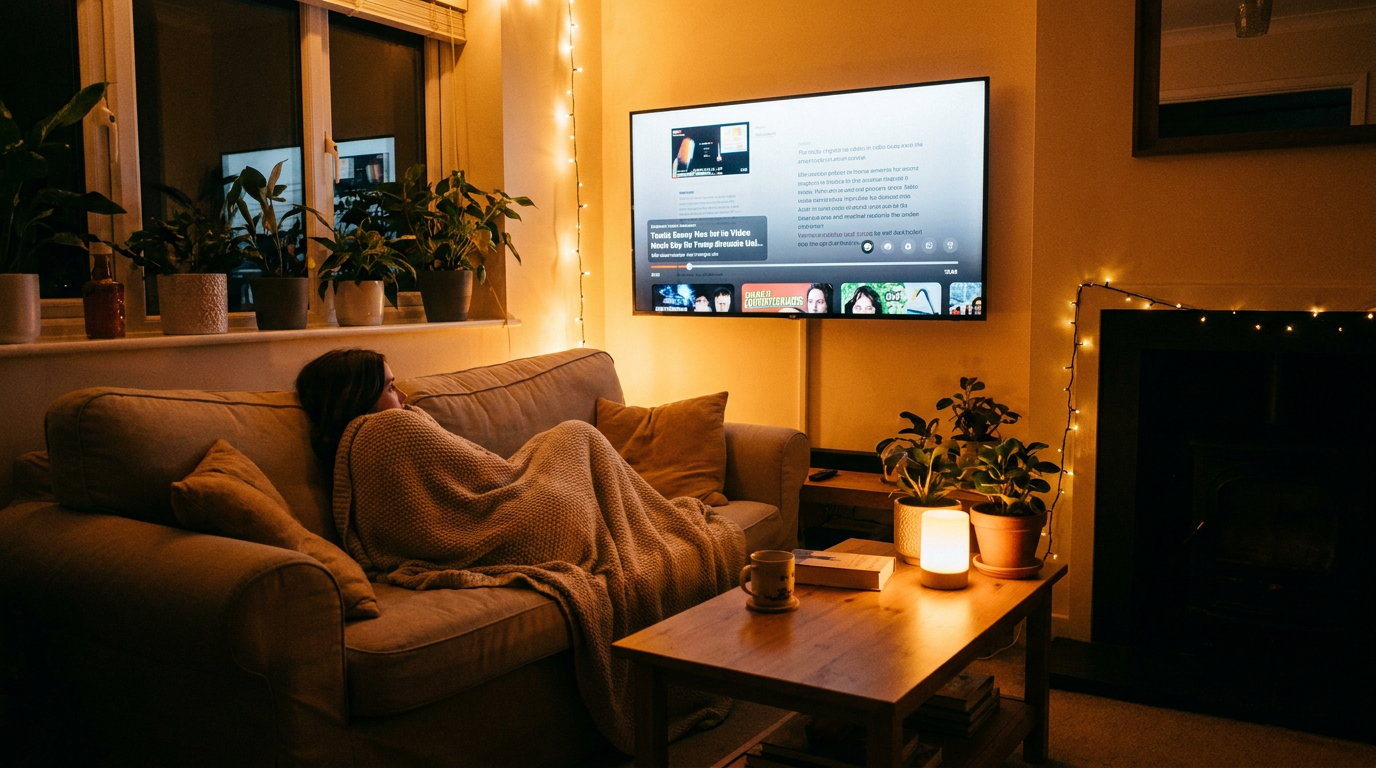
For the better part of a decade, the internet’s golden rule was simple: make it faster, make it louder, and keep it under fifteen seconds. The algorithmic dominance of hyper-caffeinated short-form video reshaped human entertainment, giving rise to widespread concerns about shrinking attention spans and digital exhaustion. But a formidable counter-movement has taken hold across major platforms. Fatigued by the endless scroll, millions of users are actively seeking out "Slow Content"—a digital aesthetic defined by multi-hour video essays, ambient streams, and deliberate, unhurried storytelling.[3][4]
This shift represents a profound change in how audiences consume media in 2026. Rather than swiping past a dozen videos a minute, viewers are settling in for two-hour deep dives into the marketing strategies of defunct television shows, or 50-part serialized sagas about personal relationships. The trend suggests that the modern attention span is not necessarily broken; it has simply become highly polarized, demanding either instant gratification or overwhelming, immersive depth.[1][6]
The rise of Slow Content is visible across the entire social media ecosystem, but its most surprising battleground is TikTok. Originally synonymous with micro-content, the platform has aggressively pivoted toward long-form storytelling. After progressively increasing its maximum video length from 15 seconds to 10 minutes, TikTok recently began piloting 15-minute uploads for select users, placing it in direct competition with YouTube’s traditional stronghold.[2][6]

The mechanism driving this shift is rooted in what psychologists and marketers call "Content Fatigue." When users are bombarded with thousands of high-stimulus posts daily, the novelty wears off, leading to psychological exhaustion. Slow Content acts as a digital palate cleanser. By utilizing softer lighting, neutral aesthetics, and a conversational pace—often dubbed the "Quiet Flex"—creators offer an antidote to algorithmic anxiety.[3]
The data supports this behavioral pivot. Viewership of longer videos on short-form platforms has surged, with users now spending more than half their time watching content that exceeds one minute. A landmark example occurred when a creator published a 546-minute, multi-part storytelling series that captivated audiences for weeks, generating millions of views per episode and proving that users will commit to massive runtimes if the narrative is compelling.[1][6]
To understand why platforms are embracing this, one must look at the economics of retention. While short-form videos are excellent for user acquisition and initial discovery, they are notoriously difficult to monetize effectively. Long-form content keeps users on the app for extended, uninterrupted sessions, which provides highly lucrative inventory for mid-roll advertisements and builds deeper platform loyalty.[2][5]

To understand why platforms are embracing this, one must look at the economics of retention.
Consequently, the algorithms have been quietly rewired. Platforms that once rewarded sheer posting frequency are now prioritizing completion rates and total watch time. TikTok’s Creator Rewards program, which replaced its original creator fund, specifically incentivizes videos longer than one minute, promising significantly higher payouts for creators who can hold an audience's attention for extended periods.[1][6]
For creators, this financial realignment offers a vital lifeline. The relentless demand of the short-form trend cycle—where influencers felt pressured to post three times a day to stay relevant—led to a massive burnout crisis. Industry analyses indicate that nearly 68% of high-frequency creators have experienced severe burnout. Slow Content allows them to step off the daily treadmill, focusing on researching and producing one high-quality video a week rather than a dozen disposable clips.[3][5]
This focus on quality over quantity has birthed a golden age for the "video essay." On YouTube, channels dedicated to hyper-analyzed film breakdowns, pop culture retrospectives, and philosophical deep dives have seen meteoric success. These videos, which often stretch past the two-hour mark, encourage critical thinking and offer a level of nuance that is impossible to achieve in a 60-second window.[4]
The appeal of these marathon videos goes beyond mere education; it taps into a deep craving for parasocial connection and "ambient companionship." In an increasingly isolated world, having a creator speak passionately about a niche topic for hours provides a comforting, steady presence. The creator is no longer just a fleeting entertainer; they become a virtual companion in the viewer's living room.[4][5]

This desire for authenticity has also spawned adjacent trends like "de-influencing." Instead of participating in rapid-fire product hauls, creators are producing longer, thoughtful videos explaining what not to buy, prioritizing transparency over sponsorships. This anti-consumerist framing builds a deeper reservoir of trust with the audience, which paradoxically leads to higher conversion rates when those creators do make a genuine recommendation.[3][5]
Despite the overwhelming success of Slow Content, uncertainty remains about the future of the digital ecosystem. Will short-form video disappear entirely? Industry experts argue it will not. Instead, media consumption is forming a "barbell" shape. Audiences will continue to use ultra-short videos for quick laughs or micro-learning, while reserving their deep attention for multi-hour essays.[1][4]
The casualty in this new landscape is the middle ground. The generic, five-minute vlog or the mildly entertaining mid-length clip is being squeezed out by the extremes. Creators must now choose: condense their value into a hyper-efficient hook, or provide such overwhelming depth that the viewer voluntarily switches gears into deep focus.[3][6]

Ultimately, the Slow Content movement is a profoundly optimistic development for the internet. It proves that audiences are not passive victims of algorithmic conditioning; they are capable of demanding better, more nourishing media. By choosing to slow down, millions of users are reclaiming their attention, proving that even in the age of the infinite scroll, depth still matters.[4][5]
How we got here
July 2020
TikTok extends its maximum video length to 3 minutes, hinting at a desire for deeper narratives.
February 2022
TikTok pushes the limit to 10 minutes, directly challenging YouTube's traditional long-form dominance.
Early 2024
A viral 50-part, 8-hour storytelling saga proves massive audience appetite for serialized long-form on short-video apps.
March 2024
TikTok launches the Creator Rewards program, financially incentivizing videos longer than one minute.
2025–2026
'Slow content' and multi-hour video essays become a dominant format as users actively seek antidotes to digital burnout.
Viewpoints in depth
Digital Wellbeing Advocates
Argue that slow content is a necessary antidote to algorithmic burnout.
This camp emphasizes that multi-hour video essays and ambient streams allow users to reclaim their attention spans and engage in critical thinking. Rather than succumbing to the psychological exhaustion of the infinite scroll, viewers are actively choosing media that nourishes their intellect and provides a calming, parasocial presence.
Content Creators & Strategists
Value the trend for the creative freedom and sustainability it offers.
Creators point out that stepping away from the daily-upload grind drastically reduces burnout. By focusing on one meticulously researched video rather than dozens of disposable clips, they can engage in deeper narrative storytelling. This shift ultimately builds stronger, more trusting relationships with their audiences, leading to higher long-term conversion rates.
Platform Engineers & Advertisers
View long-form content as the ultimate retention mechanism.
From a business perspective, while short clips are excellent for initial user acquisition, extended videos keep users on the app significantly longer. This increased watch time provides highly lucrative inventory for mid-roll advertisements, driving a higher return on investment and solidifying the platform's daily active user metrics.
What we don't know
- Whether short-form video will eventually see a resurgence as long-form markets become saturated.
- How the integration of AI-generated content will impact the perceived authenticity of the Slow Content movement.
Key terms
- Slow Content
- A digital media strategy prioritizing deep, well-researched, and longer-form videos over high-frequency, disposable posts.
- Content Fatigue
- The psychological exhaustion users experience from scrolling through endless, hyper-stimulating short-form videos.
- The Attention Barbell
- A media consumption theory suggesting audiences now prefer either ultra-short micro-content or ultra-long deep dives, abandoning mid-length videos.
- De-influencing
- A trend where creators explicitly tell audiences what not to buy, building trust through anti-consumerism and authenticity.
Frequently asked
What is Slow Content?
Slow Content is a digital media trend that prioritizes long-form, deeply researched, and unhurried videos over high-frequency, short-form clips.
Why is TikTok allowing longer videos?
TikTok is extending video lengths to increase user retention, provide better inventory for advertisers, and compete directly with YouTube's long-form dominance.
Does this mean short-form video is dead?
No. Experts predict a 'barbell' effect where users consume ultra-short videos for quick entertainment and multi-hour videos for deep dives, while mid-length content declines.
How does this benefit content creators?
It allows creators to step away from the exhausting pressure of posting multiple times a day, focusing instead on higher-quality storytelling that builds deeper audience trust.
Sources
Source coverage
6 outlets
3 viewpoints surfaced






[1]Business InsiderPlatform Engineers & Advertisers
Long-form video is making a comeback on social media as TikTok pushes longer content
Read on Business Insider →[2]TechCrunchPlatform Engineers & Advertisers
TikTok is piloting 15-minute long videos for selected users
Read on TechCrunch →[3]PowerdrillDigital Wellbeing Advocates
The Slow Content Revival: Why the 'Quiet Flex' is Defeating the Algorithm
Read on Powerdrill →[4]The BoarDigital Wellbeing Advocates
The resurgence of the long-form video essay in an age of short attention spans
Read on The Boar →[5]NeoReachContent Creators & Strategists
TikTok Long Form Content: The Shift from Quick Bites to Deep Dives
Read on NeoReach →[6]Fox BusinessContent Creators & Strategists
As TikTok pivots to long-form storytelling, creators introduce multipart episodes
Read on Fox Business →
Every angle. Every day.
Get entertainment stories with full source coverage and perspective breakdowns delivered to your inbox.