
How Algorithmic Choice is Rewiring Social Media for the Better
A structural shift toward user-controlled algorithms is breaking the monopoly of the 'black box' feed, empowering users to curate healthier digital diets.
By Factlen Editorial Team
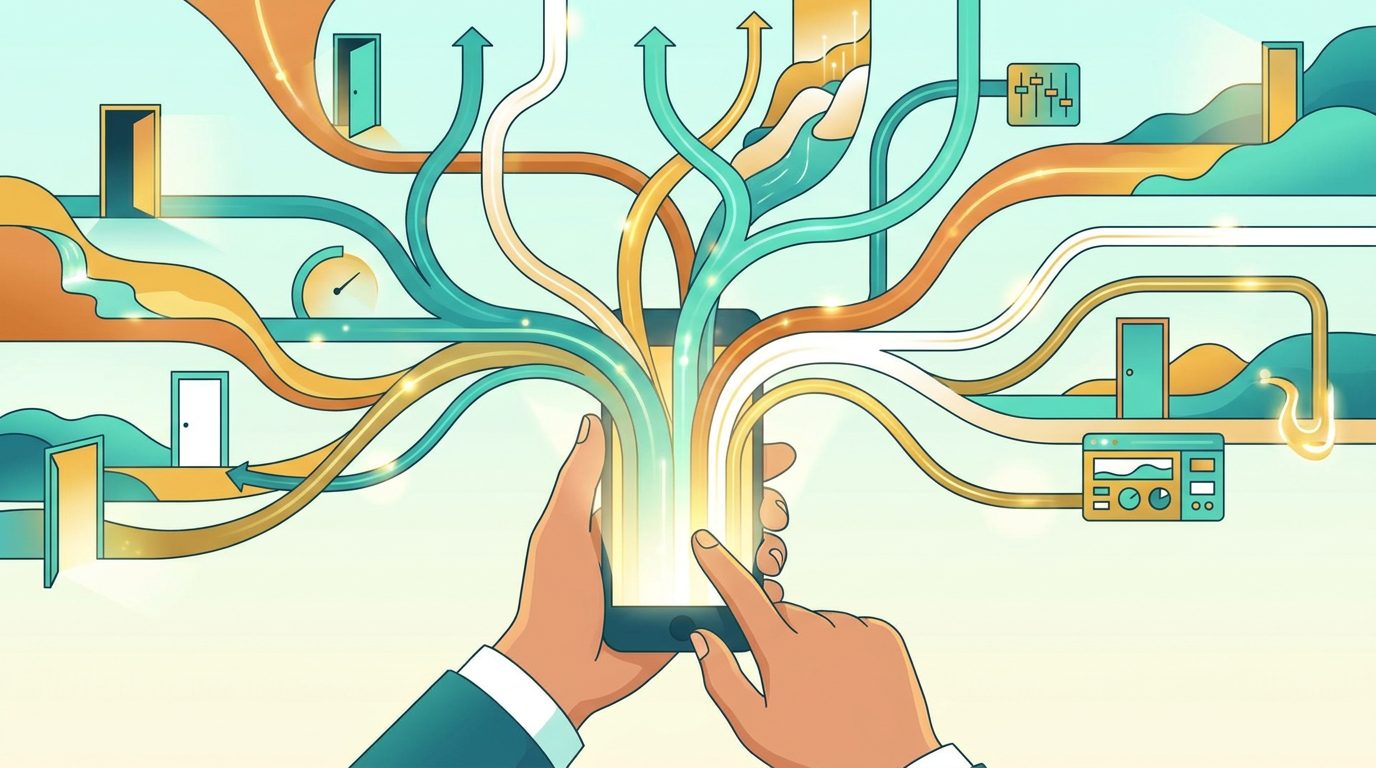
- Decentralization Advocates
- Believe users and developers should have total control over the recommendation layer.
- Public Health Experts
- Value algorithmic choice as a tool for mitigating the mental health harms of doomscrolling.
- Regulatory Bodies
- Focus on transparency, data privacy, and mitigating systemic risks via legislation.
What's not represented
- · Independent developers funding server costs for custom feeds
- · Legacy platform executives defending engagement algorithms
Why this matters
For the first time in the modern social media era, users are gaining the power to choose the algorithms that shape their digital reality. This shift from passive consumption to active curation allows individuals to protect their mental health, escape outrage-driven doomscrolling, and build healthier online communities.
Key points
- Algorithmic choice allows users to select and customize their own social media recommendation engines.
- Decentralized platforms like Bluesky have pioneered open marketplaces for third-party feed generators.
- The EU's Digital Services Act now forces major platforms to offer non-personalized feed options.
- Experts view this shift as a crucial intervention for improving mental health and reducing doomscrolling.
- Content creators can now target specific, community-curated feeds rather than chasing viral engagement.
For over a decade, the defining feature of the consumer internet was the "black box" algorithm. Centralized, opaque systems designed by a handful of tech giants dictated what billions of people saw every day, optimizing ruthlessly for engagement, outrage, and time-on-site. Users had virtually no insight into why certain posts were surfaced or how their behavioral data was being weaponized to keep them scrolling. This era of passive consumption created a digital landscape where the platform's commercial goals always superseded the user's well-being, leading to widespread frustration and a growing sense of helplessness among digital citizens who felt trapped in endless feedback loops of algorithmic curation.[8]
But in 2026, a profound structural shift is rewiring how we consume information: the rapid rise of algorithmic choice. Instead of being passively force-fed content by a single corporate artificial intelligence, users are increasingly selecting, customizing, and swapping their own recommendation engines. This movement represents a fundamental rejection of the one-size-fits-all feed, replacing it with a modular approach where the user acts as the executive editor of their own digital experience. By democratizing the recommendation layer, this shift is breaking the monopoly of legacy platforms and introducing a new era of intentional, user-directed internet consumption that prioritizes agency over blind engagement.[3]
This transition is not happening in a vacuum; it is being driven by a powerful combination of decentralized technology innovations and sweeping European regulatory frameworks that are fundamentally altering the power dynamic between platforms and the people who use them. On one front, open-source developers are building alternative architectures that prove social media can function without a central algorithmic authority. On the other front, lawmakers are recognizing that algorithmic opacity poses a systemic risk to public health and democratic discourse, forcing even the most entrenched tech monopolies to concede a degree of control back to their user bases.[4][8]
The most prominent technological catalyst for this paradigm shift has been Bluesky, a decentralized social network that successfully pioneered the concept of an open marketplace of algorithms. Originally incubated within Twitter before spinning out as an independent entity, Bluesky was built from the ground up on the AT Protocol, an architecture designed to separate the user interface from the underlying data and recommendation systems. This structural unbundling allowed the platform to introduce "custom feeds" in 2023, a feature that fundamentally changed the relationship between users and their timelines by making the algorithm a choice rather than a mandate.[1]

On Bluesky, there is no master algorithm dictating the flow of information. Instead, users can browse and install "custom feeds"—also known as feed generators—built by third-party developers, pinning them to their home screen much like installing apps on a smartphone. A user might start their day looking at a strictly chronological feed of their closest friends, switch to a feed curated by a scientific community for industry news, and end their evening with a feed that only surfaces positive, uplifting stories. The friction of changing algorithms is reduced to a simple swipe, completely demystifying the curation process.[1][7]
These feed generators range from the highly specific and whimsical—such as feeds dedicated exclusively to cat photos, accessibility design, or niche literary criticism—to complex chronological filters that only show posts from mutual followers. Because the APIs are open, any developer with a basic understanding of code can create a new feed generator based on whatever parameters they deem valuable. This has led to an explosion of creativity, where algorithms are designed not to maximize ad revenue, but to serve the highly specific, nuanced needs of micro-communities that were previously underserved by mainstream social media.[1][5]
By decoupling the user interface from the recommendation engine, the platform allows users to swap out the logic that dictates their digital reality whenever they choose, returning control of their attention to themselves. If a particular feed becomes too noisy, toxic, or irrelevant, the user is not trapped; they simply unpin it and find another. This modularity eliminates the feeling of algorithmic manipulation, as users are fully aware of the rules governing the content they see. It is a shift from trying to "beat" or "game" an algorithm to simply selecting the one that best serves your current mood and objectives.[1][3]
If a particular feed becomes too noisy, toxic, or irrelevant, the user is not trapped; they simply unpin it and find another.
Meanwhile, intense regulatory pressure has forced legacy platforms to adopt a rudimentary version of this choice, proving that algorithmic transparency is no longer just a niche tech concept. The European Union’s landmark Digital Services Act (DSA) mandates that Very Large Online Platforms (VLOPs)—defined as those with over 45 million monthly active users in the EU—must offer users the ability to opt out of personalized recommendations entirely. This legislation was born out of a growing consensus that behavioral profiling and opaque ranking systems were contributing to the rapid spread of disinformation and the degradation of public discourse.[2]
Under the strict enforcement of the DSA, giants like Meta’s Instagram and Facebook, as well as ByteDance's TikTok, must provide alternative feeds that do not rely on behavioral profiling, ensuring that European users have access to strictly chronological or non-targeted timelines. While these legacy platforms often bury these options deep within their settings menus to protect their core business models, the legal requirement establishes a vital precedent: users have a fundamental right to consume information without being subjected to invisible, AI-driven psychological profiling. Failure to comply can result in massive fines of up to 6% of a company's global revenue.[2][4]

While the European regulation focuses heavily on harm reduction, data privacy, and mitigating systemic risks to democracy, the broader movement toward algorithmic choice has profound, positive implications for individual mental health. The ability to control one's digital environment is a crucial component of psychological well-being in the modern age. When users are stripped of their agency and subjected to feeds that prioritize emotional volatility, the result is widespread digital fatigue. Restoring that agency allows individuals to rebuild a healthy relationship with the internet, transforming social media from a source of stress into a tool for genuine connection.[4][8]
For years, academic research has consistently linked engagement-optimized feeds to increased anxiety, depression, and the phenomenon of "doomscrolling," as algorithms naturally surface outrage and pessimism because those emotions are highly effective at keeping users hooked. Studies analyzing user sentiment and digital phenotyping have shown that prolonged exposure to algorithmic negativity can measurably degrade a user's mental state. The black box algorithms of the 2010s were essentially designed to exploit human psychological vulnerabilities, creating a digital environment where the most inflammatory voices were systematically amplified over measured, nuanced discourse.[6]
In this context, algorithmic choice acts as a vital psychological circuit breaker. When users feel overwhelmed by negative news, geopolitical anxiety, or toxic discourse, they can actively switch to a feed optimized for calm, education, or niche hobbies, curating a healthier digital diet. This is the digital equivalent of choosing to read a book instead of watching a sensationalist news broadcast. By giving users the tools to easily filter out the noise and focus on what genuinely brings them joy or utility, algorithmic choice empowers individuals to protect their mental health without having to disconnect from digital society entirely.[6][8]

This structural shift also completely changes the game for content creators, journalists, and publishers, who no longer have to guess what a monolithic, unpredictable algorithm wants in order to reach their audience. For years, the creator economy was defined by burnout, as individuals were forced to constantly pivot their content strategies to appease the opaque ranking systems of YouTube, Instagram, or Twitter. The introduction of custom feeds means that creators can stop performing for the machine and start creating for their actual human audience, knowing that their content will be reliably delivered to those who have opted in.[1][5]
Instead of chasing viral trends, utilizing engagement bait, or leaning into controversy to secure reach, creators can focus on building genuine connections within specific, community-curated feeds where their audience is already active and intentionally participating. A science communicator, for example, can ensure their posts appear in a dedicated STEM feed, reaching an audience that is primed and eager for that exact type of content. This fosters a healthier, more sustainable digital ecosystem where quality and relevance are rewarded over shock value and algorithmic gamification.[5][7]
Despite the overwhelming benefits, significant challenges remain in scaling algorithmic choice to the broader public. There are real concerns regarding the server costs for independent developers hosting custom algorithms, as processing millions of posts in real-time requires substantial computational resources. Furthermore, there is an open question of whether mainstream users—who have been conditioned for years to accept passive, frictionless consumption—will consistently take the time to actively curate their feeds. The success of this movement relies on users being willing to embrace a slightly higher cognitive load in exchange for a vastly superior digital experience.[3][8]

Ultimately, however, the rise of algorithmic choice represents a necessary maturation of social media—a move away from passive consumption toward active, intentional curation that puts human well-being and autonomy first. As decentralized protocols continue to mature and regulatory frameworks like the DSA set new global standards, the era of the black box algorithm is slowly coming to an end. We are entering a new phase of the internet where the user is no longer the product being manipulated, but the architect of their own digital reality.[7][8]
How we got here
2022
The European Union passes the Digital Services Act, setting the stage for algorithmic transparency.
May 2023
Bluesky officially launches custom feeds, introducing the concept of an open marketplace of algorithms.
2024
The DSA comes into full effect, forcing major platforms to offer non-personalized feed options in Europe.
2026
Algorithmic choice becomes a mainstream expectation, reshaping how users curate their mental health and digital diets.
Viewpoints in depth
Decentralization Advocates
Champions of open-source technology who believe users should own their algorithms.
This camp argues that the only way to break the monopoly of Big Tech is to decouple the user interface from the recommendation engine. By allowing third-party developers to build and host custom feeds, they believe the internet can return to a more democratic, user-controlled state where innovation thrives without corporate gatekeeping.
Public Health Experts
Researchers focused on the psychological impact of social media consumption.
Mental health professionals emphasize that engagement-optimized algorithms inherently surface outrage and anxiety-inducing content because it keeps users scrolling. They view algorithmic choice as a critical public health intervention, giving individuals the agency to act as their own 'circuit breakers' and curate digital environments that foster connection rather than isolation.
Regulatory Bodies
Government entities focused on mitigating systemic risks and protecting data privacy.
For regulators, particularly in the European Union, algorithmic choice is a matter of consumer protection and democratic integrity. They argue that opaque, behavioral-profiling algorithms pose systemic risks to elections and public safety. By forcing platforms to offer non-personalized alternatives, regulators aim to reduce the unchecked power of tech giants to shape public discourse.
What we don't know
- Whether mainstream users will consistently take the time to actively curate their feeds over the long term.
- How independent developers will sustainably fund the server costs required to host popular custom algorithms.
- If US lawmakers will eventually adopt algorithmic transparency regulations similar to the EU's Digital Services Act.
Key terms
- Algorithmic Choice
- The concept of allowing users to select from multiple recommendation algorithms to control what content they see on a platform.
- Feed Generator
- A custom algorithm built by a developer that filters and ranks posts based on specific rules, which users can subscribe to.
- Very Large Online Platform (VLOP)
- An EU legal designation for platforms with over 45 million monthly active users, subjecting them to stricter transparency and safety rules.
- Digital Services Act (DSA)
- A landmark European Union regulation designed to create a safer digital space and mandate algorithmic transparency from major tech companies.
- Doomscrolling
- The act of spending excessive time consuming large quantities of negative news online, often exacerbated by engagement-driven algorithms.
Frequently asked
What is algorithmic choice?
It is the ability for social media users to select and customize the recommendation algorithms that dictate what content appears in their feeds, rather than relying on a single platform-controlled algorithm.
How do custom feeds work on Bluesky?
Users can browse an open marketplace of 'feed generators' built by third-party developers, allowing them to pin specific algorithms—like chronological mutuals or niche topics—to their home screen.
What does the EU Digital Services Act require?
The DSA requires Very Large Online Platforms (VLOPs) to offer users the option to view non-personalized feeds that do not rely on behavioral profiling or targeted data.
Does algorithmic choice improve mental health?
Yes, experts suggest that giving users the power to opt out of engagement-optimized 'doomscrolling' algorithms allows them to curate healthier, more intentional digital environments.
Sources
Source coverage
8 outlets
3 viewpoints surfaced








[1]Bluesky Official BlogDecentralization Advocates
Custom Feeds: A New Paradigm in Social Media
Read on Bluesky Official Blog →[2]European CommissionRegulatory Bodies
The Digital Services Act: Empowering Citizens Online
Read on European Commission →[3]WiredDecentralization Advocates
Bluesky's Custom Algorithms Could Be the Future of Social Media
Read on Wired →[4]Chicago Policy ReviewRegulatory Bodies
The EU Digital Services Act and Algorithmic Transparency
Read on Chicago Policy Review →[5]Muck RackRegulatory Bodies
Why PR Teams Care About Bluesky's Transparent Algorithms
Read on Muck Rack →[6]National Institutes of HealthPublic Health Experts
The mental health and well-being profile of young adults using social media
Read on National Institutes of Health →[7]Distribution AIDecentralization Advocates
Understanding Algorithmic Choice on Decentralized Platforms
Read on Distribution AI →[8]Factlen Editorial TeamPublic Health Experts
Synthesis by Factlen editorial team
Read on Factlen Editorial Team →
Every angle. Every day.
Get technology stories with full source coverage and perspective breakdowns delivered to your inbox.