
The Great Conversion: How Empty Offices Are Becoming 90,000 New Homes
Driven by persistent remote work and a severe housing shortage, office-to-residential conversions have surged to record highs in 2026. While engineering and financial hurdles remain, targeted incentives are successfully turning obsolete commercial spaces into vibrant residential neighborhoods.
By Factlen Editorial Team
- Urban Planners & Developers
- Focus on revitalizing downtowns, overcoming engineering hurdles, and utilizing incentives to expand housing.
- Housing Advocates
- Emphasize the need for affordability requirements and inclusionary zoning in subsidized conversions to prevent exclusive luxury development.
- Commercial Real Estate Analysts
- Focused on the financial feasibility, asset devaluation, and mitigating losses from high office vacancy rates.
What's not represented
- · Existing commercial tenants facing relocation
- · Local small businesses reliant on daytime office workers
Why this matters
The transformation of empty office buildings into apartments is reshaping the American downtown, offering a sustainable solution to the national housing shortage while creating vibrant, walkable neighborhoods.
Key points
- Planned office-to-residential conversions reached a record 90,300 units in early 2026, a 28 percent increase from the previous year.
- Office repurposing now accounts for 47 percent of all adaptive reuse projects nationwide, outpacing hotel and industrial conversions.
- Older, pre-1980s buildings with smaller floor plates are the most physically suitable candidates for residential retrofits.
- Adaptive reuse preserves embodied carbon and can save up to 20 percent on construction costs compared to ground-up development.
- Municipalities are increasingly offering upfront capital subsidies to bridge the financial gap and mandate affordable housing inclusion.
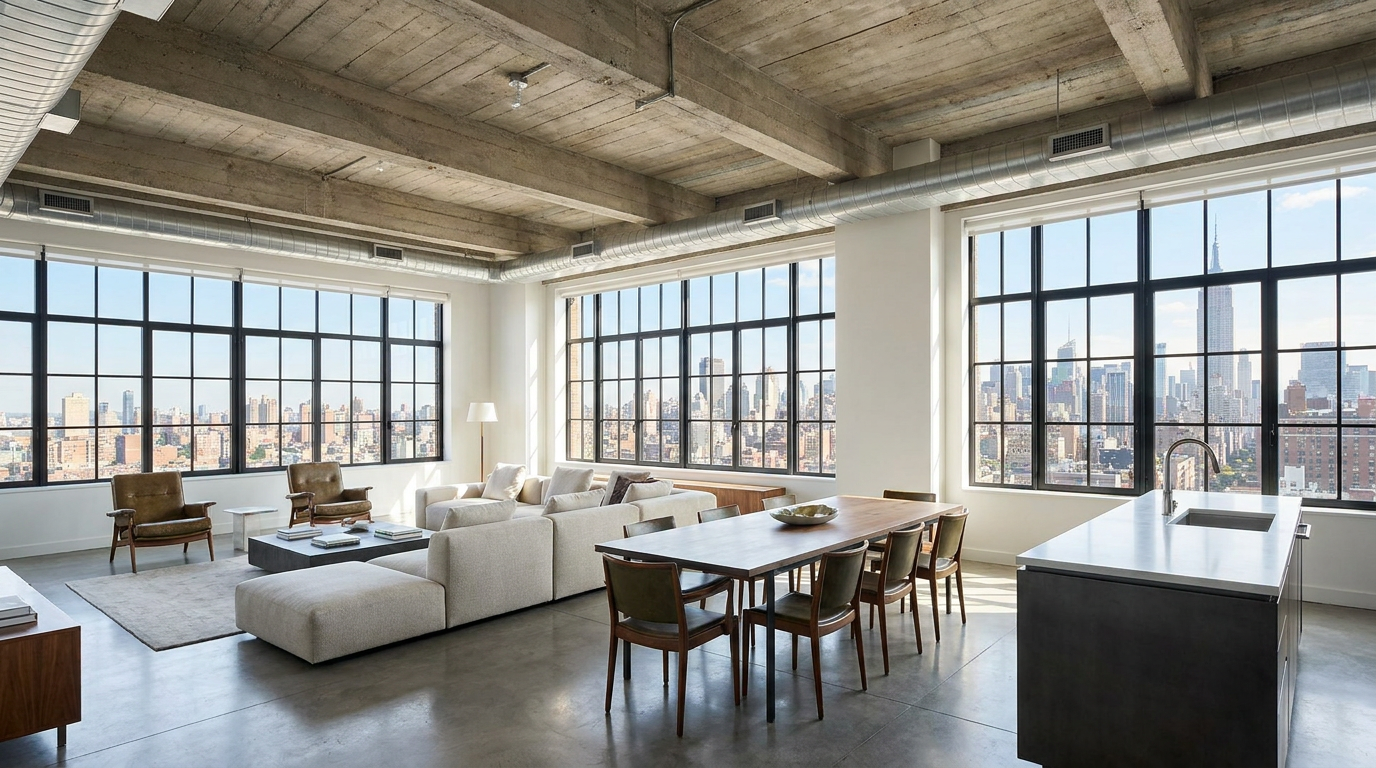
The American downtown is undergoing its most profound physical transformation since the post-war urban renewal era. Driven by the sticky shift to hybrid work and a persistent national housing shortage, developers are increasingly turning to adaptive reuse—specifically, converting obsolete office buildings into residential apartments. What began as a pandemic-era experiment has matured into a structural real estate trend. According to a 2026 analysis by RentCafe, planned office-to-residential conversion projects have reached a record 90,300 units nationwide. This represents a 28 percent increase from the previous year and is nearly four times higher than the volume recorded in 2022.[1][2]
The sheer scale of this reallocation of space is reshaping the construction pipeline across the country. Office conversions now account for 47 percent of all adaptive reuse projects in the United States, comfortably outpacing hotel conversions at 18 percent and industrial repurposing at 16 percent. The Northeast currently leads the nation with over 28,500 planned units, heavily anchored by New York City and Boston. The South follows closely behind with 26,500 units, while the Midwest and West are projected to deliver roughly 20,000 and 15,000 units, respectively.[1][2]
Specific metropolitan areas have emerged as primary testing grounds for this transition, utilizing aging building stock to inject new life into central business districts. Washington, D.C., Chicago, Los Angeles, and Dallas boast some of the largest conversion pipelines in the country. In Chicago, for example, nearly 100-year-old high-rises that once housed manufacturing and publishing are being transformed into hundreds of modern apartments. These projects are actively shifting downtowns away from a 9-to-5 monoculture toward vibrant, 24-hour neighborhoods.[1][2][3]

However, the enthusiasm for adaptive reuse often collides with the physical realities of commercial architecture. Not every vacant office tower can seamlessly become an apartment complex. A study by the National Bureau of Economic Research (NBER) estimated that only about 11 percent of office buildings in the downtowns of the 105 largest U.S. cities are physically and economically suitable for residential conversion. The ideal candidates are typically older, Class B and Class C buildings constructed before the 1980s.[6]
These pre-1980s structures tend to feature smaller floor plates, operable windows, and higher ceilings, which are essential for meeting residential light and air requirements. Because residential building codes mandate that every bedroom must have a window, the distance from the building's core to its exterior wall is the single most critical metric in a conversion's feasibility. Buildings with narrow profiles allow developers to easily layout apartments along the perimeter, leaving the central core for elevators and hallways.[6][7]
Conversely, modern glass-box office towers built in the 1990s and 2000s present severe engineering challenges. Their massive, deep floor plates mean that interior spaces are situated too far from perimeter windows to legally serve as living areas. To solve this, architects are forced to carve massive light wells or courtyards through the center of buildings, a process that requires complex structural reinforcement and sacrifices rentable square footage.[7]
Conversely, modern glass-box office towers built in the 1990s and 2000s present severe engineering challenges.
The plumbing and mechanical overhauls are equally daunting. Commercial buildings are designed with centralized mechanical, electrical, and plumbing (MEP) systems, typically featuring one large set of restrooms per floor. Converting them requires coring through thick concrete floors—often complicated by post-tensioned slabs—to install individual plumbing and HVAC lines for dozens of separate apartment units. Because the existing structure must remain intact, MEP costs make up a significantly larger percentage of the budget in adaptive reuse projects than in ground-up construction.[7]

Beyond the architectural puzzle, the financial calculus of office-to-residential conversions remains precarious. A 2026 report by the Brookings Institution and the U.S. Department of Housing and Urban Development cautions that, in most markets, these conversions do not make pure economic sense without intervention. There is frequently a gap between the current value of the office building plus the steep cost of conversion, and the projected post-conversion value of the residential asset.[3]
The National Association of Realtors notes that a conversion is generally only feasible if local Class A apartment rents significantly exceed the current rents of Class B or C office spaces. Their analysis of 27 major markets heavily impacted by the pandemic found that 22 possessed the market conditions necessary to make conversions theoretically feasible. However, high interest rates and tight lending standards have put immense downward pressure on developers' ability to secure financing for these complex projects.[4][7]
To bridge this financial gap, municipalities are deploying a variety of policy levers. A 2025 comparative study by Econsult Solutions analyzed incentive programs across North America, concluding that well-designed, substantial upfront capital subsidies are significantly more effective at making conversions viable than long-term tax abatements. Cities that provide direct financial support or expedite zoning and permitting processes are seeing the highest volume of successful projects.[5]

At the federal level, proposed legislation like the Revitalizing Downtowns and Main Streets Act aims to offer tax credit subsidies to developers in exchange for dedicating a percentage of the new units to affordable housing. The integration of affordable housing remains a central tension in the conversion boom. Housing advocates argue that without mandates like inclusionary zoning or Low-Income Housing Tax Credits (LIHTC), these expensive retrofits will exclusively produce luxury apartments, doing little to alleviate the affordability crisis for middle- and lower-income renters.[3]
When the math does pencil out, the economic and environmental benefits are substantial. Adaptive reuse projects can save up to 20 percent on overall construction costs compared to ground-up development, shifting the bulk of the expenditure from raw materials to local labor. More importantly, repurposing an existing structure preserves its embodied carbon—the greenhouse gas emissions associated with the initial manufacturing and transportation of the building's steel and concrete. By avoiding demolition and new structural construction, adaptive reuse offers a highly sustainable pathway to expanding the housing supply.[6][7]
Looking ahead, the pipeline of conversions is expected to remain robust as commercial real estate markets continue to digest the permanent reduction in office demand. With national office vacancy rates hovering near 20 percent in early 2026, millions of square feet remain underutilized. As property valuations for obsolete office buildings continue to decline, the acquisition costs for developers will drop, naturally improving the financial viability of future residential projects.[1][2][4]

Ultimately, the legacy of the office-to-residential boom will extend far beyond the raw number of units created. By replacing single-use commercial monoliths with mixed-use residential communities, cities are actively redesigning their urban cores. The result is a shift away from the fragile, commuter-dependent downtowns of the 20th century toward resilient, 24/7 neighborhoods where people can live, work, and access amenities within a walkable radius.[3][5]
How we got here
2020-2021
The shift to remote work empties downtown office buildings, causing commercial vacancy rates to spike.
2022
Early adaptive reuse projects gain traction, with roughly 23,000 office-to-residential units entering the pipeline.
2024
Conversion projects double as cities begin offering tax abatements and zoning exemptions to developers.
Early 2026
The conversion pipeline hits a record 90,300 units, making office repurposing the dominant form of adaptive reuse nationwide.
Viewpoints in depth
Urban Planners & Developers
Viewing conversions as the key to saving post-pandemic downtowns.
For city planners and real estate developers, the structural shift to remote work presents a once-in-a-generation opportunity to correct the urban planning mistakes of the 20th century. By converting single-use commercial districts into mixed-use neighborhoods, they argue cities can create vibrant, 24/7 communities that are more resilient to economic shocks. Developers emphasize that while the engineering challenges are steep, targeted municipal incentives and expedited permitting can unlock millions of square feet of underutilized space.
Housing Advocates
Warning that conversions must include affordable units to be equitable.
Housing policy experts and advocates caution against viewing adaptive reuse as a silver bullet for the national housing crisis. Because the capital expenditures required to retrofit plumbing, HVAC, and structural cores are so high, developers are heavily incentivized to build luxury apartments to recoup their costs. Advocates argue that if public funds or tax breaks are used to subsidize these projects, they must be tied to strict inclusionary zoning mandates to ensure low- and middle-income residents are not priced out of revitalized downtowns.
Commercial Real Estate Analysts
Focusing on the harsh financial realities of asset devaluation.
From a purely financial perspective, commercial real estate analysts view the conversion trend as a necessary, albeit painful, market correction. With national office vacancy rates hovering near 20 percent, billions of dollars in commercial asset value have been wiped out. Analysts note that conversions only pencil out when the acquisition cost of the building drops significantly—meaning current owners must accept massive losses before a developer can step in and profitably transform the property into residential units.
What we don't know
- How the influx of new residential units will impact the long-term tax base of cities heavily reliant on commercial property taxes.
- Whether the federal Revitalizing Downtowns and Main Streets Act will pass and provide sufficient subsidies to scale affordable conversions.
- The exact percentage of current conversion projects that will successfully secure financing amid tight lending standards.
Key terms
- Adaptive Reuse
- The process of repurposing an existing building for a use other than what it was originally designed for, such as turning an office into apartments.
- Floor Plate
- The total leasable square footage of a single floor in a commercial building, which dictates how easily the space can be divided into apartments.
- Embodied Carbon
- The total greenhouse gas emissions generated by the manufacturing, transportation, and assembly of a building's materials, which is preserved during adaptive reuse.
- Class B and C Offices
- Older, less modern commercial buildings that typically feature fewer amenities and lower rents than premium Class A towers, making them prime targets for conversion.
- Post-Tensioned Slab
- A concrete floor reinforced with high-strength steel cables pulled tight after pouring, which makes drilling new plumbing holes highly complex.
Frequently asked
Why can't all empty office buildings become apartments?
Many modern office buildings have massive, deep floor plates that place interior spaces too far from windows, making them illegal for residential bedrooms without expensive structural modifications.
Does converting an office building save money?
Yes, adaptive reuse can save up to 20% on construction costs compared to ground-up development, largely by preserving the existing structural frame and foundation.
Will these conversions create affordable housing?
Without government subsidies or inclusionary zoning mandates, the high cost of conversion typically forces developers to charge luxury market rates to make the project financially viable.
Which cities have the most conversion projects?
New York City, Washington D.C., Chicago, Los Angeles, and Dallas currently lead the nation in planned office-to-residential conversion units.
Sources
Source coverage
8 outlets
3 viewpoints surfaced








[1]Scotsman GuideUrban Planners & Developers
Office-to-residential conversions gain traction
Read on Scotsman Guide →[2]Multifamily ExecutiveUrban Planners & Developers
Office-to-Apartment Conversions Surge as Pipeline Nears 100,000 Units
Read on Multifamily Executive →[3]Brookings InstitutionHousing Advocates
Economic impact of office conversions to housing
Read on Brookings Institution →[4]National Association of RealtorsCommercial Real Estate Analysts
Analysis of office-to-housing conversions
Read on National Association of Realtors →[5]Econsult SolutionsUrban Planners & Developers
A Comparative Analysis of Incentive Programs in Four North American Cities
Read on Econsult Solutions →[6]Center for American ProgressHousing Advocates
The Impact of Office-to-Residential Conversions
Read on Center for American Progress →[7]IAPMOCommercial Real Estate Analysts
Adaptive Reuse: Converting Offices to Residential
Read on IAPMO →[8]Factlen Editorial Team
Synthesis by Factlen editorial team
Read on Factlen Editorial Team →
Every angle. Every day.
Get real estate stories with full source coverage and perspective breakdowns delivered to your inbox.