
AI and Autonomous Labs Are Accelerating the Discovery of Clean Energy Materials
Artificial intelligence models have predicted hundreds of thousands of novel, stable materials, while autonomous robotic labs are successfully synthesizing them. This closed-loop approach is poised to drastically reduce the time required to develop next-generation batteries and superconductors.
By Factlen Editorial Team
- Computational Researchers
- Focusing on scaling AI models to predict millions of theoretical structures across the periodic table.
- Experimental Scientists
- Emphasizing the physical realization of AI blueprints through autonomous robotics and closed-loop synthesis.
- Applied Engineering & Industry
- Prioritizing the translation of novel materials into commercial technologies like batteries and superconductors.
What's not represented
- · Industrial Manufacturers
- · Mining and Raw Materials Sector
Why this matters
The physical materials required for highly efficient electric vehicles, advanced microchips, and renewable energy grids do not yet exist. By shrinking the discovery timeline from decades to days, AI is unblocking the most critical bottlenecks in climate technology and consumer electronics.
Key points
- AI models like DeepMind's GNoME have predicted 380,000 thermodynamically stable new materials.
- Generative AI tools like Microsoft's MatterGen allow scientists to design materials based on desired physical properties.
- Autonomous robotic facilities like Berkeley's A-Lab are successfully synthesizing these AI blueprints without human intervention.
- Researchers are actively using these tools to discover novel superconductors and clean energy storage solutions.
For over a century, the discovery of new materials has been defined by painstaking trial and error. From the lithium-ion batteries that power modern electric vehicles to the silicon chips inside every smartphone, the journey from theoretical concept to commercial reality typically spans more than a decade. Chemists and materials scientists have historically relied on intuition, incremental adjustments, and years of repetitive laboratory testing to find compounds that are both functional and stable. This slow, manual pipeline has become the primary bottleneck in advancing clean energy and next-generation computing.[6]
This historical bottleneck is now being shattered by a convergence of artificial intelligence and autonomous robotics. In what researchers are calling a paradigm shift for the physical sciences, advanced AI models are predicting millions of novel, thermodynamically stable crystal structures in a matter of days. Simultaneously, robotic laboratories are synthesizing these AI-generated blueprints without human intervention. By closing the loop between computational prediction and physical creation, the scientific community is accelerating the pace of materials discovery by orders of magnitude.[1][2]
The implications for global technology and climate infrastructure are profound. The transition to sustainable energy—which requires more efficient solar cells, higher-capacity solid-state batteries, and room-temperature superconductors—depends entirely on materials that do not yet exist in commercial form. If researchers can rapidly identify and manufacture compounds that conduct electricity without loss, or store thermal energy more efficiently than current lithium-ion constraints allow, the timeline for deploying advanced green technologies could be compressed from decades to mere years. This shift moves materials science from a discipline of discovery to one of intentional design.[5][6]

The first major claim driving this acceleration is that deep learning can bypass traditional computational limits to predict stable materials at an unprecedented scale. Historically, computational screening required immense supercomputer resources to simulate atomic interactions using density functional theory, severely limiting the number of candidates that could be evaluated. Today, neural networks trained on decades of quantum mechanical data can predict the stability of a new atomic arrangement in milliseconds. This computational leap allows researchers to cast a vastly wider net across the periodic table, exploring complex multi-element combinations that human scientists would likely never consider testing manually.[1]
The primary evidence for this computational leap comes from Google DeepMind’s Graph Networks for Materials Exploration, known as GNoME. By utilizing a large-scale active learning loop, GNoME identified 2.2 million new crystal structures. Crucially, the model predicted that 380,000 of these are thermodynamically stable—meaning they will not spontaneously decompose and are viable candidates for real-world synthesis. This massive dataset provides a foundational map of stable inorganic materials, offering researchers a targeted menu of compounds to investigate for specific industrial applications.[1]
To put this achievement in perspective, previous computational approaches led by initiatives like the Materials Project identified roughly 28,000 stable materials over the course of a decade. DeepMind researchers estimate that GNoME’s output represents the equivalent of 800 years of human experimental knowledge, effectively expanding the known catalog of stable materials by an order of magnitude. Independent researchers analyzing the dataset have already validated the model's accuracy, confirming that hundreds of the structures predicted by GNoME perfectly match materials that were concurrently discovered through traditional, painstaking laboratory experiments around the world.[1][8]

A parallel approach is emerging through generative artificial intelligence, shifting the process from passive screening of databases to active, targeted design. Microsoft Research recently introduced MatterGen, a model that functions similarly to popular generative text models, but is engineered specifically for atomic structures. Instead of filtering through a massive, pre-calculated database to find a material that might work, MatterGen allows scientists to work backward from the exact specifications they need for a given technology, fundamentally altering the traditional discovery workflow.[3]
A parallel approach is emerging through generative artificial intelligence, shifting the process from passive screening of databases to active, targeted design.
Using MatterGen, a researcher can input desired physical properties—such as high thermal stability, specific electronic band gaps, or distinct magnetic behavior—and the AI generates a novel material blueprint tailored precisely to those constraints. This capability is particularly valuable for developing alternatives to critical materials that are vulnerable to supply chain disruptions. It allows engineers to intentionally design high-performance magnets or battery cathodes using only abundant, inexpensive elements, entirely bypassing the need to rely on rare-earth metals that carry heavy geopolitical and environmental costs.[3]
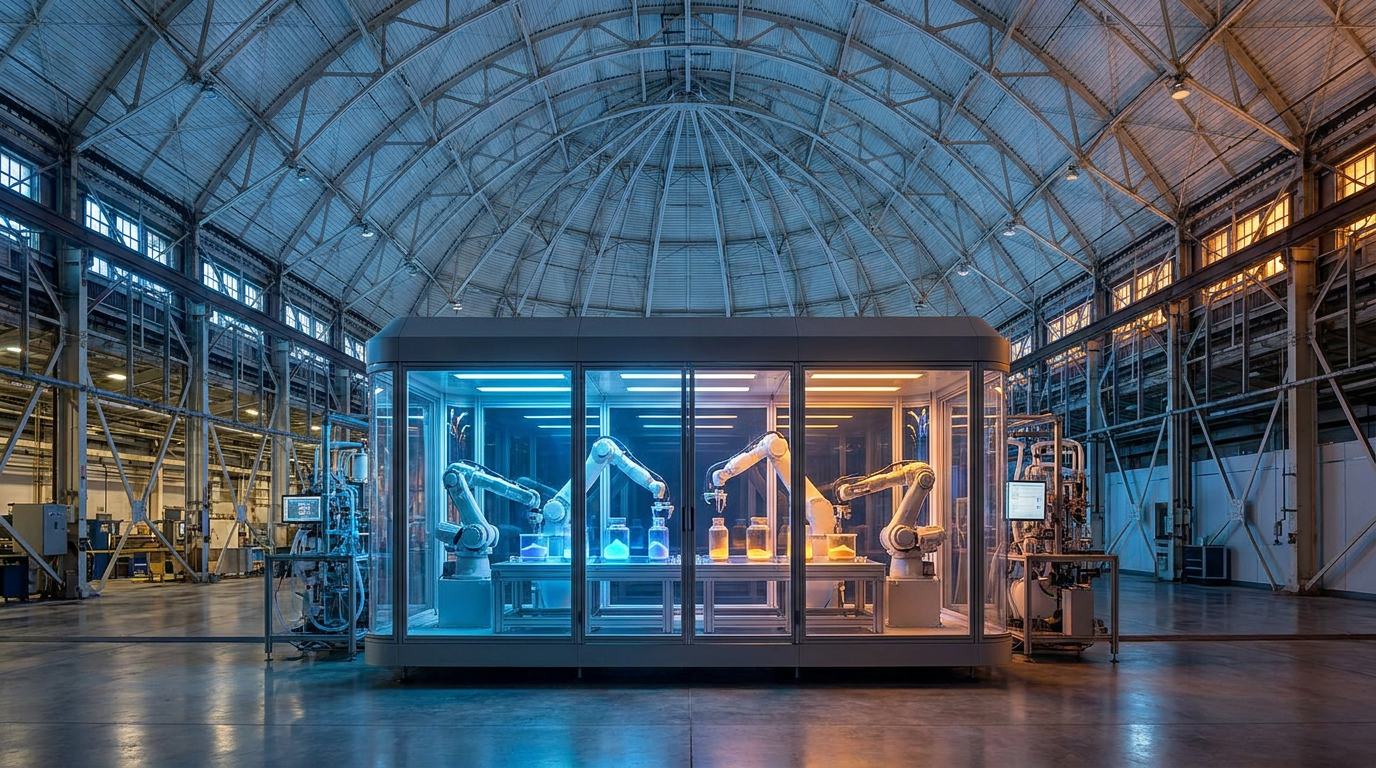
However, theoretical prediction is only half the battle; a digital blueprint is ultimately useless if the material cannot be built in the physical world. The second major claim in this field is that autonomous, closed-loop laboratories can physically synthesize these AI-generated blueprints at a pace far exceeding human chemists. By integrating advanced robotics with machine learning, these facilities aim to completely remove the manual labor of mixing powders, operating high-temperature furnaces, and analyzing X-ray diffraction results, creating a continuous, uninterrupted pipeline from digital concept to physical reality.[2][7]
The most compelling evidence for this physical realization is the A-Lab at the Lawrence Berkeley National Laboratory. Designed as a fully automated facility for solid-state synthesis, the A-Lab uses robotic arms to handle inorganic powders, guided entirely by AI decision-making algorithms. Unlike liquid-based automated labs, which are easier to engineer using pumps and valves, the A-Lab tackles the much harder problem of solid-state chemistry, which is essential for producing the scalable, application-ready materials required by the energy storage industry.[2][7]
In a landmark 17-day continuous operation, the A-Lab attempted to synthesize 58 target materials selected from the GNoME database and the Materials Project. Operating around the clock without human intervention, the robotic system successfully realized 41 novel compounds. This represents a remarkable 71 percent success rate for synthesizing entirely new inorganic materials. This yield dramatically outpaces traditional laboratory environments, where human researchers might spend several months optimizing the temperature profiles and precursor ratios just to successfully synthesize a single novel compound.[2]

The true breakthrough of the A-Lab lies in its ability to handle failure autonomously. When a synthesis attempt failed to produce the desired crystalline phase, the A-Lab’s active learning system immediately analyzed the resulting X-ray diffraction data, adjusted the thermodynamic parameters, and proposed a revised recipe. This demonstrates a genuine closed-loop capability that learns from its own physical mistakes. By continuously refining its synthesis strategies based on real-time empirical feedback, the system mimics the intuition of an experienced chemist, but operates at a speed and scale that humans cannot match.[2][7]
The third major claim is that these AI-discovered materials are rapidly moving out of academic isolation and toward targeted industrial and defense applications. Rather than simply cataloging new crystals for future generations to study, research institutions and government laboratories are actively deploying these models to solve immediate engineering crises. The focus has shifted from broad exploration to highly specific problem-solving, particularly in the realms of energy transmission, advanced battery storage, and the development of resilient autonomous systems for complex environments.[4][5]
Evidence of this rapid translation is visible in recent strategic partnerships across the defense and energy sectors. The Johns Hopkins Applied Physics Laboratory has integrated Microsoft’s MatterGen to specifically hunt for novel oxide superconducting materials. Superconductors, which transmit electricity with zero resistance, are considered the holy grail of grid efficiency, but current materials require extreme, expensive cooling. By leveraging generative AI, the laboratory aims to discover new superconducting compounds that operate at higher temperatures and can be manufactured domestically, without relying on vulnerable international supply chains for critical elements.[4]
Similarly, the Energy-GNoME project at Politecnico di Torino is applying secondary machine learning filters to DeepMind’s massive database of 380,000 stable structures. Their explicit goal is to isolate the specific atomic configurations best suited for next-generation energy storage and conversion technologies. By systematically categorizing these AI-generated materials based on their specific utility for advanced solar cells, thermoelectric generators, or solid-state batteries, the project is actively bridging the critical gap between raw computational data and the physical deployment of commercial clean energy grids.[5]
Despite these monumental breakthroughs, significant uncertainties remain regarding the industrialization of these discoveries. Predicting a material's thermodynamic stability in a simulation does not guarantee it can be manufactured economically at a massive scale. Furthermore, the long-term degradation rates of these novel compounds under real-world conditions—such as the repeated charging and discharging cycles of an electric vehicle battery over ten years—cannot yet be fully simulated. Until these AI-designed materials undergo years of rigorous physical stress testing, their ultimate commercial viability remains an open question.[6][8]

How we got here
Early 2023
Berkeley Lab launches the A-Lab, integrating robotics and AI for autonomous solid-state synthesis.
Nov 2023
Google DeepMind publishes the GNoME paper, revealing 2.2 million newly predicted crystal structures.
Dec 2023
Microsoft Research introduces MatterGen, a generative AI model for targeted materials design.
Early 2026
Institutions like JHU APL and Politecnico di Torino begin deploying these AI tools for specific superconductor and energy applications.
Viewpoints in depth
Computational Researchers
Focusing on scaling AI models to predict millions of theoretical structures across the periodic table.
This camp argues that the primary bottleneck in materials science has been the computational cost of simulating atomic interactions. By training deep neural networks on decades of quantum mechanical data, they believe we can map the entire landscape of stable inorganic materials. Their evidence relies on the sheer volume of thermodynamically stable predictions generated by models like GNoME and MatterGen, asserting that a wider theoretical funnel inevitably leads to more practical breakthroughs.
Experimental Scientists
Emphasizing the physical realization of AI blueprints through autonomous robotics and closed-loop synthesis.
For experimentalists, a digital blueprint is meaningless until it is physically synthesized. This camp focuses on building autonomous laboratories, like the A-Lab, that can translate AI predictions into tangible powders and crystals. They argue that the real breakthrough is not just predicting stability, but engineering robotic systems that can learn from failed syntheses in real-time, thereby removing human manual labor from the most tedious phases of chemical discovery.
Applied Engineering & Industry
Prioritizing the translation of novel materials into commercial technologies like batteries and superconductors.
Engineers and industry analysts are less concerned with the total number of new crystals and more focused on specific applications. This perspective filters the massive AI datasets for materials that meet strict industrial constraints—such as avoiding rare-earth elements, maximizing thermal stability, and ensuring economic viability at scale. They caution that while AI can predict stability, it cannot yet fully simulate the long-term degradation of a material inside a commercial electric vehicle battery.
What we don't know
- Whether these AI-predicted materials can be manufactured economically at an industrial scale.
- How these novel compounds will degrade over decades of real-world use, such as repeated battery charging cycles.
- If generative AI models can accurately predict the behavior of highly complex, multi-element alloys under extreme physical stress.
Key terms
- Thermodynamic Stability
- The state in which a material will not spontaneously decompose or change its structure, making it viable for real-world use.
- Solid-State Synthesis
- A chemical process that creates new compounds by mixing and heating solid powders, rather than using liquids or gases.
- Active Learning
- A machine learning approach where the AI model continuously updates and improves its predictions based on real-time feedback from experiments.
- Density Functional Theory (DFT)
- A complex computational modeling method used in physics and chemistry to investigate the electronic structure of atoms and molecules.
Frequently asked
What is the GNoME project?
GNoME is an AI tool developed by Google DeepMind that predicted 2.2 million new crystal structures, including 380,000 that are thermodynamically stable.
How does an autonomous lab work?
Autonomous labs use robotic arms to mix, heat, and analyze chemical samples without human intervention, guided by AI algorithms that adjust recipes based on real-time results.
Why do we need new materials?
Next-generation technologies like high-capacity solid-state batteries, efficient solar panels, and room-temperature superconductors require materials that perform better than anything currently available.
Can AI guarantee a material will work in a battery?
No. While AI can predict if a material is stable, extensive physical testing is still required to determine how it will degrade over years of real-world use.
Sources
Source coverage
8 outlets
3 viewpoints surfaced








[1]Google DeepMindComputational Researchers
AI tool GNoME finds 2.2 million new crystals, including 380,000 stable materials that could power future technologies
Read on Google DeepMind →[2]NatureExperimental Scientists
An autonomous laboratory for the accelerated synthesis of novel materials
Read on Nature →[3]Microsoft ResearchComputational Researchers
MatterGen: A new paradigm of materials design with generative AI
Read on Microsoft Research →[4]Johns Hopkins Applied Physics LaboratoryExperimental Scientists
APL, Microsoft Partner to Advance AI Innovation in Robotics, Materials Discovery
Read on Johns Hopkins Applied Physics Laboratory →[5]R&D MagazineApplied Engineering & Industry
The algorithm that unearths the materials of the future
Read on R&D Magazine →[6]Factlen Editorial TeamApplied Engineering & Industry
Synthesis by Factlen editorial team
Read on Factlen Editorial Team →[7]Lawrence Berkeley National LaboratoryExperimental Scientists
Robots and AI Combine to Accelerate Materials Discovery at the A-Lab
Read on Lawrence Berkeley National Laboratory →[8]arXivComputational Researchers
Analysis of GNoME dataset and its implications for materials science
Read on arXiv →


Every angle. Every day.
Get ai stories with full source coverage and perspective breakdowns delivered to your inbox.