
Apple's iOS 27 Introduces Conversational Siri AI and Quality-of-Life Upgrades
Apple's latest mobile operating system update, iOS 27, brings a highly anticipated conversational Siri AI alongside a suite of practical quality-of-life improvements. Early hands-on testing suggests the new assistant is significantly more capable and context-aware, marking a major leap for the iPhone ecosystem.
By Factlen Editorial Team

- Tech Enthusiasts
- Focus on the technical leap of the new AI architecture and its seamless integration into the Apple ecosystem.
- Mainstream Consumers
- Value the practical, everyday utility and the reduction of friction in completing daily tasks on their devices.
- Privacy Advocates
- Emphasize the importance of Apple's on-device processing approach, ensuring personal data isn't compromised or used for model training.
What's not represented
- · Competitor AI developers
- · Accessibility advocates
Why this matters
For hundreds of millions of iPhone users, the daily friction of interacting with voice assistants is about to drop significantly. The shift toward a genuinely conversational, context-aware Siri means users can execute complex, multi-step tasks hands-free, fundamentally changing how people interact with their devices.
Key points
- iOS 27 introduces a completely overhauled, conversational Siri AI powered by on-device large language models.
- The new assistant can maintain context across multiple queries and execute complex, multi-step tasks across native apps.
- Apple is prioritizing privacy by processing most requests on-device and using a secure cloud framework for heavier tasks.
- The update also includes significant customization options for the home screen and Control Center.
- Advanced on-device AI features will require newer iPhone models with the latest processors.
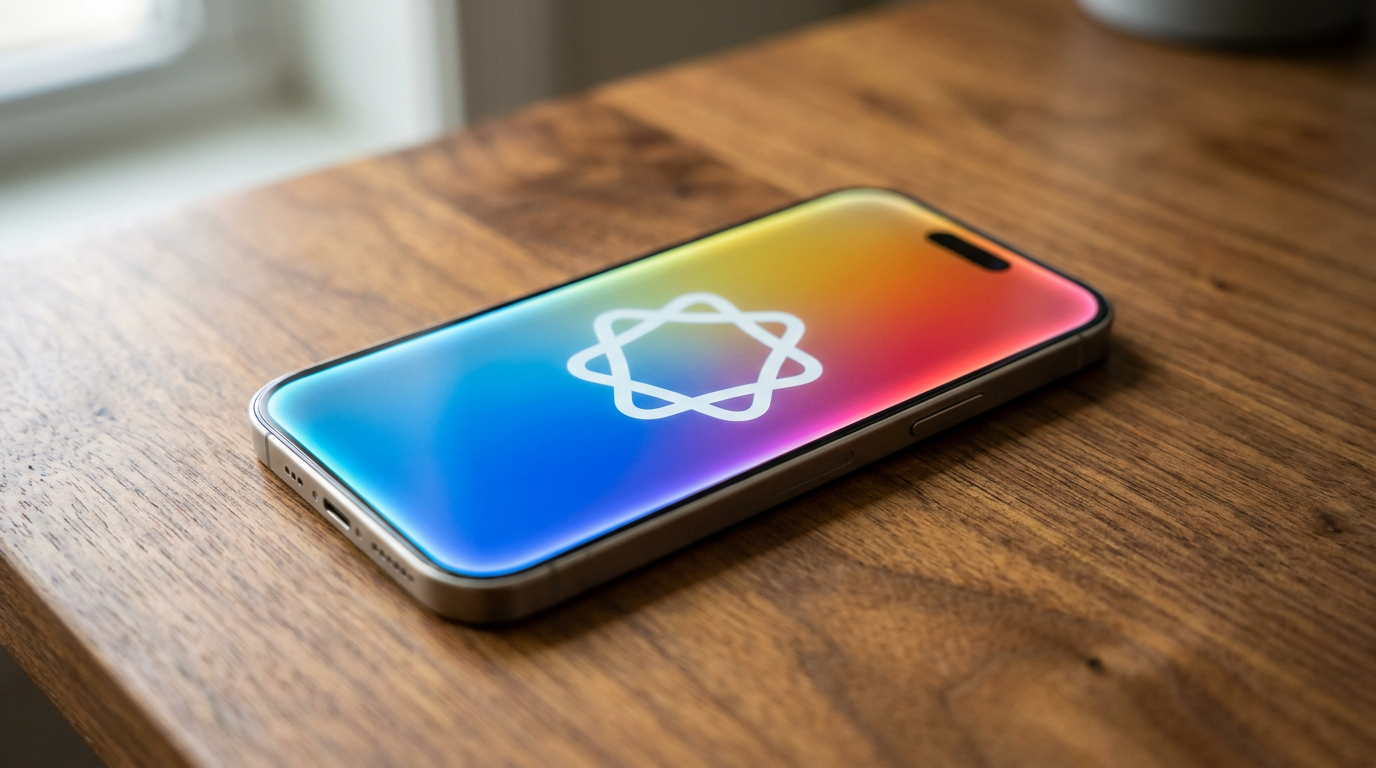
Apple has officially pulled back the curtain on iOS 27, and while the update includes a variety of system-wide tweaks, the undeniable centerpiece is a completely overhauled Siri. Powered by Apple's latest on-device large language models, the new Siri AI aims to transform the voice assistant from a rigid command-and-control tool into a genuinely conversational partner. Early hands-on impressions suggest that the upgrade is not just a flashy gimmick, but a substantial leap forward in everyday utility.[1][2]
For years, Siri has been the subject of user frustration, often struggling with follow-up questions or complex phrasing. The iOS 27 architecture fundamentally changes this dynamic. By integrating advanced natural language processing directly into the operating system, Siri can now understand stumbles in speech, maintain context across multiple queries, and infer user intent with surprising accuracy. If a user asks for the weather in Chicago and then follows up with, "What about tomorrow?", Siri seamlessly understands the geographic context.[3][4]
The true power of the new Siri AI lies in its deep integration with Apple's native applications. Reviewers testing the developer beta have highlighted Siri's ability to execute multi-step workflows that previously required manual tapping. For instance, a user can instruct Siri to "Find the photo of me at the beach last summer, enhance the lighting, and message it to Sarah." The assistant parses the request, locates the specific image using semantic search, applies the edit, and drafts the message, asking for a final confirmation before sending.[2][6]

Beyond the headline-grabbing AI features, iOS 27 introduces a host of quality-of-life improvements that refine the iPhone experience. The update brings unprecedented customization options to the home screen and Control Center, allowing users to place icons anywhere on the grid and resize control widgets to their liking. Additionally, a new intelligent battery management system learns user habits to optimize charging cycles and extend overall battery lifespan.[1][5]
Beyond the headline-grabbing AI features, iOS 27 introduces a host of quality-of-life improvements that refine the iPhone experience.
Privacy remains a cornerstone of Apple's software philosophy, and the implementation of Siri AI reflects this commitment. The vast majority of Siri's new capabilities are processed entirely on-device, utilizing the iPhone's Neural Engine. This means personal data, such as messages, photos, and calendar events, never leaves the phone for standard requests. For more complex queries that require cloud computing, Apple has introduced a "Private Cloud Compute" framework, which utilizes custom Apple silicon servers designed to cryptographically ensure data is not stored or accessible to Apple.[4][5]
This privacy-first approach distinguishes Apple's offering from competitors who rely heavily on cloud-based models that ingest user data for continuous training. While cloud-first models might occasionally offer broader general knowledge, Apple is betting that users will prefer an assistant that deeply understands their personal context—their schedules, relationships, and habits—without compromising their privacy. Analysts note that this deep OS-level integration gives Apple a unique advantage in the increasingly crowded AI assistant market.[3][5]

Developers are also getting the tools they need to plug into Siri's upgraded brain. The new App Intents API allows third-party applications to expose their specific functions to Siri. This means that in the near future, users will be able to ask Siri to perform complex actions within apps like Spotify, Uber, or specialized productivity tools, using natural language rather than rigid, pre-programmed shortcuts.[1][6]
However, the advanced capabilities of Siri AI will require substantial processing power. Apple has confirmed that while iOS 27 will be available on a wide range of older devices, the full suite of on-device AI features will be restricted to newer iPhone models equipped with the latest A-series chips and sufficient unified memory. Older devices will still benefit from the redesigned interface and basic improvements, but will rely more heavily on cloud processing for complex tasks.[1][4]
The rollout of iOS 27 is following Apple's traditional schedule. The developer beta is currently available, with a public beta expected in July. The final, stable release will launch in the fall, likely coinciding with the announcement of the next generation of iPhones. As developers begin to integrate the new App Intents, the true potential of a fully conversational, context-aware Siri will become increasingly apparent.[1][6]
How we got here
2011
Apple introduces the original Siri voice assistant with the iPhone 4S.
2017
Apple debuts the Neural Engine, laying the hardware groundwork for on-device machine learning.
June 2026
Apple unveils iOS 27, featuring a massive architectural overhaul of Siri powered by generative AI.
Viewpoints in depth
Tech Enthusiasts' View
Tech reviewers see the update as a necessary and impressive leap forward for the Apple ecosystem.
For technology reviewers and power users, iOS 27 represents the update they have been waiting for. The integration of generative AI directly into the operating system bridges the gap between Apple's hardware prowess and the software capabilities that competitors have been showcasing. They highlight the App Intents API as a game-changer, predicting that once developers fully adopt the framework, the iPhone will become a significantly more powerful tool for automation and productivity.
Privacy Advocates' View
Privacy experts praise Apple's commitment to keeping personal data out of the cloud.
In an era where tech companies are aggressively harvesting data to train their AI models, privacy advocates view Apple's approach as a vital counterweight. By insisting that the majority of Siri's processing happens on the device's Neural Engine, Apple ensures that sensitive information—like reading habits, personal photos, and daily schedules—remains under the user's control. The introduction of Private Cloud Compute for heavier tasks is seen as a novel and necessary solution to balance advanced capabilities with strict data security.
What we don't know
- Exactly which older iPhone models will support the full suite of on-device AI features.
- How quickly third-party developers will adopt the new App Intents API to integrate their apps with Siri.
Key terms
- On-device processing
- Executing computing tasks directly on the smartphone's hardware rather than sending data to external cloud servers, enhancing speed and privacy.
- App Intents
- A developer framework that allows third-party applications to expose their specific functions and actions directly to Siri.
- Private Cloud Compute
- Apple's secure server architecture designed to handle complex AI requests while cryptographically ensuring user data is not stored or accessible.
Frequently asked
Will my older iPhone get the new Siri AI?
While iOS 27 will be available on many older devices, the most advanced on-device AI features will require newer iPhone models with the latest A-series chips and sufficient memory.
Does the new Siri AI cost extra?
No, the new Siri AI and iOS 27 features are included as a free software update for compatible Apple devices.
Is my personal data used to train Apple's AI?
Apple has stated that personal data processed on-device or through their Private Cloud Compute framework is not used to train their foundational AI models.
Sources
Source coverage
6 outlets
3 viewpoints surfaced






[1]TechCrunchTech Enthusiasts
Every new iOS 27 feature that’s worth knowing about
Read on TechCrunch →[2]WiredMainstream Consumers
Siri AI Hands On: A Smart, Helpful Assistant
Read on Wired →[3]The VergeTech Enthusiasts
Apple's iOS 27 makes Siri the AI assistant we always wanted
Read on The Verge →[4]CNETMainstream Consumers
iOS 27 hands-on: Siri gets a massive AI brain transplant
Read on CNET →[5]Wall Street JournalPrivacy Advocates
Apple’s New Siri AI Actually Works. Here’s What iOS 27 Brings.
Read on Wall Street Journal →[6]9to5MacTech Enthusiasts
iOS 27 beta 1: Top features and Siri AI deep dive
Read on 9to5Mac →

Every angle. Every day.
Get technology stories with full source coverage and perspective breakdowns delivered to your inbox.