
Iran Threatens to Reclose Strait of Hormuz Over Israeli Strikes in Lebanon, Testing Fragile US Truce
Just days after a landmark US-Iran agreement reopened the vital shipping lane, Tehran announced a renewed blockade of the Strait of Hormuz, citing ongoing Israeli military operations in southern Lebanon. US Central Command denies the strait is closed, setting up a high-stakes standoff as diplomats gather in Switzerland.
By Factlen Editorial Team
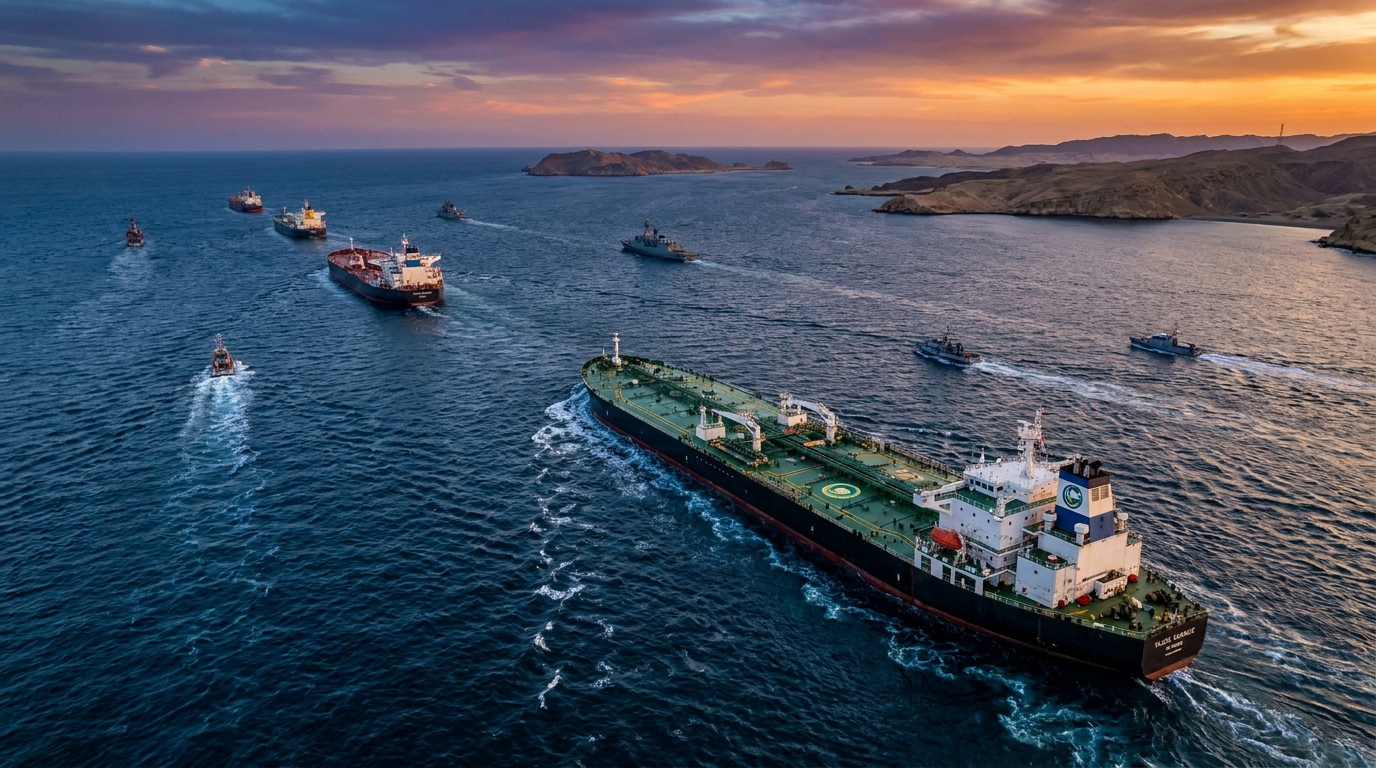
- Iranian Military Command
- Argues the US and Israel breached the MoU by continuing strikes in Lebanon, justifying the renewed closure of the strait.
- US Administration & CENTCOM
- Maintains the strait remains open and active, denying Iranian control while pushing to keep the diplomatic framework alive in Switzerland.
- Israeli Government
- Defends ongoing military operations in southern Lebanon as necessary to combat Hezbollah, regardless of the US-Iran MoU.
- Global Energy Markets
- Views the situation as a binary logistical risk, weighing the physical flow of oil against the threat of skyrocketing insurance premiums and supply shocks.
What's not represented
- · Lebanese Civilians
- · Commercial Shipping Crews
Why this matters
The Strait of Hormuz facilitates one-fifth of the world's daily oil supply. If the US-Iran ceasefire collapses and the waterway is blocked, global energy prices will spike, driving up inflation and fuel costs for consumers worldwide.
Key points
- Iran announced a renewed closure of the Strait of Hormuz just three days after reopening it.
- Tehran cites ongoing Israeli military strikes in Lebanon as a violation of the US-Iran ceasefire.
- US Central Command denies the closure, stating 55 ships successfully transited the strait on Saturday.
- The Strait of Hormuz facilitates roughly 20% of the world's daily oil consumption.
- US and Iranian diplomats are scheduled to meet in Switzerland to attempt to salvage the agreement.
The fragile peace agreement intended to stabilize the Middle East and reopen the world's most critical energy chokepoint is already unraveling. On Saturday, Iran's armed forces announced they were once again closing the Strait of Hormuz to commercial vessel traffic, just three days after it had reopened.[3]
The abrupt reversal comes shortly after US President Donald Trump and Iranian leadership signed a 14-point Memorandum of Understanding (MoU) designed to end months of regional warfare. Under that framework, Iran had agreed to lift its blockade of the strait and waive transit fees for a 60-day negotiation period.[2][4]
The trigger for Tehran's renewed blockade threat is the ongoing violence in southern Lebanon. According to Iran's Khatam-al Anbiya Central Headquarters, continued Israeli military strikes against Hezbollah—which reportedly killed at least 16 people on Saturday, including civilians—constitute a direct violation of the MoU.[5][8]
The foundational first clause of the agreement requires a cessation of hostilities on all fronts, including Lebanon. Iran argues that the United States has failed to rein in its ally, demonstrating "bad faith" and a "clear breach of its commitment" to the peace framework.[2][8]

However, the reality on the water remains fiercely contested. While Iran's Islamic Revolutionary Guard Corps (IRGC) Navy warned commercial vessels that their security would be at risk if they approached the strait, the US military insists the waterway remains open and active.[2][3]
US Central Command (CENTCOM) forcefully pushed back on Tehran's claims on Saturday afternoon. A CENTCOM spokesperson stated that 55 merchant ships carrying approximately 17 million barrels of oil had successfully transited the corridor that day, declaring bluntly that "Iran does not control the Strait of Hormuz."[1]
US Vice President JD Vance echoed this assessment, telling Fox News that "the straits are now open" and expressing confidence that the broader ceasefire framework could still hold despite the escalating rhetoric.[1]
The stakes for the global economy are difficult to overstate. At its narrowest point, the Strait of Hormuz is just two miles wide in each navigable direction, yet it facilitates the transit of approximately one-fifth of the world's total daily oil consumption and a massive share of liquefied natural gas.[4][6]
The stakes for the global economy are difficult to overstate.
When Iran effectively closed the strait earlier in the spring of 2026, it triggered a severe logistical supply shock. Brent crude prices surged past $100 per barrel, forcing governments worldwide to tap strategic reserves and driving up inflation.[4][6][7]
The announcement of the US-Iran MoU earlier this week had provided immediate relief to energy markets. Brent crude futures had tumbled back down to roughly $78 per barrel as traders priced in the release of an estimated 85 million barrels of oil stranded on tankers waiting in the Persian Gulf.[4]

Energy analysts warn that this renewed uncertainty will likely freeze the normalization process. Shipping companies are already grappling with exorbitant war-risk insurance premiums and logistical backlogs, which experts warned could take four to eight weeks to resolve even under peaceful conditions.[7]
The diplomatic fallout is now shifting to Bürgenstock, Switzerland, where US and Iranian negotiators are scheduled to begin direct talks on Sunday. The discussions are being mediated by officials from Pakistan and Qatar.[2]
The US delegation, which includes special envoys Steve Witkoff and Jared Kushner, is attempting to salvage the 60-day negotiation window. Vice President Vance has indicated he may also travel to Switzerland in the coming days to bolster the diplomatic effort.[1][2]

Iranian Foreign Ministry spokesperson Esmail Baghaei confirmed that Tehran's negotiating team is proceeding to Switzerland, but framed the trip strictly as a mission to demand US compliance with the initial ceasefire terms before any broader discussions can occur.[8]
The core friction point remains Israel's military posture. The Israeli government, which was not a direct signatory to the US-Iran MoU, maintains that it must continue operations in southern Lebanon to neutralize threats from Hezbollah and secure its northern border.[2][8]
Israeli strikes on Saturday targeted areas around Nabatieh and other southern Lebanese towns. Hezbollah, in turn, accused Israel of violating a localized ceasefire that had reportedly been brokered just a day prior, vowing to continue its retaliatory attacks.[2][8]
US intelligence agencies have reportedly warned the Trump administration that Israeli Prime Minister Benjamin Netanyahu is likely to sustain military pressure on Hezbollah, a dynamic that directly threatens the White House's broader diplomatic strategy with Tehran.[1]
For now, the global energy market and international shipping industry are caught in a perilous waiting game. Traders must weigh CENTCOM's assurances of safe passage against the IRGC's explicit threats of military intervention.[1][2]

How we got here
March 2026
Iran effectively closes the Strait of Hormuz amid escalating regional conflict, sending oil prices soaring.
Mid-June 2026
US President Donald Trump and Iranian leadership sign a 14-point MoU to halt hostilities and reopen the strait.
June 19, 2026
Oil prices drop to roughly $78 per barrel as stranded tankers begin moving through the waterway.
June 20, 2026
Iran announces a renewed closure of the strait in response to deadly Israeli strikes in southern Lebanon.
June 21, 2026
US, Iranian, Qatari, and Pakistani diplomats are scheduled to begin direct talks in Switzerland.
Viewpoints in depth
Iran's Stance
Viewing the MoU as a conditional framework that the US has already failed to uphold.
Tehran views the 14-point Memorandum of Understanding not as a finalized peace treaty, but as a conditional test of US leverage over Israel. By pointing to the ongoing Israeli strikes in southern Lebanon, Iran's military command argues that the US has failed to enforce the very first clause of the agreement—a cessation of hostilities on all fronts. Consequently, the IRGC feels legally and strategically justified in reinstating the blockade on the Strait of Hormuz, using global energy markets as leverage to force compliance.
The US Strategy
Attempting to decouple the maritime shipping lanes from the ongoing ground conflicts.
The Trump administration and US Central Command are executing a dual-track strategy: aggressively denying Iran's physical control over the Strait of Hormuz while rushing diplomats to Switzerland to save the political framework. By publicly announcing the successful transit of 55 merchant ships, the US is attempting to reassure global markets and prevent a panic-driven oil price spike, even as intelligence agencies warn that Israel's continued operations in Lebanon could ultimately unravel the entire diplomatic effort.
Market Realities
Pricing in the risk of a prolonged, unpredictable logistical bottleneck.
For global energy markets, the political blame game is secondary to the physical flow of crude. Analysts note that even if US warships can escort some tankers through the strait, the mere threat of IRGC intervention skyrockets war-risk insurance premiums. With 85 million barrels of oil stranded in the Persian Gulf and a global economy highly sensitive to inflation, traders are warning that the normalization of shipping could take months, keeping energy prices volatile regardless of what is signed in Switzerland.
What we don't know
- Whether commercial shipping companies will heed CENTCOM's assurances or halt traffic due to IRGC threats.
- If the US can successfully pressure Israel to halt its military operations in southern Lebanon.
- How quickly global oil prices will react if the diplomatic talks in Switzerland collapse entirely.
Key terms
- Strait of Hormuz
- A narrow waterway between the Persian Gulf and the Gulf of Oman, serving as the world's most important oil transit chokepoint.
- Memorandum of Understanding (MoU)
- A formal agreement outlining the terms of a preliminary ceasefire and negotiation framework between the US and Iran.
- US Central Command (CENTCOM)
- The unified command of the US military responsible for operations and security in the Middle East and surrounding regions.
- War-risk insurance
- Specialized maritime insurance policies that cover damage or loss of vessels navigating through active conflict zones, which spike in cost during geopolitical crises.
- Brent Crude
- A major global benchmark for pricing physical crude oil, used to price two-thirds of the world's internationally traded crude oil supplies.
Frequently asked
Why did Iran threaten to close the Strait of Hormuz again?
Iran cited ongoing Israeli military strikes against Hezbollah in southern Lebanon, which Tehran views as a direct violation of the US-Iran ceasefire agreement.
Is the Strait of Hormuz actually closed right now?
It is disputed. While Iran announced a closure and warned vessels to stay away, US Central Command stated that 55 merchant ships successfully passed through the waterway on Saturday.
How does this affect global oil prices?
The strait facilitates 20% of global oil trade. Its closure in the spring drove prices over $100 a barrel; the recent peace deal dropped prices to $78, but this new threat introduces severe market uncertainty.
What is the US-Iran Memorandum of Understanding?
It is a 14-point preliminary agreement signed by President Trump and Iranian leadership to end regional hostilities and open a 60-day window for broader peace negotiations.
Sources
Source coverage
8 outlets
4 viewpoints surfaced








[1]The Washington PostUS Administration & CENTCOM
Iran says Strait of Hormuz closed again after Israel strikes Lebanon
Read on The Washington Post →[2]CBS NewsIranian Military Command
Iran recloses Strait of Hormuz over alleged violations in Lebanon: Iranian state TV
Read on CBS News →[3]AxiosUS Administration & CENTCOM
Iran closes Strait of Hormuz again over Israel attacks on Lebanon
Read on Axios →[4]Al JazeeraIranian Military Command
Oil prices continue slide amid hopes for peace, opening of Strait of Hormuz
Read on Al Jazeera →[5]The JournalIranian Military Command
Iran announces that the Strait of Hormuz is closed again over Israel's attacks on Lebanon
Read on The Journal →[6]Fitch RatingsGlobal Energy Markets
Oil to Drop as Soon as Hormuz Reopens
Read on Fitch Ratings →[7]Antara NewsGlobal Energy Markets
Indonesia welcomes US-Iran peace deal, reopening of Strait of Hormuz
Read on Antara News →[8]ITV NewsIsraeli Government
Iran closes Strait of Hormuz again as Israel continues to strike Lebanon
Read on ITV News →
More in news politics
See all 6 stories →4-Day Workweek
Fact-Checking the 4-Day Workweek: What the 2026 Evidence Actually Shows
7 sources

US-Iran Deal
Trump Administration Faces Bipartisan Blowback Over Concessions in U.S.-Iran Peace Deal
8 sources
Electoral Reform
The Evidence on Ranked-Choice Voting: Does It Actually Reduce Polarization?
6 sources
Gun Rights
Supreme Court Strikes Down Federal Gun Ban for Marijuana Users
7 sources
Every angle. Every day.
Get news politics stories with full source coverage and perspective breakdowns delivered to your inbox.