
The Evidence for Nutritional Psychiatry: How the Gut-Brain Axis Affects Mental Health
Clinical trials increasingly show that interventions targeting the gut microbiome can significantly reduce symptoms of depression and anxiety, opening a new frontier in mental health treatment.
By Factlen Editorial Team
- Nutritional Psychiatrists
- Argue that diet must become a standard pillar of psychiatric assessment and advocate for dietary prescriptions alongside pharmaceutical interventions.
- Microbiome Researchers
- Focus on the biological mechanisms, mapping exactly which bacterial strains produce specific neurotransmitters to develop targeted therapies.
- Public Health Advocates
- Emphasize lifestyle accessibility and preventative care, viewing dietary education as a democratized tool for population-level mental health.
What's not represented
- · Traditional Psychopharmacologists
- · Patients with severe eating disorders
Why this matters
For decades, mental health treatment focused almost exclusively on brain chemistry and psychological therapy. Understanding the gut-brain connection gives patients a powerful, accessible daily tool—what they eat—to actively improve their psychological resilience and complement traditional treatments.
Key points
- The gut-brain axis is a bidirectional communication network linking the digestive system to the central nervous system.
- Roughly 90 percent of the body's serotonin is manufactured in the digestive tract by the microbiome.
- The landmark SMILES trial proved that a modified Mediterranean diet can significantly improve clinical depression.
- Gut bacteria produce short-chain fatty acids that reduce systemic inflammation, a known driver of mood disorders.
- Nutritional psychiatry is recommended as a powerful complementary treatment, though not a replacement for acute psychiatric care.
For generations, the treatment of mental health conditions has been strictly a "neck-up" endeavor, focused on neurotransmitters in the brain and cognitive behavioral therapies. But a quiet revolution in psychiatric research is moving the focus downward, fundamentally changing how medical science understands mood disorders.[4]
The emerging field of "nutritional psychiatry" is built on a biological reality that scientists are only now fully mapping: the gut-brain axis. This bidirectional communication network links the enteric nervous system of the gastrointestinal tract directly to the central nervous system, proving that the brain and the digestive system are in constant, intimate dialogue.[5]
"We are realizing that the brain does not exist in isolation," notes the synthesis by the Factlen Editorial Team, reviewing the last decade of gastroenterological and psychiatric data. "The ecosystem of the gut is constantly sending chemical signals that dictate mood, stress response, and cognitive clarity."[6]
The physical superhighway for this connection is the vagus nerve, a thick cable of neurons running from the brainstem down to the abdomen. While scientists long knew the brain sent signals down this nerve to control digestion, modern evidence reveals that 80 percent of the vagus nerve's fibers actually send signals up from the gut to the brain.[4]

The messengers traveling this highway are largely manufactured by the microbiome—the roughly 100 trillion bacteria, viruses, and fungi residing in the human digestive tract. These microbes act as an internal pharmacy, synthesizing the very chemicals that regulate human emotion.[1]
The sheer volume of neurochemicals produced in the gut is staggering. An estimated 90 percent of the body's serotonin—the neurotransmitter targeted by standard antidepressant medications like SSRIs—is manufactured in the digestive tract, along with about 50 percent of the body's dopamine.[2]
Furthermore, gut bacteria produce gamma-aminobutyric acid (GABA), an amino acid that functions as the brain's primary inhibitory neurotransmitter. GABA essentially calms nervous system activity, helping to regulate anxiety and fear responses.[5]
The clinical evidence supporting dietary intervention for mental health reached a watershed moment with the publication of the SMILES trial in BMC Medicine. It was the first randomized controlled trial to explicitly test whether dietary improvement could treat clinical depression.[3]
The clinical evidence supporting dietary intervention for mental health reached a watershed moment with the publication of the SMILES trial in BMC Medicine.
In the study, patients with moderate to severe depression were divided into two groups. One received standard social support befriending protocols, while the other underwent a dietary intervention focused on a modified Mediterranean diet—rich in whole grains, vegetables, legumes, olive oil, and nuts.[3]
The results were striking. After 12 weeks, 32 percent of the patients in the dietary intervention group achieved full remission of their depression, compared to just 8 percent in the social support control group.[3]

Subsequent meta-analyses have reinforced these findings, demonstrating that diets high in fiber and fermented foods consistently correlate with lower perceived stress and reduced inflammatory markers.[1]
Inflammation is the crucial third mechanism in the gut-brain connection. A compromised intestinal lining—often colloquially called "leaky gut"—allows bacterial fragments and toxins to enter the bloodstream, triggering a systemic immune response.[4]
This systemic inflammation can cross the blood-brain barrier. Elevated levels of inflammatory cytokines in the brain are now strongly linked to the pathophysiology of major depressive disorder, essentially causing the brain to exhibit a "sickness behavior" that mirrors depression.[5]
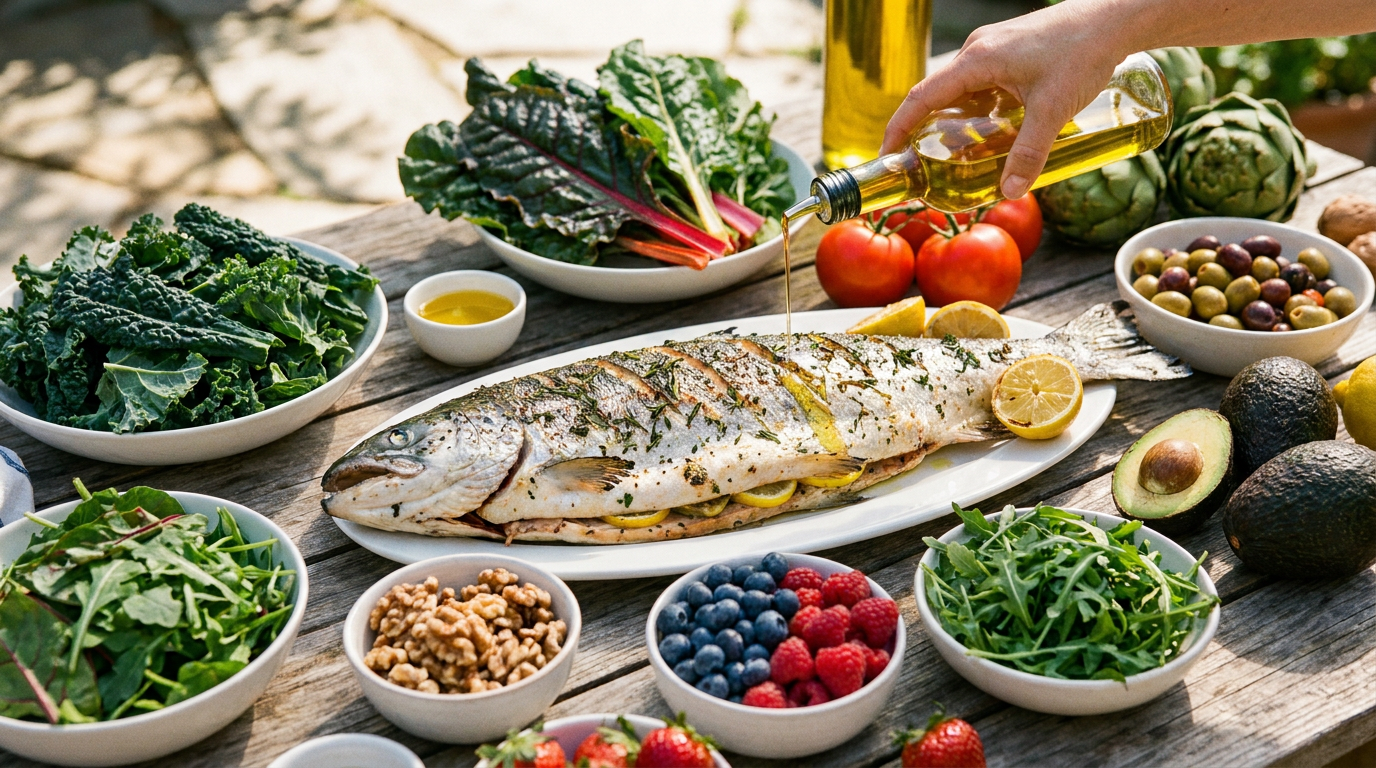
By consuming a diet rich in diverse plant fibers, individuals feed the beneficial bacteria that produce short-chain fatty acids (SCFAs) like butyrate. Butyrate actively repairs the gut lining and exerts powerful anti-inflammatory effects throughout the body and brain.[2]

Despite the robust evidence, researchers urge caution against viewing nutritional psychiatry as a standalone cure. Dietary interventions are highly effective as adjunctive treatments, but they are not immediate replacements for acute psychiatric medications or therapy in severe cases.[6]
There is also significant transparent uncertainty regarding "psychobiotics"—specific probiotic supplements marketed for mental health. Because individual microbiomes are as unique as fingerprints, a bacterial strain that reduces anxiety in one person may have no effect on another.[5]
The consensus among leading researchers is that whole-food dietary patterns, rather than isolated supplements, offer the most reliable benefits. The synergy of fiber, polyphenols, and fermented foods creates an environment where beneficial microbes can thrive.[1]

Ultimately, the validation of the gut-brain axis represents a profoundly empowering shift in mental health care. It democratizes a portion of psychiatric treatment, giving individuals an evidence-based, daily mechanism to actively build their own psychological resilience.[6]
How we got here
2004
Early germ-free mice studies show that gut bacteria directly influence stress responses and anxiety-like behaviors.
2017
The landmark SMILES trial is published, providing the first randomized controlled evidence that dietary intervention can treat clinical depression.
2022
Large-scale meta-analyses confirm the link between high-fiber, fermented food diets and reduced systemic inflammation and perceived stress.
2026
Nutritional psychiatry increasingly enters mainstream clinical guidelines as an evidence-based adjunctive treatment for mood disorders.
Viewpoints in depth
Nutritional Psychiatrists
Argue that diet must become a standard pillar of psychiatric assessment.
This camp points to trials like SMILES as definitive proof that treating the gut is treating the brain. They advocate for dietary prescriptions—specifically emphasizing fiber, polyphenols, and fermented foods—alongside or even before pharmaceutical interventions for mild-to-moderate cases of depression and anxiety. They view the separation of physical nutrition and mental health as an outdated medical paradigm.
Microbiome Researchers
Focus on the granular biological mechanisms of bacterial strains.
Rather than focusing purely on broad dietary patterns, these scientists are working to map exactly which bacterial strains produce specific neurotransmitters like GABA and serotonin. Their ultimate goal is to move beyond general dietary advice and develop targeted, FDA-approved 'psychobiotic' therapies that can precisely alter brain chemistry by seeding the gut with specific microbial profiles.
Traditional Psychopharmacologists
Maintain a cautious stance regarding the limits of lifestyle interventions.
While acknowledging the reality of the gut-brain link, this camp emphasizes that severe psychiatric conditions—such as bipolar disorder or severe major depressive disorder—are acute medical emergencies. They warn against the risk of patients abandoning proven pharmaceutical interventions in favor of dietary changes, stressing that nutritional psychiatry must remain an adjunctive therapy rather than primary critical care.
What we don't know
- Exactly which specific strains of bacteria are responsible for the most significant mental health improvements.
- How to reliably predict which dietary intervention will work best for an individual's unique microbiome.
- The long-term efficacy of isolated 'psychobiotic' supplements compared to whole-food dietary changes.
Key terms
- Gut-Brain Axis
- The bidirectional biochemical signaling network that connects the gastrointestinal tract and the central nervous system.
- Microbiome
- The combined genetic material of the trillions of microorganisms, including bacteria and fungi, residing in the human digestive tract.
- Vagus Nerve
- The longest cranial nerve in the body, serving as the primary physical communication pathway between the gut and the brain.
- Short-Chain Fatty Acids (SCFAs)
- Beneficial compounds produced when gut bacteria ferment dietary fiber, known for repairing the gut lining and reducing inflammation.
- Psychobiotics
- Live bacteria (probiotics) that, when ingested in adequate amounts, might confer a mental health benefit by affecting the host's microbiota.
Frequently asked
Can changing my diet replace my antidepressant medication?
No. Researchers emphasize that nutritional psychiatry is an adjunctive (complementary) treatment, not a replacement for prescribed medications in acute or severe cases.
What is the vagus nerve?
It is a major cranial nerve that acts as a bidirectional superhighway between the brain and the digestive system, transmitting chemical signals back and forth.
Do over-the-counter probiotic pills work for anxiety?
The evidence is mixed. Because every person's microbiome is unique, researchers currently recommend whole-food dietary changes over isolated probiotic supplements for mental health benefits.
Sources
Source coverage
6 outlets
3 viewpoints surfaced






[1]The Washington PostPublic Health Advocates
How food affects your mood and mental health
Read on The Washington Post →[2]NPRMicrobiome Researchers
The connection between your gut microbiome and anxiety
Read on NPR →[3]BMC MedicineNutritional Psychiatrists
A randomised controlled trial of dietary improvement for adults with major depression (the 'SMILES' trial)
Read on BMC Medicine →[4]Harvard Health PublishingNutritional Psychiatrists
Nutritional psychiatry: Your brain on food
Read on Harvard Health Publishing →[5]National Institutes of HealthMicrobiome Researchers
Psychobiotics and the Manipulation of Bacteria-Gut-Brain Signals
Read on National Institutes of Health →[6]Factlen Editorial TeamPublic Health Advocates
Synthesis by Factlen editorial team
Read on Factlen Editorial Team →
More in health
See all 7 stories →Vaccine Tech
FDA Advisory Committee Unanimously Recommends First mRNA Flu Vaccine
7 sources
Psychiatry
Exercise as a First-Line Prescription for Depression and Anxiety: The Evidence Pack
8 sources

Exercise Science
The Evidence for Movement: Why Exercise is Becoming a Primary Prescription for Depression
8 sources

Vaccine Tech
FDA Advisory Committee Unanimously Recommends First mRNA Flu Vaccine
6 sources
Every angle. Every day.
Get health stories with full source coverage and perspective breakdowns delivered to your inbox.