
World's First Tooth-Regrowth Drug Advances to Phase II Clinical Trials
A Japanese biotechnology company has secured new funding to advance an experimental drug designed to regrow natural human teeth, targeting commercial availability by 2030.

Share this story
For generations, the holy grail of dentistry has been the ability to regrow a lost tooth. When a permanent tooth is lost to decay, trauma, or genetic conditions, patients are left with a limited menu of artificial replacements: dentures, bridges, or titanium implants. While these prosthetics restore basic function, they cannot replicate the living tissue, blood flow, and structural integration of a natural tooth.
That biological barrier may soon be broken. Toregem BioPharma, a biotechnology spin-out from Kyoto University, recently secured $5.3 million in Pre-Series C financing to advance its experimental tooth-regeneration drug into Phase II clinical trials. The funding milestone pushes a once-radical concept closer to reality, accelerating a timeline that targets commercial availability by 2030.[1][2]
The drug, designated TRG035, represents a fundamental shift in regenerative medicine. Rather than relying on stem cell transplants or complex tissue engineering, the treatment aims to unlock the human body's own dormant capacity to grow a "third set" of teeth.[2]
To understand how TRG035 works, it is necessary to look at the genetic brakes that govern human anatomy. Humans naturally grow two sets of teeth during their lifetime: baby teeth and permanent adult teeth. However, humans also possess vestigial "tooth buds"—tiny clusters of cells in the jaw that have the latent potential to form a third set.
These buds remain permanently dormant because of a specific protein called uterine sensitization-associated gene-1, or USAG-1. USAG-1 acts as a molecular off-switch. It suppresses the signaling pathways of bone morphogenetic proteins (BMPs), which are responsible for regulating the development of bones and organs, including teeth. By keeping BMPs in check, USAG-1 ensures that healthy adults do not grow extra teeth.[2]
TRG035 is a monoclonal antibody designed to neutralize this exact biological barrier. When administered via injection, the drug binds to the USAG-1 protein and blocks its function. With the suppressor removed, the bone morphogenetic proteins are free to stimulate the dormant tooth buds, theoretically prompting them to develop into fully functional teeth.
The foundational evidence for this mechanism is robust. In studies published between 2018 and 2021, lead researcher Dr. Katsu Takahashi and his team tested the anti-USAG-1 antibody on mice engineered to lack teeth. A single injection successfully triggered the growth of new teeth. Subsequent testing on ferrets—which possess a dental pattern and tooth bud structure highly similar to humans—also resulted in the growth of fully functional teeth without serious adverse side effects.[2]
Moving from animal models to humans, Toregem launched a Phase I clinical trial at Kyoto University Hospital in late 2024. The initial study enrolled 30 healthy adult men, aged 30 to 64, who were missing at least one molar. Because Phase I trials are designed purely to evaluate safety and toxicity, researchers did not expect actual tooth regrowth in these older participants. The trial concluded its initial tracking window without any serious adverse events, clearing the path for efficacy testing.[1]
With the $5.3 million funding injection, the Phase II trials will shift focus to the drug's primary target demographic: children aged two to seven who suffer from severe congenital hypodontia. This genetic condition, which affects roughly one in 1,000 people, is characterized by the absence of six or more permanent teeth from birth.[1]
For pediatric patients, the clinical stakes are immense. Because titanium implants cannot be safely anchored in a jawbone that is still growing, children with severe hypodontia are often forced to rely on removable dentures for years. This stopgap solution can lead to severe chewing difficulties, nutritional deficits, and profound social stigma, with some affected teenagers resorting to wearing face masks in public.
Children are also the ideal candidates for TRG035 from a biological standpoint. At a young age, patients still possess an abundance of dental epithelial cells—the foundational stem-like cells required for tooth development. Researchers are optimistic that administering the antibody during this critical developmental window will successfully activate their dormant tooth buds.
While the immediate priority is treating congenital conditions, the ultimate ambition of the research team is far broader. Dr. Takahashi has explicitly stated that his goal is to establish tooth regrowth medicine as a standard "third choice" alongside dentures and implants for the general population.[2]
This expansion would target adults who have lost teeth due to severe periodontal disease, trauma, or age-related decay. The implications for aging societies are profound; in Japan alone, government data indicates that over 90 percent of adults over the age of 75 are missing at least one tooth. Restoring natural dentition could drastically improve systemic health, digestion, and quality of life for seniors worldwide.[1]
However, the leap from pediatric genetic conditions to adult acquired tooth loss is fraught with biological uncertainties. Dental experts caution that the adult jaw is a vastly different environment. Mary MacDougall, dean of the faculty of dentistry at the University of British Columbia, has noted that adults who have been missing teeth for years lack the robust population of dental epithelial cells found in children. Without these foundational cells, the drug may not have the necessary raw materials to trigger regrowth.
There are also concerns regarding precision and control. The USAG-1 protein regulates tooth growth systemically. Critics warn that it may be difficult to direct the TRG035 antibody to act on one specific missing tooth without inadvertently triggering unwanted tooth growth in other areas of the jaw.
Despite these lingering questions, the pace of development remains unprecedented for regenerative dentistry. Toregem BioPharma's total funding, including government grants and subsidies, now exceeds $29 million, providing a strong financial runway for the upcoming Phase II trials.
If the pediatric trials demonstrate clear efficacy and the safety profile holds, the company remains steadfast in its goal to bring the drug to market by 2030. While adults with cavities may have to wait longer for their turn, the successful regeneration of human teeth would mark one of the most significant medical breakthroughs of the decade.
Key points
- Toregem BioPharma has raised $5.3 million to advance its tooth-regeneration drug, TRG035, into Phase II clinical trials.
- The drug works by neutralizing USAG-1, a protein that suppresses the development of dormant tooth buds in the jaw.
- Phase I safety trials in healthy adult men concluded without serious adverse events.
- Upcoming Phase II trials will focus on children aged 2 to 7 who are missing six or more permanent teeth from birth.
What we don’t know
- Whether the drug can successfully trigger tooth regrowth in adults who lack the foundational stem cells found in children.
- How precisely the drug can be controlled to grow a single missing tooth without stimulating unwanted growth elsewhere in the jaw.
- The final cost of the treatment and whether it will be covered by standard dental insurance plans.
How we got here
2018–2021
Researchers successfully grow extra teeth in mice and ferrets using an anti-USAG-1 antibody.
Oct 2024
Phase I human clinical trials begin at Kyoto University Hospital to test the drug's safety in adult men.
May 2026
Toregem BioPharma raises $5.3 million to advance the drug into Phase II trials.
Late 2026
Phase II trials are scheduled to begin, targeting children aged 2 to 7 with severe congenital tooth loss.
2030
The provisional target year for the drug to become commercially available to the public.
- Biotech Researchers
- Scientists developing the drug who believe neutralizing the USAG-1 protein can unlock the body's latent ability to grow a third set of teeth.
- Pediatric Advocates
- Dental professionals focused on the immediate relief the drug could provide to children suffering from severe congenital tooth loss.
- Skeptical Dental Experts
- Academics who caution that adult jaws may lack the necessary stem cells for the drug to work, and warn of uncontrolled tooth growth.
Perspectives this story doesn't cover
- Health Insurance Providers
- Prosthodontists and Implant Manufacturers
Sources
Source coverage
2 outlets
3 viewpoints surfaced


- [1]The Economic TimesBiotech Researchers
Toregem BioPharma secures $5.3 million for tooth-regeneration drug trials
Read on The Economic Times → - [2]Dentistry TodayBiotech Researchers
Researchers in Japan Discover Medicine Capable of Regrowing Third Set of Teeth for Humans
Read on Dentistry Today →
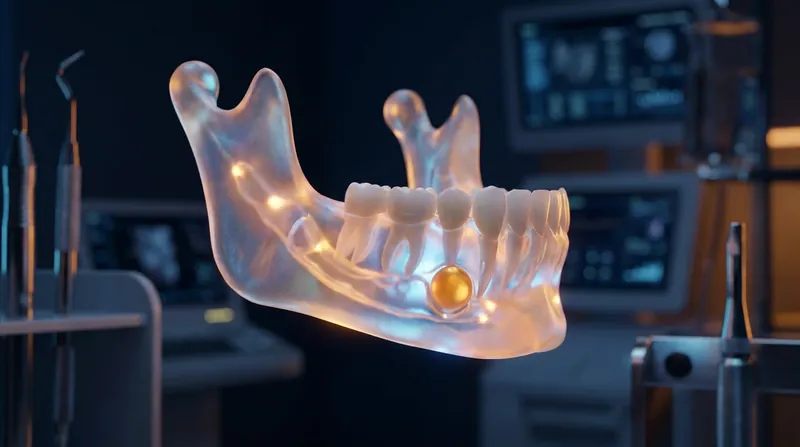
More in Health
See all →Regenerative Dentistry
Japanese Scientists Advance Human Trials for Drug That Regrows Lost Teeth
5 sources
Dental Imaging
FDA Clears First-Ever Dental-Dedicated MRI for Non-Ionizing Soft-Tissue Diagnostics
3 sources
Dental Tech
Landmark ADA/AAOMR Consensus Recommends Ending Use of Thyroid Shields in Dental X-Rays
4 sources
Genomic Testing
Landmark Phase 3 Trial Shows Genomic Test Safely Spares Two-Thirds of High-Risk Breast Cancer Patients from Chemotherapy
3 sources

Comments
Every angle. Every day.
Get Health stories with full source coverage and perspective breakdowns, free every day.