
World Cup 2026 Rosters Confirmed: Historic Snubs and Surprise Call-Ups Define the 48-Team Era
As the 2026 World Cup kicks off across North America, national team managers have finalized their 26-man squads, prioritizing tactical cohesion over star power in a series of shocking roster decisions.
By Factlen Editorial Team
- National Team Managers
- Prioritizes tactical cohesion, defensive work rate, and system execution over individual star power.
- Emerging Debutants
- Focuses on seizing the opportunity on the global stage and playing with fearless freedom.
- Veteran Icons
- Values leadership, locker-room experience, and capitalizing on their final World Cup appearances.
- Supporters & Pundits
- Questions high-profile snubs and demands immediate entertainment and results from the selected squads.
What's not represented
- · Players omitted from the final rosters
- · Domestic club managers losing players to the tournament
Why this matters
The final 26-man rosters dictate the tactical landscape of the largest sporting event in history. By prioritizing system fit over individual star power, managers have set the stage for a tournament where cohesive teamwork is expected to triumph over disjointed celebrity.
Key points
- The 2026 World Cup features a record 1,248 players across 48 nations.
- England manager Thomas Tuchel shocked fans by omitting Phil Foden and Cole Palmer.
- Brazil included 34-year-old Neymar while leaving out Gabriel Jesus and Richarlison.
- The USMNT roster balances 13 returning veterans with 13 first-time World Cup selections.
- Managers across the tournament prioritized tactical cohesion and pressing over individual star power.
The 2026 FIFA World Cup has officially kicked off across the United States, Canada, and Mexico, bringing an unprecedented 48 nations and 1,248 players to the global stage. Following the final submission deadline, the confirmed 26-man rosters have set the tactical battlelines for the largest tournament in football history. For heavyweight contenders and host nations alike, the selection process was fraught with difficult decisions, balancing seasoned veterans against emerging domestic talents. The official squad lists published by FIFA underscore the sheer scale of the expanded format, which opens the door to more nations and players than ever before. With the group stages now in full swing across North America, the intense scrutiny over who made the plane—and who was left behind—has given way to the reality of on-pitch performance.[10]
This summer's tournament represents a massive generational shift in the sport, serving as a changing of the guard on football's biggest stage. According to FIFA's official data, a staggering 891 players are experiencing the World Cup for the very first time, highlighting a wave of renewal across the global game. Yet, the allure of the seasoned veteran remains incredibly strong. The confirmed lists feature 357 players returning for at least their second tournament. Most notably, global icons like Argentina's Lionel Messi, Portugal's Cristiano Ronaldo, and Mexico's Guillermo Ochoa are embarking on historic, record-breaking sixth World Cup campaigns. This blend of hungry debutants and desperate veterans promises to deliver a tournament defined by both youthful exuberance and hardened tactical experience.[10]

Nowhere were the roster selection shocks more seismic than in the England camp. Manager Thomas Tuchel, tasked with ending a 60-year trophy drought for the Three Lions, made ruthless cuts to his 26-man squad that sent shockwaves through the Premier League. In a bold statement of intent, Tuchel omitted reigning domestic superstars Phil Foden, Cole Palmer, and Trent Alexander-Arnold from the final list. For a nation accustomed to prioritizing individual star power, the decision to leave behind some of the most technically gifted players in Europe signaled a massive philosophical shift. Tuchel has explicitly prioritized tactical cohesion, defensive work rate, and a relentless counter-pressing system over assembling a disjointed collection of famous names.[11]
To execute this high-intensity vision, the German manager handed surprise call-ups to a new breed of English talent, most notably Aston Villa's Morgan Rogers. The 23-year-old attacker produced a breakout performance during the warm-up matches and is highly valued by Tuchel for his exceptional work off the ball. Rogers, a self-confessed football obsessive, has embraced the pressure of displacing established stars, noting that he intends to play with the same freedom he had as a child. His inclusion highlights a broader strategy within the England setup to build a squad of willing runners who can seamlessly execute complex pressing triggers against elite opposition.[5][11]

The engine room of Tuchel's revamped England side features another massive surprise in Nottingham Forest's Elliot Anderson. Anderson has experienced a meteoric rise over the past year, establishing himself as a certain starter alongside Arsenal's Declan Rice. His club form was so dominant that Nottingham Forest reportedly turned down a £122 million bid from Manchester City on the eve of the tournament. Tuchel has publicly lauded Anderson as one of the most complete and mobile midfielders in the Premier League, trusting the young debutant to provide the necessary steel and progression in the center of the park.[5][11]
The engine room of Tuchel's revamped England side features another massive surprise in Nottingham Forest's Elliot Anderson.
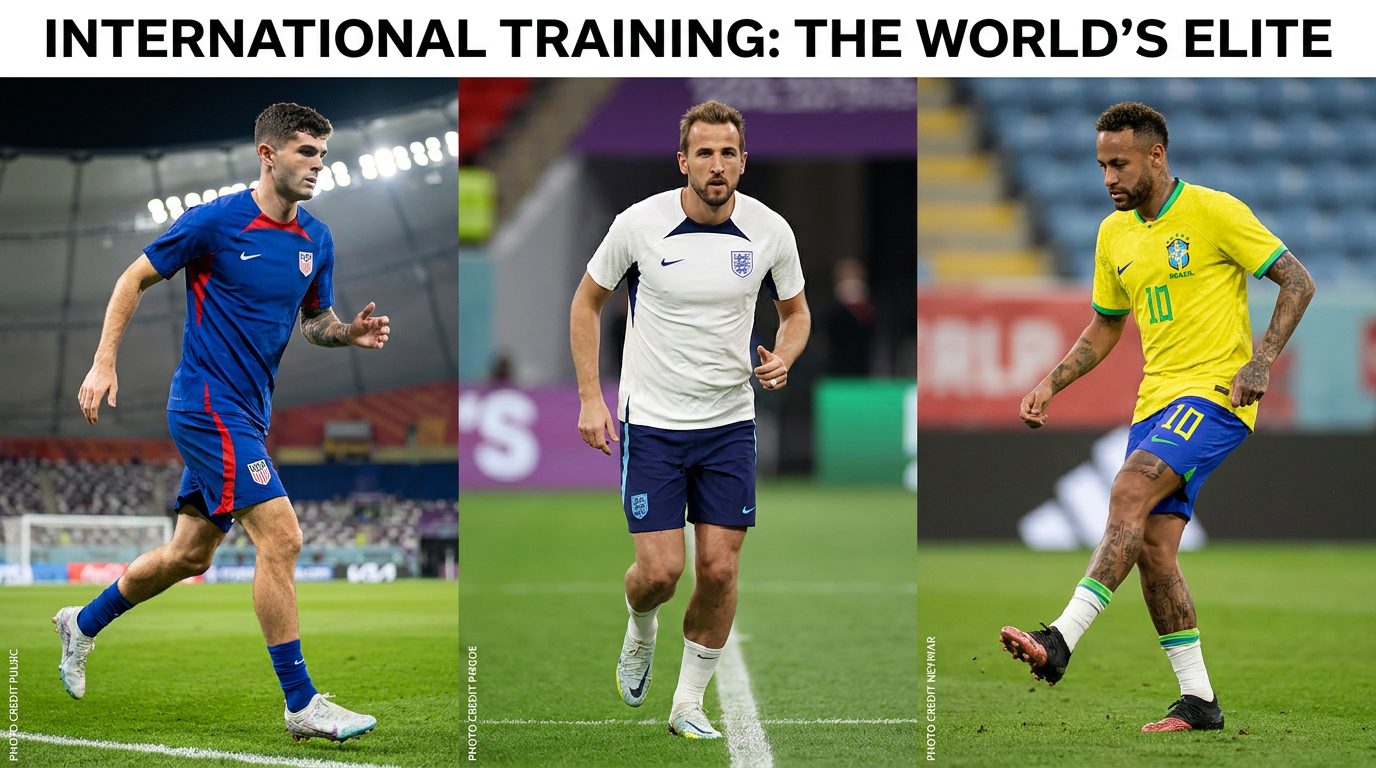
While the supporting cast has been radically overhauled, England's ultimate success still rests squarely on the shoulders of their captain, Harry Kane. The Bayern Munich striker enters his third World Cup wearing the armband, equalling a national record, and arrives in frightening form after netting a staggering 60 goals in 53 appearances for his club this season. Tuchel's entire tactical framework—from the industrious midfield to the counter-pressing wingers—is designed to provide Kane with the service and space he needs to operate. If the supporting cast can deliver, Kane is heavily tipped not only for the Golden Boot but potentially the Ballon d'Or.[5][11]
For five-time champions Brazil, the roster announcement delivered a mix of nostalgic returns and high-profile snubs as they seek to end a 24-year World Cup drought. Head coach Carlo Ancelotti confirmed that 34-year-old Neymar would make the cut for his fourth World Cup, despite the forward battling severe hamstring and knee injuries over the past year. Neymar had not been called up to the national team since 2023, but his desperation to compete in North America ultimately swayed the Italian manager. The inclusion of the veteran playmaker ensures that the Seleção retains its all-time leading scorer, providing a vital locker-room presence for a squad carrying immense expectations.[4][6]

Neymar's romantic return came at the direct expense of several established European stars. Ancelotti made the difficult decision to leave Premier League regulars Gabriel Jesus and Richarlison off the final roster, while 113-cap veteran defender Thiago Silva also missed out. Instead, the Brazilian attack is being handed over to a dynamic new generation. Real Madrid superstars Vinícius Júnior and Rodrygo will be joined by 19-year-old prodigy Endrick, who has rapidly ascended from teenage sensation to one of the country's brightest prospects. This youthful forward line is expected to operate with immense attacking freedom, supported by the physical midfield presence of Casemiro and Bruno Guimarães.[1][6]
Interestingly, Ancelotti's squad features a surprisingly robust domestic presence, breaking from the recent trend of relying almost exclusively on European-based talent. Seven players on the 26-man roster were selected directly from the Campeonato Brasileiro Série A. Flamengo, one of the most popular clubs in the country, contributed four players to the national team, while Botafogo, Santos, and Grêmio are also represented. This blend of domestic standout performers and elite Champions League winners reflects a deliberate attempt to reconnect the national team with its roots, while maintaining the tactical discipline required to navigate the grueling knockout stages.[8]

As the primary host nation, the United States Men's National Team faces unprecedented pressure to deliver a deep run on home soil. Manager Mauricio Pochettino has crafted a 26-man roster designed to balance the experience of the 2022 cycle with the energy of in-form domestic players. The squad features an even split, with 13 returning World Cup veterans and 13 first-time selections. Notable inclusions are Club América winger Alejandro Zendejas and Vancouver Whitecaps midfielder Sebastian Berhalter, both of whom forced their way into the manager's plans through sheer consistency over the past year.[2][3][7]
Pochettino's selection process was not without controversy, as several fan favorites were left off the final list. In-form Real Salt Lake playmaker Diego Luna and Lyon defensive midfielder Tanner Tessmann were the most notable omissions, sparking intense debate among American supporters. The USMNT defense will be anchored by Crystal Palace center-back Chris Richards, who made the final cut despite suffering torn ankle ligaments just weeks before the tournament began. With the group stages now unfolding, the American squad must quickly find its rhythm, relying heavily on the established European core of Christian Pulisic, Weston McKennie, and Tyler Adams to carry the host nation's dreams.[2][3][7]

With the 104-match marathon now officially underway, the wisdom of these roster gambles is being put to the ultimate test in stadiums across the continent. Managers like Tuchel, Ancelotti, and Pochettino have staked their professional reputations on the belief that a cohesive, tactically disciplined unit will always outperform a disjointed collection of stars. For the hundreds of debutants stepping onto the pitch, the tournament offers a life-changing opportunity to validate their surprise inclusions and etch their names into footballing history. As the world watches, this blend of hungry newcomers and desperate veterans promises to deliver a World Cup defined by tactical bravery, heartbreak, and breakout performances.[9][10]
How we got here
May 2026
National team managers finalize and submit their provisional rosters.
June 1, 2026
The official deadline for all 48 nations to submit their final 26-man squads to FIFA.
June 11, 2026
The 2026 FIFA World Cup officially kicks off across North America.
June 17, 2026
Group stage matches are in full swing as debutants and veterans take the pitch.
Viewpoints in depth
National Team Managers
Prioritizing tactical execution and defensive work rate over individual star power.
For managers like Thomas Tuchel and Mauricio Pochettino, the 26-man limit forces a ruthless prioritization of system fit over pure talent. Tuchel's decision to drop reigning Premier League superstars in favor of industrious, counter-pressing midfielders underscores a belief that international tournaments are won by cohesive units, not disjointed collections of elite individuals. This pragmatic approach accepts intense public backlash in exchange for a squad that can seamlessly execute complex pressing triggers and defensive rotations.
The Snubbed Stars
High-profile players left behind due to tactical mismatches or injury concerns.
The omission of players like Phil Foden, Cole Palmer, and Gabriel Jesus highlights the cruel reality of modern international football. Despite dominating their respective domestic leagues, these stars found themselves tactically redundant or squeezed out by managers seeking a different profile of player. For these athletes, missing the largest World Cup in history represents a devastating career blow, sparking fierce debates among pundits about whether managers are overthinking their tactical frameworks at the expense of raw, game-changing talent.
Emerging Debutants
Young players seizing unexpected opportunities on the sport's biggest stage.
The 2026 World Cup serves as a massive coming-out party for a new generation of talent. Players like Morgan Rogers, Elliot Anderson, and 19-year-old Endrick have bypassed traditional national team hierarchies, earning their spots through sheer form and fearless play. Unburdened by the historical failures of their predecessors, these debutants view the tournament not as a pressure cooker, but as a platform to express themselves and validate the bold gambles taken by their managers.
What we don't know
- Whether England's inexperienced midfield can support Harry Kane under immense tournament pressure.
- How Neymar's body will hold up after battling severe hamstring and knee injuries over the past year.
- If the USMNT's blend of domestic and European talent can handle the unprecedented pressure of playing on home soil.
Key terms
- Counter-pressing
- A tactical approach where a team immediately attempts to win the ball back high up the pitch the moment they lose possession.
- Cap
- An appearance made by a player for their national team in an official international match.
- Golden Boot
- The prestigious award given to the top goalscorer of the FIFA World Cup tournament.
Frequently asked
How many players are in a World Cup squad for 2026?
Each of the 48 competing nations was allowed to select a maximum of 26 players for their final tournament roster.
Did Neymar make the Brazil squad for 2026?
Yes, 34-year-old Neymar was included in Carlo Ancelotti's 26-man squad despite battling severe hamstring and knee injuries over the past year.
Who was left out of the England squad?
Manager Thomas Tuchel made the shocking decision to omit reigning Premier League stars Phil Foden, Cole Palmer, and Trent Alexander-Arnold.
How many teams are in the 2026 World Cup?
The 2026 tournament is the first to feature an expanded format of 48 teams, bringing a total of 1,248 players to North America.
Sources
Source coverage
11 outlets
4 viewpoints surfaced









[1]Olympics.comVeteran Icons
Brazil at FIFA World Cup 2026: Can Neymar and Vini Jr make the difference? All players, full squad list
Read on Olympics.com →[2]U.S. SoccerNational Team Managers
Meet the Team: USMNT Roster For FIFA World Cup 2026
Read on U.S. Soccer →[3]The GuardianEmerging Debutants
USMNT World Cup full roster: Alejandro Zendejas is in, Tanner Tessmann misses out
Read on The Guardian →[4]FIFANational Team Managers
Brazil squad announcement | FIFA World Cup 2026
Read on FIFA →[5]Radio TimesEmerging Debutants
Meet the England squad at World Cup 2026: Confirmed 26-man squad list of players
Read on Radio Times →[6]FourFourTwoVeteran Icons
Brazil World Cup 2026 squad: Carlo Ancelotti's latest selection
Read on FourFourTwo →[7]AS USASupporters & Pundits
USMNT at the 2026 World Cup: roster, list, players, group and schedule
Read on AS USA →[8]Heavy SportsSupporters & Pundits
Brazil World Cup Squad 2026: All 26 Players And Their Club Teams
Read on Heavy Sports →[9]Sky SportsSupporters & Pundits
World Cup 2026 squad lists: England, Scotland, Brazil, USA, Spain, France, Germany, Netherlands, Argentina, Portugal and more
Read on Sky Sports →FIFA World Cup 2026 squads confirmed
Read on FIFA →England World Cup 2026 team guide
Read on The Guardian →
More in sports
See all 9 stories →Injury
Major League Returns: Skubal, Ohtani, and Seager Headline Mid-June Injury Comebacks
6 sources
Standings
Global Baseball Races Heat Up: LG Twins Dominate KBO as SoftBank Hawks Seize NPB Interleague
6 sources
Injury
The Long Road Back: Kristian Fletcher Makes Triumphant Return From ACL Injury
6 sources
Standings
San Diego Wave Seize Top Spot in Historically Tight NWSL Standings at Summer Break
8 sources
Every angle. Every day.
Get sports stories with full source coverage and perspective breakdowns delivered to your inbox.