
US and Iran Sign Preliminary Agreement to Halt War and Reopen Strait of Hormuz
The United States and Iran have reached a preliminary agreement to end their months-long conflict, reopening the critical Strait of Hormuz and establishing a 60-day ceasefire to negotiate a broader nuclear pact. However, conflicting claims over frozen assets and Israel's refusal to halt its offensive in Lebanon threaten the fragile truce.
By Factlen Editorial Team
- US Administration
- Focuses on the immediate reopening of global trade routes and halting Iran's nuclear progress.
- Iranian Leadership
- Frames the deal as a victory that ends the US blockade and secures economic relief.
- Israeli Government
- Insists the US-Iran truce does not apply to its ongoing war against Hezbollah.
- Global Markets & Shippers
- Welcomes the economic relief but remains cautious about the physical safety of the waterway.
What's not represented
- · Lebanese civilians displaced by the ongoing conflict
- · Omani officials who co-manage the Strait of Hormuz
Why this matters
The reopening of the Strait of Hormuz promises immediate relief to a global energy crisis that has driven up fuel prices and inflation since February. However, the exclusion of Israel from the ceasefire means the risk of a broader regional war remains high, particularly in Lebanon.
Key points
- The US and Iran signed a preliminary agreement to end their war and establish a 60-day ceasefire.
- The deal lifts the US naval blockade and initiates the reopening of the Strait of Hormuz.
- US and Iranian officials have already issued conflicting claims regarding transit tolls and the release of frozen funds.
- Israel rejected the agreement's provision to end hostilities in Lebanon, vowing to continue fighting Hezbollah.
- A formal signing ceremony is scheduled for Friday in Geneva, Switzerland.
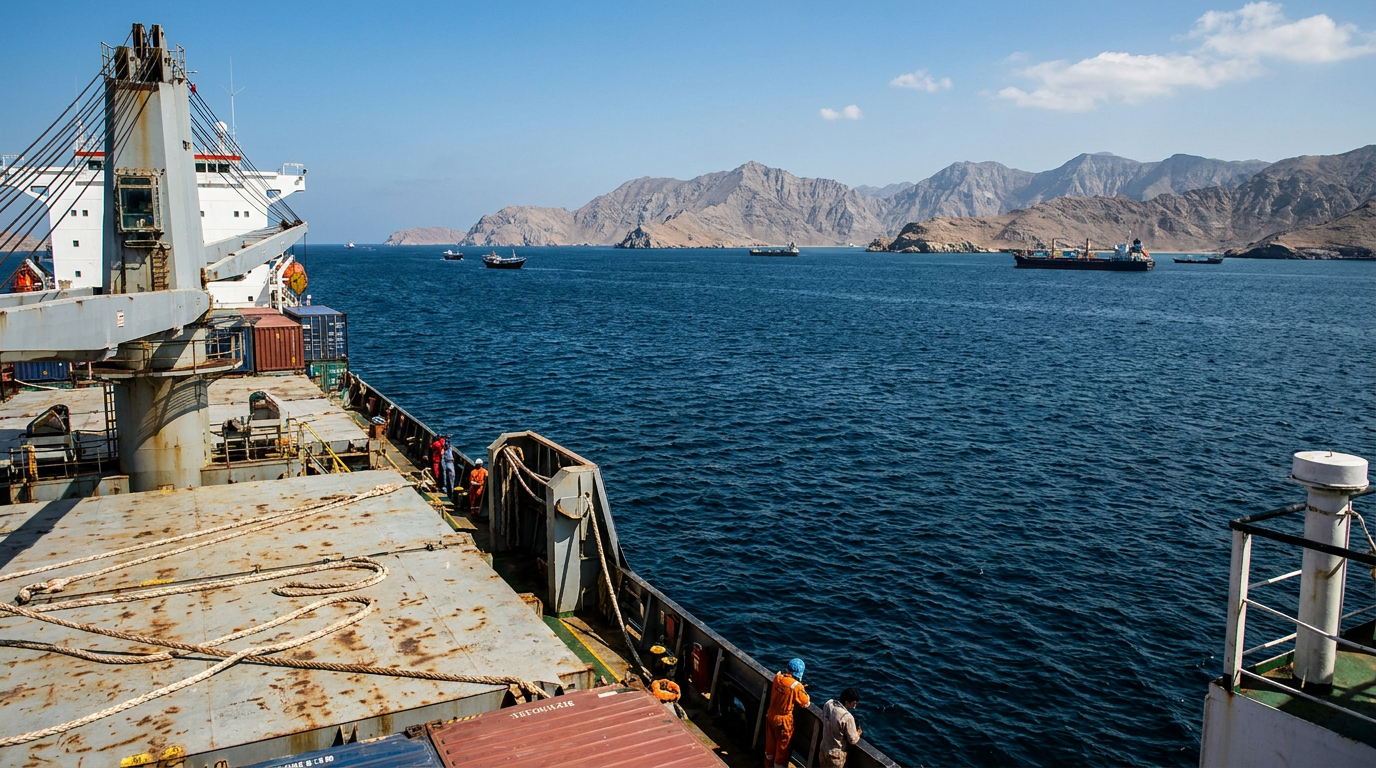
The United States and Iran have reached a preliminary agreement to halt their months-long war, signing a Memorandum of Understanding that reopens the Strait of Hormuz and establishes a 60-day ceasefire. The diplomatic breakthrough, mediated by Pakistan, aims to end a conflict that began in late February and triggered a severe global energy crisis.[3][6]
The framework was signed electronically by US President Donald Trump, Vice President JD Vance, and Iranian Parliament Speaker Mohammad Bagher Ghalibaf. A formal signing ceremony is scheduled for Friday in Geneva, Switzerland. During the 60-day pause, negotiators will attempt to forge a permanent treaty addressing Iran's nuclear program and regional security.[4][5]
The most immediate global impact of the accord is the unblocking of the Strait of Hormuz, a critical maritime chokepoint. President Trump announced that the waterway would open "toll-free" and authorized the immediate lifting of the US naval blockade on Iranian ports. In response to the news, Brent crude prices dropped more than 5 percent, and global stock markets rallied.[6][7]

Despite Trump's assertions on social media that oil tankers are already moving through the strait, international shipping associations remain highly cautious. The waterway has been heavily mined during the conflict, and the agreement outlines a 30-day period for Iranian forces to clear the explosives before commercial transit can fully normalize.[4][6]
Almost immediately after the announcement, starkly conflicting narratives emerged regarding the deal's specific terms. US officials insist that the Strait of Hormuz will remain permanently toll-free and that none of Iran's frozen financial assets will be released until Tehran demonstrates verifiable compliance with nuclear restrictions.[5][7]
Almost immediately after the announcement, starkly conflicting narratives emerged regarding the deal's specific terms.
Conversely, Iran's Islamic Revolutionary Guard Corps (IRGC) and state media claim that half of the country's $24 billion in frozen funds will be released upfront. Iranian officials also assert that Tehran and Oman will retain sovereignty over the strait and plan to collect transit fees once the 60-day negotiation window concludes.[5][8]

The most volatile complication to the US-Iran pact is the ongoing war in Lebanon. The memorandum declares a permanent end to hostilities on all fronts, prompting a wave of displaced Lebanese civilians to begin returning to the southern border region under the assumption that the fighting had ceased.[1][3]
However, Israel is not a signatory to the agreement and has flatly rejected its terms regarding Lebanon. Israeli Defense Minister Israel Katz and National Security Minister Itamar Ben-Gvir stated that the Israel Defense Forces will not withdraw from southern Lebanon and will continue their military campaign against the Iranian-backed militant group Hezbollah.[3][4][5]

US officials acknowledge that the ceasefire is not one-sided; they noted that if Iran cannot control Hezbollah and attacks on Israeli positions continue, Israel retains the right to defend itself. This dynamic leaves the broader peace framework highly vulnerable to collapse if cross-border violence escalates before Friday's formal signing.[4]
For now, the 60-day window offers a crucial diplomatic pause. US officials state that Iran has agreed to freeze its uranium enrichment and maintain the current status of its nuclear facilities while technical discussions, led by Vice President Vance, commence this week. European leaders have broadly welcomed the pact, urging swift implementation to stabilize the Middle East and the global economy.[4][6]
How we got here
Late Feb 2026
The US and Israel launch military strikes against Iran, sparking a broader regional war.
April 2026
Iran blockades the Strait of Hormuz, and the US imposes a naval blockade on Iranian ports.
June 14, 2026
US and Iranian officials electronically sign a Memorandum of Understanding to halt the conflict.
June 19, 2026
A formal signing ceremony for the peace agreement is scheduled to take place in Geneva.
Viewpoints in depth
US Administration
Views the deal as a victory that reopens global trade and halts Iran's nuclear progress.
US officials argue that the combination of military strikes and a naval blockade successfully pressured Tehran into reopening the Strait of Hormuz. They emphasize that the agreement freezes Iran's uranium enrichment without granting immediate access to frozen funds, ensuring Washington retains leverage during the upcoming 60-day negotiation period for a permanent nuclear treaty.
Iranian Leadership
Frames the agreement as a successful defense of its sovereignty that forces an end to the US blockade.
Iranian state media and the Islamic Revolutionary Guard Corps portray the memorandum as a tactical win that ends the US naval blockade of Iranian ports and secures the early release of billions in frozen assets. They maintain that Iran retains ultimate control over the Strait of Hormuz and reject the notion that the waterway will be permanently toll-free.
Israeli Government
Rejects the ceasefire's application to its ongoing military operations in Lebanon.
Israeli leaders emphasize that they are not bound by the US-Iran memorandum. Defense officials insist that the IDF will not withdraw from southern Lebanon and will continue its campaign to dismantle Hezbollah, viewing the US-Iran truce as insufficient to guarantee security along Israel's northern border.
Global Energy Markets
Relieved by the diplomatic breakthrough but cautious about the immediate realities of maritime transit.
Energy analysts and international shipping associations welcomed the immediate 5 percent drop in crude oil prices. However, they warn that the physical reopening of the Strait of Hormuz will take time. Insurers and logistics companies remain hesitant to resume full operations until Iranian forces verifiably clear the waterway of naval mines.
What we don't know
- Whether Israel's continued military operations in Lebanon will cause Iran to withdraw from the agreement before Friday's signing.
- Exactly when commercial shipping companies will deem the Strait of Hormuz safe enough to resume full transit.
- How the conflicting interpretations of frozen asset releases and transit tolls will be resolved in the final text.
Key terms
- Strait of Hormuz
- A narrow, strategically vital waterway between the Persian Gulf and the Gulf of Oman through which roughly 20 percent of the world's oil supply passes.
- Memorandum of Understanding (MoU)
- A preliminary, non-binding agreement outlining the broad terms of a deal before a formal, detailed treaty is finalized.
- Naval Blockade
- A military operation in which ships are used to prevent vessels from entering or leaving a country's ports.
Frequently asked
Is the war in the Middle East officially over?
Not entirely. While the US and Iran have agreed to a ceasefire, Israel has stated it will continue its military operations against Hezbollah in Lebanon.
When will oil prices go back down?
Brent crude prices dropped 5 percent immediately after the announcement, but experts warn it will take months for the global energy supply chain to fully normalize.
Is the Strait of Hormuz safe for ships now?
Not yet. The agreement allows 30 days for Iranian forces to clear naval mines from the waterway, and many shipping companies are waiting for confirmation before resuming transit.
Sources
Source coverage
8 outlets
4 viewpoints surfaced








[1]Al JazeeraIranian Leadership
Trump says Iran deal ‘all signed’
Read on Al Jazeera →[2]Fox NewsUS Administration
Trump may have won a strategic pause in Iran. Now comes the hard part
Read on Fox News →[3]PBSGlobal Markets & Shippers
Iran and U.S. reach an initial deal to extend the ceasefire and open the Strait of Hormuz but challenges remain
Read on PBS →[4]The GuardianIsraeli Government
Middle East crisis live: Trump claims ships carrying oil are moving out of strait of Hormuz after US and Iran agree deal
Read on The Guardian →[5]CBS NewsUS Administration
Live Updates: U.S.-Iran deal signed by Trump and Iranian negotiator, U.S. officials say
Read on CBS News →[6]Financial TimesGlobal Markets & Shippers
Iran and US agree deal to open Strait of Hormuz and extend ceasefire
Read on Financial Times →[7]AxiosUS Administration
What's in the Iran deal Trump says he's ready to sign
Read on Axios →[8]Institute for the Study of WarIranian Leadership
Iran Update Special Report, June 13, 2026
Read on Institute for the Study of War →
More in news politics
See all 5 stories →Electoral Reform
Fact-Checking Ranked-Choice Voting: Does the Evidence Match the Hype?
0 sources
Hormuz Reopening
US and Iran Sign Tentative Peace Deal to End War and Reopen Strait of Hormuz
0 sources
Alabama Senate
Former Navy SEAL Jared Hudson Defeats Trump-Backed Barry Moore in Alabama Senate Runoff
0 sources
Every angle. Every day.
Get news politics stories with full source coverage and perspective breakdowns delivered to your inbox.