
US and Iran Reach Tentative Peace Deal to End War and Reopen Strait of Hormuz
The United States and Iran have agreed to a framework to end their 100-day conflict, lifting the U.S. naval blockade and reopening the critical Strait of Hormuz to global shipping. The deal, mediated by Pakistan and Qatar, sets up a fragile 60-day window to negotiate the fate of Tehran's nuclear program.
By Factlen Editorial Team
- Global Markets & European Allies
- Focuses strictly on the economic relief, prioritizing the restoration of global trade, the drop in energy prices, and the stabilization of the Middle East.
- U.S. Administration
- Frames the agreement as a decisive victory achieved through strength, forcing Iran to reopen the Strait and halting its nuclear progress.
- Iranian Leadership
- Views the deal as a successful defense of national sovereignty that broke the U.S. naval blockade and secured the unfreezing of vital economic assets.
- Israeli Government & Hawks
- Argues the framework is a dangerous concession that leaves Iran's nuclear infrastructure intact and fails to secure Israel against proxy attacks from Lebanon.
What's not represented
- · Lebanese civilians affected by the ongoing border conflict
- · Commercial shipping crews navigating the heavily mined strait
Why this matters
The reopening of the Strait of Hormuz immediately eases a historic global energy crisis, sending oil prices plummeting and restoring 20% of the world's seaborne crude supply. However, the fragile framework leaves the ultimate fate of Iran's nuclear program and the ongoing conflict in Lebanon unresolved, meaning regional stability remains precarious.
Key points
- The U.S. and Iran have reached a preliminary agreement to end their 100-day war.
- The deal lifts the U.S. naval blockade and initiates the reopening of the Strait of Hormuz.
- Global oil prices plunged over 4% following the announcement.
- A 60-day negotiation window has been established to address Iran's nuclear program.
- The formal signing ceremony is scheduled for Friday in Geneva, Switzerland.
- Israel has reportedly pushed back on provisions demanding a ceasefire in Lebanon.
The United States and Iran have reached a preliminary memorandum of understanding to end a devastating 100-day war that has reshaped the Middle East and fractured the global energy market. The agreement, announced early Monday after intense mediation by Pakistan and Qatar, establishes an immediate ceasefire, lifts the U.S. naval blockade on Iranian ports, and initiates the reopening of the Strait of Hormuz.[1][4]
U.S. President Donald Trump confirmed the breakthrough on social media late Sunday, declaring the deal complete. "I hereby fully authorize the toll-free opening of the Strait of Hormuz, and, simultaneously herewith, authorize the immediate removal of the United States Naval blockade," Trump wrote, adding, "Ships of the World, start your engines. Let the oil flow!" The formal signing ceremony is scheduled for Friday, June 19, in Geneva, Switzerland.[2][5]
Iranian officials corroborated the core aspects of the framework, though their language was notably more cautious. Deputy Foreign Minister Kazem Gharibabadi stated that the agreement puts an "immediate and permanent end" to military operations on all fronts. However, Iranian state media emphasized that Tehran's full compliance would not begin until the ink is dry on Friday, framing the deal as a victory that forced Washington to abandon its blockade.[3][4][6]
The economic relief was instantaneous. Global markets, which had been suffocated by the effective closure of the Strait of Hormuz since late February, rallied aggressively. Brent crude futures plunged more than 4% to roughly $83.60 a barrel, while U.S. West Texas Intermediate slid 4.6%. Asian equities surged, with indices in Tokyo and Seoul climbing more than 5% as the threat of a prolonged energy shortage evaporated.[5][8]

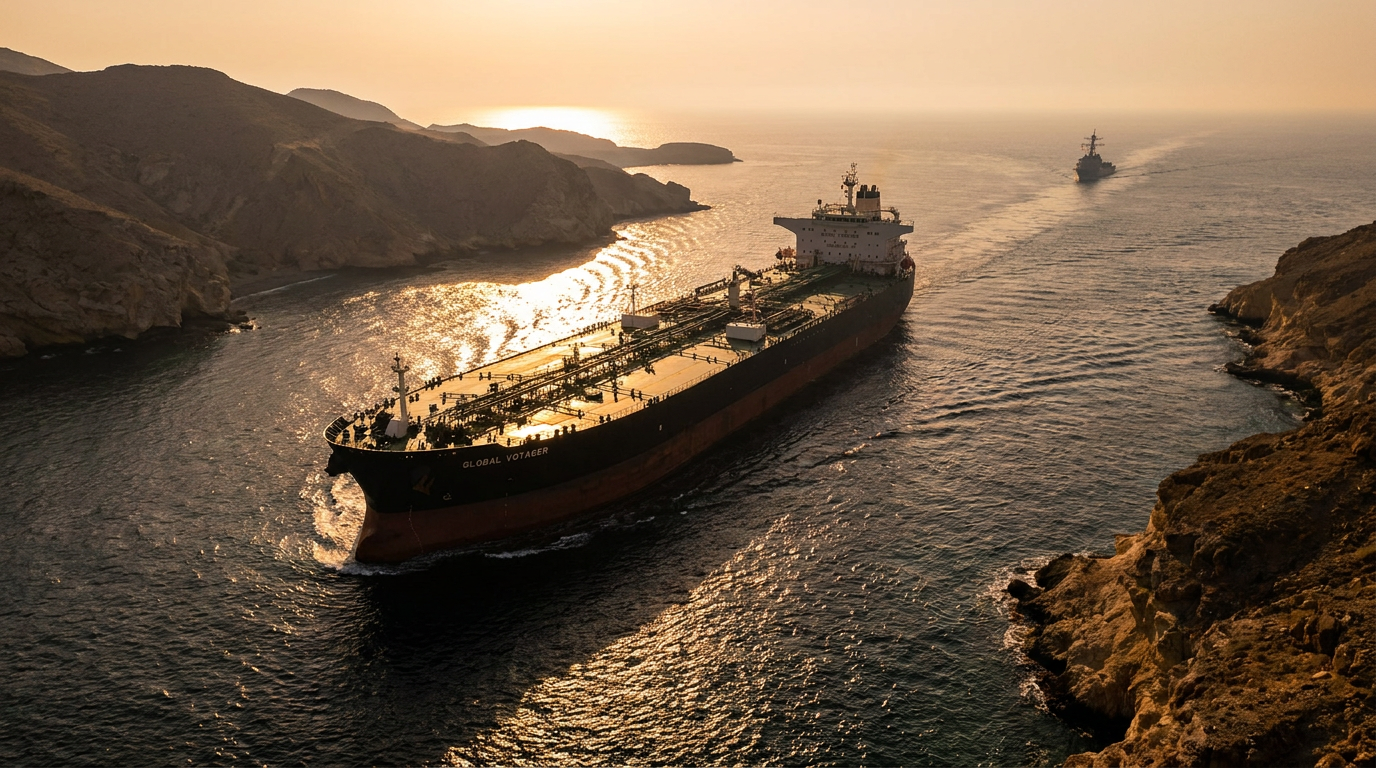
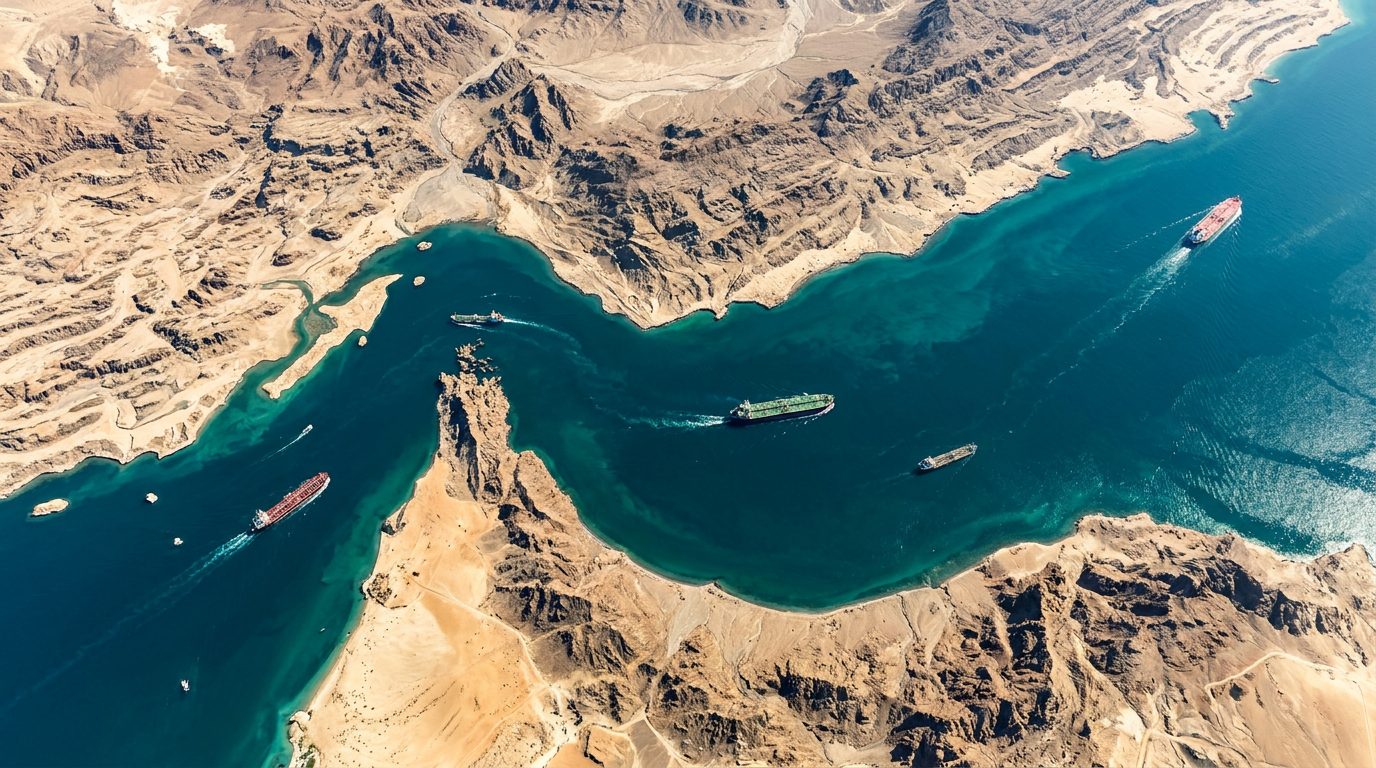
The Strait of Hormuz is a vital maritime chokepoint through which roughly 20% of the world's crude oil and significant volumes of natural gas and fertilizer transit. Its closure by Tehran—in retaliation for initial U.S. and Israeli strikes—triggered a historic energy shock. While Trump demanded a "toll-free" reopening, Iranian semi-official media reported that the waterway's management would resume over a 30-day period under "Iranian arrangements," hinting at lingering friction over maritime sovereignty.[5][8]
The Strait of Hormuz is a vital maritime chokepoint through which roughly 20% of the world's crude oil and significant volumes of natural gas and fertilizer transit.
Beyond the immediate resumption of shipping, the memorandum outlines a highly precarious 60-day negotiation window to address Iran's nuclear ambitions. The war began in part to neutralize Tehran's atomic infrastructure, which had enriched uranium to 60% purity—a short technical step from weapons-grade material. The U.S. is demanding the destruction or removal of this stockpile, while Iranian officials have proposed diluting the uranium domestically.[1][3][7]
If the two sides fail to reach a comprehensive nuclear accord within those 60 days, the ceasefire could collapse. Trump has reportedly threatened to resume military strikes if a final nuclear resolution is not achieved, while the draft agreement also stipulates the phased release of up to $24 billion in frozen Iranian assets, contingent on Tehran's compliance.[3][6][7]

A major complication remains the ongoing conflict in Lebanon. The draft agreement explicitly calls for a cessation of hostilities on all fronts, which Iran interprets as including the fighting between Israel and the Iranian-backed militia Hezbollah. However, Israeli Prime Minister Benjamin Netanyahu reportedly informed the U.S. administration that Israel does not consider itself bound by the Lebanon-related provisions of the U.S.-Iran memorandum.[2][3]
Israel's continued military operations, including a recent airstrike on Beirut's southern suburbs just hours before the deal was finalized, nearly derailed the talks. Iranian Parliament Speaker Mohammad Bagher Ghalibaf cited the strike as evidence that Washington lacks the ability to control its allies, though Tehran ultimately chose not to retaliate and proceeded with the ceasefire framework.[1][6]
Domestically, the agreement faces intense scrutiny in both nations. In Tehran, hardline factions have staged protests, accusing the negotiating team of treason for making concessions to Washington. Iranian President Masoud Pezeshkian has been forced to publicly defend the diplomats, arguing that ending the war and lifting sanctions is essential for the nation's survival.[6]
In the United States, the deal has drawn sharp criticism from foreign policy hawks within the Republican Party. Critics argue that the framework fails to achieve the war's original objectives—namely, the complete elimination of Iran's nuclear program and the dismantling of its proxy networks—and instead rewards Tehran with billions in unfrozen assets and renewed leverage over global shipping.[1][3]

Despite the skepticism, European leaders breathed a collective sigh of relief. U.K. Prime Minister Keir Starmer called the breakthrough a "hugely important step forward," while French President Emmanuel Macron and EU Commission President Ursula von der Leyen emphasized that restoring toll-free freedom of navigation is an indispensable condition for the global economy. As diplomats converge on Geneva for Friday's signing, the world watches to see if this fragile truce can evolve into lasting stability.[5][6]
How we got here
Feb 28, 2026
The U.S. and Israel launch initial strikes against Iran, sparking a regional war.
March 2026
Iran effectively closes the Strait of Hormuz, triggering a global energy crisis.
April 2026
The U.S. military imposes a naval blockade on Iranian ports in retaliation.
June 14, 2026
Mediators announce a preliminary memorandum of understanding to end the conflict.
June 19, 2026
The official signing ceremony for the peace framework is scheduled to take place in Geneva.
Viewpoints in depth
U.S. Administration's View
The deal is a triumph of maximum pressure that secures global energy routes.
U.S. officials, led by President Trump, are framing the memorandum as a decisive victory that validates their aggressive military and economic posture. By forcing Iran to reopen the Strait of Hormuz, the administration claims it has rescued the global economy from a crippling energy crisis while maintaining leverage over Tehran. The U.S. perspective emphasizes that the naval blockade successfully brought Iran to the table, and officials insist that the upcoming 60-day window will be used to dismantle Iran's highly enriched uranium stockpile under the threat of renewed military action.
Iranian Leadership's View
The agreement is a successful defense of sovereignty that broke an illegal blockade.
For Tehran, the framework is being sold domestically as a strategic win against Western imperialism. Iranian officials highlight the lifting of the U.S. naval blockade and the impending release of up to $24 billion in frozen assets as proof that their closure of the Strait of Hormuz effectively forced Washington's hand. While facing intense criticism from hardline factions who view any negotiation as capitulation, President Pezeshkian's government maintains that the deal preserves Iran's core infrastructure while providing desperately needed economic relief. They also assert that the Strait's reopening will occur strictly under Iranian sovereign control.
Israeli Security Establishment's View
The framework is a dangerous half-measure that leaves existential threats intact.
The Israeli government and regional security hawks view the U.S.-Iran memorandum with profound skepticism. From their perspective, the war was initiated to permanently neutralize Iran's nuclear capabilities and dismantle its network of proxy militias. By agreeing to a ceasefire that only pauses nuclear development for 60 days—and by attempting to enforce a truce in Lebanon—critics argue the U.S. has prematurely abandoned its leverage. Israeli officials have reportedly signaled they will not be bound by the Lebanon ceasefire provisions, prioritizing the immediate security of their northern border against Hezbollah over the broader U.S. diplomatic framework.
What we don't know
- Whether Iran will agree to destroy its highly enriched uranium or insist on diluting it domestically.
- How Israel will conduct its military operations in Lebanon if the U.S. considers the region part of the ceasefire.
- The exact timeline and safety protocols for clearing naval mines from the Strait of Hormuz.
Key terms
- Strait of Hormuz
- A narrow waterway between the Persian Gulf and the Gulf of Oman through which roughly 20% of the world's seaborne crude oil passes.
- Memorandum of Understanding (MOU)
- A formal agreement between two or more parties that establishes a framework for cooperation, often preceding a finalized, binding treaty.
- Highly Enriched Uranium
- Uranium that has been processed to contain a high percentage of the U-235 isotope, bringing it closer to the weapons-grade material needed for a nuclear bomb.
- Naval Blockade
- The use of naval forces to cut off a specific area, preventing the entry or exit of maritime traffic and commerce.
Frequently asked
When does the Strait of Hormuz officially reopen?
While the U.S. authorized an immediate reopening, actual maritime traffic requires mine-clearing operations. The formal reopening process is tied to the official signing of the deal on Friday, June 19.
Does this deal eliminate Iran's nuclear program?
No. The memorandum establishes a 60-day window to negotiate the fate of Iran's highly enriched uranium, which remains a major unresolved sticking point.
How does this affect the war in Lebanon?
The draft agreement calls for an end to military operations on all fronts, including Lebanon, but Israeli officials have reportedly stated they do not consider themselves bound by this provision.
Sources
Source coverage
8 outlets
4 viewpoints surfaced








[1]PBSIsraeli Government & Hawks
Deal is reached to end Iran war and Trump orders stop to U.S. naval blockade
Read on PBS →[2]CBS NewsU.S. Administration
Iran Updates: Trump says Strait of Hormuz will reopen Friday after deal agreed to with Tehran
Read on CBS News →[3]Times of IsraelIsraeli Government & Hawks
US, Iran said to agree on peace deal to end war, reopen Strait of Hormuz
Read on Times of Israel →[4]Al JazeeraIranian Leadership
US-Iran 'peace deal' announced; Trump says Strait of Hormuz reopening
Read on Al Jazeera →[5]The GuardianGlobal Markets & European Allies
Crude prices plunge, stocks surge on US-Iran peace deal
Read on The Guardian →[6]The National NewsIranian Leadership
A US–Iran memorandum outlines an immediate ceasefire and a phased roadmap to end the war
Read on The National News →[7]AxiosU.S. Administration
What's in the Iran deal Trump says he's ready to sign
Read on Axios →[8]Seatrade MaritimeGlobal Markets & European Allies
Strait of Hormuz set to reopen under US – Iran peace deal
Read on Seatrade Maritime →
Every angle. Every day.
Get news politics stories with full source coverage and perspective breakdowns delivered to your inbox.