
US and Iran Reach Interim Deal to Reopen Strait of Hormuz and Unlock $300 Billion in Economic Relief
The United States and Iran have drafted a memorandum of understanding to halt their months-long conflict, allowing Tehran to immediately resume oil exports in exchange for a 60-day framework to negotiate a permanent nuclear settlement.
By Factlen Editorial Team
- U.S. Administration
- Focuses on stabilizing global energy markets and creating a structured path to a permanent nuclear treaty.
- Iranian Leadership
- Views the deal as a strategic victory that secures vital economic relief without sacrificing core nuclear infrastructure.
- Energy Markets
- Welcomes the removal of the geopolitical risk premium on oil, though long-term stability remains uncertain.
- Regional Skeptics
- Argues the financial concessions empower Iran regionally while failing to address its proxy networks or ballistic missiles.
What's not represented
- · European Union Negotiators
- · Lebanese Government Officials
- · Iranian Civilian Opposition Groups
Why this matters
The reopening of the Strait of Hormuz removes the single largest constraint on the global economy in 2026. A resumption of Iranian oil exports is already driving down global energy costs, which will likely ease inflation pressures and influence upcoming central bank interest rate decisions.
Key points
- The U.S. and Iran have drafted an interim agreement to end their conflict and reopen the Strait of Hormuz.
- Iran will be allowed to immediately resume crude oil and petrochemical exports under U.S. sanctions waivers.
- The deal includes a proposed $300 billion economic development fund for Iran, backed by the U.S. and regional partners.
- Both nations have 30 days to restore commercial shipping in the Persian Gulf to pre-war volumes.
- The memorandum establishes a 60-day window to negotiate a permanent treaty regarding Iran's nuclear program.
- Global oil prices plunged over 5% on the news, with Brent crude falling below $79 per barrel.
The United States and Iran have reached a sweeping interim agreement to halt their months-long military conflict, a diplomatic breakthrough that promises to reopen the Strait of Hormuz and fundamentally reshape global energy markets. The memorandum of understanding, expected to be formally signed in Switzerland on Friday, outlines a phased de-escalation that grants Tehran immediate financial relief in exchange for a 60-day window to negotiate a permanent settlement regarding its nuclear program.[1][4][5]
At the core of the draft agreement is a massive economic incentive structure designed to bring Iran to the negotiating table. Under the proposed arrangement, the U.S. Treasury Department will immediately issue sanctions waivers allowing Iran to resume exports of crude oil, petrochemical products, and related derivatives. In tandem, the United States has committed to ending its naval blockade of Iranian ports, a move that effectively unfreezes one of the world's most critical maritime chokepoints.[1][5]
The financial concessions extend far beyond immediate oil revenues. The draft text reveals that the U.S., alongside regional partners in the Middle East, will establish a comprehensive economic rehabilitation and development plan for Iran, backed by at least $300 billion in financing. Furthermore, the agreement paves the way for the eventual release of billions of dollars in frozen Iranian assets held overseas, contingent upon the progress of the upcoming 60-day negotiations.[1][3][4]

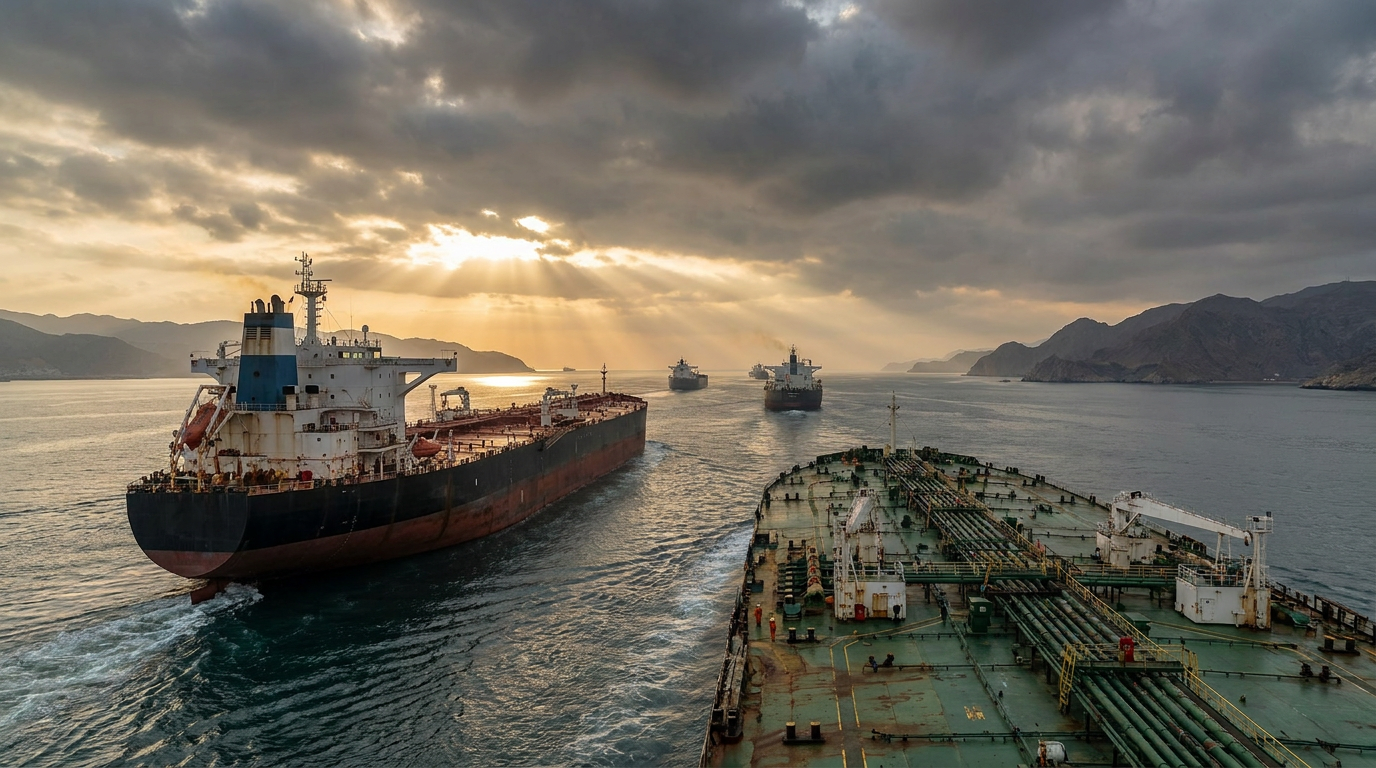
For global markets, the most urgent mechanism in the deal is the reopening of the Strait of Hormuz. The waterway, which typically handles roughly a fifth of global oil and liquefied natural gas supplies, has been severely restricted since the conflict escalated in late February. The interim deal mandates that both nations work to restore commercial shipping traffic to pre-war volumes within 30 days, requiring Iran to clear naval mines and remove technical obstacles it placed in the Persian Gulf and the Gulf of Oman.[2][4][5]
Energy markets reacted violently to the prospect of normalized shipping and a sudden influx of Iranian supply. Global crude benchmarks plunged by more than 5% as details of the memorandum emerged, with Brent crude futures falling $4.21 to settle at $78.96 per barrel. West Texas Intermediate (WTI) saw a similar decline, dropping 5.8% to close at $76.05 per barrel. Analysts note that the sharp sell-off reflects not just the immediate return of Iranian barrels, but the dismantling of the massive risk premium that had been priced into oil since the conflict began.[7][8]

Digital tracking data corroborated by satellite imagery indicates that the mechanism is already in motion. At least two National Iranian Tanker Company supertankers, carrying a combined 3.8 million barrels of crude oil, have reportedly exited the U.S. Navy blockade perimeter. While full replenishment of global oil reserves will take time, economists suggest that a partial recovery of energy flows over the coming weeks will be sufficient to avoid damaging shortages and could prompt central banks to reconsider further interest rate hikes.[6][8]
Despite the economic breakthroughs, the interim agreement leaves several of the most contentious issues unresolved, effectively kicking the can down the road. The memorandum does not address the ultimate fate of Iran's enriched uranium stockpile, nor does it mandate the dismantling of its conventional military forces or ballistic missile arsenal. Instead, Iran has simply agreed to maintain the status quo on its nuclear program—meaning no new enrichment—and reaffirmed its commitment not to produce a nuclear weapon during the 60-day negotiation period.[2][3]
Despite the economic breakthroughs, the interim agreement leaves several of the most contentious issues unresolved, effectively kicking the can down the road.
This deliberate deferral reflects a familiar diplomatic playbook for the Islamic Republic. By securing a narrow, temporary memorandum, Iranian officials have successfully converted military pressure into immediate liquidity and breathing space. The strategy allows Tehran to contain rising domestic unrest fueled by a deteriorating economy without making irreversible compromises on its core nuclear infrastructure.[2]
For the U.S. administration, the calculus is heavily influenced by domestic economic pressures. The conflict and the resulting blockade had driven gasoline and diesel prices to politically toxic levels in the United States. By securing an agreement that immediately lowers energy costs, the administration aims to ease inflation while shifting the diplomatic burden to a structured, 60-day United Nations-backed framework.[4][8]

However, the deal's broad scope has already triggered alarm among regional allies and foreign policy hawks. A particularly sensitive clause in the memorandum states that the ceasefire applies to "all fronts, including in Lebanon." This inclusion fulfills a key Iranian demand but severely complicates the strategic position of Israel, which has been engaged in ongoing military operations against Hezbollah in southern Lebanon and has not formally agreed to the terms of the U.S.-Iran memorandum.[3][6]
Skeptics in Washington and the Middle East argue that the agreement amounts to a massive financial giveaway that rewards Tehran without securing binding, long-term security guarantees. Critics point out that the $300 billion development fund and the immediate sanctions waivers provide Iran with the capital necessary to fortify its regime, while the 60-day window offers no absolute certainty that a permanent, verifiable nuclear treaty will actually materialize.[3][4]
The implementation of the deal will rely on a carefully choreographed sequence of reciprocal actions. The U.S. must issue the sanctions waivers and lift the maritime blockade before Iran is obligated to fully restore navigation in the Strait of Hormuz. A joint implementation mechanism will be established to oversee this delicate exchange, ensuring that neither side reneges on the preliminary steps before the final negotiations commence.[4][5]

Diplomatic attention now turns to the Bürgenstock resort in Switzerland, where the formal signing ceremony is scheduled to take place. U.S. Vice President JD Vance is expected to lead the American delegation, while Iran will likely be represented by Parliament Speaker Mohammad Bagher Ghalibaf. The presence of high-level officials underscores the gravity of the memorandum, even as technical details regarding the exact structure of the $300 billion fund are still being finalized.[4]
If the 60-day negotiations are successful, the resulting permanent peace deal will be submitted to the United Nations Security Council for approval as a binding resolution. This would theoretically result in the phased lifting of all primary and secondary U.S. sanctions, as well as historical UN resolutions against Iran. However, the path from an interim ceasefire to a comprehensive, permanent treaty remains fraught with geopolitical landmines.[3][5]
For now, the global economy is breathing a collective sigh of relief. The immediate threat of a catastrophic energy shock has been averted, and commercial vessels are preparing to navigate the Persian Gulf freely for the first time in months. Yet, the ultimate success of the agreement hinges entirely on whether Washington and Tehran can bridge their fundamental ideological divides over the next two months.[6][8]
How we got here
Late February 2026
U.S.-Israeli strikes escalate into a broader regional conflict, leading to a U.S. naval blockade of Iranian ports.
March - May 2026
The conflict hardens into a stalemate, severely restricting commercial shipping through the Strait of Hormuz and driving up global oil prices.
Early April 2026
A fragile, temporary ceasefire is implemented but fails to resolve the underlying blockade or maritime restrictions.
June 14, 2026
Reports emerge that the U.S. and Iran have reached a draft memorandum of understanding to end hostilities.
June 16, 2026
Global crude benchmarks plunge by more than 5% as details of the $300 billion financial relief package and oil export waivers leak to the press.
June 19, 2026
The formal signing ceremony for the interim agreement is scheduled to take place in Switzerland.
Viewpoints in depth
U.S. Administration's View
The deal is a necessary step to stabilize global energy markets and create a structured path to a permanent nuclear treaty.
For the U.S. administration, the interim agreement is a pragmatic mechanism to defuse an economically damaging conflict. By lifting the blockade and allowing oil to flow, the U.S. immediately relieves the inflationary pressure of high gasoline prices domestically. Officials argue that the 60-day window, combined with the promise of the $300 billion fund, provides the necessary leverage to force Tehran into binding, verifiable limits on its nuclear program without committing U.S. forces to a protracted regional war.
Iranian Leadership's View
The memorandum is a strategic victory that secures vital economic relief without sacrificing core nuclear infrastructure.
Tehran views the interim deal as a successful execution of its strategy to absorb pressure and outlast the blockade. By securing immediate sanctions waivers for oil exports and the promise of a massive development fund, the Iranian government gains the liquidity needed to stabilize its domestic economy and quell internal unrest. Crucially, Iranian negotiators achieved this without agreeing to dismantle their existing enriched uranium stockpiles or conventional missile programs, preserving their strategic deterrents ahead of the final talks.
Energy Markets' View
The agreement dismantles the geopolitical risk premium on oil, though long-term stability remains uncertain.
Commodity traders and macroeconomic analysts have welcomed the deal as a watershed moment that removes the single largest supply threat to the global economy. The immediate 5% drop in crude prices reflects the market pricing in the return of millions of Iranian barrels and the normalization of the Strait of Hormuz. However, analysts caution that the market remains sensitive to the fragility of the 60-day negotiation window; if the final talks collapse, the risk premium will rapidly return.
Regional Skeptics' View
The financial concessions empower Iran regionally while failing to address its proxy networks or ballistic missiles.
U.S. foreign policy hawks and regional allies, particularly Israel, view the memorandum with deep suspicion. They argue that granting Iran access to a $300 billion fund and immediate oil revenues effectively rewards Tehran's aggression and provides capital that could be funneled to proxy groups across the Middle East. Furthermore, the inclusion of a ceasefire on "all fronts, including Lebanon" is seen as a direct constraint on Israel's security operations, leading critics to warn that the deal sacrifices long-term regional stability for short-term economic relief.
What we don't know
- It remains unclear exactly how the $300 billion economic development fund will be structured and which regional partners will contribute to it.
- The ultimate fate of Iran's highly enriched uranium stockpile is not addressed in the interim deal and remains a major hurdle for the final negotiations.
- It is unknown how Israel will respond to the clause extending the ceasefire to Lebanon, where it has been conducting military operations.
Key terms
- Strait of Hormuz
- A narrow, strategically critical waterway between the Persian Gulf and the Gulf of Oman through which roughly 20% of the world's oil supply passes.
- Sanctions Waiver
- An official exemption granted by a government (in this case, the U.S. Treasury) allowing specific prohibited economic activities, such as purchasing Iranian oil, without penalty.
- Memorandum of Understanding (MOU)
- A formal, written agreement between two or more parties that outlines the terms and details of a mutual understanding, often serving as the foundation for a final, binding treaty.
- Brent Crude
- A major trading classification of sweet light crude oil that serves as a benchmark price for purchases of oil worldwide.
- Risk Premium
- The additional cost added to the price of an asset (like oil) to compensate for the uncertainty and potential supply disruptions caused by geopolitical conflict.
Frequently asked
When will Iran be able to sell oil again?
Under the interim agreement, Iran is permitted to resume crude oil and petrochemical exports immediately upon the signing of the memorandum, facilitated by U.S. sanctions waivers.
What happens to the Strait of Hormuz?
The U.S. will lift its naval blockade, and Iran has committed to clearing naval mines and technical obstacles to restore commercial shipping to pre-war volumes within 30 days.
Does this deal stop Iran from getting a nuclear weapon?
The interim deal requires Iran to maintain the status quo on its nuclear program and reaffirm its commitment not to build a weapon, but the final details regarding its existing enriched uranium will be negotiated over the next 60 days.
Where is the $300 billion coming from?
The $300 billion economic development and rehabilitation fund will be financed by the United States alongside regional partner nations in the Middle East, though the exact contribution breakdown is still being finalized.
Is the conflict completely over?
The memorandum establishes an immediate ceasefire on all fronts, but it is an interim measure. A permanent end to the conflict depends on the success of the 60-day negotiations for a final treaty.
Sources
Source coverage
8 outlets
4 viewpoints surfaced








[1]BloombergEnergy Markets
Iran to Gain Major Financial Relief Under Interim Deal With US
Read on Bloomberg →[2]ReutersIranian Leadership
Iran pushes for limited interim agreement with US to ease economic pressure
Read on Reuters →[3]Middle East EyeU.S. Administration
US may pull forces out of areas near Iran as part of a final peace deal and commits to supporting a $300bn reconstruction fund
Read on Middle East Eye →[4]The Japan TimesU.S. Administration
U.S. and Iran prepare to sign interim peace deal
Read on The Japan Times →[5]Fortune IndiaIranian Leadership
Iran to receive $300-billion development fund with oil exports relief in peace deal with US
Read on Fortune India →[6]Business StandardRegional Skeptics
US-Iran deal promises end to war but how it will work still unclear
Read on Business Standard →[7]CommoPlastEnergy Markets
Oil tumbles more than 5% as prospective US–Iran peace deal signals return of Iranian supply
Read on CommoPlast →[8]Lombard OdierEnergy Markets
US-Iran accord frees up Hormuz shipping
Read on Lombard Odier →


Every angle. Every day.
Get business stories with full source coverage and perspective breakdowns delivered to your inbox.