
UHNW Buyers Double Global Searches for US Luxury Homes, Fueling 'Landmaxxing' Trend
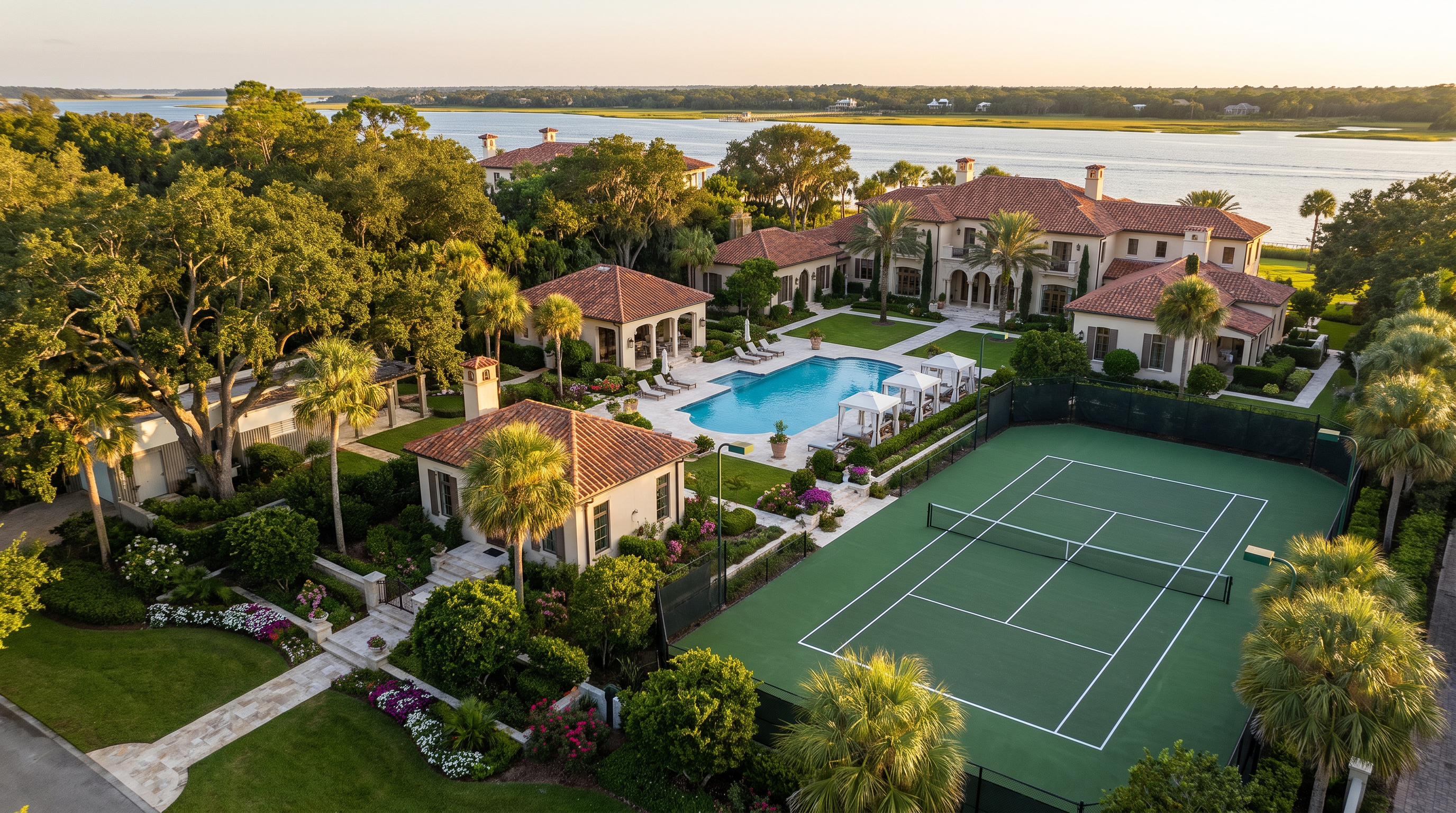
Ultra-wealthy buyers are increasingly purchasing adjacent properties to build sprawling private compounds, prioritizing absolute privacy and safe-haven assets.
- Estate Consolidators
- Buyers prioritizing absolute privacy, sovereign control, and multigenerational living spaces.
- Tangible Asset Investors
- Wealth managers and buyers who view raw land as a finite, inflation-proof legacy asset.
- Market Constrainers
- Local brokers and analysts observing how this trend removes inventory and inflates neighborhood prices.
How we got here
2020–2021
The pandemic sparks a surge in demand for space, privacy, and self-contained amenities among affluent buyers.
2023–2024
High-profile billionaires begin making headlines for assembling massive, multi-lot waterfront compounds in South Florida.
Early 2026
Global inquiries for U.S. luxury real estate double, and searches for buildable land surge by 97% as 'landmaxxing' becomes a formalized market trend.
Why it matters
As ultra-wealthy buyers purchase multiple adjacent properties to create private compounds, they are redefining luxury from 'owning the biggest house' to 'controlling the surrounding environment.' This shift not only transforms how the world's most affluent families live, but also permanently removes inventory from the market, driving up neighborhood property values.
For most people navigating the 2026 housing market, the experience is defined by compromise. It is a waiting game of frozen inventory and stubborn interest rates, where buyers routinely sacrifice a guest room or a backyard just to secure a foothold. The broader narrative is one of constraint, as families wait for economic signals to clear before making their next move. But step into the ultra-luxury tier, and a completely different reality is unfolding. Here, buyers are not compromising—they are expanding. And they are not just buying the dream house; they are buying the house next door, the lot across the street, and the parcel behind the garden.[2][3][4]
This aggressive expansion strategy is known as "landmaxxing," and it has quickly become the defining real estate trend of the year. Driven by ultra-high-net-worth individuals, global inquiries for U.S. luxury properties doubled in the first five months of 2026 alone. These buyers are hunting for something that money used to buy easily but now struggles to find in densely populated enclaves: absolute privacy and sovereign control over their immediate environment.[1]
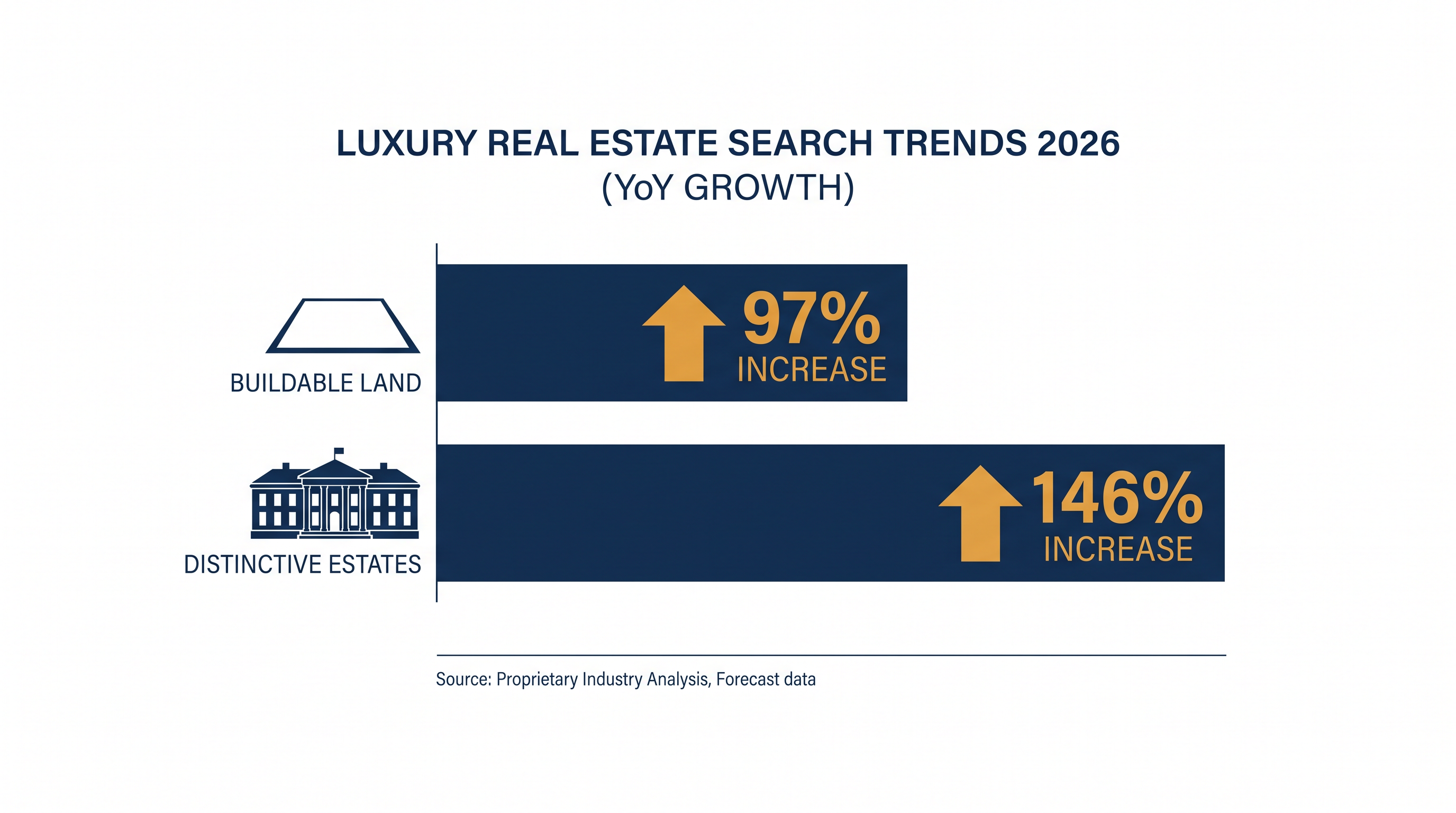
The numbers reveal a stark divergence in how wealth is moving through the property market. While standard home sales have cooled across the country, searches for buildable land have surged 97% year-over-year. Similarly, inquiries for distinctive, sprawling estates have climbed 146%. The data points to a fundamental shift in priorities at the top of the market, where the size of the house is now secondary to the size of the footprint it sits on.[4]
The mechanism of landmaxxing is straightforward but breathtakingly expensive. Instead of uprooting their lives to find a larger estate in a remote location, a buyer simply waits for their neighbors to sell—or makes them an all-cash offer they cannot refuse—and stitches the parcels together. This allows them to stay in their preferred, highly exclusive zip codes while artificially creating the acreage of a countryside manor.[5][6]
The sensory experience of these new compounds represents a shift in what luxury feels like. It is no longer just about golden fixtures, towering marble foyers, or visible opulence. It is about the quiet rustle of a private citrus orchard, the rhythmic thwack of a personal padel court, and the seamless integration of wellness spas that rival five-star resorts. The goal is to create a self-sustaining ecosystem where the resident never actually needs to leave.[6]
Privacy has become the ultimate luxury commodity. High-net-worth buyers are increasingly motivated by a desire to insulate themselves from the noise, the digital overload, and the visibility of the modern world. By controlling the adjacent lots, buyers dictate their own sightlines. They ensure that no one can build a towering structure that shadows their morning sunlight, and no uninvited gaze can penetrate their sanctuary. The perimeter becomes a lush, impenetrable barrier of mature trees and acoustic landscaping.[5][6]
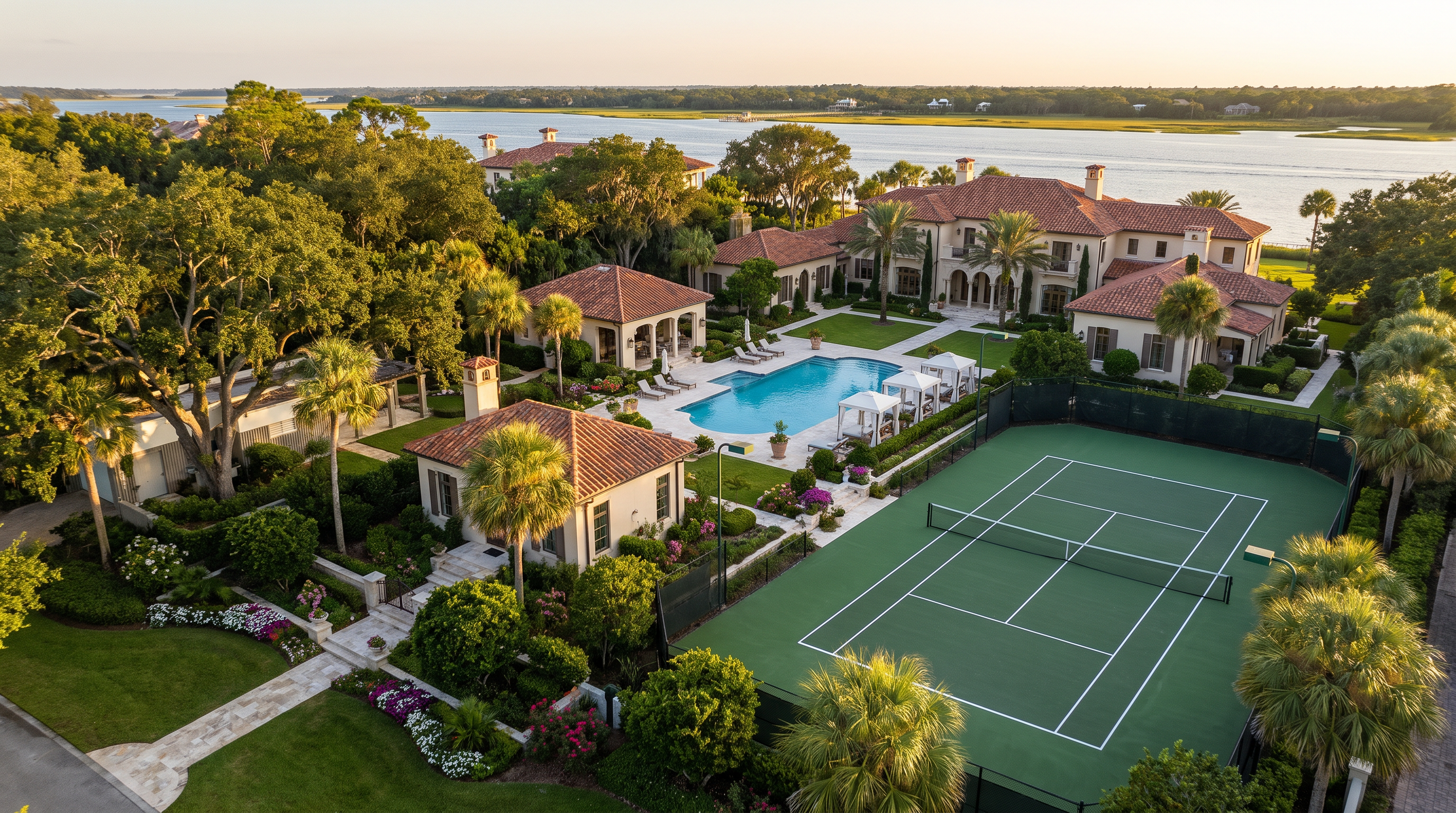
Multigenerational living is another driving force behind this horizontal expansion. As the great wealth transfer accelerates—with millennials and Generation X inheriting trillions of dollars—families are designing compounds that allow adult children, aging parents, and dedicated staff to live on the exact same footprint. By building separate guest houses and auxiliary structures across consolidated lots, they achieve proximity without ever sacrificing their independence or privacy.[6]
Multigenerational living is another driving force behind this horizontal expansion.
Beyond lifestyle, there is a powerful financial mechanism at play. Real estate is increasingly viewed not just as a beautiful place to live, but as a "safe haven" asset. In a world defined by digital wealth, cryptocurrency volatility, and artificial intelligence stock surges, buyers want to convert their abstract gains into something deeply tangible. They are looking for assets that they can walk on, build upon, and pass down.[2]
Raw land, unlike a house, cannot be printed, manufactured, or recreated. It is a strictly finite resource, especially in highly desirable coastal enclaves. Ultra-high-net-worth buyers are parking cash in these sprawling assemblages as a hedge against inflation and a permanent legacy asset for future generations. They understand that while architectural tastes will change, the underlying dirt will only become more valuable.[6]
South Florida has emerged as the undisputed epicenter of this movement. The region's combination of favorable tax structures, waterfront scarcity, and a dense concentration of tech and hedge-fund wealth makes it the perfect proving ground for compound building. The lack of state income tax has drawn a massive influx of capital, and those new arrivals are eager to carve out their own private kingdoms along the coast.[3][6]
High-profile billionaires have set the template for this behavior. Citadel founder Ken Griffin has spent over $450 million assembling a 27-acre compound in Palm Beach, systematically buying out neighbors to create an unprecedented private estate. Similarly, tech executives like Jeff Bezos have spent hundreds of millions piecing together adjacent lots in Miami's exclusive island enclaves, normalizing the practice of buying the whole block.[3][4][6]
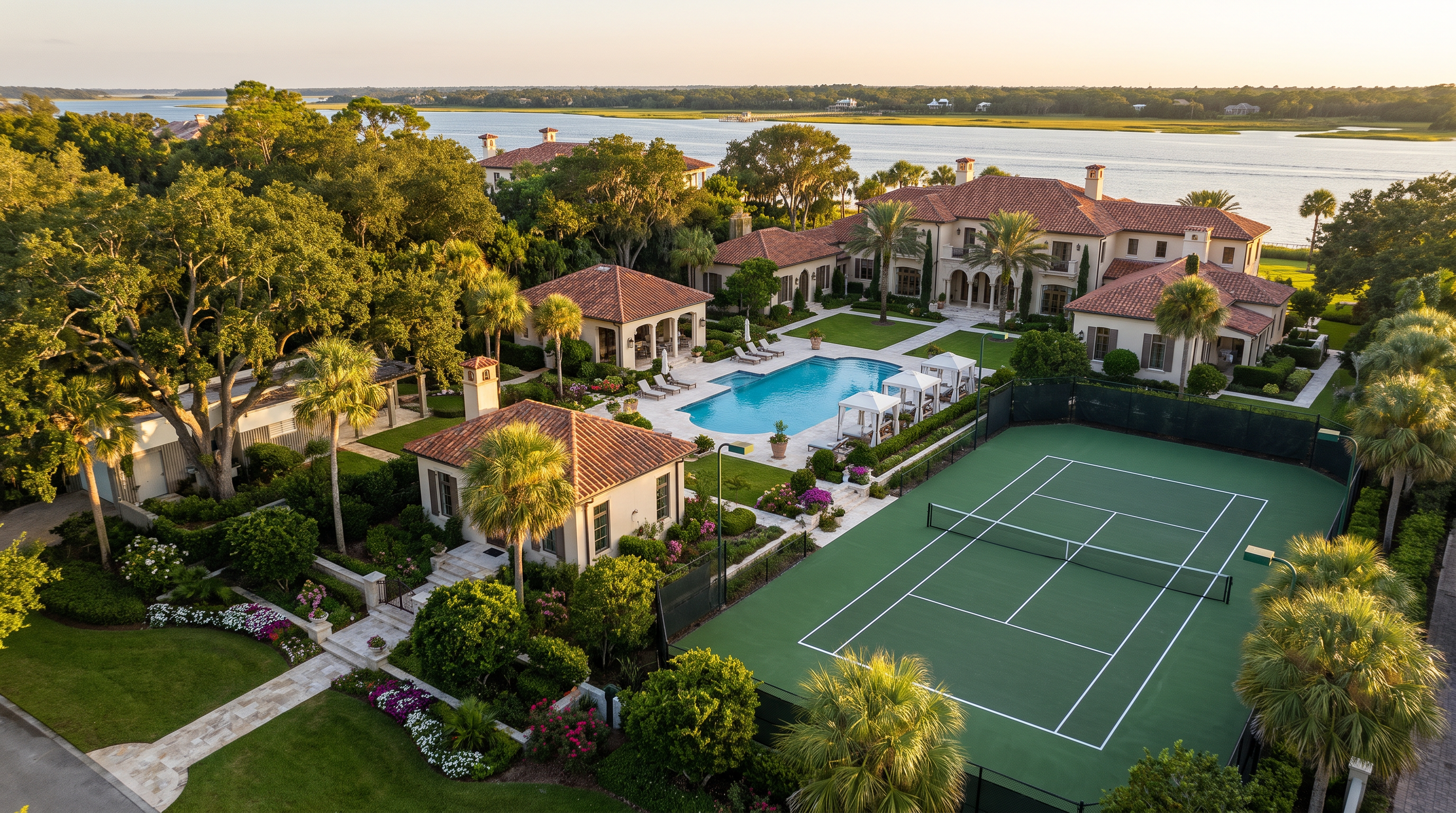
But the trend is not confined to the coasts. In places like Aspen, Colorado, and the hidden-gem towns of the Sun Belt, buyers are stitching together ranches and hillside retreats. They are prioritizing fresh air, open skies, and proximity to nature over urban density, applying the landmaxxing philosophy to mountain and desert landscapes with equal fervor.[6]
International buyers are also fueling the fire. Drawn by the lifestyle, the predictable weather, and the relative stability of the U.S. market, foreign wealth is pouring into these private enclaves. For many international elites, American dirt is viewed as the ultimate safe deposit box—a secure place to park capital far away from geopolitical instability in their home regions.[2]
The ripple effect on the broader luxury market is profound. Because landmaxxing buyers are willing to overpay simply to secure contiguous lots, they are setting new pricing precedents. When a buyer pays a 30% premium just to acquire the house next door, it artificially inflates the comparable sales data for the entire neighborhood, driving up property taxes and pricing out the tier of buyers just below them.[6]
Furthermore, this practice permanently removes inventory from an already constrained market. When a single buyer purchases three adjacent homes only to tear two of them down for a private park or a tennis court, the neighborhood loses housing stock that will likely never be replaced. This creates a cycle of scarcity that only further drives up the value of the remaining homes.[6]
Ultimately, this shift redefines what it means to live well in 2026. It is a move away from visible, flashy consumption toward a quieter, more intentional form of luxury. The ultimate status symbol is no longer the car in the driveway or the label on the door—it is measured in acreage, deep breaths, and the profound peace of mind that comes from owning your own horizon.[1]
What to know
- Ultra-high-net-worth buyers are increasingly purchasing adjacent properties to build massive private compounds.
- Searches for buildable luxury land have surged 97% year-over-year in 2026.
- The trend is driven by a desire for absolute privacy, controlled sightlines, and multigenerational living.
- Real estate is increasingly viewed as a safe-haven asset to park wealth generated from tech and digital markets.
- South Florida has emerged as the epicenter of the trend, led by high-profile billionaire assemblages.
- The practice permanently removes inventory from the market and drives up neighborhood property values.
Where opinion splits
The Estate Consolidators
Buyers prioritizing absolute privacy, sovereign control, and multigenerational living spaces.
For this demographic, the primary motivation is lifestyle preservation. By acquiring the properties next door, they eliminate the risk of a neighbor building a disruptive structure or compromising their sightlines. This approach allows them to custom-build extensive wellness amenities, staff quarters, and guest houses, ensuring that their extended family can live on the same footprint while maintaining total independence and security.
The Tangible Asset Investors
Wealth managers and buyers who view raw land as a finite, inflation-proof legacy asset.
From a financial perspective, landmaxxing is a strategic wealth preservation move. In an era where vast fortunes are generated through digital assets and tech valuations, UHNW individuals are seeking to convert those gains into physical, irreplaceable assets. Because raw land cannot be manufactured, these sprawling assemblages serve as a safe-haven hedge against inflation and a permanent legacy that can be passed down through generations.
The Market Constrainers
Local brokers and analysts observing how this trend removes inventory and inflates neighborhood prices.
Real estate professionals note that this trend is fundamentally altering the mechanics of luxury neighborhoods. When a single buyer purchases three adjacent homes only to tear two of them down for a private park, it permanently removes housing stock from an already constrained market. Furthermore, because these buyers are often willing to pay a premium simply to secure a contiguous lot, they artificially inflate the property values for the entire surrounding area.
Key terms
- Landmaxxing
- The practice of purchasing adjacent residential properties or lots to consolidate them into a single, sprawling private compound.
- UHNW (Ultra-High-Net-Worth)
- Individuals with a net worth of at least $30 million, who are driving the top tier of the luxury real estate market.
- Safe-Haven Asset
- An investment, such as raw land or prime real estate, expected to retain or increase in value during times of economic volatility.
- Sovereign Control
- In real estate, the ability to completely dictate one's living environment, sightlines, and security without outside interference.
- Nest Investing
- The strategy of directing a larger portion of personal wealth into primary and secondary residences rather than other luxury goods.
Unanswered questions
- Whether local municipalities will introduce zoning restrictions to prevent the consolidation of multiple residential lots into single mega-compounds.
- How the long-term maintenance and staffing requirements of these sprawling estates will reshape the local labor markets in luxury enclaves.
- If the trend will eventually trickle down to the broader high-net-worth market, or remain exclusive to billionaires with unlimited cash reserves.
Reader questions
What exactly is landmaxxing in real estate?
Landmaxxing is the practice of purchasing adjacent residential properties or lots to consolidate them into a single, sprawling private compound, rather than simply buying one larger home.
Why are buyers choosing to buy the house next door?
Affluent buyers want absolute control over their environment. Buying adjacent lots allows them to protect their sightlines, ensure total privacy, and build custom amenities like wellness spas or multigenerational guest houses.
Where is this trend happening the most?
While it is a national trend, South Florida—specifically Miami and Palm Beach—has become the epicenter due to its favorable tax environment, concentration of wealth, and highly desirable waterfront lots.
How does this impact the broader housing market?
By absorbing multiple properties into a single estate, landmaxxing permanently removes inventory from the market. Buyers are also willing to overpay for contiguous lots, which drives up property values in the surrounding neighborhood.
Sources
Source coverage
6 outlets
3 viewpoints surfaced





[1]Coldwell Banker Global LuxuryEstate Consolidators
Behind the 'Landmaxxing' Trend: The New Status Move in Luxury Real Estate
Read on Coldwell Banker Global Luxury →[2]InmanMarket Constrainers
While the broader housing market cools, luxury real estate is thriving
Read on Inman →[3]The Real DealMarket Constrainers
Buying mansions here and there is not enough for the uber-rich
Read on The Real Deal →[4]EntrepreneurTangible Asset Investors
Luxury land searches are up 97% this year as the ultra-wealthy race to buy out their neighbors
Read on Entrepreneur →[5]Christie's International Real EstateEstate Consolidators
Today's high-net-worth homebuyers are placing an increased emphasis on privacy and security
Read on Christie's International Real Estate →[6]Live South Florida RealtyMarket Constrainers
Landmaxxing, Defined: The South Florida Market
Read on Live South Florida Realty →
Comments
Every angle. Every day.
Get lifestyle stories with full source coverage and perspective breakdowns delivered to your inbox.