
The Mechanics of the Pre-Screen: How the UK's New Electronic Travel Authorization Reshapes Access for US and Visa-Waiver Travelers
The UK has strictly enforced its new digital pre-screening system, requiring US and visa-waiver travelers to secure an Electronic Travel Authorisation before boarding their flights.
By Lan Xu

- Leisure Travelers
- Focuses on the user experience, cost, and convenience of the new digital border.
- Aviation Industry
- Prioritizes frictionless transit and the logistical burden of enforcing border rules.
- Border Security
- Emphasizes the necessity of digital pre-screening to modernize national security.
Perspectives this story doesn't cover
- Travel Agents managing group bookings
- Cross-border business commuters
Key terms
- Electronic Travel Authorisation (ETA)
- A digital pre-screening permission required for visa-exempt travelers to enter or transit the UK.
- Visa-Exempt National
- A citizen of a country, such as the US or Canada, who does not need a traditional visa for short visits to the UK.
- Airside Transit
- Changing planes at an airport without passing through immigration or border control.
- Home Office
- The UK government department responsible for immigration, security, and law and order.
Key points
- The UK now strictly enforces its Electronic Travel Authorisation (ETA) for US and visa-waiver travelers.
- The digital pre-screening costs £20 and is valid for two years or until the traveler's passport expires.
- Every traveler, including infants and children, must have their own individual ETA to board a UK-bound flight.
- Airside transit passengers are currently exempt from the requirement following pushback from the aviation industry.
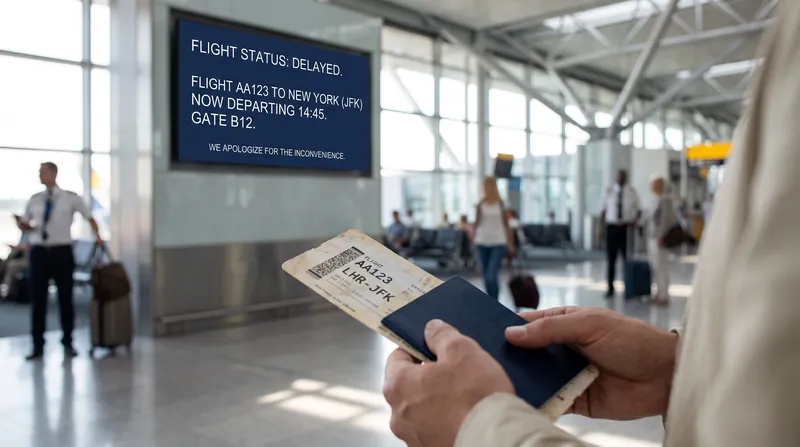
Picture the classic transatlantic departure: you’ve packed your bags, hailed a ride to the airport, and walked up to the check-in counter with nothing but a US passport and a dream of London pubs or Scottish highlands. For decades, that navy-blue booklet was a golden ticket. It carried an unspoken assumption that North American and European travelers were exempt from the bureaucratic friction of pre-travel paperwork. You simply booked a flight, showed up, and walked through the border.
That era of frictionless, spontaneous travel is officially over. As of early 2026, the United Kingdom has reached the strict enforcement phase of its Electronic Travel Authorisation (ETA) system. The rule is absolute: if you do not have an approved ETA linked to your passport before you reach the airport, you will not be allowed to board your flight.[5]
The most common misconception is that the UK has started demanding visas from Americans and Europeans. It hasn't. The ETA is not a visa; it is a digital pre-screening mechanism. It mirrors the ESTA system that the United States has required from its own visitors for years, and previews the upcoming ETIAS system that the European Union plans to launch.[1]
Instead of a consular interview or a stack of printed documents, the ETA is designed to be handled entirely from your couch. Travelers download the official UK ETA smartphone app, scan the biometric chip inside their passport, take a quick selfie to verify their identity, and answer a brief set of background questions.[6]
The digital authorization costs £20 (roughly $25 USD), a fee that was recently increased from the initial rollout price. Once the Home Office algorithms process the application—which often takes just a few minutes, though officials advise leaving up to three working days—the approval is electronically bound to your passport number.[2][4]
That digital link remains valid for two years, or until your passport expires, whichever comes first. During that window, travelers can make unlimited trips to England, Scotland, Wales, and Northern Ireland, with each stay permitted to last up to six months for tourism, visiting family, or basic business meetings.[3]
That digital link remains valid for two years, or until your passport expires, whichever comes first.
One detail that frequently catches families off guard is the lack of group applications. The ETA is an individualized security check. Every single traveler requires their own authorization and must pay the £20 fee. That includes teenagers, toddlers, and even newborn infants traveling in a carrier.
The system did not appear overnight. It is the culmination of a multi-year, phased rollout designed to digitize the UK's borders completely. The program began testing with travelers from Gulf states in late 2023. By January 2025, it expanded to include the United States, Canada, and Australia, followed shortly by European nationals.[4]
What makes 2026 distinct is the end of the grace period. The UK government has now shifted the burden of enforcement directly onto the airlines, instituting a strict 'no permission, no travel' mandate. When a gate agent scans your passport in New York or Paris, their system pings the UK database. Without a digital green light, the airline is legally barred from issuing a boarding pass.[2][5]
This strict enforcement has forced travelers to pay closer attention to transit rules. Initially, the UK government intended to require an ETA for all passengers changing planes at airports like Heathrow, even if they never passed through border control.[4]
However, following intense pushback from the aviation and tourism industries—who feared that a transit tax would drive connecting passengers to rival European hubs—the government temporarily dropped the airside transit requirement. If you are simply walking from one gate to another within the terminal, you are currently exempt, though officials are keeping this policy under review.[4]
Another hidden trap awaits dual nationals. If you hold both a US and a British passport, you are exempt from the ETA because you have the right of abode in the UK. But the digital system only knows what you show it. If you attempt to check in using your American passport, the airline's computer will demand an ETA. Dual citizens must travel on their British or Irish passports to avoid being denied boarding.[3]
Ultimately, the ETA represents a fundamental shift in how the world manages travel. The days of undocumented international hops are fading, replaced by a global web of digital pre-clearance that knows who you are before you even pack your bags.[5]
For the modern traveler, this doesn't mean the end of international exploration; it simply requires a slight adjustment in habits. The ETA is now just one more essential item on the pre-trip checklist, right next to booking the hotel and packing an umbrella. Secure it early, and the doors to the UK remain as wide open as ever.
Sources
Source coverage
6 outlets
3 viewpoints surfaced






- [1]FragomenBorder Security
The UK's Electronic Travel Authorisation Scheme: Everything You Need to Know
Read on Fragomen → - [2]Lewis SilkinAviation Industry
UK ETA expansion: what you need to know
Read on Lewis Silkin → - [3]CIBTvisasBorder Security
UK Expands ETA Requirement to US and Canadian Citizens
Read on CIBTvisas → - [4]WikipediaBorder Security
Electronic Travel Authorisation (United Kingdom)
Read on Wikipedia → - [5]Factlen Editorial TeamLeisure Travelers
Synthesis by Factlen editorial team
Read on Factlen Editorial Team → - [6]UK Home OfficeBorder Security
Apply for an electronic travel authorisation (ETA)
Read on UK Home Office →
Comments

More in Travel
See all →Passenger Rights
How EU, US, and Canadian Laws Dictate Compensation for Denied Boarding and Flight Delays
7 sources
Protected Lands
The IUCN Category II Standard: How the Global Community Actually Defines a 'National Park'
6 sources

Maritime Law
The Flag State Principle: How the IMO's SOLAS Convention Dictates the Law and Safety Standards on a Cruise Ship
7 sources

Mountain Geography
The 1,500-Meter Threshold: How Topographic Prominence Actually Defines an Ultra-Prominent Peak
6 sources

Every angle. Every day.
Get Travel stories with full source coverage and perspective breakdowns delivered to your inbox.