
Subjective Sleep Quality, Not Duration, Predicts Lower Partner Support and Higher Conflict, Study Finds
A new 14-day diary study of couples reveals that feeling poorly rested—regardless of how many hours were slept—triggers negative affect that reduces a person's ability to provide emotional support to their partner.
By Irina Belova


- Clinical Psychology
- Focuses on the cognitive and emotional mediators, like negative affect, that translate poor sleep into behavioral conflict.
- Relationship Science
- Examines the dyadic nature of sleep, viewing it as a shared resource that impacts both partners' well-being and relationship satisfaction.
- Editorial Synthesis
- Integrates clinical findings with practical, experiential advice for couples navigating daily life.
At a glance
- A landmark 14-day diary study of over 200 couples found that feeling poorly rested predicts lower emotional support for partners.
- The actual number of hours slept (sleep duration) had no consistent impact on daily relationship dynamics.
- Poor subjective sleep triggers 'negative affect,' an irritable mood that drains the empathy needed for healthy interactions.
- The lack of support is felt mutually; partners accurately perceive receiving less support when their significant other sleeps poorly.
- Experts suggest couples should communicate proactively about their perceived restfulness to avoid escalating minor morning conflicts.
Why it matters now
We often obsess over getting exactly eight hours of sleep, but this research shifts the focus to how we actually feel when we wake up. Understanding that a bad night's sleep directly impairs our ability to support our partners can help couples navigate morning friction with more empathy and less blame.
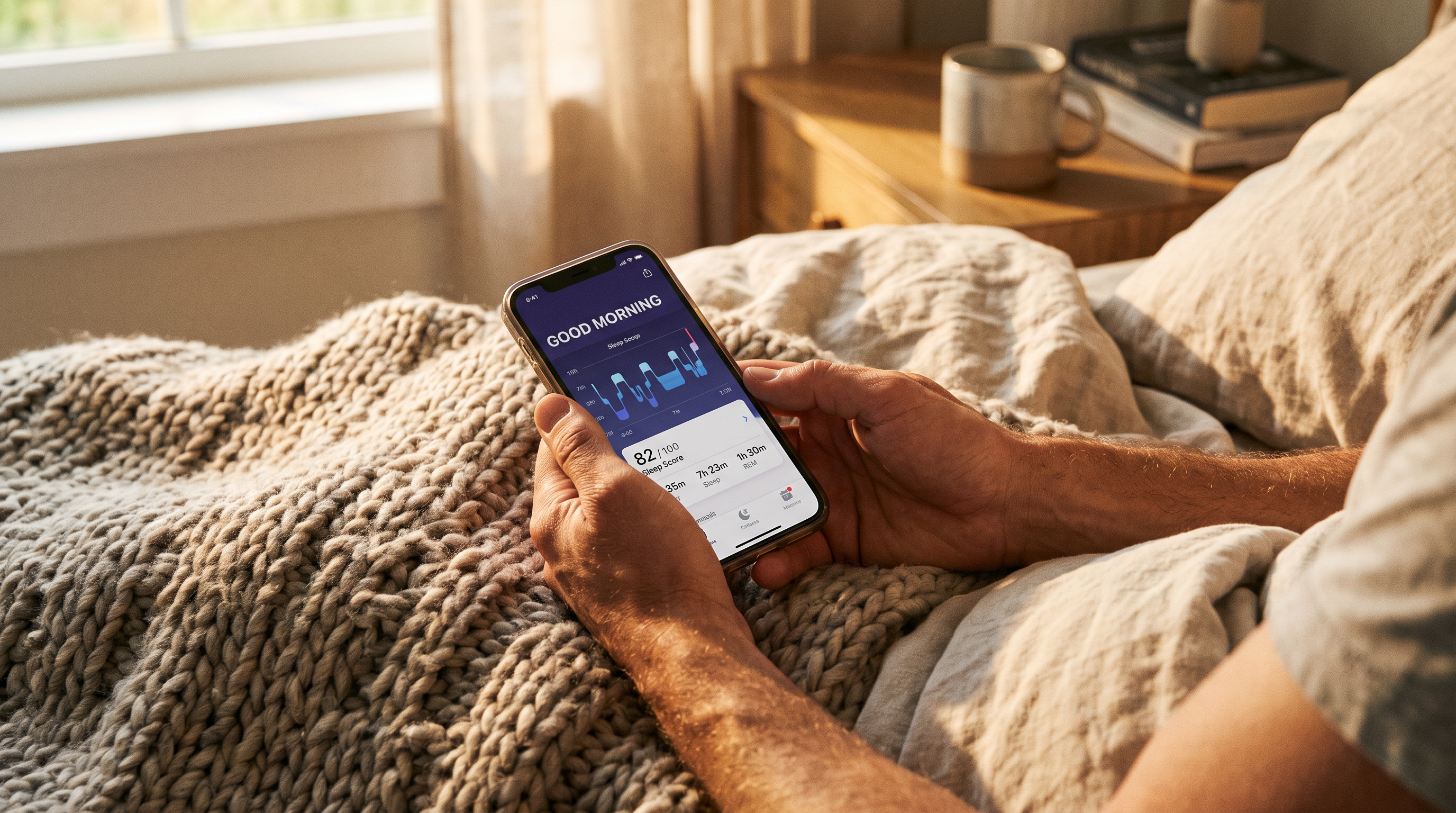
You wake up feeling groggy, your eyes heavy and your patience thin, despite your smartwatch cheerfully announcing you logged a full eight hours. By breakfast, a minor miscommunication with your partner about the day's schedule escalates, and you find yourself entirely lacking the emotional bandwidth to offer a kind word. A new landmark study explains exactly why this happens, revealing that your subjective sleep quality—how rested you actually feel, rather than the raw number of hours you spent in bed—is the true driver of daily relationship friction.[1][2]
The research, which tracked the daily lives of over 200 cohabiting couples across two separate cohorts, set out to untangle the messy, intimate reality of how our nights dictate our days. For two weeks, both partners kept detailed daily diaries recording their sleep patterns, their emotional states, and how they interacted with each other. This dyadic approach allowed scientists to capture a granular, real-time look at the mechanics of domestic life, moving beyond broad retrospective surveys to see exactly how a bad Tuesday night influenced a Wednesday morning conversation.[1]
For years, popular sleep hygiene advice has focused relentlessly on duration, treating rest as a simple math equation. We are constantly told to chase the elusive eight-hour mark, leading many to gamify their sleep with wearable trackers and smartphone apps that induce a unique kind of morning anxiety when the numbers fall short. This purely quantitative approach treats sleep as a biological quota to be filled, often entirely ignoring the qualitative, lived experience of the sleeper and how they actually feel when their feet hit the floor.[3]
But when it comes to the health and resilience of a romantic relationship, the researchers found that the clock matters far less than the perception. Participants who reported poor subjective sleep quality were consistently less likely to provide emotional or practical support to their partners the following day. Whether it was actively listening to a frustrating work complaint, offering a word of encouragement, or simply helping with a routine household chore, the fundamental capacity to be present and helpful was severely diminished on days following a restless night.[1][2]
Crucially, this empathy deficit held true regardless of whether the person slept for a fragmented five hours or a continuous nine. The data revealed that sleep duration simply did not predict a person's ability to be a supportive partner. Instead, it is the visceral feeling of being unrested—the lingering morning fatigue, the persistent brain fog, and the physical heaviness—that actively drains the specific cognitive and emotional resources necessary to show up for someone else. Feeling tired is a heavier burden on a relationship than technically being under-slept.[1]
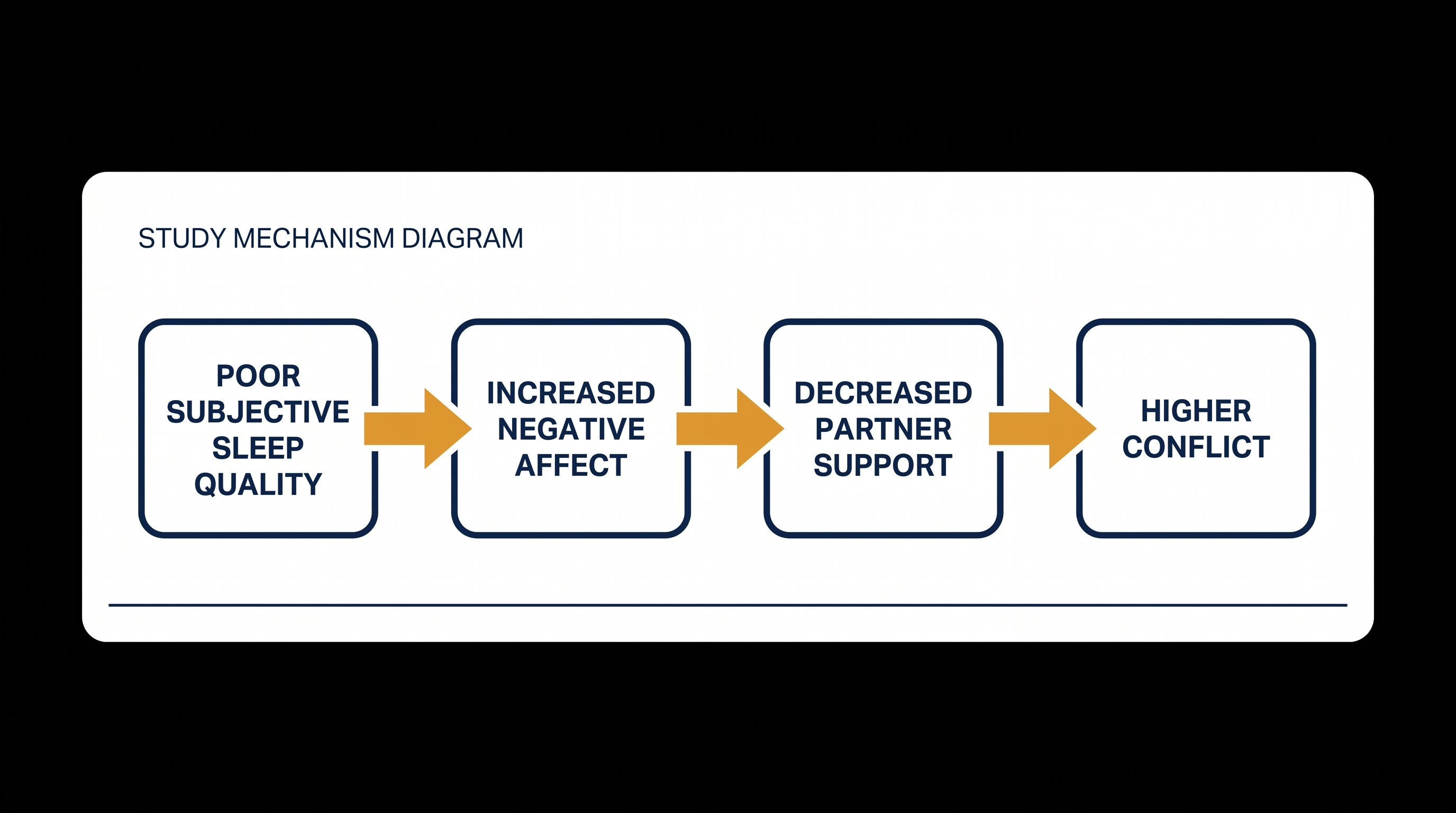
The study identified a precise psychological mechanism driving this interpersonal disconnect: a sharp increase in what researchers call negative affect. When we feel we haven't slept well, we experience a predictable, measurable spike in irritability, frustration, and general bad mood. This isn't just a fleeting moment of morning grumpiness before the first cup of coffee; it is a sustained shift in a person's emotional baseline that colors every interaction, text message, and passing comment throughout the entire day, making the world feel inherently more abrasive.[1]
This lingering negative affect acts as an invisible emotional wall between partners. It aggressively consumes the mental energy usually reserved for perspective-taking, making it significantly harder to step into a partner's shoes, validate their feelings, or respond to their needs with grace. Empathy is not a passive state; it requires active cognitive effort and emotional regulation. When a poorly rested brain is already overwhelmed by its own irritability, it simply refuses to spend the necessary energy to process and accommodate another person's emotional reality.[1][2]
This lingering negative affect acts as an invisible emotional wall between partners.
Because the researchers utilized a daily diary format rather than a one-time questionnaire, they could watch these emotional fluctuations happen in real time. This approach provided a high-resolution picture of exactly how a single bad night ripples through a household's ecosystem over the next 24 hours. The methodology captured the immediate, day-to-day consequences of subjective sleep quality in a way that broad, retrospective surveys often miss, proving that relationship satisfaction isn't just a static trait, but a daily practice heavily influenced by our physical state.[1]
The data clearly showed that the impact of a restless night is not one-sided. On days following poor subjective sleep, participants not only reported providing less support, but their partners also accurately perceived receiving less support. The emotional absence was felt on both sides of the kitchen island, confirming that the lack of empathy wasn't just an internal feeling in the tired person's head—it translated into tangible behavioral changes that left their significant other feeling noticeably less cared for and more isolated.[1]
Interestingly, the research suggests that feeling exhausted may not necessarily cause more conflicts to spontaneously occur out of thin air. Instead, poor subjective sleep fundamentally changes how partners approach and resolve the normal, inevitable friction of shared living. The daily annoyances—a misplaced set of keys, a scheduling mix-up, a forgotten chore—remain exactly the same, but the emotional reaction to them shifts dramatically from mild irritation to disproportionate frustration. The threshold for what constitutes an argument is severely lowered.[1][2]
Without the protective buffer of emotional support and the cognitive ability to take the other person's perspective, these minor disagreements are far more likely to escalate into overt, damaging arguments. The emotional resilience required to de-escalate a tense moment, offer a quick apology, or simply let a minor slight go is entirely depleted. Consequently, couples find themselves trapped in petty, drawn-out disputes that neither person actually wants to be having, driven entirely by the underlying hum of sleep-deprived irritability.[1]
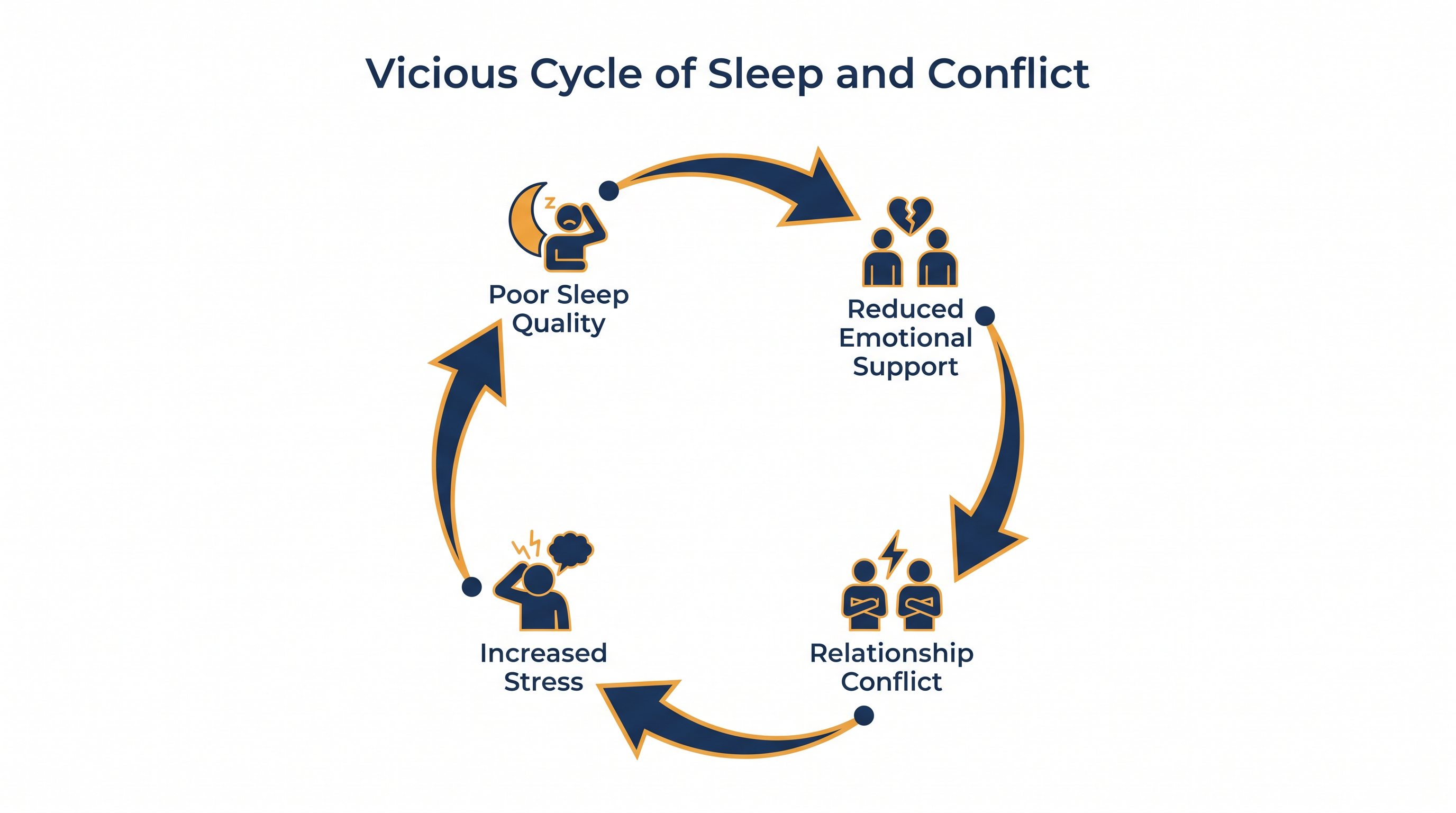
This dynamic can easily spiral into a vicious, self-perpetuating cycle for couples who don't recognize what is actually happening beneath the surface of their arguments. Relationship strain and unresolved conflict cause significant physiological arousal and psychological stress. That lingering stress makes it incredibly difficult to relax, which in turn disrupts subjective sleep quality the following night, setting the stage for another difficult, emotionally depleted day. Without intervention, poor sleep and relationship conflict begin to feed off one another indefinitely.[2]
Breaking this cycle requires a practical, intentional shift in how couples communicate with each other in the morning. Rather than turning breakfast into a competition over who got fewer hours of sleep on their tracker, partners might benefit from simply acknowledging when they feel unrested. By stating 'I didn't sleep well and I'm feeling a bit drained today,' couples can treat the fatigue as a shared weather condition to navigate together, rather than a personal failing or an excuse for bad behavior.[3]
By naming the fatigue early in the day, couples can proactively adjust their expectations and protect their relationship from unnecessary damage. They can explicitly agree to table heavy financial discussions, lower the bar for household chores, and give each other the grace to be a little less present. This proactive communication acts as a pressure release valve, ensuring that a partner's quietness or short temper is correctly attributed to a bad night's sleep rather than a lack of love or commitment.[3]
The findings also validate a broader shift in how we treat sleep problems clinically, moving away from a pure focus on duration. Interventions like cognitive behavioral therapy for insomnia (CBT-I) focus heavily on reducing sleep anxiety and improving a patient's subjective perception of restfulness. By helping people feel better about the sleep they are actually getting, these therapies don't just improve individual health metrics; this study suggests they could yield massive interpersonal dividends, effectively acting as a form of preventative couples therapy.[1][3]
Ultimately, this research fundamentally reframes sleep from a purely individual health metric into a vital, shared relationship resource. When we prioritize waking up feeling restored—and when we give ourselves and our partners grace on the mornings we don't—we are doing far more than just caring for our own physical bodies. We are actively protecting our capacity to love, our ability to empathize, and our daily commitment to support the people closest to us through the inevitable friction of everyday life.[3]
Terms to know
- Subjective Sleep Quality
- An individual's personal perception of how well they slept and how rested they feel upon waking, regardless of the actual hours logged.
- Negative Affect
- The experience of negative emotions such as anger, frustration, irritability, or sadness, which the study identified as the bridge between poor sleep and reduced support.
- Dyadic Diary Study
- A research method where both partners in a relationship record their daily experiences, allowing scientists to track how one person's state affects the other in real time.
- Perspective-Taking
- The cognitive ability to understand a situation from another person's point of view, a skill that is heavily impaired by fatigue.
The backstory
2018–2021
Early dyadic studies begin establishing a link between general sleep disturbances and lower relationship satisfaction in older couples.
2023
Researchers publish initial findings suggesting that the emotional components of sleep deprivation are more damaging to social bonds than the cognitive deficits.
April 2026
The landmark 14-day diary study of over 200 couples is published, definitively separating the effects of sleep quality from sleep duration on daily partner support.
Different angles
Sleep Researchers
Emphasize the distinction between objective sleep metrics and subjective sleep experience.
Sleep scientists argue that the modern fixation on sleep duration—often driven by commercial wearables and rigid health guidelines—misses the biological reality of sleep architecture. They point out that a person can log eight hours of fragmented, light sleep and wake up feeling exhausted, or sleep six hours deeply and feel entirely restored. This research validates their ongoing push toward measuring sleep quality and treating sleep anxiety, rather than just prescribing more time in bed. By proving that the subjective feeling of rest is what actually drives daytime social functioning, researchers hope to shift public health messaging away from strict hourly quotas and toward holistic sleep satisfaction.
Couples Therapists
Focus on how sleep deprivation acts as a catalyst for relationship dysfunction.
Clinical psychologists and relationship counselors view these findings as a crucial, practical tool for de-escalating domestic conflict. They argue that many intense arguments are not actually about the topic at hand—be it finances, chores, or scheduling—but are instead symptoms of depleted emotional reserves. By identifying poor subjective sleep as a primary trigger for negative affect, therapists can help couples implement 'pause protocols.' This involves explicitly agreeing to delay sensitive discussions or complex problem-solving on days when one or both partners wake up feeling unrested, thereby preventing minor irritations from causing lasting relational damage.
Still unresolved
- Whether these findings hold true for couples with young children, whose sleep disruptions are chronic and externally driven rather than episodic.
- How the use of sleep-tracking wearables might artificially alter a person's subjective sleep quality by telling them they slept poorly before they assess how they actually feel.
Questions readers ask
Does sleeping longer help if I still feel tired?
According to the study, no. Sleep duration did not predict a person's ability to provide partner support. The critical factor is subjective sleep quality—how rested and restored you actually feel upon waking.
Why does poor sleep make us less supportive?
The researchers found that feeling unrested triggers 'negative affect'—a measurable spike in irritability and bad mood. This emotional drain consumes the mental bandwidth needed to be patient and empathetic toward a partner.
Can one person's bad sleep affect the other partner?
Yes. The study showed that on days following poor subjective sleep, not only did the tired individual provide less support, but their partner also accurately perceived receiving less support, meaning the deficit is felt mutually.
Sources
Source coverage
3 outlets
3 viewpoints surfaced



[1]National Institutes of HealthClinical Psychology
Daily effects of sleep on provided and perceived partner support
Read on National Institutes of Health →[2]ResearchGateRelationship Science
Sleep quality, not duration, predicts daily relationship functioning
Read on ResearchGate →[3]Factlen Editorial TeamEditorial Synthesis
Synthesis by Factlen editorial team
Read on Factlen Editorial Team →
Comments
Every angle. Every day.
Get lifestyle stories with full source coverage and perspective breakdowns delivered to your inbox.