
Largest Monthly CPI Drop Since 2020: Headline Inflation Falls to 3.5% as Core Stalls
Headline inflation plummeted to 3.5% in July 2026, marking the steepest monthly decline in four years, though stubbornly high core inflation complicates the Federal Reserve's next move.

A common misconception about inflation reports is that a sharp drop in the headline number guarantees an immediate pivot in monetary policy, prompting central banks to slash borrowing costs. The July 2026 Consumer Price Index (CPI) report, released Wednesday morning by the Bureau of Labor Statistics, shatters that assumption entirely.
While headline inflation plummeted to an annualized 3.5%—marking the largest single-month deceleration since the pandemic shock of early 2020—the underlying data reveals a deeply bifurcated economy. This divergence between falling energy costs and sticky service prices will likely force the Federal Reserve to keep interest rates elevated, frustrating investors who had bet heavily on a dovish pivot.[1][2]
The concrete figures paint a picture of an economy moving in two distinct directions. The Bureau of Labor Statistics reported that the headline CPI fell 0.4% month-over-month, dragging the annual rate down dramatically from 4.1% in June to 3.5% in July. This cooling was almost entirely engineered by a collapse in global energy prices, with gasoline indices plunging 8.2% in a single month and fuel oil dropping even further.
However, 'core' inflation, the metric that strips out volatile food and energy sectors to reveal underlying price trends, remained stubbornly entrenched at 4.2% annually. More concerning for policymakers, the core index showed zero month-over-month deceleration, indicating that the foundational pressures driving the cost of living higher have not yet been extinguished.[3]
The mechanism behind this divergence highlights the structural challenges still plaguing the U.S. economy as it transitions out of the post-pandemic inflationary cycle. While consumers are seeing genuine, immediate relief at the pump and in certain durable goods categories like used vehicles and electronics, service-sector inflation continues to run uncomfortably hot.
Housing costs, which make up a massive weighting in the CPI basket, alongside auto insurance premiums and medical care services, all posted steady gains in July. These sticky service costs effectively neutralized the deflationary pressure from the commodities sector, proving that domestic wage growth and housing shortages are now the primary engines of inflation, rather than global supply chain bottlenecks.[3][4]
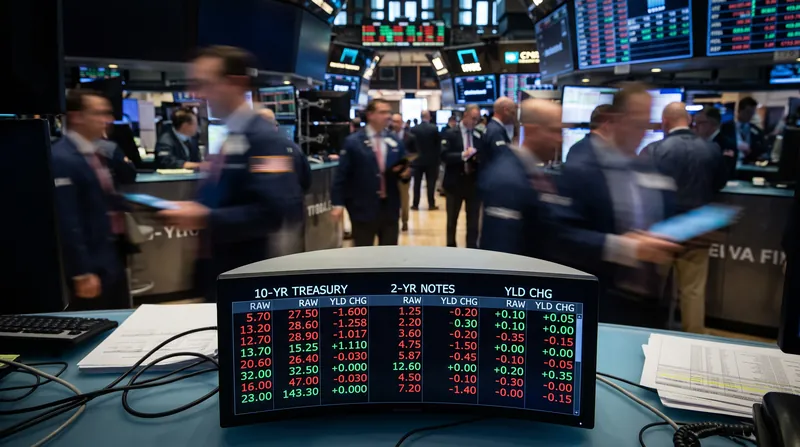
Financial markets reacted to the mixed data with immediate, whiplash-inducing volatility, reflecting the complex implications for future monetary policy. The Dow Jones Industrial Average initially surged more than 300 points in pre-market trading on the headline number, before retreating sharply as bond yields stabilized and the reality of the core data set in.
Investors who had aggressively priced in multiple rate cuts for the fall are now being forced to recalibrate their expectations. Capital is rapidly shifting away from rate-sensitive growth stocks and toward defensive equities and short-term Treasuries, as the realization dawns that the Federal Reserve's preferred metrics remain uncomfortably far from its stated 2% target zone.[2]
For the average consumer, this bifurcated report translates to a frustrating and contradictory financial reality. The cost of commuting and purchasing basic goods is visibly easing, providing a tangible and much-needed boost to monthly household cash flow after years of relentless price hikes. Yet, because core inflation dictates the Federal Reserve's interest rate policy, the cost of borrowing will remain punishingly high.
Whether a family is looking to secure a 30-year mortgage for a new home, finance an auto loan, or simply carry a credit card balance from month to month, the stalled core inflation data ensures that the era of expensive debt is far from over.[1][4]
Looking ahead, the central bank now faces a highly complex communication challenge ahead of its highly anticipated September policy meeting. Federal Reserve policymakers must acknowledge the significant and welcome progress in headline disinflation without signaling a premature victory that could inadvertently reignite asset bubbles or consumer spending sprees.
Analysts across Wall Street now widely expect the Fed to hold rates steady, using the stalled core data as ironclad justification to maintain restrictive financial conditions through the end of the year. The path to a soft landing remains viable, but the July CPI report proves the final mile of inflation reduction will be the most grueling.[3]
The political ramifications of the July CPI report are already rippling through Washington, as both parties attempt to spin the bifurcated data to their advantage ahead of the fall legislative session. The administration was quick to champion the 3.5% headline figure as definitive proof that its economic agenda is successfully lowering the cost of living for working-class families, pointing specifically to the sharp drop in energy and grocery staples.
Conversely, opposition lawmakers zeroed in on the 4.2% core inflation rate, arguing that the persistent rise in housing and insurance costs proves that systemic inflationary pressures remain untamed, largely blaming sustained federal deficit spending for keeping service-sector prices artificially elevated.[4]
Ultimately, the July data cements a new reality for the American economy: the era of broad-based, macroeconomic trends moving in unison has ended, replaced by a fragmented landscape where different sectors experience vastly different realities. For businesses, this means navigating a complex environment where input costs for physical goods are dropping, but labor and service expenses continue to climb.
For the Federal Reserve, it means relying on a blunt instrument—interest rates—to solve a highly targeted problem in the housing and services sectors. Until those specific structural imbalances are resolved, the gap between what consumers pay at the pump and what they pay for a mortgage will continue to define the financial decade.[1][2]
Key points
- Headline CPI fell to an annualized 3.5% in July 2026, the largest monthly drop since 2020.
- The deceleration was driven almost entirely by an 8.2% plunge in global energy prices.
- Core inflation, which excludes food and energy, remained stubbornly flat at 4.2%.
- Service-sector costs, including housing and insurance, continued to rise steadily.
How we got here
June 2022
Headline inflation peaks at 9.1%, triggering aggressive Federal Reserve rate hikes.
December 2023
Core inflation begins to show signs of stickiness, hovering around 4.5% despite falling energy prices.
March 2026
The Federal Reserve signals a 'higher for longer' approach as service-sector inflation refuses to cool.
July 2026
Headline inflation plummets to 3.5%, marking the largest single-month drop since 2020.
- Monetary Hawks
- Argues that stalled core inflation proves underlying price pressures remain untamed, necessitating sustained high interest rates.
- Dovish Economists
- Emphasizes the massive drop in headline inflation as proof that the worst of the economic crisis is over, urging rate cuts.
- Neutral Data Analysts
- Focuses strictly on the divergence between goods and services, avoiding policy prescriptions in favor of statistical breakdown.
Perspectives this story doesn't cover
- Small Business Owners
- Fixed-Income Retirees
Sources
Source coverage
4 outlets
3 viewpoints surfaced




- [1]ReutersNeutral Data Analysts
US consumer prices post largest drop since 2020; core inflation remains sticky
Read on Reuters → - [2]The Wall Street JournalMonetary Hawks
Headline Inflation Cools to 3.5%, But Core Prices Keep Fed on Edge
Read on The Wall Street Journal → - [3]BloombergMonetary Hawks
Energy Slump Drags US Headline CPI Lower as Core Services Stall
Read on Bloomberg → - [4]The New York TimesDovish Economists
Inflation Eases Significantly in July, Offering Relief to Consumers
Read on The New York Times →

More in Finance
See all →Inflation Inequality
How the Consumer Price Index Understates Cumulative Inflation for Lower-Income Households
4 sources

Fed Watch
Fed Governor Waller Signals September Rate Hold, Citing Skewed Nonmarket Services Inflation
6 sources

Labor Market
US Hiring Plunges by 294,000 in July as Labor Market Enters 'Low-Hire, Low-Fire' Era
5 sources

Yield Curve
How the Inverted Yield Curve Predicts Recessions: Evidence and Mechanism
7 sources
Comments
Every angle. Every day.
Get Finance stories with full source coverage and perspective breakdowns, free every day.