
UEFA Rejects FIFA Apology, Reaffirms World Cup Boycott Threat and Loss of Confidence in Infantino
European soccer's governing body has maintained its threat to boycott the World Cup, stating that FIFA's apology for a failed $20 billion privatization plan does not restore trust in President Gianni Infantino.

- Governance Reform Advocates
- Argues that the sport's governance cannot be treated as a tradable asset and demands total transparency.
- Neutral Administrative Observers
- Focuses on the factual timeline of the meetings, apologies, and the procedural standoff between the governing bodies.
- Global Development Proponents
- Highlights the original intent of the funds to boost infrastructure and development in smaller member associations.
Perspectives this story doesn't cover
- Private Equity Investors
- Smaller Member Associations
European soccer's governing body has formally rejected an apology from FIFA regarding an aborted $20 billion privatization plan, confirming that its unprecedented threat to boycott the 2026 World Cup remains fully active. In a blistering and highly unusual public statement issued on Thursday, UEFA reiterated that it has lost all confidence in FIFA President Gianni Infantino, escalating a severe governance crisis that threatens to fundamentally fracture global football. The administrative standoff centers on Infantino's now-scrapped "FIFA Forward Enterprise" proposal, a controversial initiative which would have sold minority stakes in the sport's flagship tournaments to private equity investors. By refusing to accept the apology, UEFA has signaled that the dispute is no longer just about the specific financial plan, but about the overall leadership and transparency of the sport's highest office.[1][2][3][4][5]
The latest escalation follows a high-level FIFA crisis meeting held in Rabat, Morocco, on Wednesday, convened specifically to address the mounting global backlash. During the summit, FIFA's management board sought to present a united front to the public, officially reaffirming its "full support" for Infantino despite the widespread criticism. However, recognizing the severity of the rift, the global governing body also issued a formal apology to its member associations. In the statement, FIFA acknowledged that "mistakes were made" in how the private investment plan was communicated and developed, pledging to conduct a thorough internal governance review to ensure such administrative errors do not recur in the future.[1][2][4][6]
UEFA immediately and forcefully dismissed the gesture as entirely insufficient for the scale of the breach of trust. According to the European body, the apology changes nothing about the fundamental secrecy that characterized the negotiations, noting that the specific conditions required to lift the boycott threat have not yet been met. UEFA has publicly demanded two non-negotiable guarantees from Zurich: the permanent, irrevocable withdrawal of any projects aiming to sell stakes in major competitions, and binding, structural assurances that future attempts to "distort the game" through private equity will never be entertained by the leadership.[1][2][4]
The European governing body did not mince words regarding Infantino's leadership style, characterizing the initial privatization proposal as a "shabby, back-room, opaque deal" cooked up by faceless individuals without the consent of the sport's primary stakeholders. UEFA's leadership emphasized that the fact that FIFA employees—whose careers and livelihoods depend directly on Infantino's favor—continue to support him does absolutely nothing to restore the shattered confidence of the broader football family. The 55-member European bloc remains entirely united in its willingness to walk away from all FIFA-organized events, including the highly lucrative World Cup, if its strict demands for transparency and accountability are ignored.[1][2][3][4]
The controversy originally erupted late last month when Infantino unveiled the FIFA Forward Enterprise scheme, which was reportedly developed in close partnership with major U.S. financial institutions, including J.P. Morgan and the Thrive Eternal fund. The ambitious plan aimed to spin off FIFA's massive commercial operations—including the men's and women's World Cups and the newly expanded Club World Cup—into a separate $20 billion subsidiary, with 20 percent of the entity owned by private investors. Infantino argued passionately that leveraging football's immense commercial strength in the private market was essential to fund sustainable, inclusive development and infrastructure projects across all global regions, particularly in developing nations.[5][6]
However, the proposal was met with immediate, fierce, and nearly universal resistance from the sport's traditional power bases. Critics argued vehemently that the governance, history, and identity of the world's most popular sport should never be treated as a tradable asset subject to the whims of private equity. The backlash quickly expanded far beyond Europe's borders. North America's CONCACAF and the Asian Football Confederation (AFC) joined UEFA in publicly opposing the plan, creating an insurmountable wall of resistance that forced Infantino into a humiliating retreat and the formal abandonment of the project over the weekend.[3][4][5][6]
However, the proposal was met with immediate, fierce, and nearly universal resistance from the sport's traditional power bases.
The resulting political fallout has severely weakened Infantino's position on the global stage, drawing criticism from figures outside the traditional football hierarchy. Canadian Prime Minister Mark Carney publicly stated that he no longer has confidence in Infantino's ability to lead, citing a "fatal" governance failure in bypassing senior advisers and board members during the secretive negotiations. The English Football Association and the global players' union, FIFPRO, have also formally withdrawn their support for the president. FIFPRO went as far as accusing the FIFA president of a "profound abuse of presidential power," highlighting the deep unease among the athletes who actually play the game.[2][6]
Despite the mounting pressure and calls for his resignation, Infantino appears determined to weather the storm and fight for his political survival ahead of the next FIFA presidential election, which is scheduled for March 18, 2027, in Rabat. Prior to the crisis, he had already secured hundreds of letters of support from smaller member associations endorsing his re-election campaign, relying on his track record of increasing financial distributions to developing football nations. However, those endorsements are not legally binding, and leading European officials have reportedly already begun the quiet process of identifying and backing a viable challenger to stand against him.[3][4][6]
For now, the world's most popular sport remains trapped in a precarious holding pattern with no clear resolution in sight. If the deep administrative rift between Zurich and Nyon cannot be healed, a European boycott of the 2026 World Cup—co-hosted by the United States, Canada, and Mexico—would devastate the tournament's sporting integrity and wipe out billions of dollars in projected commercial value. As UEFA continues to demand a fundamental restructuring of FIFA's decision-making processes, the coming weeks will determine whether Infantino can survive the most severe and unified challenge to his authority since taking office a decade ago.[3][5][6]
Key points
- UEFA has formally rejected FIFA's apology regarding the aborted $20 billion privatization plan.
- The European governing body maintains its threat to boycott the 2026 World Cup and all FIFA competitions.
- FIFA's management board backed President Gianni Infantino but admitted communication mistakes were made.
- The standoff has severely weakened Infantino's position ahead of the 2027 FIFA presidential election.
Sources
Source coverage
6 outlets
3 viewpoints surfaced





- [1]OneFootballGovernance Reform Advocates
UEFA keeps World Cup boycott threat despite FIFA apology
Read on OneFootball → - [2]Associated PressNeutral Administrative Observers
UEFA maintains boycott threat of FIFA competitions after Infantino's crisis meeting
Read on Associated Press → - [3]The GuardianGovernance Reform Advocates
Uefa has warned Gianni Infantino that his style of leadership cannot continue
Read on The Guardian → - [4]United Press InternationalNeutral Administrative Observers
UEFA holding on to threat of World Cup boycott
Read on United Press International → - [5]TeleSURGovernance Reform Advocates
UEFA Rejects FIFA's Plan to Privatize World Cup's Management
Read on TeleSUR → - [6]P.M. News NigeriaGlobal Development Proponents
Failed FFE: Gianni Infantino's position collapses as FIFA plots new leadership
Read on P.M. News Nigeria →
Comments
More in Sports
See all →Standings
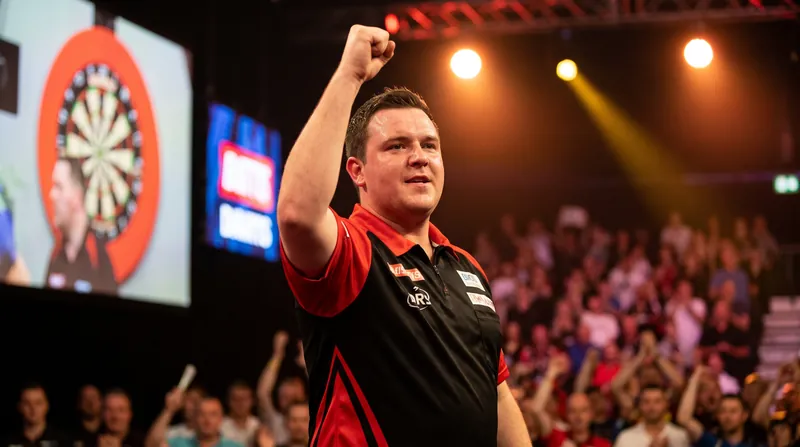
Cameron Menzies Defies Travel Nightmare to Claim PC29 Title as Minehead Bubble Race Intensifies
4 sources
Power ranking
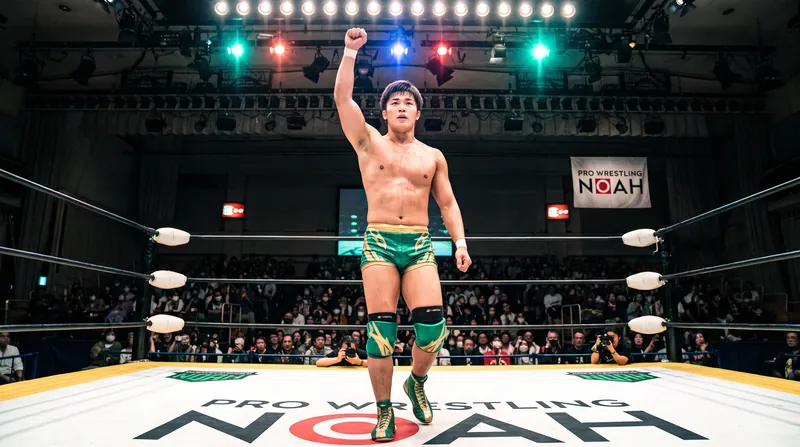
N-1 Victory Power Rankings: Kaito Kiyomiya Commands A Block While B Block Descends Into Chaos
5 sources
Standings
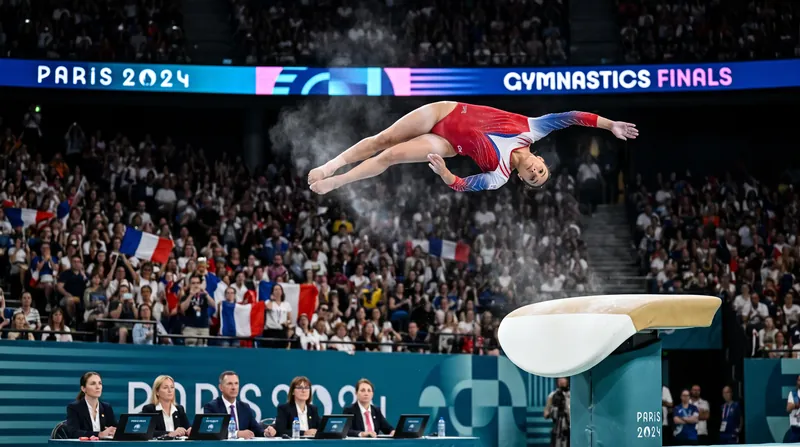
Asian Games Gymnastics Standings: Yeo Seojeong Tops Vault Qualifications as Medal Race Heats Up in Nagoya
5 sources
Injury
Asian Games Injury Report: Kim Woo-min Battles Through Shoulder Tear, Tong Yu Jing Out After Surgery
5 sources
Every angle. Every day.
Get Sports stories with full source coverage and perspective breakdowns delivered to your inbox.