
Thai Badminton Player Pitchamon Opatniputh Provisionally Suspended at Asian Games After Positive Furosemide Test
The 19-year-old athlete faces a provisional suspension following the first reported anti-doping violation of the 2026 Asian Games.

- Anti-Doping Regulators
- Strict liability dictates that athletes are entirely responsible for any banned substance found in their system.
- Athlete Advocates
- Due process requires waiting for the B-sample and investigating potential inadvertent contamination.
Perspectives this story doesn't cover
- Pitchamon Opatniputh's legal team
- Competing athletes in the women's singles draw
Under the World Anti-Doping Agency's strict liability mandate, an athlete is ultimately responsible for any prohibited substance found in their system, regardless of how it entered. That regulatory constraint has now sidelined 19-year-old Thai badminton standout Pitchamon Opatniputh, who has been provisionally suspended from the 2026 Asian Games following a positive test for the diuretic furosemide. The International Testing Agency confirmed the adverse analytical finding on September 21, 2026, triggering an immediate halt to her participation in the tournament.[1][2]
The suspension marks the first confirmed anti-doping violation of the current Asian Games, removing a high-profile competitor from the badminton brackets. Testers detected the substance in an in-competition sample collected earlier in the week. The swift application of the provisional suspension aligns with standard protocols for specific masking agents, ensuring the integrity of the ongoing tournament while the formal adjudication process begins. The International Testing Agency, which handles the anti-doping program for the Olympic Council of Asia, forwarded the case to the Court of Arbitration for Sport's anti-doping division for immediate handling.[1][5]
Furosemide is classified under Section S5 of the World Anti-Doping Agency's prohibited list, which covers diuretics and masking agents. While the prescription medication is primarily used in clinical settings to treat fluid build-up and hypertension, sports regulators ban it both in and out of competition because its mechanism of action dilutes urine. That dilution can effectively lower the concentration of other performance-enhancing drugs, such as anabolic steroids, making them significantly harder for laboratory equipment to detect during standard screening procedures.[3][6]
The provisional suspension immediately bars Pitchamon from all sanctioned competition, pending a final resolution of the matter. Under the established anti-doping framework, the athlete retains the right to request the analysis of her B-sample—the second of 2 samples collected—to verify the initial laboratory results. She also holds the right to appeal the provisional suspension itself before the Court of Arbitration for Sport, though such appeals require demonstrating that the violation likely involved a contaminated product or that the suspension would cause disproportionate harm before a full hearing can be convened.[1][7]
The provisional suspension immediately bars Pitchamon from all sanctioned competition, pending a final resolution of the matter.
Pitchamon entered the Asian Games as one of Thailand's most promising young athletes, having previously captured the World Junior Championship title and steadily climbed the senior international rankings. Her rapid ascent had positioned her as a key medal contender in the women's singles draw, carrying significant expectations from the Badminton Association of Thailand. Her sudden removal forces a reshuffling of the tournament bracket and leaves the Thai national team without one of its primary scoring options in the team event, altering the competitive landscape for the remaining nations.[2][4]
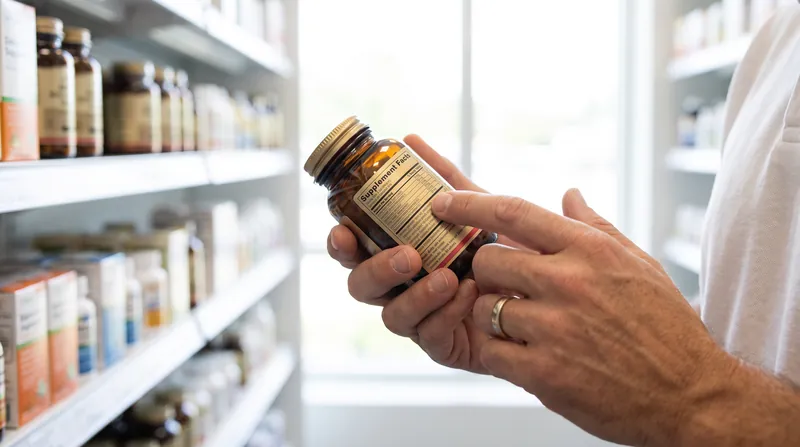
Cases involving furosemide often hinge on establishing the exact source of the ingestion. Because badminton does not utilize weight classes—unlike combat sports or weightlifting, where diuretics are sometimes illegally employed for rapid acute weight loss—investigators will likely focus on alternative explanations. The defense typically centers on whether the substance was ingested inadvertently through a contaminated dietary supplement, or if it was part of a legitimate medical prescription obtained without filing the 1 required Therapeutic Use Exemption in advance. If an athlete can prove no significant fault or negligence, the standard sanction can be substantially reduced.[3][6]
The International Testing Agency and the Badminton Association of Thailand have not yet released direct public statements or official quotes regarding the specific concentration levels found in the sample. National federations typically wait for the athlete's legal representation to review the complete laboratory documentation package before making public declarations regarding the case. The timeline for the B-sample opening and the subsequent tribunal hearing will depend on the current caseload at the World Anti-Doping Agency's accredited laboratory and the scheduling availability of the designated arbitrators. Until those steps are completed, the federation must proceed with its remaining roster.[2][7]
The adjudication process now shifts entirely to the formal hearing phase. The strict liability principle means the burden of proof rests 100 percent on the athlete to explain the presence of the substance in her system. If the B-sample confirms the initial finding and no mitigating circumstances are established to the satisfaction of the panel, Pitchamon faces a standard 4-year ban from the sport, which can be reduced to 2 years or less if she proves no significant fault, stalling a highly anticipated career just as it reached the senior international stage.[1][5]
The stakes
A positive test for a masking agent triggers an immediate provisional suspension under World Anti-Doping Agency rules, removing a rising star from international competition while the B-sample and appeals process unfold.
The essentials
- Thai badminton player Pitchamon Opatniputh has been provisionally suspended from the 2026 Asian Games.
- Testers detected the banned diuretic and masking agent furosemide in an in-competition sample.
- The suspension marks the first confirmed anti-doping violation of the current Asian Games tournament.
- The athlete retains the right to request a B-sample analysis and appeal the provisional suspension.
Perspectives explored
Anti-Doping Regulators' View
Strict liability dictates that athletes are entirely responsible for any banned substance found in their system.
For testing agencies and tournament organizers, the immediate application of a provisional suspension is a non-negotiable mechanism to protect the integrity of the ongoing Asian Games. Regulators argue that allowing an athlete with an adverse analytical finding to continue competing, even while awaiting a B-sample, compromises the fairness of the bracket and harms clean athletes. From this perspective, the presence of a masking agent like furosemide—which can actively hide the use of other performance-enhancing drugs—requires swift removal from competition regardless of the athlete's intent or age.
Athlete Defense Perspective
Due process requires waiting for the B-sample and investigating potential inadvertent contamination.
Legal advocates for athletes emphasize that an adverse analytical finding on an A-sample is only the first step in a complex adjudication process. They argue that provisional suspensions, while standard, can cause irreparable harm to an athlete's career and reputation before all the facts are known. In cases involving diuretics, the defense often centers on the high prevalence of contaminated dietary supplements or legitimate medical treatments administered without the proper paperwork. This camp stresses that the athlete must be afforded the time and resources to trace the source of the substance before a final sanction is applied.
Sources
Source coverage
7 outlets
2 viewpoints surfaced






- [1]The Straits TimesAnti-Doping Regulators
Thai teenage badminton player first doping case at Asian Games: Testers
Read on The Straits Times → - [2]The StarAthlete Advocates
Badminton: Thai shuttler Pitchamon first doping case at Asian Games
Read on The Star → - [3]Nation ThailandAthlete Advocates
Furosemide in focus after Pitchamon's provisional suspension
Read on Nation Thailand → - [4]Houston ChronicleAthlete Advocates
Teenage Thai badminton player Opatniputh tests positive for doping at Asian Games
Read on Houston Chronicle → - [5]The Manila TimesAnti-Doping Regulators
Thai badminton player first doping case at Asian Games
Read on The Manila Times → - [6]Seoul Economic DailyAnti-Doping Regulators
Thai Badminton Star Pichamon Fails Doping Test, Out of Asian Games
Read on Seoul Economic Daily → - [7]Nation ThailandAthlete Advocates
Pitchamon provisionally suspended from Asian Games after positive test
Read on Nation Thailand →
Comments

More in Fitness
See all →World Record
Agnes Jebet Ngetich Breaks Women-Only Half Marathon World Record in Copenhagen
4 sources

Metabolic Health
88,000-Adult Study Finds Exercise's Absolute Diabetes Risk Reduction Peaks in Older Adults
5 sources

Aquatic Physics
The Velocity-Cubed Law: How Swimming Power Increases Exponentially with Speed Due to Wave Drag
7 sources

Supplement Regulation
The Regulatory Framework of Dietary Supplements: FDA Authority vs. State Restrictions
3 sources
Every angle. Every day.
Get Fitness stories with full source coverage and perspective breakdowns delivered to your inbox.