
U.S. Strikes Hit Iranian Water Facilities Amid Heatwave, Sparking War Crime Accusations
U.S. precision strikes in southern Iran destroyed two drinking water reservoirs serving 20,000 people, escalating tensions following the downing of an American helicopter. Iranian officials labeled the attack on civilian infrastructure a war crime, while the Pentagon maintains it targeted military air defense and radar sites.
By Factlen Editorial Team
- Iranian Authorities
- Condemns the strikes as a calculated war crime aimed at depriving civilians of essential resources.
- International Legal & Humanitarian Observers
- Focuses on the violation of international law and the severe humanitarian consequences of targeting civilian infrastructure.
- U.S. Military
- Frames the operation as a necessary and proportional self-defense measure against Iranian aggression.
What's not represented
- · Local residents of Bemani and Kouhestak directly affected by the water shutoff
- · Independent international investigators on the ground in Sirik county
Why this matters
Targeting civilian water infrastructure during a severe heatwave crosses a critical threshold in international humanitarian law, potentially constituting a war crime. The escalation threatens to unravel a fragile April ceasefire and widen the conflict across the Middle East.
Key points
- U.S. strikes destroyed two water reservoirs in southern Iran, cutting off supply to 20,000 people.
- The attack occurred during a severe heatwave with temperatures exceeding 113°F.
- The U.S. claims it targeted military radar and air defense sites after an American helicopter was shot down.
- Weapons debris at the site was identified as fragments of a U.S.-made GBU-39 guided bomb.
- Iran labeled the destruction of civilian infrastructure a war crime and retaliated against U.S. bases in the Gulf.
- Iranian state media reports that alternative water distribution networks were restored within 12 hours.
U.S. precision strikes in southern Iran destroyed two critical drinking water reservoirs, cutting off supply to roughly 20,000 civilians amid a punishing heatwave. The June 10 attack on the village of Bemani in Hormozgan province has drawn international scrutiny and accusations of war crimes from Tehran, marking a severe escalation in the renewed hostilities between the United States and Iran.[1][6]
The strikes followed the downing of a U.S. Army Apache helicopter near the Strait of Hormuz on Tuesday. U.S. President Donald Trump quickly blamed Iranian forces for shooting down the aircraft and vowed a forceful response, though an official U.S. inquiry into the exact cause of the crash is still ongoing.[2][3]
U.S. Central Command (CENTCOM) stated that American forces, utilizing Marine Corps, Air Force, and Navy assets, conducted "self-defense strikes" against multiple Iranian targets. The Pentagon maintained that the precision munitions were aimed strictly at military surveillance capabilities, communication systems, and air defense radar sites in response to what it termed "unwarranted and continued aggression."[2][4]

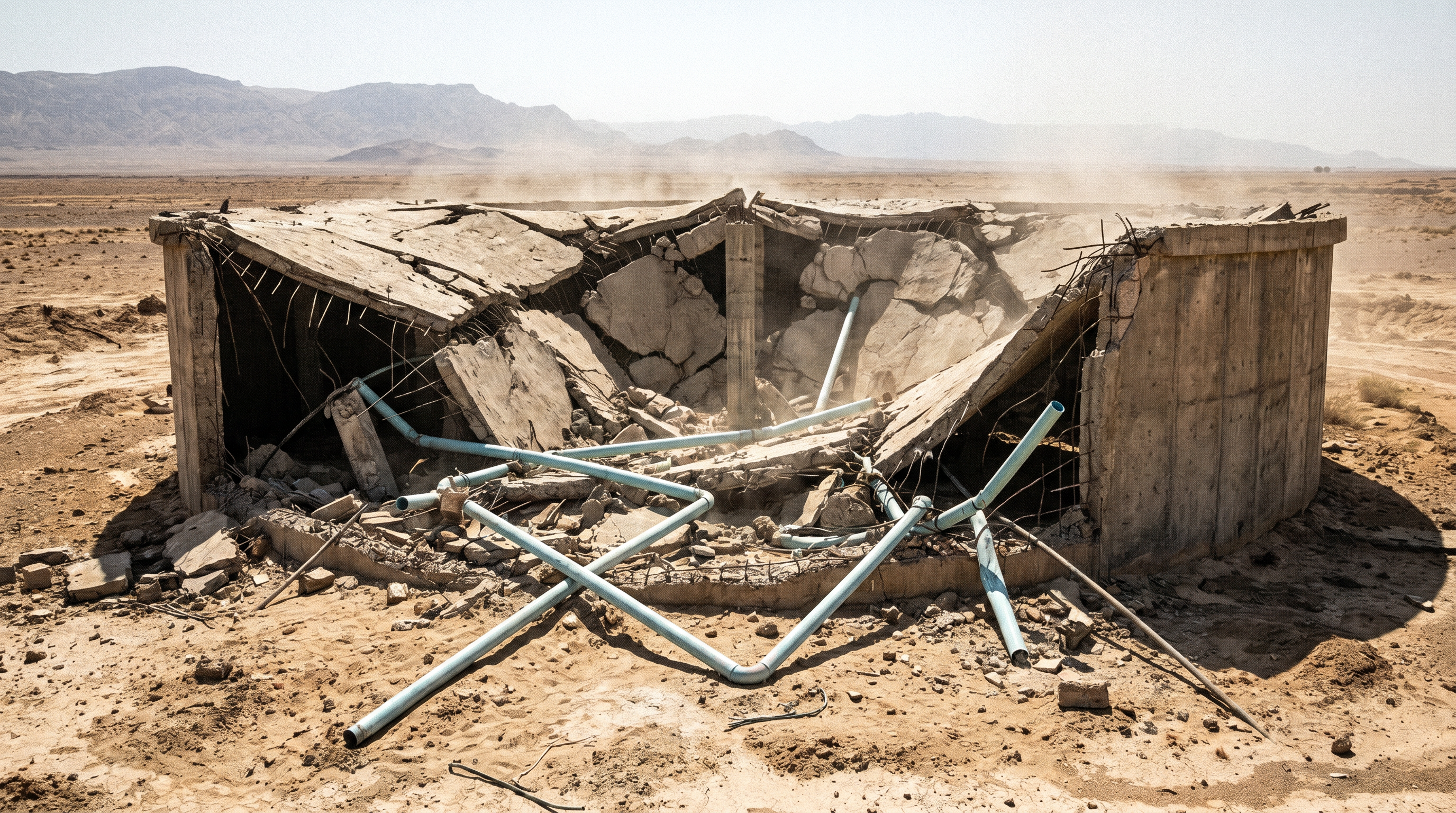
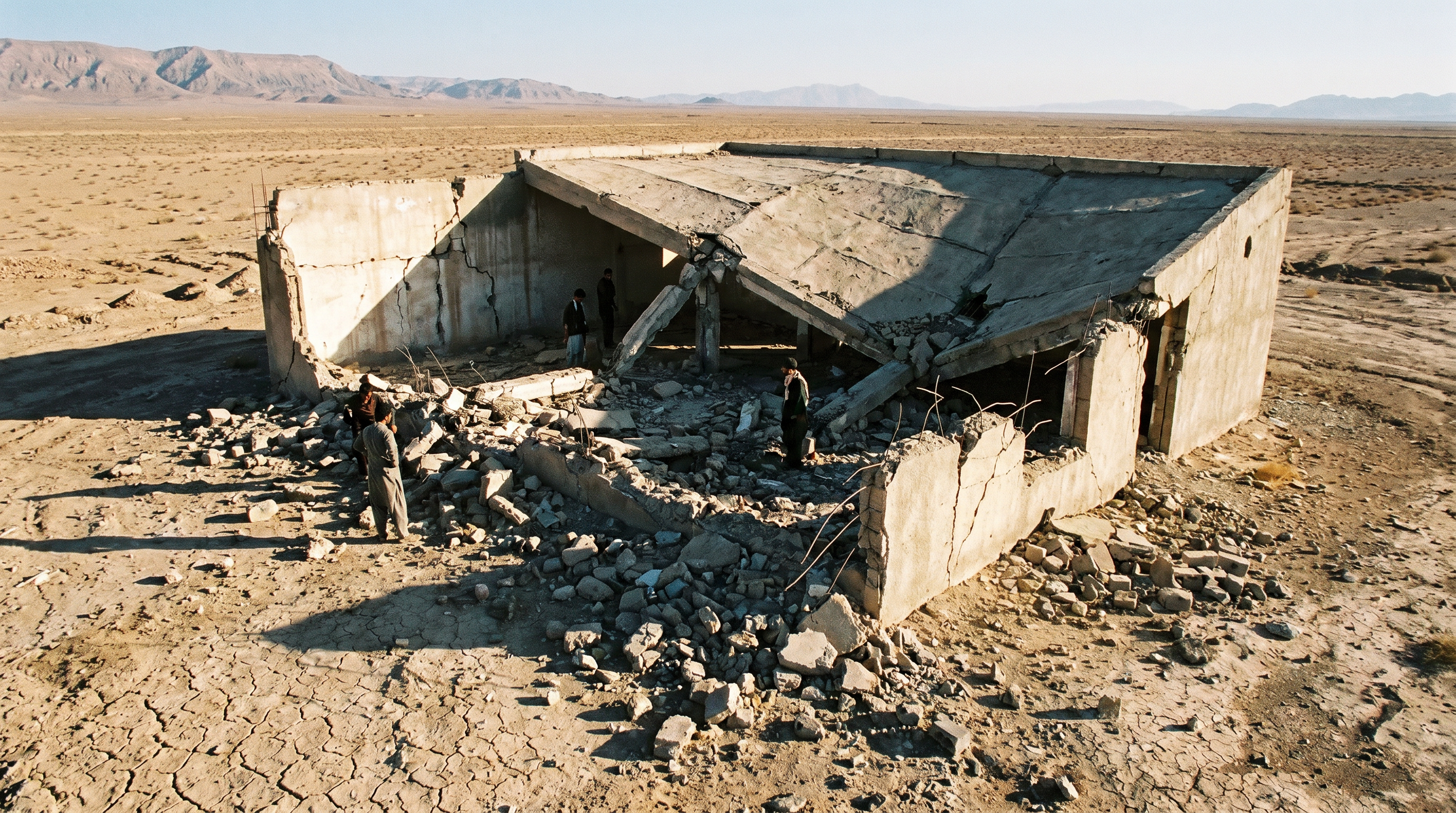
Despite CENTCOM's assertions, visual evidence and local reports confirm the destruction of civilian infrastructure. A 500-cubic-meter tank and a 2,000-cubic-meter tank in Sirik county were completely destroyed. An analysis of satellite imagery and video footage by The New York Times, alongside weapons debris cataloged by the Open Source Munitions Portal, identified fragments of a U.S.-made GBU-39 guided bomb at the remote water facilities.[1][4][8]
Despite CENTCOM's assertions, visual evidence and local reports confirm the destruction of civilian infrastructure.
The destruction occurred as temperatures in the region soared between 113°F and 122°F (45°C to 50°C). The affected communities in Bemani and Kouhestak were already grappling with chronic water scarcity due to a decades-long drought. While Iranian state television reported that alternative water distribution networks were restored within 12 hours, the temporary loss of the 2,500-cubic-meter capacity created critical conditions for local inhabitants.[6][7]
Iranian officials vehemently condemned the strikes. Foreign Ministry spokesperson Esmaeil Baqaei described the bombing as a "calculated war crime and a flagrant violation of human rights," emphasizing that the facilities were indispensable to civilian survival. Under the Geneva Conventions and international humanitarian law, deliberately targeting civilian water infrastructure is strictly prohibited.[1][5][7]

Dismissing the U.S. justification as a "false pretext," Iran's Islamic Revolutionary Guard Corps (IRGC) quickly retaliated. Tehran claimed to have launched missile and drone attacks against U.S. military bases in Bahrain, Kuwait, and Jordan. Jordan reported shooting down five incoming missiles aimed at an air base hosting American aircraft, while Bahrain and Kuwait also intercepted incoming fire.[2][3][7]
The exchange shatters a fragile, Pakistan-mediated ceasefire that had paused the broader U.S.-Israeli war with Iran on April 8. With both sides trading blows over critical infrastructure and military installations, the region braces for further instability, complicating ongoing efforts to negotiate a comprehensive peace agreement.[3][7]
How we got here
Feb 28, 2026
A broader war between the U.S., Israel, and Iran officially breaks out.
April 8, 2026
A temporary, Pakistan-mediated ceasefire halts major hostilities.
June 9, 2026
A U.S. Army Apache helicopter crashes near the Strait of Hormuz; President Trump blames Iran.
June 10, 2026
U.S. forces launch precision strikes in southern Iran, destroying two water reservoirs in Bemani.
June 10, 2026
Iran retaliates by firing missiles at U.S. military bases in Jordan, Kuwait, and Bahrain.
June 11, 2026
Iranian authorities restore emergency water distribution to the affected villages.
Viewpoints in depth
U.S. Military Command
Maintains the strikes were precise, proportional, and aimed at military targets.
U.S. Central Command asserts that the strikes were a necessary act of self-defense following the downing of an American Apache helicopter. The Pentagon insists that the munitions were directed at Iranian air defense systems, ground control stations, and surveillance radars. U.S. officials have not officially acknowledged the destruction of the water reservoirs, framing the broader operation as a targeted effort to degrade Iran's offensive capabilities and protect American assets in the region.
Iranian Government
Views the strikes as a deliberate war crime targeting civilian survival.
Tehran argues that the destruction of the Bemani water facilities was not collateral damage, but a calculated attack on civilian infrastructure. Iranian officials point to the remote location of the reservoirs—far from military installations—as evidence of a deliberate strike. By cutting off drinking water to 20,000 people during a severe heatwave, Iran claims the U.S. has flagrantly violated the Geneva Conventions, justifying their retaliatory missile strikes on American bases across the Gulf.
International Legal Observers
Warns that targeting water infrastructure violates international humanitarian law.
Legal experts and human rights organizations emphasize that the Geneva Conventions and the Berlin Rules on Water Resources strictly prohibit attacks on objects indispensable to civilian survival. If the U.S. intentionally targeted the water reservoirs, or failed to take adequate precautions to avoid them while striking nearby military targets, it could constitute a war crime. Observers note a troubling pattern, referencing a similar U.S. strike on a desalination plant on Qeshm Island earlier in the conflict.
What we don't know
- Whether the U.S. military intentionally targeted the water facilities or if they were struck by mistake due to proximity to military sites.
- The definitive cause of the U.S. Apache helicopter crash that triggered the escalation.
- The full extent of the damage caused by Iran's retaliatory missile strikes on U.S. bases in Jordan, Bahrain, and Kuwait.
Key terms
- GBU-39
- A 250-pound precision-guided glide bomb used by the U.S. Air Force to strike targets with high accuracy.
- Geneva Conventions
- A set of international treaties that establish the standards of international law for humanitarian treatment in war, including the protection of civilian infrastructure.
- Strait of Hormuz
- A crucial and highly contested waterway between the Persian Gulf and the Gulf of Oman, through which a significant portion of the world's oil passes.
Frequently asked
Why did the U.S. strike Iran?
The U.S. launched the strikes in response to the downing of an American Apache helicopter near the Strait of Hormuz, which President Trump blamed on Iranian forces.
What was destroyed in the strikes?
According to visual evidence and Iranian officials, two drinking water reservoirs in the village of Bemani were destroyed, alongside U.S. claims of hitting military radar and air defense sites.
Is attacking a water facility a war crime?
Yes, under international humanitarian law, deliberately attacking infrastructure that is indispensable to the survival of the civilian population, such as drinking water installations, is considered a war crime.
Has the water supply been restored?
Iranian state television reported that alternative water distribution networks were established and supply was restored to the affected villages within 12 hours.
Sources
Source coverage
8 outlets
3 viewpoints surfaced







[1]The GuardianInternational Legal & Humanitarian Observers
Military strikes on water facilities in Iran may constitute a war crime, experts say
Read on The Guardian →[2]PBSU.S. Military
U.S. and Iranian strikes shake the Mideast
Read on PBS →[3]Al JazeeraInternational Legal & Humanitarian Observers
Which targets have been hit in Iran?
Read on Al Jazeera →[4]Anadolu AgencyIranian Authorities
US strikes near Hormuz hit Iranian drinking water facility: Media reports
Read on Anadolu Agency →[5]TruthoutInternational Legal & Humanitarian Observers
US Bombs Water Facilities in Iran, a Possible War Crime Violation
Read on Truthout →[6]The HinduIranian Authorities
Thousands of Iranians in Sirik lose access to drinking water after U.S. strikes
Read on The Hindu →[7]BSS / AFPIranian Authorities
Water supply to villages in southern Iran restored
Read on BSS / AFP →[8]Common DreamsInternational Legal & Humanitarian Observers
'War Crimes': Analysis Suggests US Bombed Water Facilities Used by 20,000 Iranians in Precision Strike
Read on Common Dreams →
More in news politics
See all 47 stories →Platform Moderation
Evidence Pack: Do Crowdsourced Fact-Checks Actually Change Political Misperceptions?
7 sources

Supreme Court
Supreme Court Strikes Down EPA Power Plant Emissions Rules in 6-3 Decision
7 sources
Cabinet Nomination
Trump Nominates Jay Clayton for Director of National Intelligence Amid FISA Standoff
7 sources

Defense Spending
U.K. Defense Secretary John Healey Resigns Over Military Funding Dispute, Deepening Crisis for Starmer
8 sources

Every angle. Every day.
Get news politics stories with full source coverage and perspective breakdowns delivered to your inbox.