
The Unprecedented Boom in U.S. Women's Soccer: Two Division I Leagues, Stadiums, and Grassroots Growth
The 2026 season marks a historic turning point for women's professional soccer in the United States, with the NWSL and the newly sanctioned USL Super League driving massive expansion, dedicated stadiums, and grassroots investments.
By Factlen Editorial Team
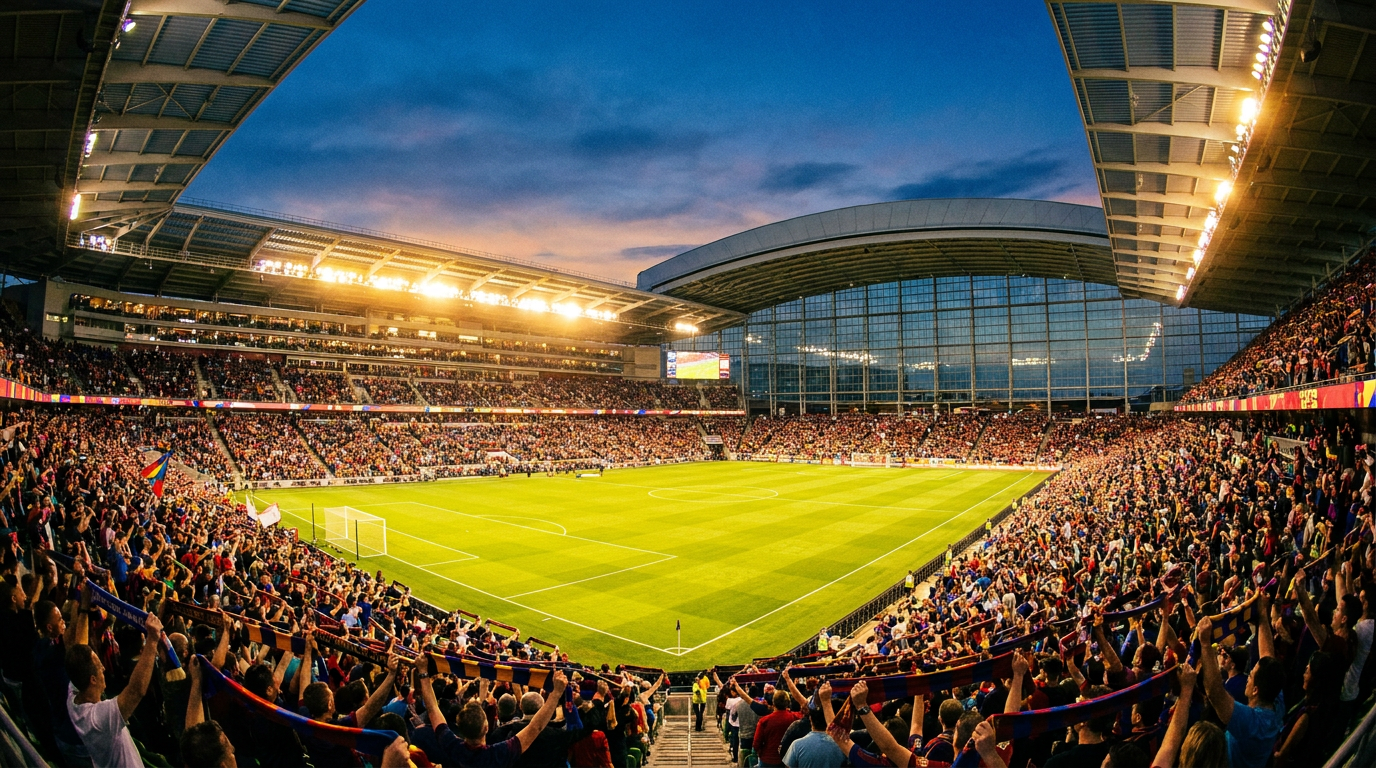
- League Executives & Owners
- Focuses on commercial viability, expansion fees, and building permanent stadium infrastructure.
- Players & Development Advocates
- Emphasizes the creation of new professional roster spots and a sustainable youth-to-pro pathway.
- Grassroots & Community Leaders
- Prioritizes local youth access and building community facilities in underserved areas.
What's not represented
- · International leagues competing for the same global talent pool.
- · Lower-division amateur clubs navigating the changing professional landscape.
Why this matters
For decades, female athletes had limited professional pathways in the U.S., but the simultaneous success of multiple top-tier leagues and dedicated infrastructure means more roster spots, higher salaries, and a sustainable ecosystem for the next generation of players.
Key points
- The NWSL expanded to 16 teams in 2026, with the Boston Legacy and Denver Summit making their debuts.
- The USL Super League concluded its inaugural Division I season, with Lexington SC winning the championship.
- The USL Super League will transition to a spring-to-fall calendar in 2027 to align with the domestic landscape.
- A new Division II league, WPSL Pro, is launching in 2026 to bridge the gap between amateur and professional play.
- Grassroots initiatives are installing dozens of mini-pitches in urban areas to ensure local youth access.
The summer of 2026 marks a watershed moment for women's professional soccer in the United States, transitioning an ecosystem once defined by survival into an era of unprecedented expansion and physical permanence. For the first time in history, the U.S. boasts two thriving Division I women's leagues operating simultaneously, driving a massive influx of capital, dedicated infrastructure, and new professional roster spots. The National Women's Soccer League (NWSL), long the standard-bearer for the sport, has expanded to 16 teams this season, while the newly minted USL Super League recently crowned its inaugural champion. This dual-engine growth is fundamentally reshaping the domestic landscape, proving that the market for women's sports is not just viable, but highly lucrative.[1][6][8]
The NWSL's aggressive growth strategy took center stage this spring with the highly anticipated debuts of two expansion franchises: the Boston Legacy and the Denver Summit. The financial stakes have skyrocketed, evidenced by record-breaking expansion fees—including reports of a $110 million valuation for the Denver ownership group to enter the league. This valuation represents a staggering leap from the league's early days, signaling deep institutional confidence in the product. The league is not stopping at 16; executives have already awarded an 18th franchise to Columbus, Ohio, set to begin play in 2028. This rapid scaling reflects a broader strategy to capture major media markets and capitalize on the surging viewership and attendance metrics that have defined the NWSL's recent seasons.[1][3][5]

Parallel to the NWSL's expansion, the USL Super League has successfully established itself as a formidable Division I entity. In late May 2026, the league concluded its inaugural season with Lexington SC defeating Carolina Ascent FC 3-1 to claim the championship. The final, hosted at Lexington SC Stadium, drew a record crowd of 7,715 fans, underscoring the appetite for top-tier women's soccer in markets outside the traditional NWSL footprint. The Super League's strategy of placing teams in mid-sized and emerging soccer markets—such as Spokane, Tampa Bay, and Lexington—has effectively broadened the sport's geographic reach, bringing professional matches to communities that previously lacked access to the highest level of the women's game.[6][8]
In a move designed to further harmonize the domestic soccer landscape, the USL Super League announced in early June that it will transition to a spring-to-fall calendar beginning in 2027. Initially launched with a fall-to-spring schedule to align with the international calendar, the league will play an abridged 14-match fall season in 2026 before making the permanent switch. This strategic pivot aligns the Super League's timeline with the NWSL, streamlining the domestic viewing experience for fans and simplifying the logistics of player transfers and broadcasting schedules. The alignment is widely viewed as a maturation step for the Super League, ensuring that both Division I properties can maximize their visibility during the peak North American sports months.[4]

Underpinning this league-level expansion is a historic boom in soccer-specific infrastructure. For decades, women's teams were often relegated to secondary tenants in massive NFL stadiums or forced to play on college campuses with inadequate facilities. That paradigm shifted dramatically when the Kansas City Current opened CPKC Stadium—the first arena in the world built specifically for a women's professional team. Now, clubs across both the NWSL and the USL Super League are following suit, investing hundreds of millions of dollars into dedicated stadiums and state-of-the-art training facilities. This physical footprint is crucial; as industry analysts note, owning a stadium guarantees a team's long-term presence in a city and unlocks vital revenue streams from naming rights, concessions, and non-matchday events.[2]
Underpinning this league-level expansion is a historic boom in soccer-specific infrastructure.
The ripple effects of this Division I boom are also accelerating development in the lower tiers of the U.S. soccer pyramid. To bridge the critical gap between amateur play and the elite professional ranks, a new Division II circuit known as WPSL Pro is launching in 2026. Backed by millions in funding and featuring 15 committed teams in markets like Cleveland and Austin, the league aims to provide a vital stepping stone for developing talent. By offering professional contracts and high-level competition, WPSL Pro ensures that late-bloomers and college graduates who miss out on the limited Division I roster spots still have a viable pathway to pursue a career in the sport.[3]

While the professional ranks dominate the headlines, significant investments are simultaneously flowing into the grassroots level to ensure the sport's long-term health. In June 2026, retail giant Macy's partnered with the U.S. Soccer Foundation to launch a major initiative aimed at eradicating 'soccer deserts' in underserved communities. The program funded the installation of 88 mini-pitches across the greater New York City metro area, transforming underutilized urban spaces into safe, high-quality playing surfaces. These community investments are paired with trained coach-mentors, directly connecting the inspiration generated by the professional leagues with tangible, local access for the next generation of young athletes.[7]

Ultimately, the 2026 landscape represents the realization of a decades-long dream for advocates of women's sports. The presence of multiple professional leagues, dedicated stadiums, and robust grassroots funding has created a sustainable, multi-tiered ecosystem. Female soccer players in the United States now have more opportunities to earn a living wage, play in front of massive crowds, and train in world-class facilities than ever before. As the NWSL and USL Super League continue to expand their footprints and solidify their commercial viability, the narrative surrounding women's soccer has definitively shifted from a fragile experiment to an undeniable economic and cultural powerhouse.[1][2][3][4][6][7]
How we got here
2013
The National Women's Soccer League (NWSL) launches its inaugural season with eight teams.
Feb 2024
The USL Super League officially receives Division I sanctioning from the U.S. Soccer Federation.
Mar 2026
The Boston Legacy and Denver Summit debut, bringing the NWSL to 16 active franchises.
May 2026
Lexington SC defeats Carolina Ascent FC to win the inaugural USL Super League championship.
Jun 2026
The USL Super League announces a strategic transition to a spring-to-fall calendar starting in 2027.
Viewpoints in depth
League Executives & Owners
Focuses on the commercial viability and physical permanence of the sport.
For league commissioners and ownership groups, the 2026 season represents a transition from survival mode to aggressive capitalization. By securing record-breaking expansion fees—such as Denver's $110 million entry—and investing heavily in soccer-specific stadiums, executives argue they are building a bulletproof commercial foundation. They view physical infrastructure as the ultimate guarantee that women's professional soccer will remain a permanent fixture in the American sports landscape, unlocking vital revenue streams that were previously inaccessible when teams rented massive NFL venues.
Players & Development Advocates
Emphasizes the creation of jobs and a sustainable career pathway.
Athletes and talent evaluators celebrate the dual Division I system and the launch of WPSL Pro as a massive victory for labor. For years, the bottleneck of having only one top-tier league meant that hundreds of elite college graduates were forced to either abandon the sport or move overseas. Advocates argue that the current expansion creates a true domestic pyramid, offering a living wage, professional development, and high-level competition to a much broader pool of talent, ultimately raising the standard of the national team pool.
Grassroots & Community Leaders
Prioritizes local access and youth inspiration.
Community organizers and philanthropic partners emphasize that the professional boom must be tethered to local access. Organizations like the U.S. Soccer Foundation argue that building 88 mini-pitches in urban 'soccer deserts' is just as critical as building 10,000-seat professional stadiums. From this perspective, the true legacy of the 2026 soccer boom will be measured by how many young girls in under-resourced neighborhoods are given a safe place to play and a tangible pathway to emulate the professionals they watch on television.
What we don't know
- Whether the U.S. market can sustain two separate Division I women's leagues over the long term without cannibalizing viewership.
- How the launch of WPSL Pro will impact the talent pool and financial stability of existing amateur leagues.
Key terms
- Division I Sanctioning
- The highest level of professional soccer classification granted by the U.S. Soccer Federation, requiring specific standards for stadium size, market population, and financial backing.
- Expansion Fee
- A sum of money paid by a new ownership group to an existing sports league for the right to establish a new franchise.
- Players' Shield
- The trophy awarded to the team with the best regular-season record in the USL Super League.
- Soccer Desert
- An area, typically urban or under-resourced, that lacks safe, accessible facilities and organized programs for youth to play soccer.
Frequently asked
Are the NWSL and USL Super League competing against each other?
While both hold Division I status, they operate in mostly different markets and aim to grow the overall footprint of women's soccer rather than directly cannibalize each other's fanbases.
When will the USL Super League align its schedule with the NWSL?
The USL Super League announced it will play an abridged fall season in 2026 before fully transitioning to a spring-to-fall calendar in 2027.
What is WPSL Pro?
WPSL Pro is a new Division II women's soccer league launching in 2026 with 15 committed teams, designed to bridge the development gap between amateur play and the top-tier professional leagues.
What is a mini-pitch?
A mini-pitch is a small, customized hard-court surface designed for soccer, often installed in urban areas to maximize limited space and provide safe playing environments for youth.
Sources
Source coverage
8 outlets
3 viewpoints surfaced








[1]NWSLLeague Executives & Owners
NWSL Awards Expansion Franchise to Columbus, Marking the League's 18th Club
Read on NWSL →[2]The GuardianGrassroots & Community Leaders
US soccer is in the midst of a stadium boom, each with realistic ambitions
Read on The Guardian →[3]Front Office SportsLeague Executives & Owners
New US Women's Soccer League Says It Has Millions in Funding Lined Up
Read on Front Office Sports →[4]USL Super LeagueLeague Executives & Owners
Gainbridge Super League Announces 2026 Fall Season Format, Transition to Spring-to-Fall Calendar in 2027
Read on USL Super League →[5]American Soccer AnalysisPlayers & Development Advocates
2026 NWSL Previews: Denver Summit, Boston Legacy
Read on American Soccer Analysis →[6]FOX SportsPlayers & Development Advocates
New USL Super League seeks to grow women's professional soccer in the US
Read on FOX Sports →[7]Macy's IncGrassroots & Community Leaders
Macy's Kicks Off Summer as the Ultimate World Soccer HQ, Bringing the Global Game to Life Nationwide
Read on Macy's Inc →[8]WLEX-TVGrassroots & Community Leaders
Lexington Sporting Club Advances to First Championship in Club History
Read on WLEX-TV →

More in sports
See all 12 stories →Ski Mountaineering
The Anatomy of SkiMo: Inside the Olympics' Most Exhausting New Sport
0 sources

Injury
World Cup 2026 Injury Tracker: England Loses Livramento as Neymar and Davies Race to Fitness
0 sources

Biomechanical Tracking
How Markerless Motion Capture is Quietly Extending Elite Athlete Careers
0 sources

Storyline
Lamine Yamal Returns from Injury to Lead Spain's 2026 World Cup Campaign
0 sources
Every angle. Every day.
Get sports stories with full source coverage and perspective breakdowns delivered to your inbox.