
The 'Serve and Return' Mechanism: How Simple Interactions Shape Infant Brain Architecture
Decades of developmental research show that back-and-forth interactions between caregivers and infants—known as 'serve and return'—physically build the neural foundations for lifelong learning and emotional regulation.
By Irina Belova

In short
- Serve and return describes the reciprocal, back-and-forth interactions between caregivers and infants.
- These simple exchanges physically shape the neural architecture of a child's developing brain.
- Consistent responsiveness acts as a biological buffer against toxic stress and cortisol floods.
In the multi-billion-dollar market of educational toys, flashcards, and digital learning apps, the most profound tool for early childhood brain development requires no batteries, no subscriptions, and costs absolutely nothing. It is a biological mechanism that unfolds naturally in grocery store aisles, on changing tables, and across living room floors every single day.
Developmental scientists and pediatricians call it 'serve and return'—a continuous, reciprocal loop of communication between a child and a caregiver that literally shapes the physical architecture of the infant brain. Far more powerful than passive listening or screen-based learning, this interactive rhythm is the foundational building block of human cognition.[1][6]
Coined by researchers at Harvard University’s Center on the Developing Child in 2005, the term borrows the familiar imagery of a tennis match or a ping-pong rally to explain a highly complex neurobiological process. The concept synthesizes decades of dense academic research into a highly accessible framework for parents and educators.
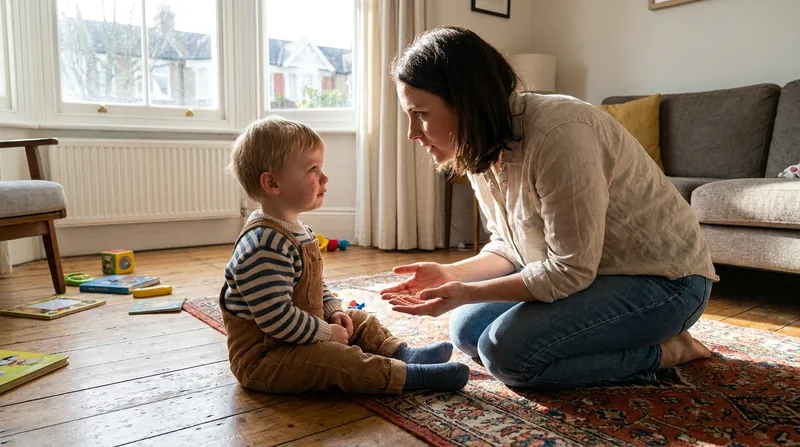
In this game, instead of a ball, what passes back and forth is attention, emotion, and language. When a baby babbles, points at a ceiling fan, or simply makes direct eye contact with an adult, they are serving. When an adult responds with a warm smile, a spoken word, or a gentle physical touch, they are returning the serve, keeping the developmental rally alive.[1][5]
To understand why this simple game matters so deeply, one must look at how the human brain organizes itself from birth. Brains are not simply born fully formed; they are built over time, much like the concrete foundation of a skyscraper.
In the first three years of life, the brain is exceptionally plastic, forming more than a million new neural connections every single second. These connections are entirely driven by experience and environment. When a child serves and a caregiver returns, the specific neural pathways associated with communication, social regulation, and emotional intelligence are actively reinforced and strengthened, laying the groundwork for all future learning.[1][4][6]
Conversely, the absence of this interaction has severe biological consequences. If a child repeatedly serves and the caregiver consistently fails to return—perhaps due to severe distraction, postpartum depression, or chronic environmental stress—the child's brain architecture can physically weaken. A persistent lack of responsiveness triggers the body's biological stress response, flooding the developing brain with cortisol.
Over time, this chronic stress can impair the development of social learning skills, emotional regulation, and memory functions. Serve and return interactions act as a sturdy biological buffer, deterring this toxic stress response and creating a physiological sense of safety that allows the brain to focus on growth rather than survival.[1][4][6]
The Harvard framework breaks this complex neurobiology down into five highly actionable steps for everyday caregivers. The first step is simply noticing the serve and sharing the child's focus of attention. A serve is not always a loud cry or a clear word; it can be incredibly subtle.
A squirm, a sudden frown, a reach toward a pet, or even a change in breathing patterns all count as serves. By paying close attention to what the child is focused on in that exact moment, the caregiver establishes a critical baseline of mutual interest and connection.[1][5]
The second step is returning the serve by supporting and encouraging the child's innate curiosity. This validates the child's experience, signaling to their developing nervous system that their thoughts and feelings matter. The third step—'give it a name'—is particularly crucial for early language acquisition. Even before a child can understand or speak words, a caregiver who verbally names what the child is looking at (for example, saying 'Yes, that is a big red dog!') helps the brain forge essential linguistic connections, linking visual stimuli to auditory vocabulary.[1]
The fourth step requires patience: taking turns and waiting. After returning a serve, the caregiver must intentionally pause. This waiting period is vital; it gives the infant the necessary cognitive time to process the interaction, form their own ideas, and prepare their next serve.
Rushing the interaction can overwhelm the child and shut down the rally. Finally, the fifth step involves practicing beginnings and endings. This means reading the child's cues to know when they are tired or ready to move on to a new activity, which fosters early independence and teaches the child that their boundaries are respected.[1]
Recent academic literature has expanded on the specific ways different caregivers influence this developmental process. A comprehensive study published in the National Library of Medicine examined 'serve and return' interactions between 9-month-old infants and both their mothers and fathers in diverse household settings.
The researchers found that both parents make unique, measurable contributions to a child's linguistic future, debunking the myth that only a primary maternal figure drives early communication skills. The data underscores that infants benefit immensely from a diverse network of responsive caregivers, each bringing slightly different interactional rhythms to the rally.[3][6]
The study revealed fascinating distinctions in how these rhythms impact brain development. Mothers who provided highly meaningful responses—returns that were semantically relevant to exactly what the child was focused on—had children with significantly higher expressive language skills at 18 months. Meanwhile, fathers who provided highly prompt responses (reacting within four seconds of the child's serve) positively influenced the child's receptive language scores. This suggests that the quality of the return (meaningfulness) and the speed of the return (promptness) both play distinct, critical roles in wiring the brain for comprehensive communication.[3][5]
In 2026, educational researchers writing in the journal Child Development Perspectives proposed extending the classic metaphor to 'Serve-Return-Rally-Learn' (SRRL). This updated framework emphasizes that the ultimate goal is not just a single back-and-forth exchange, but sustaining a longer, multi-turn rally.
These extended rallies create emotionally safe environments where children feel secure enough to take cognitive risks, experiment with new sounds, and explore complex ideas. The SRRL model is particularly influential in early childhood education settings, where sustained shared thinking between a teacher and a toddler is viewed as the gold standard for cognitive development.[2]
However, modern environments present unprecedented challenges to maintaining these rallies. The ubiquity of smartphones and digital screens frequently interrupts the caregiver's ability to notice a child's subtle serves. When a caregiver's attention is fractured by a device, the 'return' is often delayed, muted, or missed entirely.
While occasional missed serves are a normal part of life, a chronic pattern of digital distraction can accumulate, depriving the developing brain of the continuous feedback loops it requires to build strong neural pathways. Experts warn that the passive screen time of the parent can be just as detrimental to the child as putting the child in front of a screen.[6]
Despite the high stakes of brain development, developmental psychologists emphasize a deeply forgiving metric to combat parental anxiety: the 50 percent rule. Caregivers do not need to be perfectly attuned to their children at all times to ensure healthy development.
Extensive research suggests that being responsive to a child's serves just 50 percent of the time is entirely sufficient to build a secure attachment and healthy neural architecture. The brain is resilient, and it does not require flawless parenting; it simply requires a reliable, general pattern of responsiveness to feel safe and supported.[6]
This margin of error is a crucial comfort for exhausted, overworked parents. Serve and return is not about performing a rigid, exhausting educational task every waking minute; it is about the broader intention of connection.
It is a powerful reminder that the most sophisticated educational technology in the world cannot replicate the developmental power of a parent simply looking at their child, smiling, and waiting for a response. In an era of intense parenting pressure, the science of serve and return proves that simply being present and engaged is more than enough to build a thriving mind.[5][6]
Key terms
- Serve and return
- The reciprocal, back-and-forth communication loop between a child and a caregiver that builds neural pathways.
- Neural architecture
- The physical structure and pathways of the brain, which are shaped by early experiences and interactions.
- Expressive language
- A child's ability to use words, gestures, and facial expressions to communicate their wants and needs.
- Receptive language
- A child's ability to understand information, words, and sentences spoken by others.
- Cortisol
- A stress hormone that, when chronically elevated due to neglect or lack of responsiveness, can impair brain development.
- Serve-Return-Rally-Learn (SRRL)
- An extended framework emphasizing the importance of sustaining long, multi-turn interactions to promote deeper learning.
Frequently asked
What counts as a 'serve' from a baby?
A serve can be any attempt to communicate or show interest. This includes babbling, making eye contact, reaching, pointing, squirming, or even changing breathing patterns.
Do I need to talk constantly to my baby?
No. While naming objects is helpful, a 'return' can be entirely non-verbal. Smiling, making a facial expression, or gently touching the child are all highly effective returns.
What if I miss my child's cues because I'm busy?
Occasional missed serves are completely normal and harmless. Research shows that caregivers only need to be responsive about 50 percent of the time to foster secure attachment and healthy brain development.
Is this only important for infants?
While the first three years are the most critical window for foundational brain architecture, serve and return interactions remain vital for emotional regulation and complex learning throughout childhood.
Viewpoints in depth
Developmental Scientists
Focuses on the biological and neurological mechanisms of early childhood interactions.
For neurobiologists and developmental psychologists, 'serve and return' is not just a parenting philosophy; it is a measurable biological imperative. This camp focuses on how specific types of interactions trigger synaptic pruning and myelination in the infant brain. They rely on empirical data—such as cortisol swabs and language acquisition scores—to prove that responsive caregiving physically alters brain structure, buffering against toxic stress and laying the groundwork for executive function.
Early Childhood Educators
Focuses on applying reciprocal interaction frameworks in group care settings.
Educators and childcare professionals view the framework through the lens of classroom dynamics. For this group, the challenge is scaling 'serve and return' when one adult is managing multiple infants or toddlers. They advocate for the 'Serve-Return-Rally-Learn' (SRRL) extension, emphasizing that even brief, high-quality rallies of sustained shared thinking can compensate for the lack of constant one-on-one attention in a daycare environment.
Parenting Advocates
Focuses on translating the science into manageable, guilt-free practices for families.
Family advocates and clinical social workers emphasize the '50 percent rule' to combat modern parenting anxiety. They argue that while the science of brain architecture is vital, framing it as a high-stakes requirement can overwhelm exhausted parents. This camp focuses on the accessibility of the practice—highlighting that it requires no money, no special toys, and no perfection, just a general pattern of noticing and responding to a child's cues.
- Developmental Scientists
- Focuses on the biological and neurological mechanisms of early childhood interactions.
- Early Childhood Educators
- Focuses on applying reciprocal interaction frameworks in group care settings.
- Parenting Advocates
- Focuses on translating the science into manageable, guilt-free practices for families.
Perspectives this story doesn't cover
- Working parents managing extreme time poverty
- Caregivers of neurodivergent children who display non-traditional 'serves'
Sources
Source coverage
6 outlets
3 viewpoints surfaced






- [1]Harvard Center on the Developing ChildDevelopmental Scientists
5 Steps for Brain-Building Serve and Return
Read on Harvard Center on the Developing Child → - [2]Child Development PerspectivesEarly Childhood Educators
Serve-return-rally-learn: extending the serve and return metaphor in adult–child interactions
Read on Child Development Perspectives → - [3]National Library of MedicineDevelopmental Scientists
Mother-child and father-child 'serve and return' interactions at 9 months: Associations with children's language skills
Read on National Library of Medicine → - [4]Issues in Mental Health NursingParenting Advocates
History of 'Serve and Return' and a Synthesis of the Literature on Its Impacts on Children's Health and Development
Read on Issues in Mental Health Nursing → - [5]The Education HubEarly Childhood Educators
An introduction to serve and return in early childhood education
Read on The Education Hub → - [6]Factlen Editorial TeamParenting Advocates
Synthesis by Factlen editorial team
Read on Factlen Editorial Team →

More in Lifestyle
See all →Child Development
The Science of Toddler Tantrums: How the Prefrontal Cortex and Amygdala Drive Emotional Dysregulation
4 sources

Screen Time
Toddler Tech Breakthrough: Study Finds Digital Devices Offer 'Rich Opportunities' for Early Language Development
8 sources

Children's Privacy
How the FTC's Updated COPPA Rule is Reshaping Children's Online Privacy and Biometric Protections
2 sources

Parenting Science
The Science of 'Rupture and Repair': Why Perfect Parenting is Detrimental to Child Development
4 sources
Comments
Every angle. Every day.
Get Lifestyle stories with full source coverage and perspective breakdowns, free every day.