
The Rewilding Movement: How Reintroducing Keystone Species is Healing Ecosystems
Conservationists are shifting away from human micromanagement, relying instead on the reintroduction of ecosystem engineers like beavers and bison to naturally restore degraded landscapes and fight climate change.
By Factlen Editorial Team
- Conservation Biologists
- Advocates for restoring complex ecological webs by returning missing species.
- Climate Strategists
- Focuses on the carbon-capturing and disaster-mitigating potential of wild landscapes.
- Agricultural Communities
- Highlights the practical challenges and economic risks of living alongside returning wildlife.
What's not represented
- · Indigenous Land Stewards
- · Local Municipal Governments
Why this matters
As global biodiversity plummets and extreme weather intensifies, rewilding offers a cost-effective, self-sustaining solution. Understanding this shift is crucial as local communities increasingly share their landscapes with returning wildlife, and governments invest heavily in nature-based climate defenses.
Key points
- Rewilding shifts conservation from human micromanagement to allowing nature to self-regulate through the return of keystone species.
- The Eurasian beaver, extinct in the UK for 400 years, is successfully restoring wetlands, improving water quality, and reducing flood risks.
- Restored wild ecosystems act as massive carbon sinks, offering a scalable, nature-based solution to mitigate climate change.
- Reintroducing wildlife into human-dominated landscapes requires active coexistence strategies to protect agricultural livelihoods and infrastructure.
For decades, the dominant paradigm in environmental conservation was defensive: build a fence around a pristine area, keep humans out, and meticulously manage the landscape to preserve what was left. But as global biodiversity continues to plummet, a more dynamic and ambitious strategy has taken root. Known as "rewilding," this approach shifts the focus from human micromanagement to ecological self-regulation. Instead of acting as gardeners weeding a fragile plot, conservationists are stepping back and allowing natural processes to reclaim the landscape. The core philosophy is simple but radical: nature knows how to heal itself, provided it has the right tools. And the most powerful tools in nature's arsenal are not policies or technologies, but specific animals whose daily habits physically reshape the world around them.[7]
At the heart of the rewilding movement is the reintroduction of "keystone species." These are organisms that exert a disproportionately large influence on their environment relative to their abundance. When a keystone species is removed, the ecosystem dramatically changes or collapses; when it is returned, it triggers a biological chain reaction that breathes life back into degraded habitats. The International Union for Conservation of Nature (IUCN) notes that well-applied rewilding can restore ecosystems at a landscape scale, reversing biodiversity declines by allowing these crucial animals to resume their historical roles. By rebuilding the complex web of interactions that human disturbance severed, rewilding aims to create self-sustaining environments that require little to no ongoing human intervention.[1][7]
To understand rewilding, one must understand the "trophic cascade"—an ecological phenomenon triggered by the addition or removal of top predators or key herbivores. The classic example occurred in Yellowstone National Park, where the reintroduction of wolves in the 1990s fundamentally altered the landscape. The wolves kept elk populations in check and changed their grazing behavior, which allowed overgrazed willow and aspen trees to recover along riverbanks. This returning vegetation stabilized the soil, cooled the water, and brought back songbirds and beavers. Rewilding seeks to replicate these cascading benefits across various ecosystems by identifying and returning the specific missing link.[1][7]
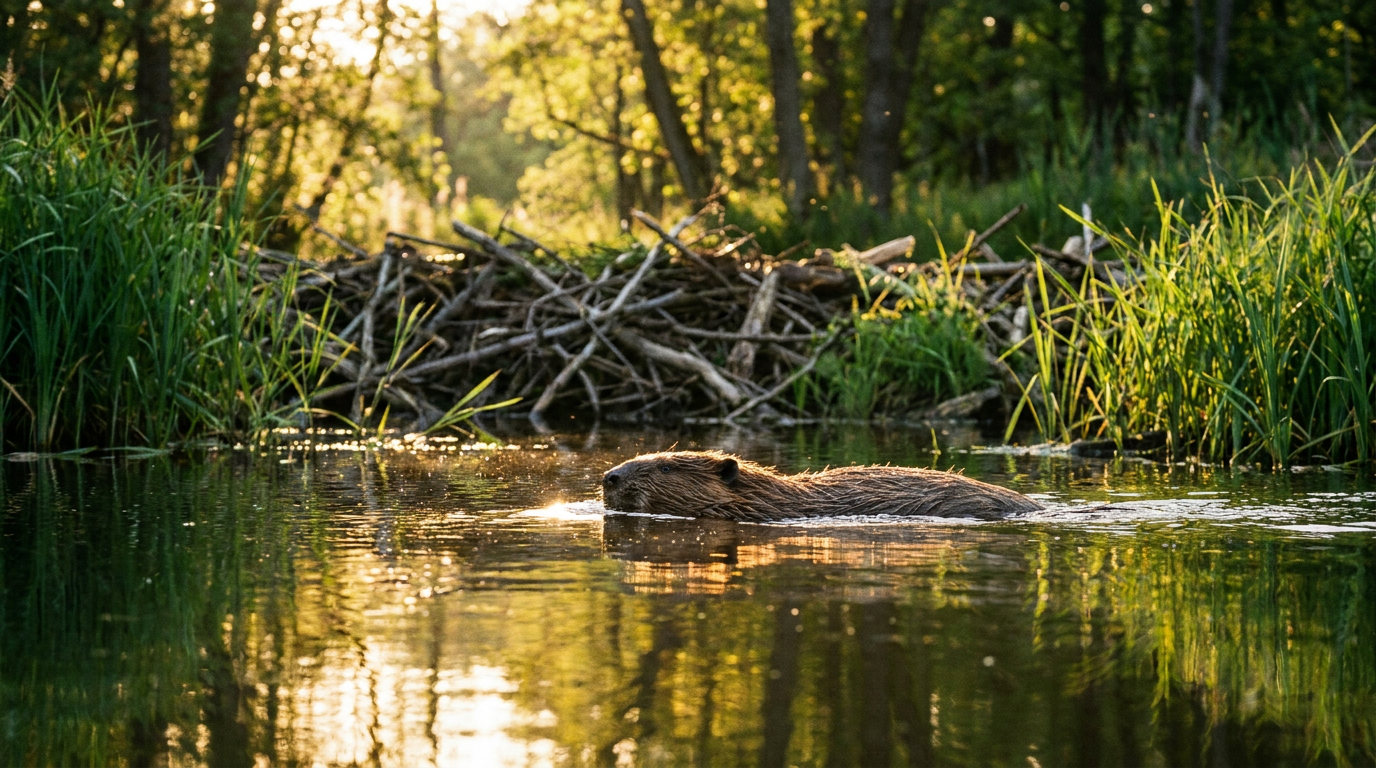
Nowhere is the transformative power of a keystone species more evident than in the return of the Eurasian beaver to the United Kingdom. Hunted to extinction in Britain over 400 years ago for its dense fur and castoreum—a glandular secretion used in perfumes and medicines—the beaver's absence left the region's waterways impoverished. Without them, rivers became fast-flowing, deeply incised channels prone to flash flooding and unable to support diverse aquatic life. Today, thanks to progressive legislation and targeted reintroduction programs, wild beavers are once again felling trees and building lodges across Scotland, England, and Wales.[2][4]

Beavers are unparalleled ecological engineers. Through their instinctual drive to build dams and dig canals, they transform simple streams into complex, braided wetlands. These newly created ponds trap sediment, preventing soil erosion from agricultural runoff from reaching the sea. The dams act as massive natural filters, capturing carbon and excess nutrients, which significantly improves downstream water quality. Furthermore, by slowing the flow of water during heavy rains, beaver wetlands act as giant sponges, ameliorating the risk of catastrophic flooding in downstream human communities while storing vital water reserves for periods of drought.[2][3]
The empirical evidence supporting the beaver's return is robust. The Freshwater Biological Association highlights that scientific trials, such as the landmark River Otter beaver project in Devon, have demonstrated profound ecological benefits. Researchers found that the presence of beavers led to a surge in local biodiversity. Insect populations exploded, providing food for returning amphibians, bats, and breeding birds. Even fish populations, which some anglers feared would be blocked by dams, have thrived; studies show that young salmon grow faster and are in better condition in the nutrient-rich, sheltered waters of beaver ponds. Crucially, beavers are strict herbivores, feeding entirely on woody vegetation and aquatic plants, posing no predatory threat to fish or other wildlife.[2][4]
The empirical evidence supporting the beaver's return is robust.
The rewilding philosophy extends far beyond aquatic rodents. Across the globe, conservationists are reintroducing large herbivores and apex predators to restore terrestrial balance. In Europe, the European bison—the continent's largest land mammal—is being returned to forests in Romania and the UK, where their grazing habits clear dense underbrush and create sunlit glades that support diverse plant and insect life. In North America, organizations like The Wildlands Conservancy are successfully expanding herds of Tule elk in California. These endemic herbivores manage grassland ecosystems through their grazing and movement, reducing wildfire fuel loads and supporting a wide array of dependent species.[6][7]

The strategy also extends to the skies and the forest floor. Re:wild's global initiatives highlight the importance of diverse ecological roles, from the California Condor—North America's largest scavenger, which removes carcasses and limits the spread of disease—to the Black Lion Tamarin, a primary seed-disperser crucial for regenerating the fragmented canopies of the Atlantic Forest. Even elusive species like the Vietnam Pheasant play a vital role by rustling leaf-litter and renewing understory life. Every species returned to its native habitat acts as a cog in a vast, self-regulating biological machine.[5]
Beyond biodiversity, rewilding has emerged as a highly scalable, nature-based solution to the climate crisis. The Global Rewilding Alliance emphasizes that climate stability and biodiversity restoration are fundamentally intertwined. Degraded landscapes lose their ability to sequester carbon, but healthy, wild ecosystems capture and store vast amounts of atmospheric CO2. When keystone species restore wetlands, grasslands, and successional forests, they effectively rebuild the earth's natural carbon sinks. This biological carbon sequestration is increasingly viewed as a critical, cost-effective complement to technological emissions reductions.[1][3]
However, the transition back to wilder landscapes is not without friction. Reintroducing ecosystem engineers into environments that have been heavily modified by humans for centuries inevitably creates conflict. The Freshwater Biological Association notes that while beavers provide immense overall benefits, their dam-building can cause localized flooding of prime agricultural land or undermine human infrastructure. In a densely populated country like the UK, a beaver's instinct to block a culvert can quickly become a costly headache for local councils and farmers, sparking intense debates about land use and property rights.[4][7]
Addressing these conflicts requires a shift from pure conservation to active coexistence management. Scotland's National Beaver Strategy, published in 2022, represents a blueprint for this balance. It outlines a vision for wider beaver restoration while providing frameworks for appropriate management and mitigation when human livelihoods are impacted. Techniques such as installing "beaver deceivers"—pipes that regulate water levels behind dams without destroying the habitat—allow communities to reap the flood-prevention benefits of beaver wetlands while protecting their own assets. Successful rewilding ultimately depends on building trust with the rural communities who share the landscape with these returning species.[4][7]

The momentum behind rewilding is increasingly backed by significant institutional funding and international cooperation. In early 2026, the Colossal Foundation, in partnership with the conservation group Re:wild, opened applications for a global Species Reintroduction Fund. Offering $250,000 annually to established projects, the fund targets the recovery of at-risk keystone species in biodiversity hotspots. By providing not just financial support but also access to genetic tools and international conservation expertise, initiatives like this are accelerating the pace at which degraded ecosystems can be repaired.[5]
This surge in rewilding efforts aligns seamlessly with broader global environmental targets, most notably the 30x30 initiative, which aims to conserve 30 percent of the Earth's lands and coastal waters by the year 2030. Achieving this ambitious goal requires more than just drawing lines on a map to protect existing wilderness; it demands the active restoration of millions of hectares of degraded land. Rewilding provides a proven, evidence-based methodology to transform these depleted areas back into thriving, resilient ecosystems capable of supporting both wildlife and human populations.[6][7]
Ultimately, the rewilding movement offers something that has been in short supply in modern environmental discourse: practical, scalable hope. By trusting in nature's inherent capacity to recover and strategically returning the keystone species that drive ecological health, humanity can move beyond merely slowing the rate of environmental decline. Rewilding demonstrates that with thoughtful intervention and a willingness to share the landscape, it is entirely possible to reverse centuries of damage, revitalize the planet's life-support systems, and ensure a vibrant, biodiverse future.[3][7]
How we got here
16th Century
The Eurasian beaver is driven to extinction in Britain due to relentless hunting for its fur and castoreum.
2009
Beavers are formally reintroduced into Knapdale, Scotland, marking the first authorized mammal reintroduction in the UK.
2020
The River Otter beaver trial in Devon concludes, providing robust scientific evidence of the species' ecological benefits.
2022
Scotland publishes its National Beaver Strategy, establishing a framework to balance ecological restoration with agricultural protection.
January 2026
The Colossal Foundation and Re:wild launch a global Species Reintroduction Fund to accelerate the return of keystone animals.
Viewpoints in depth
Conservation Biologists
Advocates for restoring complex ecological webs by returning missing species.
For conservation biologists, the traditional model of fencing off declining habitats is no longer sufficient. They argue that ecosystems are dynamic machines that require all their moving parts to function correctly. By reintroducing keystone species—whether apex predators like wolves or ecosystem engineers like beavers—biologists aim to trigger trophic cascades that naturally suppress invasive species, encourage native plant growth, and build resilience against disease. Their ultimate goal is to create self-sustaining landscapes that do not rely on perpetual human funding and micromanagement.
Climate Strategists
Focuses on the carbon-capturing and disaster-mitigating potential of wild landscapes.
Climate strategists view rewilding through the lens of nature-based solutions to global warming. They point to data showing that degraded lands emit carbon, while restored wetlands, peatlands, and old-growth forests act as massive carbon sinks. Furthermore, as extreme weather events become more frequent, strategists advocate for rewilding as a cost-effective infrastructure investment. A network of beaver dams, for instance, can slow floodwaters and retain drought reserves far more cheaply and adaptively than pouring millions of dollars into concrete flood defenses.
Agricultural Communities
Highlights the practical challenges and economic risks of living alongside returning wildlife.
Farmers and rural landowners often bear the immediate costs of rewilding initiatives. While they may acknowledge the broad ecological benefits, agricultural communities point out that modern landscapes are heavily modified for food production. A beaver dam that creates a beautiful wetland can simultaneously flood a profitable crop field or undermine a vital access road. This camp argues that rewilding cannot be a hands-off romantic ideal; it requires robust, state-funded management plans, rapid-response teams to mitigate infrastructure damage, and fair financial compensation for landowners whose livelihoods are impacted by returning species.
What we don't know
- How climate change and shifting temperature zones will affect the long-term survival of newly reintroduced species.
- The exact economic cost of compensating landowners for property damage caused by ecosystem engineers on a national scale.
- How complex trophic cascades will behave in modern, highly fragmented landscapes compared to historical, untouched wilderness.
Key terms
- Rewilding
- A conservation strategy focused on restoring natural processes and returning missing species so ecosystems can regulate themselves with minimal human intervention.
- Keystone Species
- A species on which other species in an ecosystem largely depend, such that if it were removed the ecosystem would change drastically.
- Trophic Cascade
- An ecological phenomenon triggered by the addition or removal of top predators, which causes powerful indirect effects that ripple down through the food web.
- Ecosystem Engineer
- Any organism that creates, significantly modifies, maintains, or destroys a habitat, such as a beaver building a dam.
- Carbon Sequestration
- The process of capturing and storing atmospheric carbon dioxide, a vital function performed by healthy, wild ecosystems.
Frequently asked
What exactly is a keystone species?
A keystone species is an organism that has a disproportionately large impact on its environment. Removing them causes the ecosystem to collapse, while returning them helps the habitat thrive.
Do beavers eat fish and harm local rivers?
No, beavers are strict herbivores that eat woody vegetation and aquatic plants. Their dams actually create sheltered, nutrient-rich pools where young fish grow faster.
How does rewilding help fight climate change?
By restoring natural habitats like wetlands and forests, rewilding rebuilds the earth's natural carbon sinks, allowing these ecosystems to capture and store vast amounts of atmospheric CO2.
Does rewilding mean abandoning land completely?
No. While the goal is to let nature self-regulate, rewilding in human-dominated landscapes requires active management, such as installing pipes in beaver dams to prevent the flooding of farmland.
Sources
Source coverage
7 outlets
3 viewpoints surfaced







[1]IUCNConservation Biologists
The benefits and risks of rewilding
Read on IUCN →[2]Rewilding Britain
Eurasian beaver: Nature's awesome ecological engineer
Read on Rewilding Britain →[3]Global Rewilding AllianceClimate Strategists
Rewilding Superpowers: Climate, Biodiversity, and Resilience
Read on Global Rewilding Alliance →[4]Freshwater Biological AssociationAgricultural Communities
Beaver reintroduction and management in Britain
Read on Freshwater Biological Association →[5]Re:wildConservation Biologists
The Species Reintroduction Fund
Read on Re:wild →[6]The Wildlands ConservancyConservation Biologists
Rewilding at The Wildlands Conservancy
Read on The Wildlands Conservancy →[7]Factlen Editorial Team
Synthesis by Factlen editorial team
Read on Factlen Editorial Team →
Every angle. Every day.
Get environment stories with full source coverage and perspective breakdowns delivered to your inbox.