
U.S. and Iranian Delegations Open High-Stakes Peace Talks in Switzerland
Vice President JD Vance and U.S. envoys have arrived in Switzerland for critical negotiations with Iranian officials aimed at ending the 114-day conflict. The talks, mediated by Qatar and Pakistan, face immediate hurdles over recent strikes in Lebanon and the status of the Strait of Hormuz.
By Factlen Editorial Team
- U.S. Administration
- Focused on securing a durable peace treaty and highlighting economic recovery ahead of the midterms.
- Iranian Government
- Demanding an end to regional military strikes and immediate relief from economic sanctions.
- U.S. Opposition
- Critical of the administration for starting an economically damaging war they view as unnecessary.
What's not represented
- · Lebanese government officials affected by the regional strikes.
- · European energy importers reliant on stability in the Strait of Hormuz.
Why this matters
A durable peace agreement would stabilize global energy markets heavily disrupted by the 114-day conflict and avert a broader regional war involving Lebanon and Israel. Domestically, the economic fallout and subsequent recovery from the war are poised to be the defining issues of the upcoming U.S. midterm elections.
Key points
- U.S. and Iranian officials are meeting in Switzerland to negotiate a permanent end to the 114-day war.
- Vice President JD Vance, Jared Kushner, and Steve Witkoff are leading the U.S. delegation.
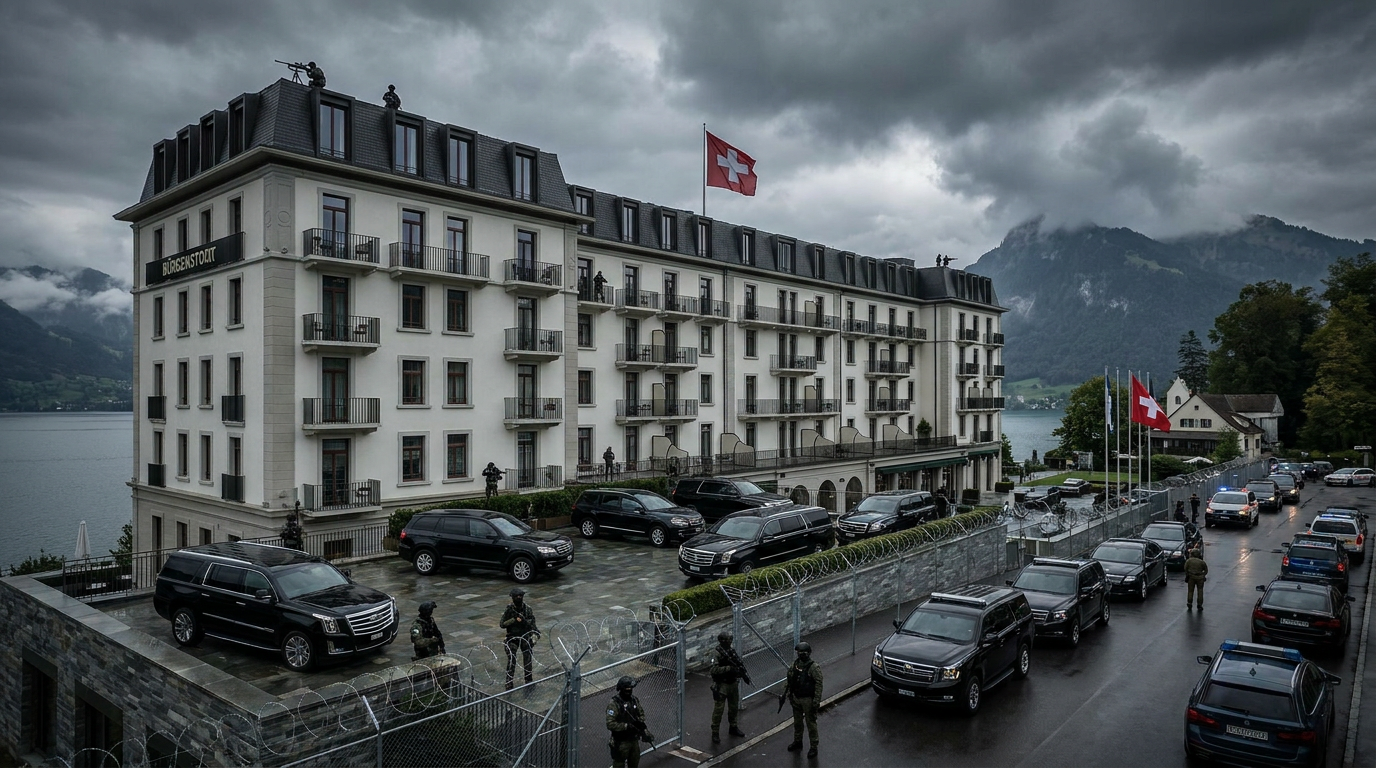
- Qatar and Pakistan are mediating the high-stakes talks at the Bürgenstock resort.
- Recent military strikes in Lebanon and tensions in the Strait of Hormuz threaten to complicate negotiations.
- The outcome of the talks is expected to heavily influence the upcoming U.S. midterm elections.
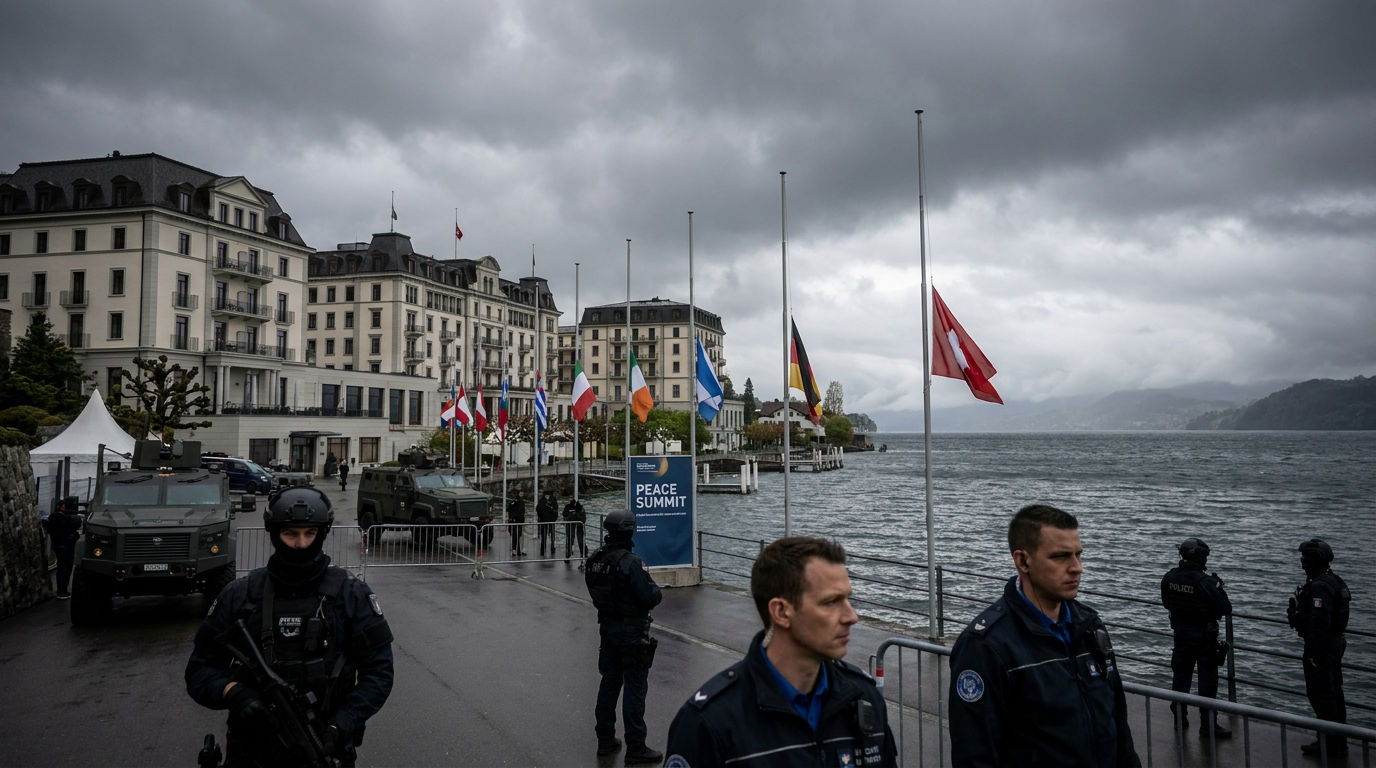
U.S. and Iranian delegations have converged on the Bürgenstock resort in Switzerland for high-stakes negotiations aimed at permanently ending the 114-day war. Vice President JD Vance arrived on Sunday to join U.S. envoys Jared Kushner and Steve Witkoff, marking the highest-level diplomatic engagement since the conflict began.[1][2][3]
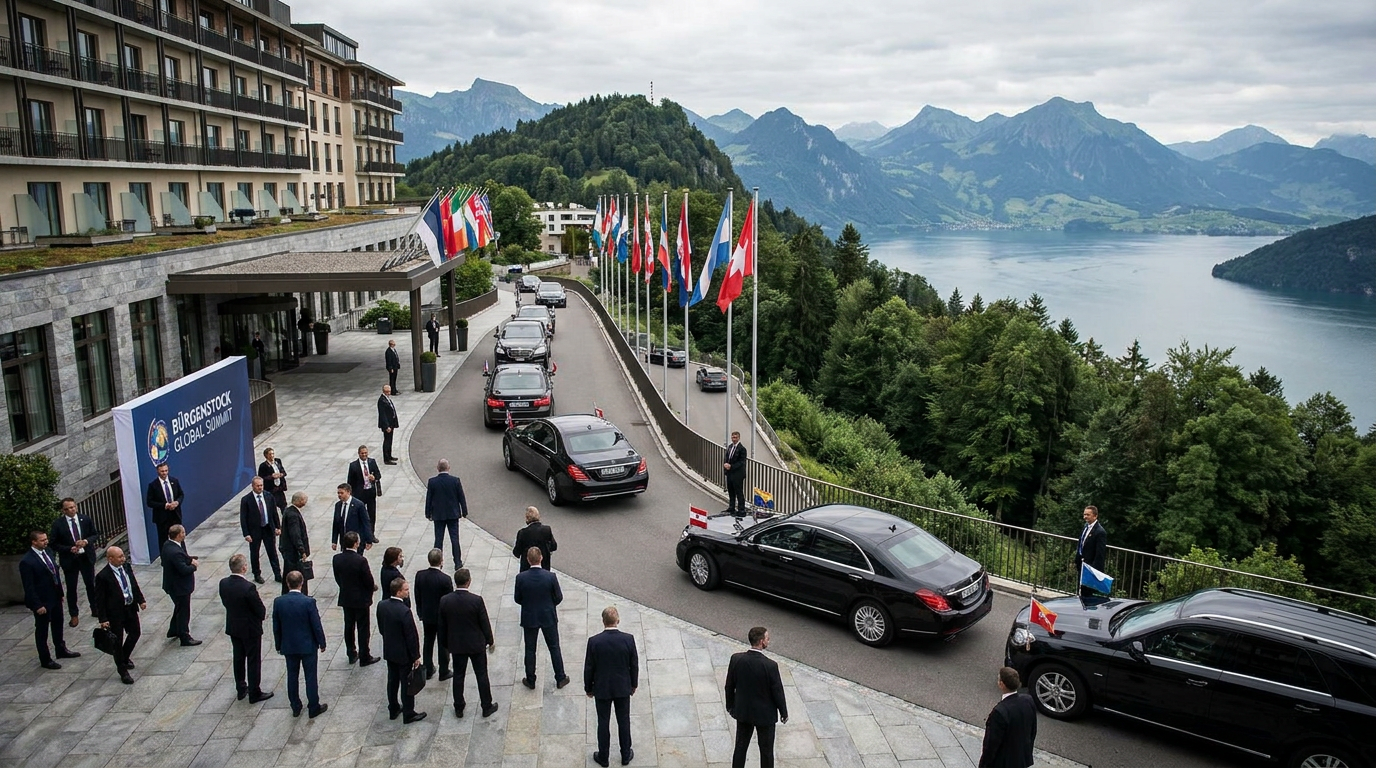
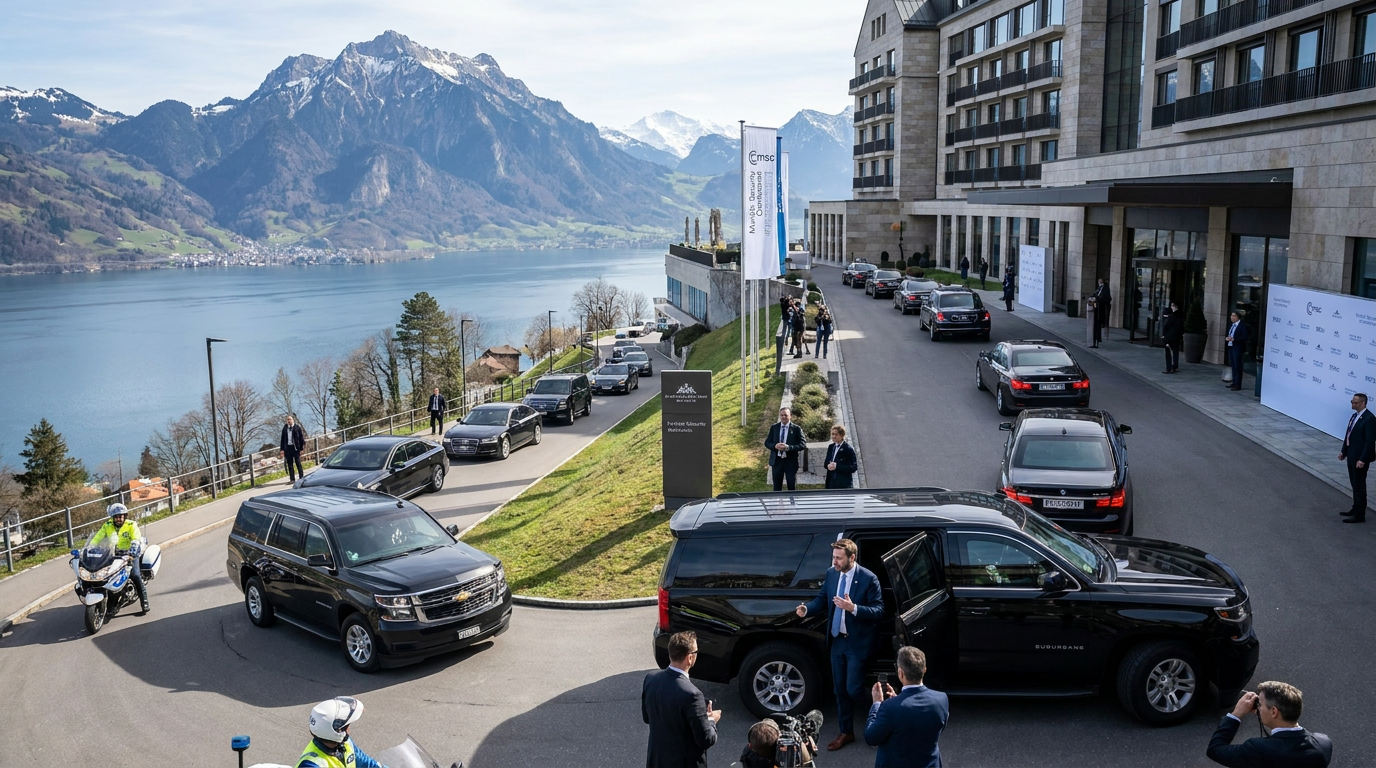
The talks, mediated by diplomatic teams from Qatar and Pakistan, are designed to reinforce a fragile Memorandum of Understanding and transition it into a durable peace agreement. Swiss authorities have secured the alpine venue, continuing the country's long-standing tradition of hosting back-channel and direct negotiations between adversarial nations.[2][5][6]
However, the agenda is already fraught with immediate regional flashpoints. Iranian officials have publicly slammed recent Israeli military strikes in Lebanon, characterizing them as direct violations of the interim agreements that paved the way for the Swiss summit. Lebanon is expected to top the agenda as negotiators attempt to de-escalate the broader regional spillover.[2][5]

Compounding the tension is renewed confusion over the operational status of the Strait of Hormuz. The critical maritime chokepoint has been a central theater of the conflict, and ensuring the unhindered flow of global energy supplies remains a primary objective for the U.S. delegation as they sit down with their Iranian counterparts.[1]
The diplomatic push in Europe is inextricably linked to the domestic political calendar in the United States. The Trump administration is eager to finalize a definitive end to the war ahead of the midterm elections, pointing to recently falling gas prices as evidence that their pressure campaign and subsequent negotiations are yielding tangible benefits for American consumers.[3][4]

The diplomatic push in Europe is inextricably linked to the domestic political calendar in the United States.
Congressional Democrats, however, are aggressively challenging that narrative on the campaign trail. Opposition leaders argue that the president initiated an economically painful and unnecessary war that severely disrupted global markets, asserting that the current diplomatic off-ramp has achieved nothing positive that could not have been secured without military conflict.[4]
For Tehran, the stakes are equally existential. After 114 days of sustained military and economic pressure, the Iranian delegation is seeking immediate relief from sanctions and a binding commitment to halt allied military operations in neighboring proxy theaters, particularly Lebanon.[2][5]
The presence of Vance, Kushner, and Witkoff underscores the White House's reliance on a tight circle of trusted envoys to handle its most sensitive foreign policy portfolios. Their mandate is to bridge the gap between the interim ceasefire and a permanent cessation of hostilities, a task complicated by the deep mistrust between the two capitals.[3]

Mediators from Qatar and Pakistan face the complex challenge of keeping both sides at the table if early sessions stall over the Lebanon dispute. Both mediating nations have significant leverage and established communication channels with Tehran, which U.S. officials hope will prevent the talks from collapsing over procedural or immediate tactical disagreements.[2]
As the first plenary sessions commence, global markets are watching closely. A breakdown in Switzerland could trigger an immediate spike in crude oil prices and a resumption of full-scale hostilities, while a breakthrough would likely cement the current fragile stability in the Middle East and reshape the political landscape in Washington.[1][4]
How we got here
Early 2026
Hostilities break out, initiating what would become a 114-day conflict between the U.S. and Iran.
June 2026
An interim Memorandum of Understanding is reached, pausing major combat operations.
June 20, 2026
U.S. and Iranian officials announce they will meet in Switzerland for formal peace talks.
June 21, 2026
Vice President JD Vance arrives in Switzerland to join U.S. envoys for the start of negotiations.
Viewpoints in depth
U.S. Administration's View
The White House views the talks as the final step in securing a durable peace and stabilizing the economy.
Administration officials and aligned envoys argue that the 114-day pressure campaign has successfully forced Tehran to the negotiating table on favorable terms. By sending a high-level delegation including Vice President Vance, the administration aims to quickly convert the interim Memorandum of Understanding into a permanent treaty. Domestically, they are framing the recent drop in gas prices as direct proof that their strategy is working, providing crucial relief to American consumers just months before the midterm elections.
Iranian Delegation's View
Tehran is prioritizing an immediate halt to regional strikes and relief from economic pressure.
Iranian negotiators are approaching the Swiss summit with a focus on regional security and sanctions relief. They have strongly condemned recent Israeli military operations in Lebanon, viewing them as a breach of the interim agreements that enabled the talks. For Iran, a successful negotiation must include binding guarantees that allied military actions in neighboring countries will cease, alongside the unfreezing of assets and the lifting of war-time economic restrictions.
U.S. Congressional Democrats
Opposition lawmakers argue the war was an unnecessary crisis that damaged the U.S. economy.
Democratic leaders are highly critical of the administration's overarching strategy, arguing that the 114-day conflict was a self-inflicted wound. They contend that the war caused severe, avoidable economic pain—particularly through energy market disruptions—and that the current diplomatic agreements achieve nothing that could not have been secured through earlier diplomacy. They view the administration's celebration of falling gas prices as merely recovering ground lost due to the president's own policies.
What we don't know
- Whether Iran will walk away from the table if military strikes in Lebanon continue.
- The specific terms of the Memorandum of Understanding that the delegations are attempting to finalize.
- How global energy markets will react if the negotiations stall or collapse.
Key terms
- Strait of Hormuz
- A crucial maritime chokepoint between the Persian Gulf and the Gulf of Oman through which a significant portion of the world's oil supply passes.
- Memorandum of Understanding (MoU)
- A formal agreement between two or more parties that establishes a framework for cooperation, often used as a stepping stone to a binding treaty.
Frequently asked
Who is mediating the peace talks?
The negotiations in Switzerland are being mediated by diplomatic delegations from Qatar and Pakistan.
Who is representing the United States?
The U.S. delegation is being led by Vice President JD Vance, alongside special envoys Jared Kushner and Steve Witkoff.
Why is Lebanon being discussed?
Iran has accused allied forces of conducting military strikes in Lebanon, which Tehran views as a violation of the interim agreements that led to the peace talks.
Sources
Source coverage
6 outlets
3 viewpoints surfaced




[1]The New York TimesU.S. Opposition
U.S. and Iranian Officials to Meet for Peace Talks in Switzerland
Read on The New York Times →[2]Al JazeeraIranian Government
Iran war day 114: US, Iranian delegations in Switzerland for key talks
Read on Al Jazeera →[3]Fox NewsU.S. Administration
JD Vance arrives in Switzerland to join Kushner and Witkoff for new round of Iran negotiations
Read on Fox News →How Trump’s Fragile Agreement With Iran Is Shaping the Midterms
Read on The New York Times - Politics →Vance arrives in Switzerland for US-Iran talks
Read on Al Jazeera English →[6]Swiss Federal Department of Foreign Affairs
Switzerland's Good Offices and Peace Promotion
Read on Swiss Federal Department of Foreign Affairs →
More in news politics
See all 5 stories →U.S.-Iran Talks
U.S. and Iran Open High-Stakes Talks in Switzerland as Strait of Hormuz Remains Closed
6 sources
US-Iran Talks
US-Iran Talks Open in Switzerland as Dispute Erupts Over Strait of Hormuz Closure
8 sources
Strait of Hormuz
US-Iran Talks Begin in Switzerland as Tehran Claims Closure of the Strait of Hormuz
8 sources
Every angle. Every day.
Get news politics stories with full source coverage and perspective breakdowns delivered to your inbox.