
How to Choose an Electric Bike: The 2026 Guide to Motors, Batteries, and Safety
Navigating the 2026 e-bike market requires looking past flashy wattage numbers to understand motor torque, battery capacity, and mandatory fire safety certifications.
By Factlen Editorial Team
- Urban Commuters
- Value reliability, low maintenance, and weather protection, often preferring simple hub motors or efficient mid-drives for flat city routes.
- Off-Road Enthusiasts
- Prioritize high torque, robust suspension, and a natural ride feel, exclusively favoring mid-drive motors for technical trails.
- Safety Regulators
- Focus strictly on UL 2849 certification and battery management systems to prevent lithium-ion fires in residential buildings.
- Budget-Conscious Buyers
- Seek the best range and power per dollar, often weighing cheaper hub-drive models against long-term maintenance costs.
What's not represented
- · Traditional Cycling Purists
- · Local Bike Shop Mechanics
Why this matters
Purchasing an e-bike is a significant investment that can replace a car for daily transit, but buying the wrong model leads to wasted money and potential safety hazards. Understanding motor types, battery metrics, and mandatory fire safety certifications ensures you buy a reliable, capable machine tailored to your actual life.
Key points
- E-bikes are categorized by purpose: commuter, e-MTB, cargo, and folding.
- Mid-drive motors offer superior hill-climbing and a natural feel by utilizing the bike's gears.
- Hub motors are more affordable and often feature throttles, but can affect weight distribution.
- Torque (measured in Nm) is a more accurate indicator of real-world power than wattage.
- UL 2849 certification is now essential to ensure electrical and fire safety.
- Hydraulic disc brakes are mandatory for safely stopping heavy e-bikes at high speeds.
The electric bicycle market in 2026 has matured past the era of novelty gadgets and cheap, disposable imports. Today, e-bikes are legitimate transportation tools, capable of replacing cars for daily commutes, hauling heavy cargo, and conquering steep mountain trails. But as the technology has advanced, so has the complexity of choosing the right model. Buyers are often overwhelmed by an alphabet soup of specifications—watt-hours, torque ratings, cadence sensors, and safety certifications.[1]
The most common mistake consumers make is shopping by specifications before defining their actual needs. A high-powered, fat-tire adventure bike might look impressive on a showroom floor, but if its primary use is a five-mile commute on flat city streets, its heavy frame and sluggish acceleration will quickly become a burden. Navigating the 2026 e-bike landscape requires understanding how different components dictate the riding experience, starting with the fundamental geometry and purpose of the bike.[1][4]
E-bikes are generally divided into four primary categories, each engineered for a specific duty cycle. Commuter and urban bikes prioritize an upright riding position, integrated lighting, fenders, and racks. They are designed for efficiency and weather protection on paved roads. E-mountain bikes (e-MTBs), by contrast, feature robust suspension systems, high-torque motors, and reinforced frames to handle the structural stress of off-road trails.[4]
For utility, cargo e-bikes have surged in popularity as true car replacements. These feature elongated frames, high payload capacities, and dual-battery options, making them ideal for grocery runs or transporting children. Finally, folding e-bikes cater to apartment dwellers and multi-modal commuters who need to carry their bikes onto trains or store them in tight spaces. Selecting the correct category is the mandatory first step; a mismatched bike will inevitably lead to buyer's remorse.[4]

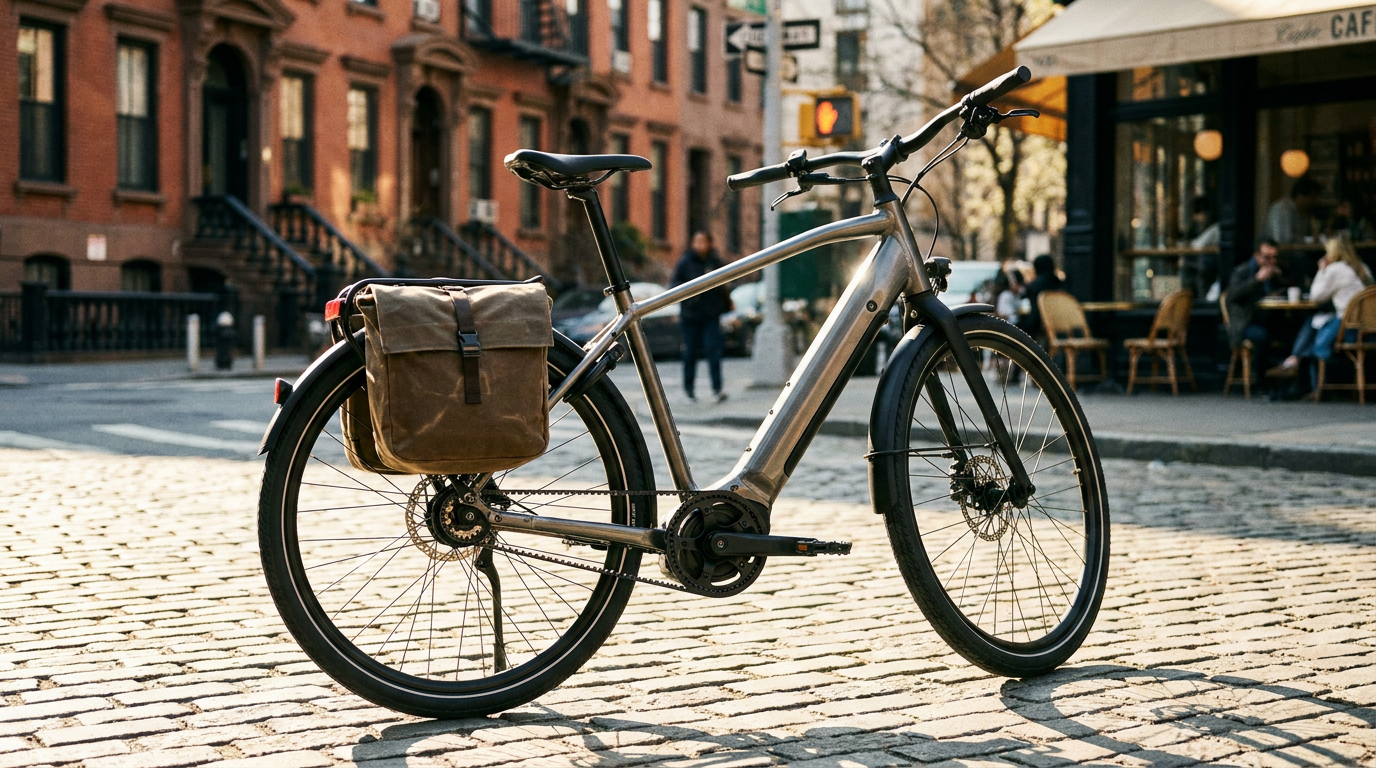
Once the category is chosen, the most consequential engineering decision is the motor type. The market is split between hub-drive motors and mid-drive motors, and the difference fundamentally alters how the bike feels and performs. Hub motors are encased within the center of either the front or rear wheel. They operate independently of the bicycle's gears, directly driving the wheel.[3]
Hub motors are prized for their simplicity, reliability, and cost-effectiveness. Because they do not interact with the bike's drivetrain, they cause less wear on the chain and cassette. They also frequently feature a throttle, allowing the rider to accelerate without pedaling—a major advantage for riders with limited mobility or those who want a sweat-free commute. However, because they add unsprung weight to the wheel, they can negatively impact the bike's handling and suspension performance over rough terrain.[3][7]
Mid-drive motors, conversely, are mounted at the bike's bottom bracket, directly between the pedals. This placement keeps the bike's center of gravity low and perfectly balanced. More importantly, a mid-drive motor transfers its power through the bicycle's existing chain and gears. This allows the motor to leverage mechanical advantage, much like a driver downshifting a manual transmission car to climb a steep hill.[3][7]
By utilizing the bike's gearing, mid-drive motors operate far more efficiently at various speeds, resulting in superior hill-climbing ability and extended battery range. They also provide a much more natural riding experience, amplifying the rider's pedaling effort rather than feeling like a motorcycle pulling the bike forward. The trade-offs are a higher upfront cost, increased wear on drivetrain components, and the requirement that the rider actively shift gears to prevent stalling the motor.[3][7]

By utilizing the bike's gearing, mid-drive motors operate far more efficiently at various speeds, resulting in superior hill-climbing ability and extended battery range.
The feel of the motor is also dictated by its sensors. Hub motors typically rely on cadence sensors, which act like an on/off switch: once the pedals start turning, the motor delivers a predetermined amount of power. Mid-drive systems almost exclusively use torque sensors, which measure exactly how hard the rider is pushing on the pedals and deliver proportional assistance. Push lightly, and the motor hums gently; stand on the pedals for a sprint, and the motor surges with maximum power.[3]
When evaluating motor power, buyers are often misled by wattage ratings. Manufacturers frequently advertise 750W motors as a selling point, but watts only tell half the story—they primarily dictate top speed. For real-world performance, torque is the critical metric. Measured in Newton-meters (Nm), torque is the rotational force that gets a heavy bike moving from a standstill and powers it up steep inclines.[5]
Think of watts as horsepower and torque as the muscle. A low-torque motor producing 30 to 40 Nm is perfectly adequate for flat urban commutes and lightweight folding bikes. A mid-torque motor offering 50 to 60 Nm hits the sweet spot for moderate hills and general use. However, for hauling cargo, tackling mountain trails, or moving a heavy fat-tire bike, a high-torque motor of 80 Nm or more is essential. A 500W motor with high torque will easily outperform a 750W motor with low torque on a steep climb.[5]

Powering these motors are lithium-ion battery packs, the single most expensive component of an e-bike. Battery capacity is measured in watt-hours (Wh), which is calculated by multiplying the battery's voltage by its amp-hours. The watt-hour rating is the true size of the energy tank. A 400 Wh battery is generally sufficient for daily urban use and short commutes, while 500 to 625 Wh is the standard for longer trekking and mixed routes.[4]
Real-world range is notoriously difficult to predict, as it depends heavily on rider weight, terrain, wind, and the level of pedal assistance used. A practical rule of thumb for 2026 buyers is to calculate their maximum daily round-trip distance and double it. If a commute is 10 miles each way, the bike needs to comfortably deliver 40 miles of real-world range to account for battery degradation over time, cold weather efficiency drops, and the buffer needed to avoid range anxiety.[1][4]
Beyond performance, the most critical shift in the 2026 e-bike market is the strict enforcement of electrical safety standards, specifically UL 2849. In previous years, the market was flooded with uncertified, low-cost lithium-ion batteries that posed severe fire risks. Thermal runaway events in poorly manufactured batteries led to devastating fires, prompting sweeping legislative changes across the country.[2][6]
UL 2849 is a comprehensive safety standard developed by Underwriters Laboratories. It does not just test the battery; it rigorously evaluates the entire electrical drive train, including the battery management system, motor, charger, and wiring. It ensures the system is protected against overcharging, short circuits, and electrical isolation failures. A related standard, UL 2271, specifically tests the safety and durability of the lithium-ion battery cells themselves.[2][8]

In 2026, purchasing an e-bike without UL 2849 certification is a massive liability. Major municipalities, including New York City, have legally mandated that all e-bikes sold or leased must be certified by a Nationally Recognized Testing Laboratory. Furthermore, countless apartment buildings, university campuses, and corporate offices now strictly prohibit the storage or charging of uncertified e-bikes on their premises.[2][6]
Finally, the increased weight and speed of e-bikes necessitate robust mechanical components, particularly brakes. An e-bike can easily weigh between 50 and 80 pounds, and traveling at sustained speeds of 20 mph requires significant stopping power. Traditional rim brakes are entirely inadequate for this task, and even basic mechanical disc brakes can struggle under heavy loads.[4][5]
Hydraulic disc brakes are now considered the non-negotiable standard for any mid-to-high-tier e-bike. Unlike mechanical disc brakes, which use a steel cable that can stretch and degrade, hydraulic systems use fluid to transfer force from the lever to the brake caliper. This provides superior modulation, requires less hand strength, and ensures reliable stopping power in wet or muddy conditions.[4][5]

Ultimately, an e-bike is a significant investment in personal mobility. While spec sheets and buying guides provide the technical foundation, they cannot replace the tactile experience of a test ride. Evaluating how the motor engages, how the frame fits, and the quality of the dealer's after-sales support are the final, crucial steps in transitioning from a traditional bicycle to the electric era.[1][4]
How we got here
2010s
Early consumer e-bikes rely heavily on rudimentary hub motors and basic cadence sensors.
2018
Mid-drive motors become the gold standard for premium e-mountain bikes due to their superior torque management.
2022
Surges in lithium-ion battery fires prompt initial calls for stricter regulations on imported e-bikes.
2023
New York City passes Initiative 663-A, legally mandating UL 2849 certification for all e-bikes sold or leased in the city.
2026
UL 2849 becomes the de facto national standard, with major retailers and property managers refusing uncertified models.
Viewpoints in depth
Urban Commuters' Priorities
City riders prioritize low maintenance, weather protection, and seamless integration into daily life.
For the daily commuter, raw power takes a backseat to reliability and convenience. This demographic heavily favors bikes with integrated fenders, robust cargo racks, and built-in lighting systems. Because urban routes are often relatively flat, many commuters opt for hub-drive motors, which are less expensive and require less drivetrain maintenance than mid-drive systems. The inclusion of a throttle is also highly valued, allowing riders to accelerate away from traffic lights quickly without breaking a sweat in their work clothes.
Off-Road Enthusiasts' Demands
Trail riders demand high torque, balanced weight distribution, and a natural pedal feel.
Electric mountain biking requires a completely different engineering approach. Off-road riders exclusively favor mid-drive motors because they leverage the bike's gearing to conquer steep, technical climbs that would stall a hub motor. Furthermore, keeping the motor's weight centered at the bottom bracket preserves the bike's natural center of gravity, allowing for agile handling over rocks and roots. Torque sensors are mandatory in this category, as riders need precise, instantaneous power delivery that matches their pedaling effort without unexpected surges.
Safety Regulators' Mandates
Regulators and fire officials are focused on eliminating the severe risks posed by uncertified lithium-ion batteries.
Following a wave of devastating battery fires in densely populated areas, safety regulators have fundamentally reshaped the e-bike market. Their primary tool is the enforcement of the UL 2849 standard, which requires rigorous third-party testing of the entire electrical system. Regulators argue that self-declared safety claims from overseas manufacturers are insufficient. By legally mandating UL certification for sales and indoor storage, they aim to force low-quality, fire-prone models out of the market entirely, prioritizing public safety over consumer affordability.
What we don't know
- How emerging solid-state battery technology will impact e-bike weight and range in the coming years.
- Whether federal tax credits for e-bike purchases will be universally adopted to subsidize higher-quality, certified models.
- How secondary markets for used e-bikes will handle the verification of battery health and safety certifications.
Key terms
- Watt-hours (Wh)
- A measure of battery capacity, calculated by multiplying voltage by amp-hours, indicating the total energy stored in the battery.
- Newton-meters (Nm)
- The metric used to measure torque, representing the rotational force a motor can apply to climb hills or accelerate from a stop.
- Unsprung weight
- The mass of the wheels and other components not supported by the bike's suspension system, which can negatively affect handling over bumps.
- Thermal runaway
- A dangerous chain reaction within a lithium-ion battery where overheating causes further temperature increases, potentially leading to an uncontrollable fire.
- Bottom bracket
- The part of the bicycle frame where the pedals and crankset are attached, which serves as the mounting point for a mid-drive motor.
Frequently asked
What is the difference between a cadence sensor and a torque sensor?
A cadence sensor delivers a fixed amount of power as soon as you turn the pedals, acting like an on/off switch. A torque sensor measures exactly how hard you are pedaling and provides proportional, natural-feeling assistance.
Do I absolutely need a mid-drive motor?
Not necessarily. If you ride in hilly terrain, carry heavy cargo, or ride off-road, a mid-drive motor is highly recommended for its torque and efficiency. For flat city commuting, a more affordable hub motor is often sufficient.
Why is UL 2849 certification so important?
It is a rigorous safety standard that tests the entire electrical system—including the battery, motor, and charger—to prevent lithium-ion fires. Many cities and landlords now legally require it for indoor storage.
Sources
Source coverage
8 outlets
4 viewpoints surfaced






[1]Factlen Editorial TeamUrban Commuters
Synthesis by Factlen editorial team
Read on Factlen Editorial Team →[2]UL SolutionsSafety Regulators
UL 2849: The Standard for Electrical Systems for eBikes
Read on UL Solutions →[3]UpwayUrban Commuters
Mid-Drive vs. Hub Motor: Which e-Bike is Right for You?
Read on Upway →[4]BikeSportAdventureOff-Road Enthusiasts
How to Choose an Electric Bike: A Complete Buying Guide
Read on BikeSportAdventure →[5]Seemoon EbikeBudget-Conscious Buyers
2026 E-Bike Buying Guide: Torque vs Watts
Read on Seemoon Ebike →[6]IntertekSafety Regulators
UL 2849 eBike Certification
Read on Intertek →[7]Yozma SportOff-Road Enthusiasts
Mid-Drive vs. Hub Motor: The 2025/2026 Guide
Read on Yozma Sport →[8]Momentum BikingSafety Regulators
What is UL 2849 and what does it ensure?
Read on Momentum Biking →

Every angle. Every day.
Get shopping stories with full source coverage and perspective breakdowns delivered to your inbox.