
U.S. and Iranian Delegations Open High-Stakes Peace Talks in Switzerland
U.S. and Iranian officials have arrived in Switzerland for critical negotiations aimed at ending the 114-day regional war and solidifying a preliminary ceasefire.
By Factlen Editorial Team
- U.S. Administration
- Seeks to secure a definitive end to the conflict, stabilize global energy markets, and achieve a major foreign policy victory.
- Iranian Leadership
- Aims to leverage the ceasefire to secure sanctions relief and solidify its regional security posture while protecting allied groups.
- Israeli Government
- Views the negotiations with deep skepticism, fearing the deal prematurely halts military pressure and leaves Iranian capabilities intact.
- Global Markets & Mediators
- Prioritizes immediate de-escalation to restore freedom of navigation in the Persian Gulf and prevent further economic shocks.
What's not represented
- · Lebanese civilian leadership
- · European Union foreign policy officials
Why this matters
A successful agreement would halt a devastating multi-front conflict that has disrupted global energy markets through the Strait of Hormuz and threatened to draw the United States into a prolonged Middle Eastern war. Failure could trigger an immediate resumption of direct military strikes.
Key points
- U.S. and Iranian delegations have opened critical peace talks in Switzerland to end the 114-day war.
- Vice President JD Vance, Jared Kushner, and Steve Witkoff are representing the United States.
- The summit aims to turn last week's preliminary ceasefire into a durable, long-term agreement.
- Ongoing fighting in Lebanon and maritime security in the Strait of Hormuz are top agenda items.
- Qatar and Pakistan are serving as the primary mediators for the negotiations.
- Israeli leadership remains highly skeptical of the preliminary deal and the current diplomatic push.
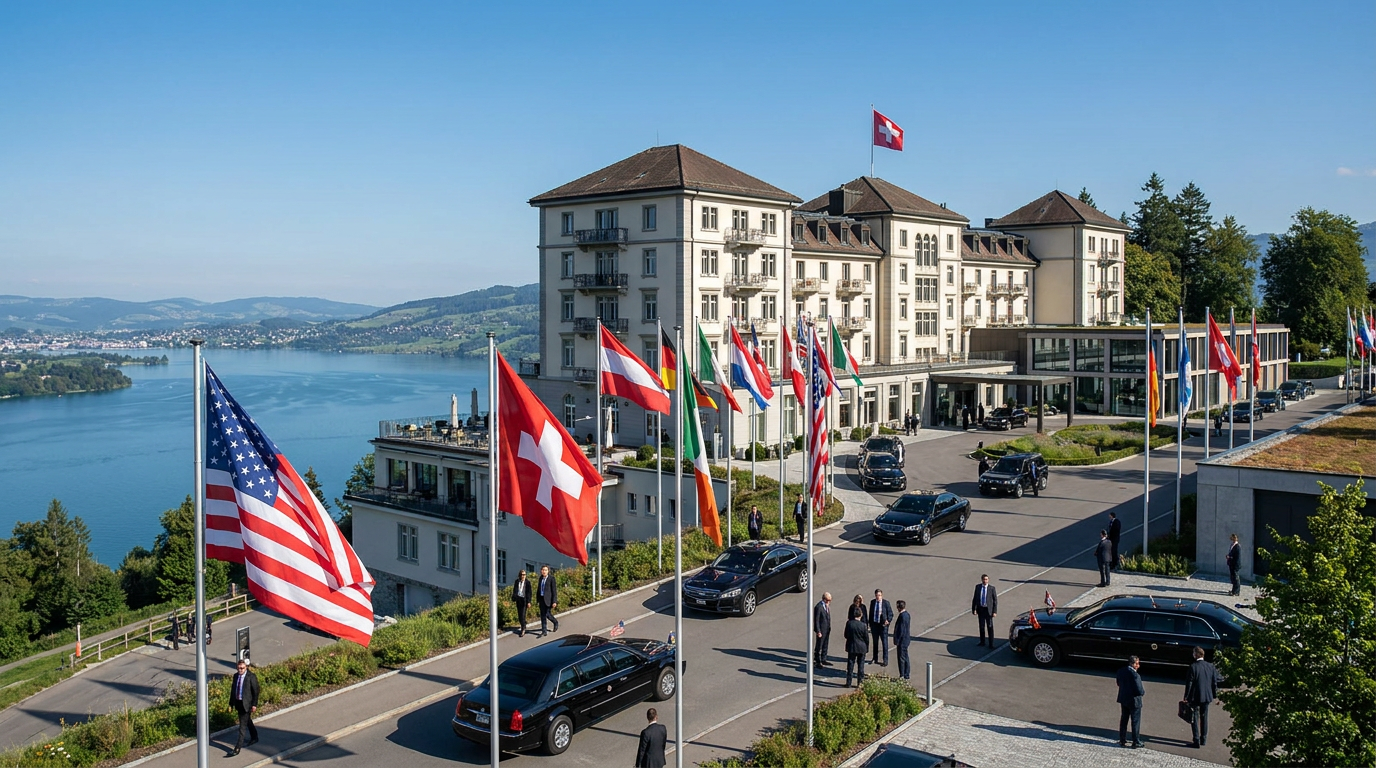
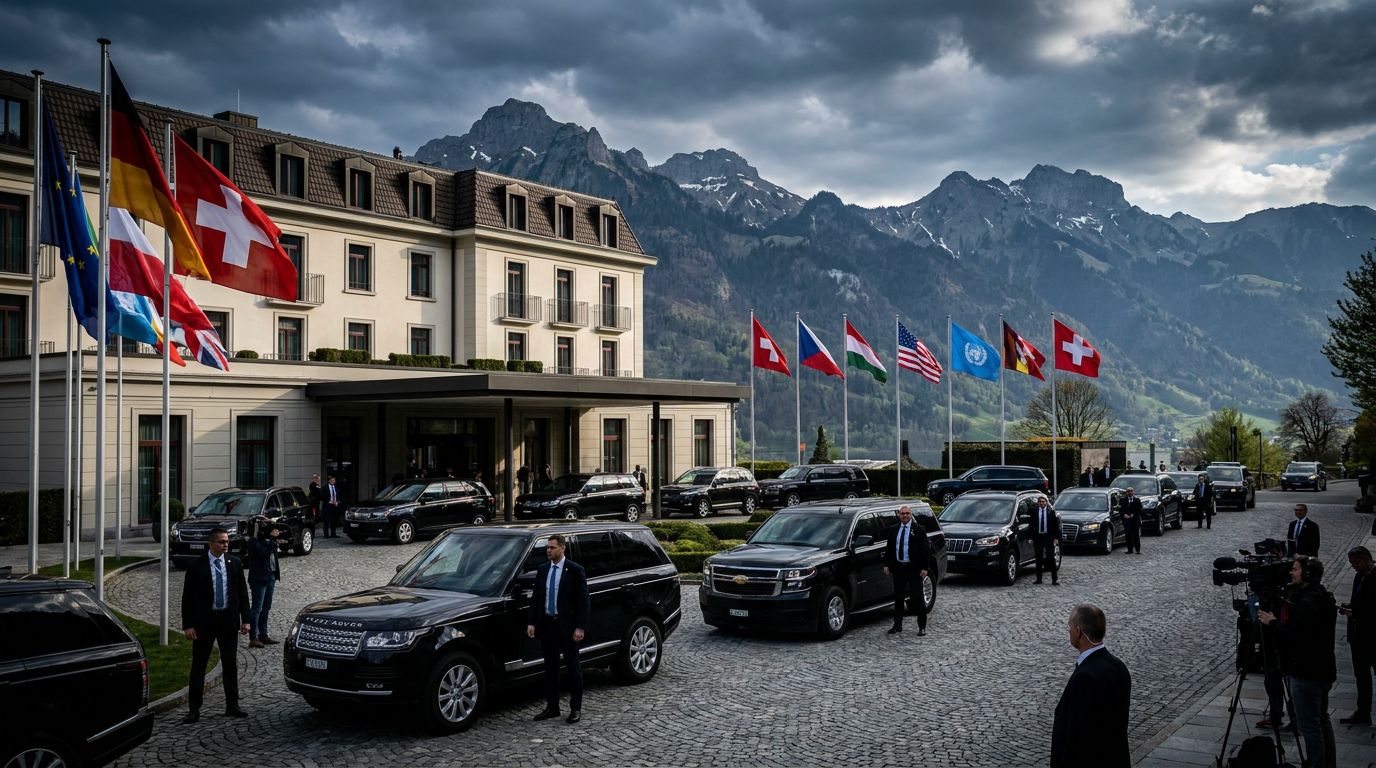
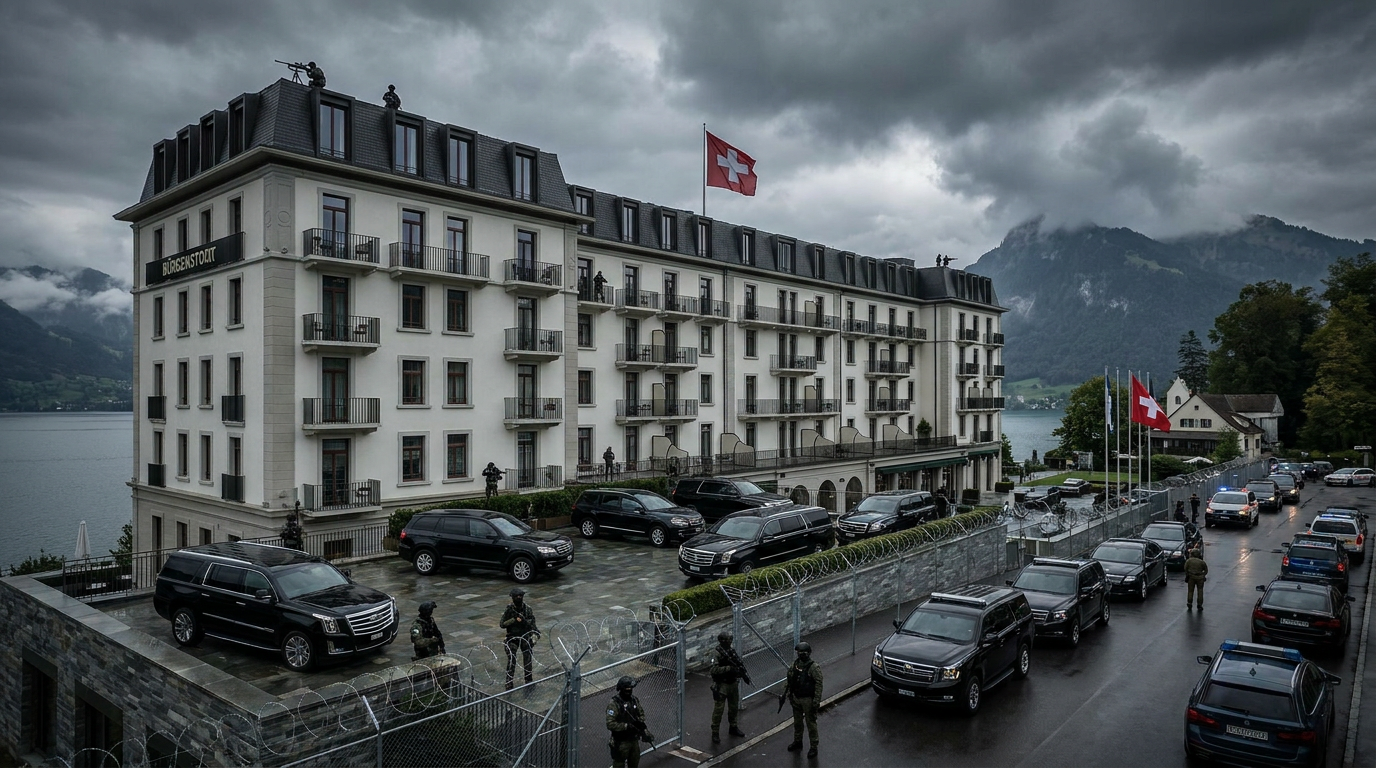
High-level delegations from the United States and Iran have converged on the Swiss resort of Burgenstock for make-or-break negotiations aimed at ending a 114-day conflict that has reshaped the Middle East. The talks, mediated by Qatar and Pakistan, represent the most significant diplomatic effort to date to solidify a fragile preliminary ceasefire reached last week.[1][3]
The United States has dispatched a heavyweight diplomatic team to Switzerland, signaling the administration's urgency to secure a foreign policy victory. Vice President JD Vance arrived on Sunday to lead the delegation, joining special envoys Jared Kushner and Steve Witkoff, who have been laying the groundwork for the summit over the past several days.[2]
The primary objective of the Burgenstock summit is to transition the interim memorandum of understanding into a durable, long-term peace agreement. The conflict, which escalated rapidly into a direct US-Israel-Iran confrontation, has severely strained regional stability and prompted unprecedented military deployments across the Persian Gulf and the Eastern Mediterranean.[1][4]
A critical flashpoint on the agenda is the ongoing situation in Lebanon. Despite the broader pause in hostilities, fighting has continued along the Israeli-Lebanese border. Iranian officials have publicly slammed recent Israeli military actions in Lebanon, characterizing them as direct violations of the interim deal and warning that the violence could derail the broader peace process.[1][3]

A critical flashpoint on the agenda is the ongoing situation in Lebanon.
Maritime security also looms large over the negotiations. Renewed confusion and sporadic incidents in the Strait of Hormuz—a vital chokepoint for global energy supplies—have kept oil markets on edge. Negotiators are expected to prioritize establishing clear rules of engagement and freedom of navigation protocols to prevent accidental escalations in the waterway.[3][5]
The diplomatic maneuvering in Switzerland is being watched with deep skepticism in Jerusalem. Israeli Prime Minister Benjamin Netanyahu has faced intense domestic and international pressure over the trajectory of the war. Analysts suggest that while the U.S. administration may secure a political win by halting the conflict, the Israeli leadership views the preliminary deal as a strategic compromise that leaves an emboldened Iran intact.[4][6]
The presence of Qatari and Pakistani mediators underscores the complex web of regional alliances required to bring both sides to the table. Qatar, hosting the largest U.S. military base in the Middle East while maintaining pragmatic ties with Tehran, has served as the primary conduit for messages, while Pakistan has leveraged its unique diplomatic position to facilitate the logistical framework of the summit.[1]

Economic pressures are heavily influencing the pace of the talks. Global markets have experienced significant volatility over the past four months, with energy prices fluctuating wildly based on the perceived threat to Middle Eastern oil infrastructure. A finalized peace agreement is widely expected to stabilize Brent crude prices and ease inflationary pressures in Western economies.[5]
As the delegations enter closed-door sessions, the timeline for a comprehensive resolution remains uncertain. While the preliminary halt in major combat operations has held, diplomats acknowledge that resolving the deeply entrenched security dilemmas regarding proxy forces, sanctions relief, and regional deterrence will require sustained and grueling negotiations over the coming days.[1][3]
How we got here
Late Feb 2026
The multi-front conflict between the U.S., Israel, and Iran officially begins.
Mid-June 2026
A preliminary memorandum of understanding is reached to halt major combat operations.
June 20, 2026
U.S. and Iranian delegations arrive in Switzerland to begin formal peace negotiations.
Viewpoints in depth
U.S. Strategic Imperative
The administration is pushing for a swift diplomatic resolution to stabilize the region and claim a foreign policy victory.
For the U.S. delegation, the primary goal is to extract the United States from a volatile Middle Eastern conflict that threatens broader economic stability. By deploying high-profile figures like Vice President JD Vance and Jared Kushner, the administration is signaling its commitment to finalizing the deal. The U.S. strategy hinges on securing guarantees for maritime security in the Persian Gulf and preventing further escalation that could draw American forces into a protracted ground war.
Iranian Demands
Tehran seeks to leverage the pause in fighting to secure economic relief while maintaining its regional influence.
Iranian negotiators are approaching the Burgenstock talks with a focus on translating the military standoff into tangible political and economic gains. A central demand is the alleviation of sanctions that have crippled the Iranian economy. Furthermore, Iran is using the ongoing skirmishes in Lebanon as leverage, arguing that any comprehensive peace must restrain Israeli military operations against Iranian allies across the Levant.
Israeli Skepticism
Jerusalem views the diplomatic process as a premature off-ramp that fails to neutralize long-term security threats.
The Israeli government, led by Prime Minister Benjamin Netanyahu, has expressed profound unease with the trajectory of the Switzerland talks. From the Israeli perspective, the preliminary deal brokered last week halted military momentum just as pressure was mounting on Tehran. Israeli officials fear that a finalized agreement will leave Iran's nuclear infrastructure and regional proxy networks largely untouched, merely delaying a future, potentially more devastating confrontation.
What we don't know
- Whether the ongoing violence in Lebanon will derail the broader negotiations.
- The specific concessions the U.S. is willing to offer regarding economic sanctions on Iran.
- How the Israeli government will respond if a final agreement is signed that it fundamentally opposes.
Key terms
- Strait of Hormuz
- A narrow, strategically vital waterway between the Persian Gulf and the Gulf of Oman through which a significant portion of the world's oil supply passes.
- Memorandum of Understanding (MoU)
- A formal agreement between two or more parties that establishes a framework for cooperation, often used as a preliminary step before a binding treaty.
Frequently asked
Who is representing the United States at the talks?
The U.S. delegation is being led by Vice President JD Vance, alongside special envoys Jared Kushner and Steve Witkoff.
Where are the negotiations taking place?
The talks are being held at the Burgenstock resort in Switzerland.
What are the main obstacles to a final agreement?
Key hurdles include resolving ongoing violence in Lebanon, establishing security protocols for the Strait of Hormuz, and addressing Israeli concerns over the terms of the ceasefire.
Sources
Source coverage
6 outlets
4 viewpoints surfaced






[1]Al JazeeraIranian Leadership
Iran war day 114: US, Iranian delegations in Switzerland for key talks
Read on Al Jazeera →[2]Fox NewsU.S. Administration
JD Vance arrives in Switzerland to join Kushner and Witkoff for new round of Iran negotiations
Read on Fox News →[3]NYTU.S. Administration
U.S. and Iranian Officials to Meet for Peace Talks in Switzerland
Read on NYT →[4]The GuardianIsraeli Government
Trump may survive the humiliation of the Iran deal. Netanyahu will not
Read on The Guardian →[5]ReutersGlobal Markets & Mediators
Global markets brace as US-Iran peace summit opens in Burgenstock
Read on Reuters →[6]Times of IsraelIsraeli Government
Jerusalem watches warily as US-Iran talks commence in Switzerland
Read on Times of Israel →
Every angle. Every day.
Get news politics stories with full source coverage and perspective breakdowns delivered to your inbox.