
The New Global Plastic Reality: A Guide to the UN Treaty, Production Caps, and the Full Life-Cycle Mandate
The UN Plastics Treaty aims to establish the first legally binding international framework to end plastic pollution. At its core is a fierce debate over whether to cap global plastic production or focus strictly on downstream waste management.
By Paige Carter

- High Ambition Coalition
- Argues that recycling cannot solve the crisis without mandatory global caps on primary plastic production.
- Petrochemical Producers
- Advocates for a treaty focused on waste management and circular economy principles rather than production limits.
- Environmental NGOs
- Demands strict bans on toxic chemical additives and the elimination of single-use plastics.
- Informal Waste Sector
- Seeks a 'Just Transition' to ensure new regulations do not destroy the livelihoods of waste pickers.
Common questions
What is the UN Plastics Treaty?
It is a proposed legally binding international agreement aimed at ending plastic pollution by addressing the full life cycle of plastics, from design and production to disposal.
Why are the negotiations stalled?
The primary roadblock is a fundamental disagreement over Article 6, which addresses plastic production. High-ambition countries want mandatory production caps, while major petrochemical-producing nations strongly oppose them.
What does a 'full life-cycle approach' mean?
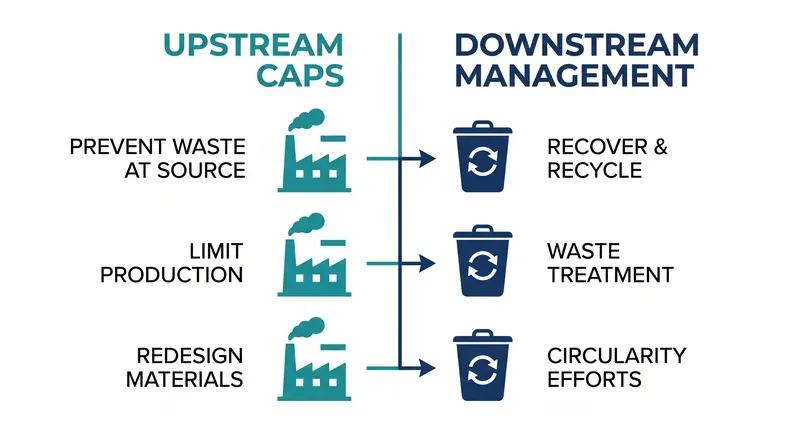
Instead of just focusing on cleaning up plastic waste (downstream), a full life-cycle approach also regulates how plastics are made, what chemicals are used, and how much raw plastic is produced (upstream).
Will the treaty ban all plastics?
No. Even the most ambitious proposals focus on reducing overall production volumes, banning specific toxic chemical additives, and phasing out unnecessary single-use plastics, while recognizing the utility of plastics in essential sectors.
The short answer
- The UN is negotiating the world's first legally binding treaty to end plastic pollution, mandated to cover the material's full life cycle.
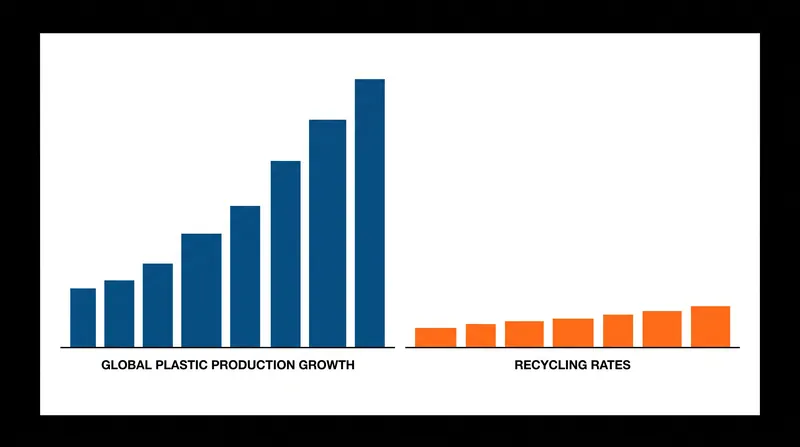
- Global plastic production currently sits at 460 million tonnes annually, with only 9% successfully recycled.
- Negotiations are deadlocked over whether to impose mandatory global caps on the production of new plastics.
- A High Ambition Coalition demands upstream production cuts, while petrochemical-producing nations favor downstream waste management.
- The treaty's final form will heavily impact global supply chains, the fossil fuel industry, and international recycling markets.
In March 2022, the United Nations Environment Assembly adopted Resolution 5/14, a mandate to forge the world's first legally binding treaty on plastic pollution. The directive was unambiguous: the agreement must address the "full life cycle" of plastics, moving beyond traditional cleanup efforts to regulate how plastics are designed, produced, and discarded.[1][6]
The necessity for this framework stems from a compounding global crisis. The world produces approximately 460 million tonnes of plastic annually, a figure projected to triple by 2060 without intervention. Of this massive output, only about 9% is successfully recycled. The vast majority leaks into marine environments, terrestrial ecosystems, and the human food chain.[3][5]
To translate the 2022 mandate into a functional treaty, the UN established the Intergovernmental Negotiating Committee (INC). The INC was tasked with drafting the instrument through a series of global summits. However, as negotiations progressed from Uruguay to Paris, Nairobi, Ottawa, and Busan, the economic weight of the global plastics industry collided with environmental imperatives, stalling the process.[1][2]
The central fracture in the negotiations lies in the interpretation of the "full life cycle" mandate. For environmental advocates and a bloc of nations known as the High Ambition Coalition, a true life-cycle approach must begin at the source: the extraction of fossil fuels and the production of primary plastic polymers. They argue that recycling alone cannot solve the crisis at current production growth rates.[2][4][5]
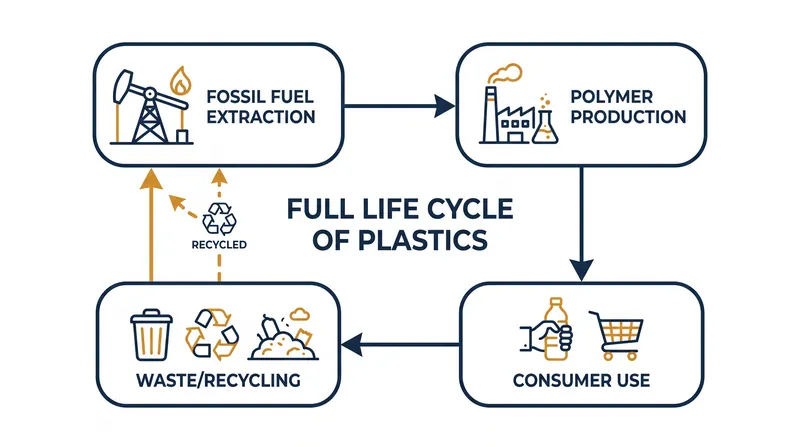
Consequently, the High Ambition Coalition—which includes over 70 member states led by nations like Rwanda and Norway—has pushed for mandatory global production caps. Proposals have included targets such as reducing global plastic production by 40% below 2025 levels by the year 2040. This upstream intervention is viewed as the most viable mechanism to stem the flow of pollution before it becomes waste.[4]
Conversely, a powerful bloc of major petrochemical-producing nations, including Saudi Arabia, the United States, Russia, and China, has fiercely resisted binding production limits. These nations advocate for a treaty that prioritizes downstream solutions, such as improved waste management infrastructure and enhanced recycling technologies, while preserving the economic utility of plastics.[4][5]
Industry lobbying groups representing chemical manufacturers have maintained a highly visible presence at the INC summits. They argue that plastics provide massive societal benefits—from medical devices to food preservation—and that overly prescriptive production caps would harm global economic development. Instead of global mandates, these producing nations generally favor non-binding, country-specific National Action Plans.[4]
Industry lobbying groups representing chemical manufacturers have maintained a highly visible presence at the INC summits.
Beyond production volumes, the treaty negotiations have grappled with the chemical composition of plastics. Thousands of chemical additives are used to give plastics flexibility, durability, or color, many of which are toxic or act as endocrine disruptors. Over 100 nations have advocated for strict chemical regulations based on precautionary principles, seeking to ban specific chemicals of concern from the global supply chain.[4][5]
The design phase of the plastic life cycle is another critical pillar of the proposed treaty. Negotiators are working to establish global standards for product design that mandate reusability and recyclability. By standardizing polymer types and eliminating problematic single-use plastics, the treaty aims to create a more functional global market for secondary materials.[2][5]
The economic implications of these regulatory shifts are profound. Studies suggest that implementing international rules for phaseouts, standardized product design, and Extended Producer Responsibility (EPR) could yield significant economic benefits by reducing waste management costs and boosting the recycled materials market. However, it would fundamentally disrupt the business models of primary polymer producers.[5]
The human element of the plastic crisis has also taken center stage, particularly regarding the informal waste sector. The International Alliance of Waste Pickers has actively participated in the INC process, demanding that the treaty include mandatory provisions for a "Just Transition." Millions of waste pickers in developing nations rely on plastic recovery for their livelihoods, and transitioning to a highly regulated circular economy risks displacing these vulnerable workers.
The deep divisions over production caps and chemical bans ultimately derailed the initial timeline. The fifth session, INC-5.1 in Busan, South Korea, in late 2024, ended without a consensus. A subsequent attempt to finalize the text at INC-5.2 in Geneva in August 2025 also failed, as low-ambition countries continued to push back against Article 6, the draft section addressing plastic production.[2][5]
Despite the gridlock, the foundational mandate of Resolution 5/14 remains intact. The international community is still legally bound to negotiate an instrument that addresses the full life cycle of plastics. The ongoing diplomatic standoff highlights the unprecedented nature of the treaty: it is not merely an environmental agreement, but a proposed restructuring of a major sector of the global industrial economy.[1][6]
As nations prepare for further rounds of negotiations, the outcome will likely hinge on finding a viable compromise between upstream production controls and downstream waste management financing. Whether the final UN Plastics Treaty emerges as a robust mechanism with binding production caps or a softer framework reliant on national voluntary efforts, it will set the regulatory baseline for the global plastics economy for decades to come.[5][6]
Why it matters
With global plastic production projected to triple by 2060, the treaty's final shape will dictate the future of the petrochemical industry, global supply chains, and the environmental health of communities worldwide.
Competing readings
The High Ambition Coalition
Led by nations like Rwanda and Norway, this bloc argues that recycling cannot solve the crisis without mandatory caps on primary plastic production.
This coalition, supported by numerous environmental NGOs, insists that the 'full life cycle' mandate inherently requires upstream interventions. They argue that as long as petrochemical companies continue to flood the market with cheap virgin plastics, secondary recycling markets will remain economically unviable. Their proposed framework includes binding global targets to reduce production, ban toxic chemical additives, and phase out problematic single-use items.
Petrochemical and Producing Nations
Major fossil fuel and plastic producers advocate for a treaty focused on waste management and circular economy principles rather than production limits.
Nations such as Saudi Arabia, the United States, and China emphasize the massive societal and economic benefits of plastics, from medical applications to food security. They argue that binding production caps would stifle economic development and harm global supply chains. Instead, this bloc favors country-driven National Action Plans, enhanced financing for waste management infrastructure, and technological innovations in recycling to prevent environmental leakage.
The Informal Waste Sector
Waste pickers and informal recycling workers demand a 'Just Transition' to ensure new regulations do not destroy their livelihoods.
Represented by groups like the International Alliance of Waste Pickers, this perspective highlights the human cost of formalizing the global waste economy. Millions of workers in developing nations rely on collecting and sorting plastic waste. They argue that any treaty must include mandatory provisions to integrate these workers into formal systems, provide fair compensation, and protect them from the economic shocks of phasing out certain plastic products.
The sequence
March 2022
The UN Environment Assembly adopts Resolution 5/14, mandating a legally binding treaty on the full life cycle of plastics.
November 2022
The Intergovernmental Negotiating Committee (INC-1) holds its first session in Uruguay to establish procedures.
April 2024
INC-4 in Ottawa concludes with deep divisions over whether to include production caps in the draft text.
November 2024
INC-5.1 in Busan, South Korea, fails to reach a final agreement, stalling on upstream production measures.
August 2025
INC-5.2 in Geneva concludes without a finalized treaty, pushing negotiations further into the future.
Jargon, explained
- Full life-cycle approach
- A regulatory framework that addresses plastics at every stage, from the extraction of raw fossil fuels to manufacturing, consumer use, and final disposal.
- Primary plastic polymers
- Virgin plastics manufactured directly from petrochemical feedstocks, before any recycling or reuse.
- High Ambition Coalition
- A group of over 70 nations pushing for strict, legally binding global rules, including production caps and chemical bans.
- Just Transition
- A policy principle ensuring that workers whose livelihoods are affected by environmental regulations—such as informal waste pickers—are protected and integrated into the new economy.
What’s still unclear
- Whether the final treaty will include any binding caps on primary plastic production or rely entirely on voluntary national targets.
- How a global financial mechanism will be structured to help developing nations build the necessary waste management infrastructure.
- Which specific chemical additives and single-use plastic products will face global bans or phase-outs.
Sources
Source coverage
6 outlets
4 viewpoints surfaced





[1]UN Environment Programme
Intergovernmental Negotiating Committee on Plastic Pollution
Read on UN Environment Programme →[2]IISD Earth Negotiations Bulletin
Summary report, 25 November – 1 December 2024: 5th Session of the Intergovernmental Negotiating Committee
Read on IISD Earth Negotiations Bulletin →[3]Global Plastic ActionEnvironmental NGOs
Global Plastics Treaty: Toward a legally binding international agreement
Read on Global Plastic Action →[4]Global Plastic LawsHigh Ambition Coalition
A Mandate for a UN Plastics Treaty
Read on Global Plastic Laws →[5]Health and Global Policy InstituteHigh Ambition Coalition
The Global Plastics Treaty: Competing Approaches and Economic Implications
Read on Health and Global Policy Institute →[6]Factlen Editorial Team
Synthesis by Factlen editorial team
Read on Factlen Editorial Team →
Comments
Every angle. Every day.
Get guides stories with full source coverage and perspective breakdowns delivered to your inbox.